Article
搜索结果:
-
Why Was Hanfu Banned at a Sacred Temple in 2026?
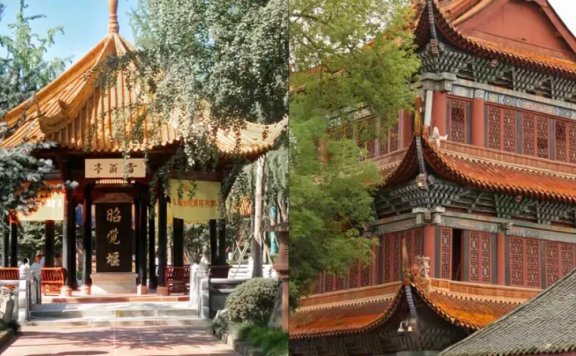
In early 2026, a social media post sparked widespread discussion. A visitor wearing a meticulously recreated ensemble from the Tang Dynasty's Wu Zhou (武周) period was denied entry to Zhaojue Temple (昭觉寺) in Chengdu (成都). The reason given by staff was "wearing exotic costume." The visitor's attire, based on artifacts unearthed from the Hejiacun (何家村) collection, was historically accurate, complete with period accessories. This single incident reignited the persistent debate: does traditional Hanfu have a place in modern public spaces? While the temple later apologized, clarifying that Hanfu is welcome, the event exposed a lingering disconnect. How, in 2026, can a garment representing millennia of Han Chinese heritage still be mistaken for a mere costume? Misplaced Blame The refusal at Zhaojue Temple is not an isolated case. Similar incidents often surface online, creating a narrative that cultural sites are hostile to traditional dress. A closer look reveals a common thread. In many instances, the core issue is not the clothing itself but unauthorized commercial photography. A restaurant near West Lake once turned away a group because their Hanfu and professional camera equated to a "commercial shoot" in the management's eyes. Shanghai Disneyland once stopped an adult guest wearing a Disney-themed… -
Who Tied the First Red String in Your Hair?
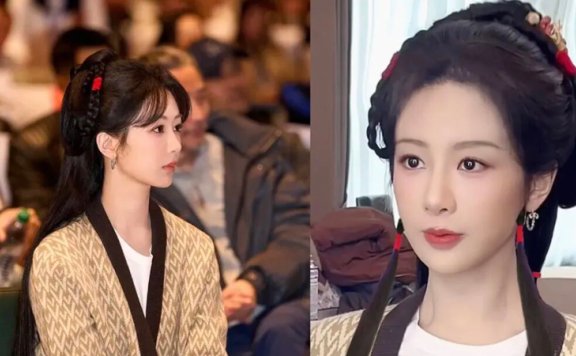
When actress Yang Zi (杨紫) appeared on screen with her hair tied with a simple red string, a wave of nostalgia washed over many viewers. That vibrant Hongtousheng (红头绳, red hair string) is more than a childhood memory or a festive accessory; it is a thread woven through centuries of Chinese social and aesthetic history. This humble object, often just a length of red yarn, connects the practical needs of daily life with deep-seated cultural wishes, evolving from a common hair fastener into a powerful symbol of tradition and belonging. Practicality to Memory Long before elastic bands, securing hair was a daily concern. Traditional methods used hairpins, combs, and cloth bands. The use of red cloth strips for decoration was common, but the narrower, string-like Hongtousheng truly emerged in the late Ming and early Qing dynasties. This shift was linked to specific hairstyles like the Sanliutou (三绺头, three-section hairstyle), which required sections of hair to be bound separately. A thin, strong red string was perfect for neatly dividing and securing these sections at the crown. The industrial revolution made machine-spun yarn cheap and widely available. Red wool or cotton string became an indispensable item in every household. It was durable,… -
Who Really Wore the Feiyu Uniform?
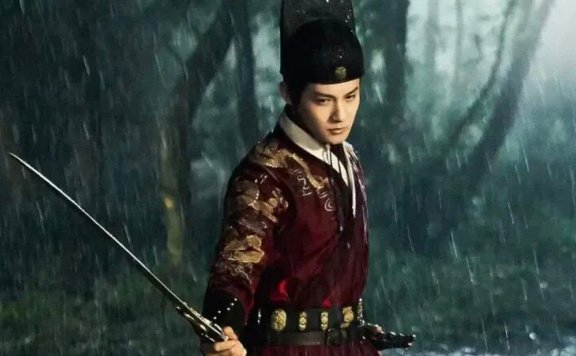
The image is iconic: a stern, formidable figure stalking palace corridors or shadowy alleyways, clad in brilliant crimson robes embroidered with mythical creatures, a sleek, curved blade at his side. This is the Jinyiwei (锦衣卫), or Embroidered Uniform Guard, as popular culture has cemented him in our minds. From television dramas to video games, this visual shorthand for Ming Dynasty secret police and imperial power is unmistakable. But what if this widespread portrayal is more fantasy than fact? The glamorous Feiyu uniform was not standard issue. For the vast majority of the men who served in this complex institution, such opulence was a distant dream, a privileged symbol reserved for a select few at the very top. The Privilege of the Robe Contrary to the on-screen legions of red-clad agents, the Feiyufu (飞鱼服) was not a uniform in the common sense. It was a "Cifu" (赐服), a bestowed garment, one of the highest honors the Ming emperor could grant. Ranking just below the imperial dragon robe, it was awarded individually for merit or faithful service. The right to wear it was a legal privilege, and unauthorized use was strictly forbidden. Its name comes from the "Feiyu" pattern: a legendary creature… -
Ancient Robes: To Wash or Not to Wash?
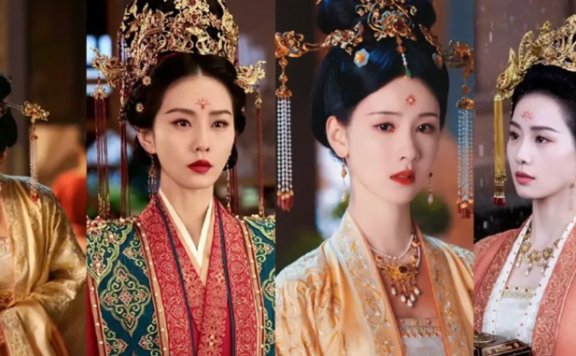
Did ancient nobles truly never wash their ornate ceremonial robes? The glittering gowns and intricate court attire seen in historical dramas often spark this question. While it seems unthinkable to modern sensibilities, the care of these garments followed a logic dictated by material constraints and social symbolism. The reality is more nuanced than a simple yes or no. The Delicate Art of Preservation For the most splendid attire—the emperor's dragon robe, a noble's court dress, or a lady's ceremonial Xiapei (霞帔)—complete immersion in water was typically avoided. This was not negligence but necessity. The fabrics and adornments were extraordinarily fragile. Silks, luxurious Yun Jin (云锦), and cloth-of-gold could be ruined by water. Protein-based silk fibers shrink, wrinkle, and lose their luster when washed. The true peril, however, lay in the decoration. Embroidery often used Jinxian (金线, gold thread) made from silk wrapped in thin gold foil. Water could cause this foil to detach or oxidize, turning black. Pearls and gemstones might be waterproof, but the threads securing them were not; moisture loosened them, risking loss. A single robe could consume hundreds of meters of such thread. Washing it would transform a masterpiece into a crumpled, tarnished shadow of itself, an… -
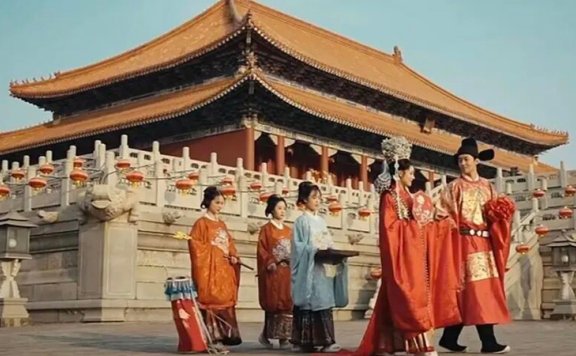
Decoding Ming Dynasty Robes in Etiquette China
When a television program can make historical clothing feel as immediate as today's fashion headlines, something special is happening. A recent broadcast by China Central Television (CCTV) has captivated audiences not with futuristic designs, but with a deep, respectful look into the past. The focus was the intricate beauty and profound symbolism of Hanfu, the traditional attire of the Han Chinese. By examining specific garments, particularly from the Ming Dynasty, the program connected threads of fabric to threads of cultural memory, prompting viewers to see ancient robes as more than museum relics. They are presented as active testaments to a worldview, where aesthetics and social order were seamlessly woven together. More Than Fabric: The Language of Ceremonial Dress The CCTV program, titled Etiquette China (礼仪中国), serves as a guide to this philosophy. It operates on a powerful premise: to understand a civilization's ideals, study the clothes it wore for its most important moments. The series approaches Hanfu not merely as costume, but as a visual language of Li (礼), a concept encompassing ritual, propriety, and the very framework of traditional social harmony. The most formal garments, known as ceremonial dress, carried the heaviest symbolic weight. These robes were canvases for… -
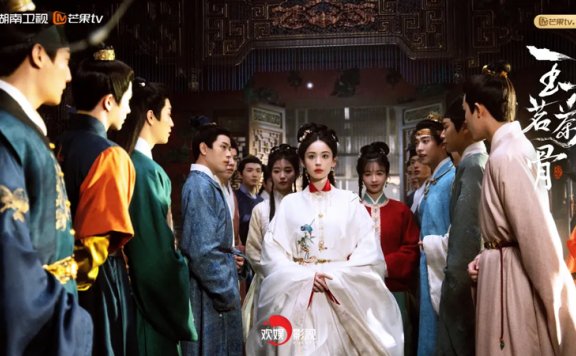
How Glory Challenges Gendered Narrative Tropes
The period drama Glory (玉茗茶骨) presents a world where men scheme in inner chambers and women pursue political thrones. Its producer, Yu Zheng (于正), markets this as a true female-centric narrative. The concept is undoubtedly attention-grabbing, positioning itself as a bold departure from tradition. It flips the script of classic palace intrigues, placing female characters in conventionally male positions of overt ambition. Yet, simply having men play at "harem struggles" while women seek a crown does not automatically forge a new path. The framework often feels familiar, merely swapping the genders within an old blueprint. The core mechanics of power—conspiracy, betrayal, rivalry—remain unchanged. This raises a question: is it female empowerment, or just the same play with a different cast? The drama's real test is whether it can move beyond this initial inversion to imagine a fundamentally different structure of power and relationship. When Men Wear the Palace Crown A new television drama turns the traditional courtship narrative inside out. In Glory, the power to choose belongs entirely to women. The story unfolds within the wealthy and influential Rong Family, a matriarchal clan whose authority in the tea trade rivals that of regional lords. Here, men are the suitors, brought… -
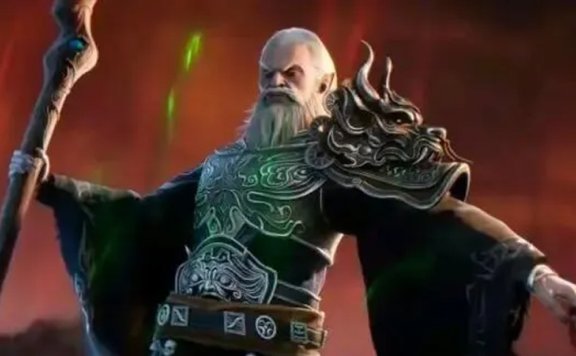
The Grim Truth of Power in Renegade Immortal
The animated saga Renegade Immortal (仙逆) presents a cultivation world of stark brutality and relentless consequence. Its protagonist, Wang Lin (王林), navigates a landscape where power is the only true currency and yesterday's disciple can become tomorrow's mortal enemy. His journey is less a heroic ascent and more a grim march through betrayal and survival. In a pivotal confrontation, he is forced to return to a place of ancient conflict, the Ancient Battlefield, to settle a debt a decade old and face a treachery that festered within his own circle. This episode crystallizes the series' core theme: in the pursuit of immortality, the most dangerous demons are often those you once nurtured yourself. The Traitor's Ambition Treachery often wears a familiar face. Hu Pao (虎咆), once under Wang Lin's tutelage, re-emerges not as a lost follower but as a vengeful rival. His rapid rise in power, serving the malevolent San Mo (散魔), is built on a foundation of resentment. He views his past as a subordinate as a stain to be erased. His ambition mirrors Wang Lin's own early hunger but is twisted by bitterness. He dreams of erasing his master and establishing his own dominion, proving that the pupil… -
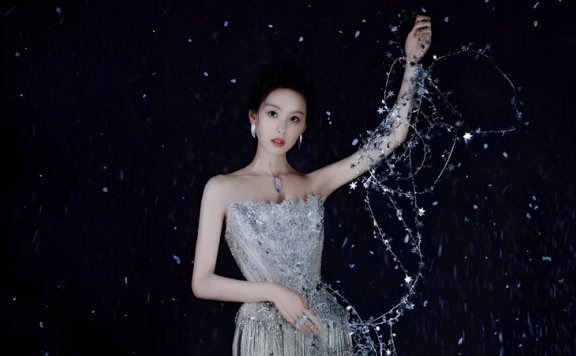
Chen Duling’s Starlight Gown on the Met Gala Carpet
The Met Gala carpet has witnessed countless spectacles, but this year, a vision in frozen starlight stopped everyone in their tracks. Chen Duling (陈都灵) did not simply arrive; she materialized, a breathtaking apparition from a wintry celestial realm. Her gown, an intricate masterpiece of silver crystals and delicate tulle, transcended fashion to become a story—a narrative of ice, light, and quiet power unfolding with every step she took. Against the backdrop of flashing cameras and murmuring crowds, she became a living constellation. This was more than a red carpet appearance; it was a performance, a deliberate and stunning articulation of an artist evolving before the public eye. The look sparked instant global conversation, dissecting not just the craftsmanship of the dress, but the statement it made about her journey from a fresh-faced ingenue to a woman commanding the spotlight with serene, undeniable authority. The Anatomy of a Dream The magic was in the meticulous details. The gown's bodice, a sleek silver column, was entirely encrusted with hundreds of thousands of hand-sewn crystals. They were not simply placed; they were mapped onto her silhouette, catching and refracting light like a second skin made of shattered ice. It was sculptural, precise, and… -
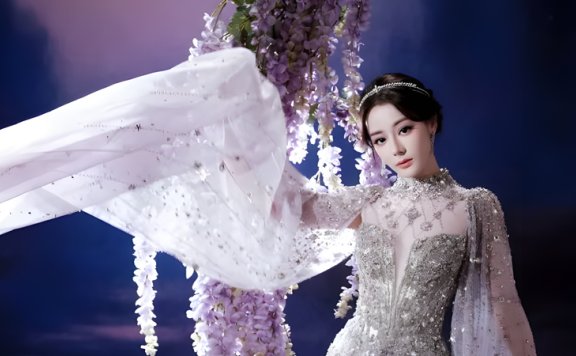
How Dilraba Wove a Fairy Tale on the Red Carpet
The internet stopped scrolling. Photographs of actress Dilraba at a recent event did not merely showcase another beautiful celebrity in another beautiful dress. They presented a vision. Swathed in a cascade of lavender and silver, she seemed less a star on a red carpet and more a character stepped from the pages of a fantasy novel. This was not just fashion; it was a moment of collective enchantment. The gown, with its ethereal silhouette and celestial detailing, transcended typical glamour, sparking a widespread conversation about beauty, storytelling, and the potent allure of dreamlike aesthetics in our contemporary world. A Gown Woven from Dreams The power of the look lay in a meticulous fusion of design and texture. A gradient of pale lilac to soft violet in layered tulle created an immediate impression of otherworldliness. This delicate base was then meticulously embroidered with a galaxy of minute silver sequins and crystals. Under the lights, they did not simply sparkle; they emitted a subtle, shimmering glow, as if the fabric itself was woven from captured starlight. The dress seemed to hold an inner luminescence. Its structure balanced boldness with grace. A deep V-neckline framed her collarbones elegantly, while a sharply defined waist… -
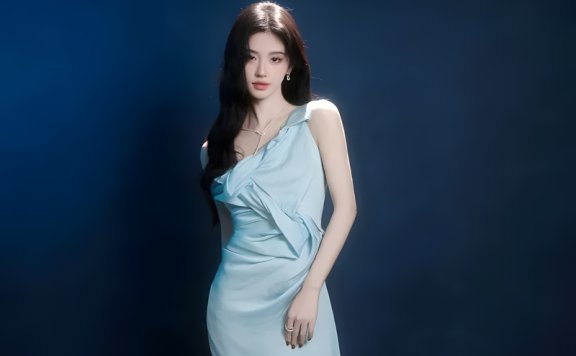
Ju Jingyi’s Ice-Blue Gown on the Red Carpet
The crimson carpet is a battlefield of visual noise, a place where bold statements often shout the loudest. Yet, in a recent stunning display, actress and singer Ju Jingyi (鞠婧祎) commanded attention through a whisper of sublime elegance. Her appearance was not defined by extravagance but by a masterful, serene composition in a singular shade of pale ice-blue. The gown, a study in fluid architecture, did not merely clothe her; it seemed to become an extension of her poised and ethereal demeanor. This moment transcended a simple fashion choice, evolving into a nuanced statement on modern femininity and the power of restrained artistry in an era of excess. It presented a compelling argument for beauty that resides not in the obvious, but in the delicate balance between structure and softness, coolness and warmth. The Dawn of a New Aesthetic Ju Jingyi’s gown immediately distinguished itself through its masterful manipulation of form and fabric. The one-shoulder silhouette created an asymmetrical line that was both architecturally interesting and inherently graceful. This single strap drew the eye across her collarbone, a subtle highlight of feminine form without overt exposure. The true genius of the design, however, lay in its intricate draping and strategic… -
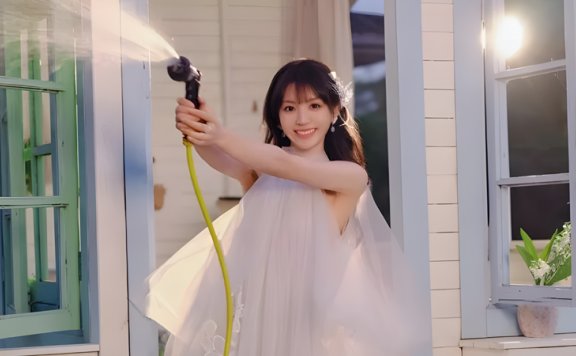
Tian Xiwei’s Sweet Haze Gown
Scrolling through social media today, one image stops you completely. It's actress Tian Xiwei (田曦薇), transformed. This isn't a typical celebrity photoshoot; it's a living spring daydream. Draped in a delicate, pale nude-pink gown, she stands bathed in soft light, resembling a piece of translucent honeyed candy. The overall effect is so captivating it feels less like viewing a picture and more like stumbling into a gentle, sun-drenched fairy tale. This particular look has ignited conversations, perfectly capturing a nuanced aesthetic that blends youthful sweetness with a sophisticated, ethereal softness. Decoding the Dream The magic of this look lies in its meticulous details. The Sweet Haze aesthetic is achieved through a masterful combination of color, texture, and cut. The gown features a halter neckline that elegantly frames her shoulders and collarbone. Its fabric is a sheer, layered netting over a milky apricot base, creating a sense of depth and movement. With every subtle pose, the skirt's folds ripple like gentle waves on a pond touched by a spring breeze. Accessories are chosen with precision. A simple, scattered floral hair clip provides a delicate accent, while long, dangling earrings enhance the vertical line, adding refinement without overwhelming the outfit's softness. The… -
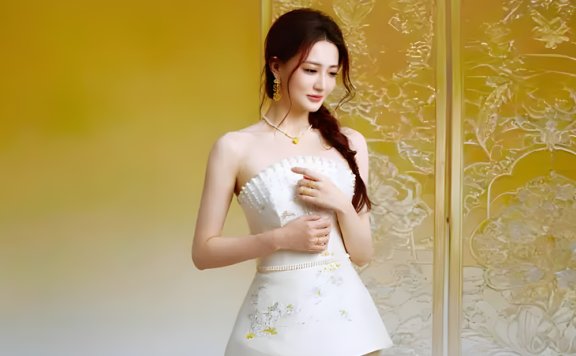
Xu Lu’s Embroidered Gown Blends Heritage and Modernity
A recent public appearance by actress Xu Lu (徐璐) has captured widespread attention. Her ensemble, a white satin bustier top paired with an off-white gradient tulle skirt, presented a vision of graceful sophistication. The outfit transcended mere fashion, evoking the poise and beauty of a classical painting. This look is a prime example of the New Chinese Style, a trend skillfully blending traditional Chinese aesthetics with contemporary design. Her styling choices sparked lively discussions, illustrating how modern celebrity fashion can breathe new life into cultural elements. The Look Xu Lu's attire was a masterclass in subtle detail and luxurious texture. The bustier top featured a three-dimensional pearl-like pattern and delicate gold-thread embroidery. This intricate work resembled a miniature landscape, capturing a sense of poetic refinement often associated with Jiangnan (江南), China's serene southern region. The design cleverly integrated Western-inspired silhouette with distinctly Chinese craftsmanship. The accompanying skirt added to the ensemble's ethereal quality. Its layered, gradient tulle created a soft, flowing movement, making every turn visually striking. The color palette of satin white, milky beige, and pale gold exuded a quiet, innate luxury. This restrained scheme elevated her overall presence, proving that impact doesn't require loud colors. Her styling completed… -
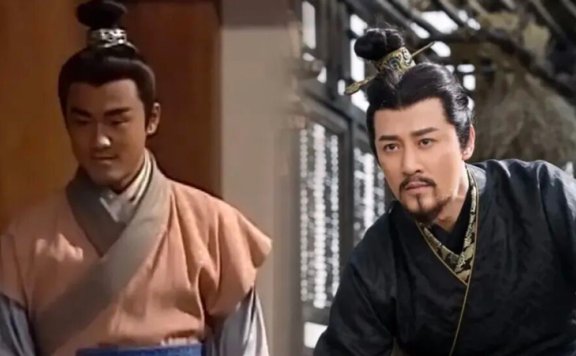
Why Are the Warriors' Topknots Tilted in Back to the PaBack to the Pastst?
The announcement of a new film adaptation of the classic time-travel series Back to the Past (寻秦记), reuniting the original cast after 25 years, has sent waves of nostalgia through its fanbase. While audiences eagerly await the return of Louis Koo and Raymond Lam to their iconic roles, a seemingly minor detail from the promotional material has ignited a surprisingly passionate online discussion: the distinct, slightly off-center topknot, or Ji (髻), worn by Lam’s character. This quirky hairstyle, far from being a costuming error, is a deliberate nod to a fascinating and authentic historical practice from the Qin era. The film’s attention to this detail opens a window into the highly structured and symbolic world of ancient Chinese military life, where even a hairstyle could speak volumes about a person’s rank and origin. More Than a Hairstyle To the modern eye, a tilted bun might appear casual or even charmingly disheveled. In the context of the Qin dynasty (221-206 BCE), however, it was a standard and meaningful feature. The most definitive evidence comes from the silent army of the Terracotta Warriors. A close examination of the thousands of life-sized figures reveals a striking variety in their topknots. A significant portion… -
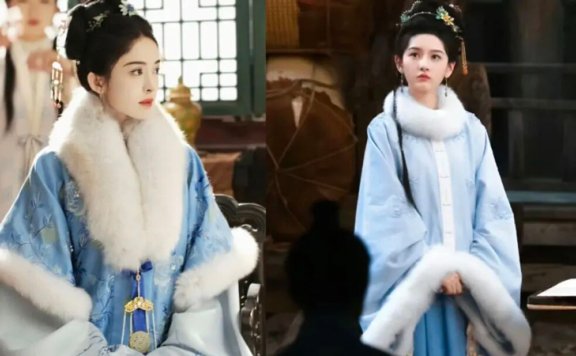
How Historical Fur Collars Blended Function and Status
Audiences often notice a curious consistency in the robes worn by characters in historical television dramas: the fabrics appear suspiciously light, seemingly unchanged by brutal winters or sweltering summers. This visual shorthand prioritizes aesthetic flow and actor comfort over historical authenticity. But a closer look reveals subtle, often overlooked details that hint at how people in eras like the Ming and Qing dynasties genuinely coped with the cold. The answer lies not in bulky modern parkas, but in ingenious layers, strategic materials, and one particularly telling accessory: the fur collar. The Historical Fur Collar Far from a mere costume embellishment, the fur collar, or Fengling (风领), was a standalone, functional piece of winter wear. As described in classics like The Dream of Red Mansions (红楼梦), it was not sewn onto a garment but worn separately over cloaks or thick robes. This design created a protective barrier against wind slipping down the neck. A passage from the novel details Shi Xiangyun's (史湘云) outfit, noting her "large sable Fengling," illustrating its use among the aristocracy. Its purpose was explicitly defensive, guarding a critical thermal zone where significant body heat escapes. The construction of winter clothing itself varied by social class. The wealthy… -
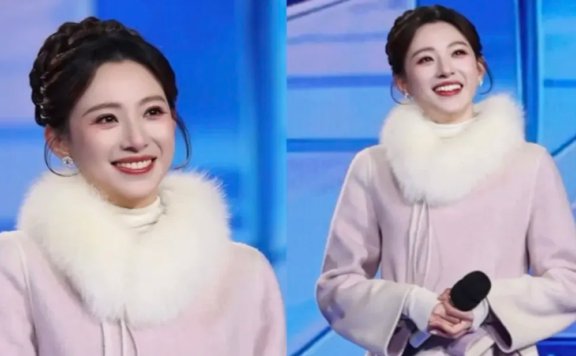
China’s Coziest Gala? The Surprising Star Accessory
This year's China Central Television New Year's Eve Gala earned a new nickname: the coziest edition yet. In a refreshing departure from the usual sleeveless gowns and sharp suits, hosts and performers appeared bundled in warm, comfortable clothing. Online audiences cheered the practicality, but they quickly noticed something else. One accessory appeared more than any other—a simple scarf. This wasn't just a tool against the winter chill; it became a subtle thread connecting the modern celebration to centuries of Chinese sartorial elegance. Ancient Neckwear While the modern scarf feels universal, its precursors have deep roots in Chinese history. As early as the Song Dynasty, a garment called Xiangpa (项帕, neck kerchief) was worn by women during festivals like the Lantern Festival. Described by scholar Zhou Mi (周密), it was a decorative band of silk or brocade wrapped around the neck, serving both aesthetic and modest warming purposes. A similar item, the Lingjin (领巾, neck scarf), was used more broadly by men and women alike. These were not the long, trailing scarves of later European fashion but practical, often square or triangular pieces of fabric, tied or fastened at the front. Art provides clues to their form. In paintings like Tang… -
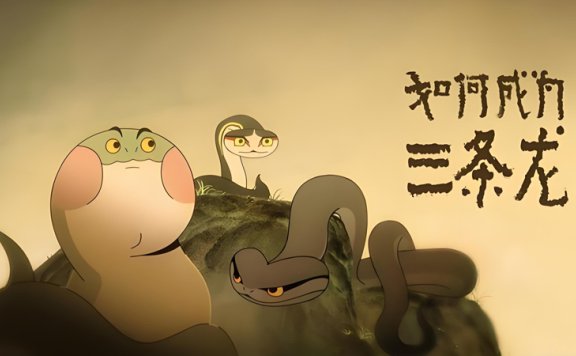
Yao-Chinese Folktales 2: How to Become Three Dragons
The first day of 2026 brought a new episode of the animated anthology Yao-Chinese Folktales 2 (中国奇谭2). Like many, I had enjoyed the first season, yet its stories faded from memory too quickly. This time, I decided to do more than just watch. The tale of the three snakes presented a simple fable, but one that clung to the mind long after the screen went dark. It asks a profound question: what defines a dragon? Is it the celestial mandate, the horns and the majesty, or is it something earned through grit and sacrifice on the dusty earth? This story, set against a drought-stricken village and a forbidding mountain, offers a quiet, powerful answer. A Hopeless Quest The three brothers—a pragmatic leader, a chatty second, and a simple, kind-hearted third—begin their journey with a clear, almost naive goal. They are not mighty. They are small snakes surviving on stolen offerings from villagers praying to the Dragon King for rain. The eldest understands a cruel truth: people worship power that solves problems. Their reverence for the Dragon King stems not from love, but from a desperate need for his rain. So, the snakes embark on a pilgrimage to learn this divine… -
Top 10 Standout Performances in The Vendetta of An
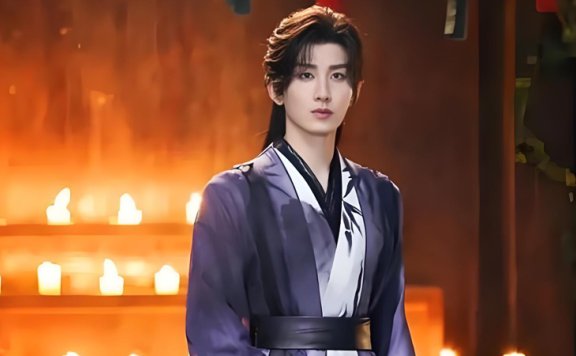
The historical drama The Vendetta of An ( 长安二十四计) offers a distinct flavor. It sidesteps familiar romantic entanglements to focus squarely on intricate political machinations within the ancient capital. Xie Huai'an (谢淮安), once a brilliant scholar, returns after a decade of planning, his hair now white. He navigates a perilous landscape where every alliance is temporary and each glance carries hidden meaning. The narrative cleverly frames these imperial power struggles as a lethal version of corporate office politics, making the stakes both grand and strangely familiar. This series invests deeply in tangible detail. Producers constructed a 400-meter replica of the Zhuque Avenue (朱雀大街). They recreated 136 pieces of ceramic ware based on artifacts from the Famen Temple. Costumes are themselves a language; Xie Huai'an's crimson robe is embroidered with winding lotus patterns, while the emperor's ceremonial headdress meticulously follows historical protocols. Elements like traditional fire-knife crafting and papermaking arts are seamlessly woven into the plot. Beyond its visual craft, the story thrives on constant recalculation. Plots double-cross, and apparent defeats reveal themselves as deeper schemes. A captured ally might be enacting a "bitter hardship ruse". This layered gameplay, echoed by a formidable cast that brings even minor roles to vivid… -
The Stage of Hair: Ming Dynasty Women's Crowning Glory
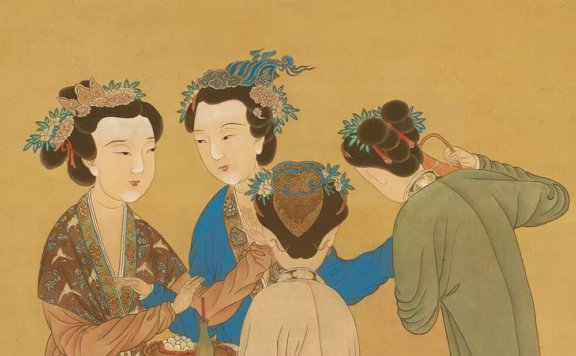
A woman sits before a bronze mirror in her chamber. Her fingers, deft and sure, begin their daily ritual. Strand by strand, hair is coiled, pinned, and elevated. This is not mere grooming; it is the construction of identity. In the Ming Dynasty, a woman’s hairstyle was her public statement, a silent language of social status, marital availability, and regional fashion. From the relatively simple coils of the early 14th century to the architectural marvels atop heads in the 16th, the evolution of the hair bun narrates a story of aesthetic ambition and social nuance. It was a canvas for artistry and a map of one's place in the world. Evolution of Style The journey of Ming hairstyles mirrors the dynasty's own socio-economic pulse. Initial styles, influenced by the preceding Song and Yuan periods, favored modesty and restraint. Hair was often gathered into neat, low buns, reflecting a post-war ethos of simplicity. This understated elegance, however, was not destined to last. As the dynasty matured, particularly during the mid to late Ming period, commercial prosperity blossomed. A vibrant urban culture emerged, especially in the wealthy Jiangnan (江南) region. With newfound economic confidence came sartorial daring. Women's hairstyles began to soar,… -
Has Strange Chronicles of Tang Uncovered a Lost Fashion Trend?
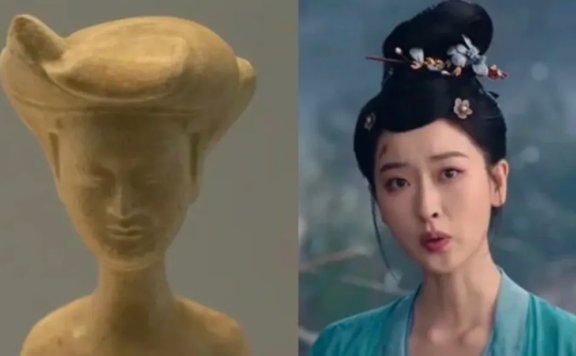
In the historical drama Strange Chronicles of Tang (唐诡奇谭), the entrance of the rain-praying master, Rachel, immediately captivates the audience. Her unique hairstyle and layered costume stand in stark contrast to the other characters, prompting viewers to question its authenticity. Could this striking look truly belong to the Tang Dynasty? The answer is a definitive yes. Her appearance is a meticulous recreation of early Tang fashion, specifically from the 7th century, centered around two distinct elements: a practical yet elegant hairstyle and an innovative garment that redefined the silhouette. The Whirlwind Chignon The hairstyle worn by the character is known as the Reverse Coiled Chignon, or Fanwan Ji (反绾髻). Its most defining feature is a curved lock of hair framing the forehead, created by coiling the hair from the nape of the neck forward. This was a popular style in early Tang, particularly during the reign of Emperor Taizong. It was also poetically called the Leyou (乐游) Plateau Reverse Coiled Chignon, named after the scenic Leyou Plateau in Chang'an. This elevated park was a favorite leisure spot for nobility and literati, and the hairstyle's name evokes its association with outdoor activity and effortless grace. Poet Gu Kuang (顾况) captured its… -
Zhao Liying’s New Hair: A Shen Li Throwback
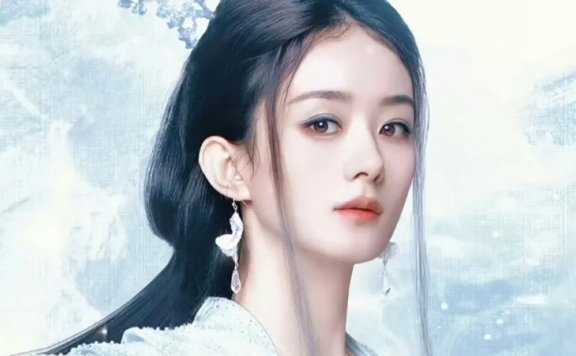
A newly released teaser for the costume drama The Unclouded Soul (逍遥) features a special appearance by actress Zhao Liying (赵丽颖). Her latest look, which includes two delicate strands of hair framing her face, has immediately captivated fans and sparked a wave of online discussion. Many have noted that this specific style feels like a direct callback to the ethereal appearance of Shen Li (沈璃), the character she portrayed in the popular Xianxia drama The Legend of Shen Li (与凤行). This hairstyle, often humorously dubbed "catfish whiskers" by modern audiences, seems to have become a signature element for her period roles, blurring the lines between different characters and evoking a strong sense of nostalgic charm. A Hairdo with History The hairstyle in question is far from a modern invention. Its roots can be traced back to the Han and Jin dynasties, particularly after the Eastern Han period. Historically, these two hanging locks of hair had specific names. For children, the style was called Chuitiao(垂髫), while the adult version was known as Chuishao (垂髾). Both terms essentially describe a single, carefully arranged strand of hair left to hang down from the main hairstyle. This was not considered bangs in the contemporary…
