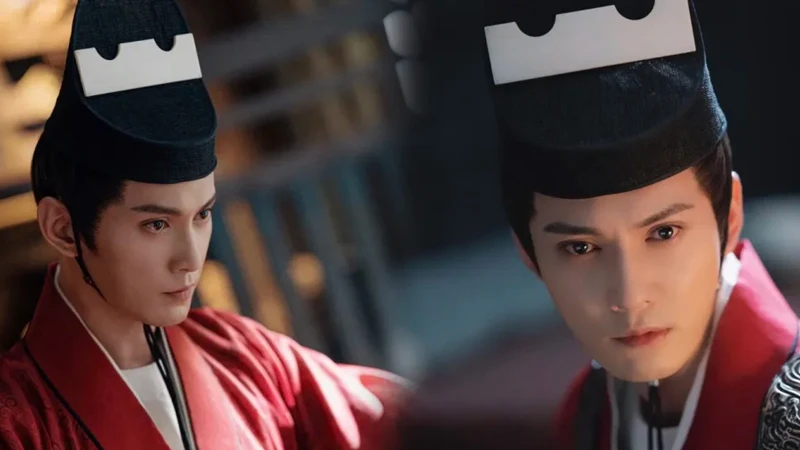
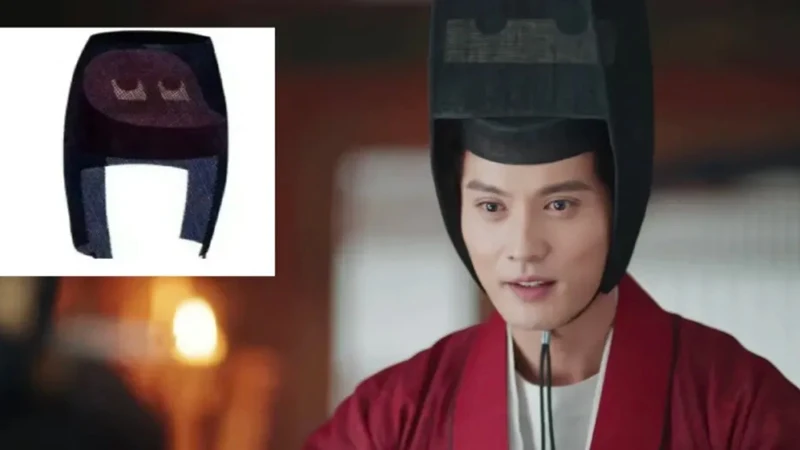
An online discussion has erupted around the distinctive headwear worn by actor Xu Zhengxi (徐正溪) in the historical drama Yong’an Dream (永安梦). Instead of the typical ornate crowns, his character sports a cap with what appear to be two small, curious eyes peeking out from the top. This unique design has captivated viewers, with many joking that only he could carry off such a peculiar look. The answer to this sartorial mystery lies not in a costume designer’s whim, but deep within the fashion history of ancient China. This headpiece is a gateway to understanding the practicalities and social codes of attire during a dynamic period in Chinese history.
The Hat’s True Identity
The cap is known as a Pingjin Ze (平巾帻). A Ze was a type of informal cap worn under more formal headpieces, and its use dates back to the Han Dynasty. It became particularly popular from the Wei and Jin periods through the Sui and Tang dynasties, frequently worn by military officials. The two horizontal protrusions that resemble eyes are not decorative. They are the ends of a horizontal hairpin called a Zan Dao (簪导), which was used to secure the cap firmly to the wearer’s hair.
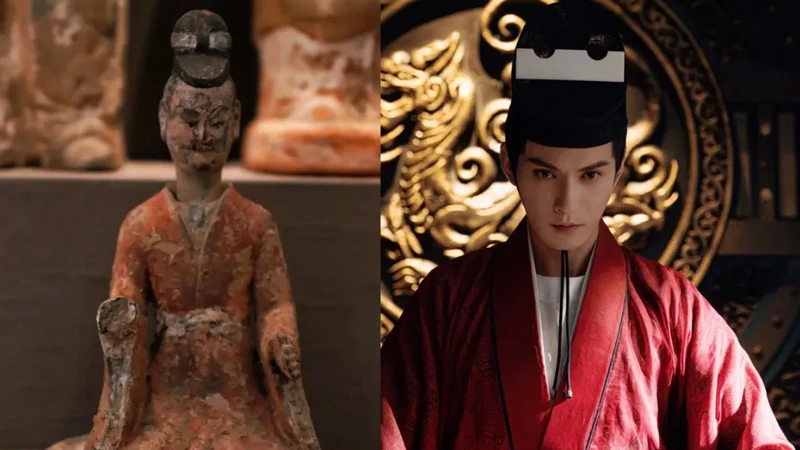
The material of this hairpin was far from arbitrary; it was a clear indicator of rank and status. Historical records, such as the New Book of Tang (新唐书), detail the strict rules governing these accessories. The emperor used hairpins made of jade or rhinoceros horn, while the crown prince was permitted only rhinoceros horn. High-ranking officials above the third grade could use horn adorned with precious stones, and those below the ninth grade used simple horn or ivory. The choice of material was a silent, yet powerful, language of social hierarchy.
In everyday wear, the Pingjin Ze typically covered just the topknot of hair and did not envelop the entire head, leading to its informal name, the “small crown.” For formal court appearances during the Sui and Tang eras, a large, overarching Long Guan (笼冠), or “cage crown,” would be placed over it. This outer crown often concealed the Pingjin Ze underneath, making its distinctive shape less visible in many historical portraits and artistic depictions.
Beyond the Headpiece
The Pingjin Ze was just one component of a complete outfit. When worn alone, it was often paired with a Zhe Yi (褶衣), a specific style of upper garment popular during the Northern and Southern Dynasties. This was part of a coordinated set known as Ku Xiu Fu (袴褶服), which included matching trousers. This ensemble represented a significant shift in ancient fashion, moving away from layered robes towards more practical, separates-style clothing.
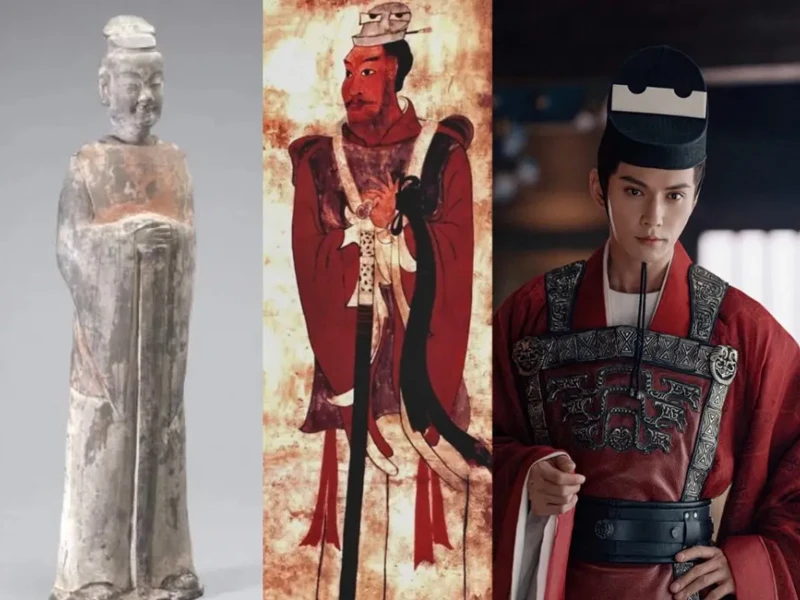
The journey of the Ku Xiu Fu (裤褶服) from humble origins to high fashion is a fascinating one. Initially, it was considered improper attire because it was essentially innerwear being worn on the outside. However, the practical needs of the turbulent Northern and Southern Dynasties period propelled it into the mainstream. Its adoption was so widespread that historical texts describe grand processions where even the female cavalry of an empress’s guard wore luxurious brocade versions of the outfit, solidifying its status as acceptable, even prestigious, ceremonial wear.
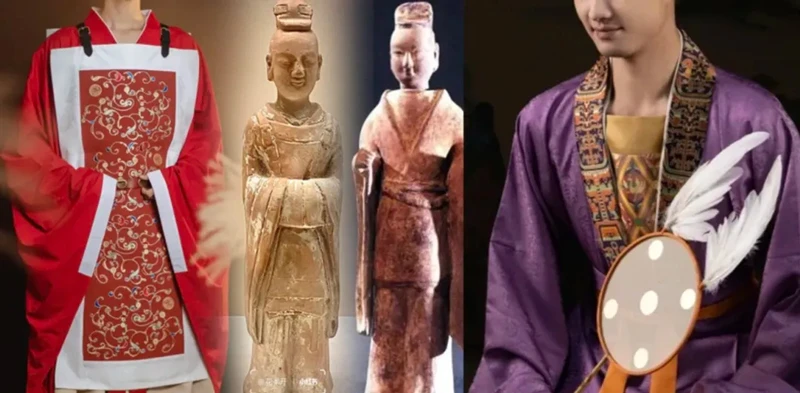
Over the Zhe Yi, one might wear a Liang Dang (裲裆). This garment consisted of two separate square panels—one for the chest and one for the back—connected by shoulder straps, resembling a modern vest or tank top. It could function as an inner layer or, notably, as a lightweight form of armor. This versatility made it a staple for both men and women, reflecting a period of sartorial experimentation and shared fashion across genders.
Costume and Character
In Yong’an Dream, the costume designers have recreated this historical ensemble with attention to detail. Xu Zhengxi’s character is shown wearing the Pingjin Ze with the Zhe Yi and Liang Dang, accurately reflecting the style a military figure might have worn for active duty. The costume effectively communicates a sense of readiness and mobility, fitting for a character who is likely engaged in physical pursuits or warfare.
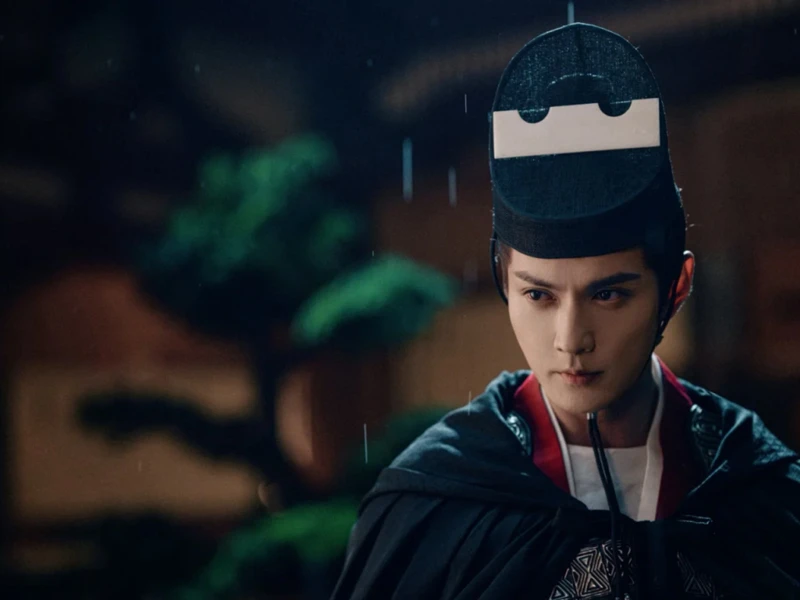
Some viewers have noted that the Pingjin Ze in the drama appears slightly larger than what historical evidence might suggest. This minor artistic liberty may have been taken to enhance its visual impact on screen or to better fit the actor’s proportions. In contrast, other historical dramas sometimes prioritize the visual grandeur of an outer Long Guan, which can appear bulky and obscure the simpler, structured cap beneath it.
Ultimately, the curious hat is more than a strange accessory; it is a thoughtfully chosen piece that anchors the character in a specific historical context. Its design, complete with the functional Zan Dao, tells a story of rank, practicality, and the evolving aesthetics of ancient Chinese attire. What first appears as a quirky design choice reveals itself as a window into the past, proving that sometimes, the smallest details in costume design carry the weight of history.