Article
搜索结果:
-
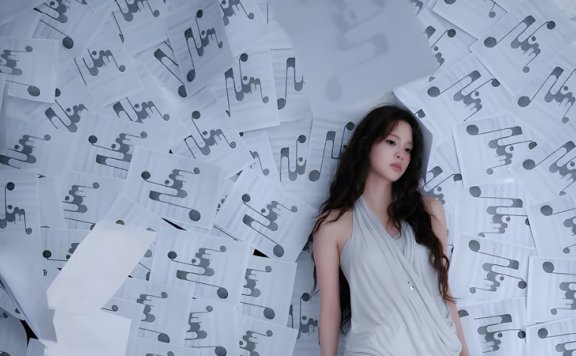
How Did Ouyang Nana Master the Art of Effortless Chic?
A photograph of musician and actress Ouyang Nana recently captivated the internet. It was not merely another celebrity photo shoot, but a visual statement that perfectly captured a contemporary mood. In it, she wore a pale grey, draped dress against a backdrop of scattered musical scores. The image did not shout for attention; it whispered a philosophy of style. This look, radiating an intelligent ease, has sparked widespread discussion about what modern elegance can be. It transcends simple fashion, blending personal artistry with sartorial grace in a way that feels both aspirational and genuine. The Dress Speaks At the heart of the image is the dress itself. Its pale grey hue is understated, acting as a blank canvas. The fabric falls in soft, deliberate folds that suggest movement even in stillness. This is not stiff tailoring, but a design that implies fluidity and natural shape. The neckline is a halter style, elegantly framing the collarbones and shoulders without being overt. It reveals just enough, balancing modesty with a subtle allure. The uneven hemline adds a final touch of nonchalance, as if the garment adapts to the wearer's rhythm rather than dictating it. The genius of this piece lies in its… -
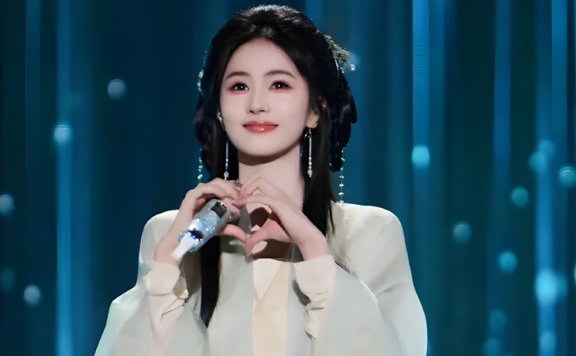
Bai Lu Embraces the Spirit of Traditional Chinese Style
In a recent series of images that swiftly captivated the internet, actress Bai Lu (白鹿) presented a vision of ethereal elegance that seems to transcend time. Dressed in a soft goose-yellow Ruqun (襦裙) robe overlaid with a sheer, misty cyan gauze outer garment, she appeared not as a modern celebrity, but as a celestial being from an ancient painting. The ensemble masterfully blends traditional Chinese aesthetics with a contemporary sense of grace, creating a "soft-fog" effect that is both delicate and profoundly arresting. This look doesn't just clothe the wearer; it surrounds her in an aura of timeless, gentle beauty that feels both familiar and wonderfully new. A Closer Look at the Details The magic lies in the meticulous craftsmanship. The pale cyan outer layer is light and translucent, reminiscent of morning mist clinging to a hillside. It adds depth and a dreamlike quality without obscuring the beauty beneath. The inner robe, in its warm, muted yellow hue, glows softly, its color evocative of sunlight on new blossoms. Upon closer inspection, exquisite embroidery reveals itself along the hems, each stitch a testament to refined artistry. These subtle details embody the quiet sophistication central to traditional Chinese design. Her hairstyle completes… -
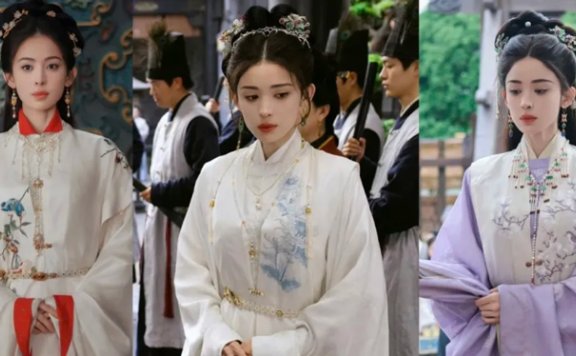
Why Does Rong Shanbao’s Outfit in Glory Look So Slimming?
In the historical drama Glory (玉茗茶骨), actress Na Zha (娜扎) captivates audiences not just with her performance, but with her wardrobe. Her character, Rong Shanbao (荣善宝), is frequently seen in a specific style of outerwear that seems to magically elongate her silhouette, sparking online conversations about its flattering power. Viewers quickly noted its similarity to modern fashion items, revealing a fascinating truth: this garment is a centuries-old design called the Bijia (比甲). More than just a costume piece, the Bijia’s journey from the imperial courts of ancient China to contemporary street style showcases a stunning continuity in aesthetic preference, proving that some designs truly are timeless. Historical Threads The Bijia’s origins trace back to the Song Dynasty. Originally a form of Hanfu, it was a sleeveless, collarless over-garment, similar to a long vest. Its practical design was later adopted and adapted during the Yuan Dynasty for functionality. Historical records like the Yuanshi (元史) describe its purpose: a garment with a front shorter than the back, lacking sleeves and a collar, secured by two ties. This made it ideal for equestrian activities and labor, protecting the torso without restricting arm movement. By the Ming Dynasty, the Bijia had shed its purely… -
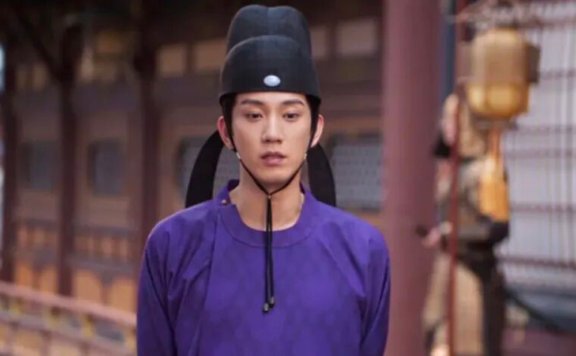
Why Did the Prince's Collar Vanish in The Imperial Coroner 2?
The premiere of the historical drama The Imperial Coroner 2 (御赐小仵作2) has sparked an unexpected debate among its dedicated fanbase. Rather than focusing solely on plot twists, viewers are scrutinizing the wardrobe of the male lead, Prince Chu (楚王). A particular detail has drawn sharp criticism: the noticeable absence of the distinct white collar lining his official robes, a signature element from the first season. This seemingly minor change has opened a broader conversation about historical authenticity, artistic license, and the evolving standards of audience expectation in period television. The discussion delves deep into the intricacies of Tang (唐) and Song (宋) dynasty attire, revealing how costume design is a language unto itself. The Missing Collar To understand the collar controversy, one must first consider the era. If the drama is set in the Tang dynasty, the typical round-neck robe was worn over an inner garment with a narrow, crossing collar. When properly worn, this inner collar would barely peek out, appearing only as a slim edge. The prominent white collar seen in Season One was, therefore, a stylistic choice rather than a strict historical reproduction. If the setting leans toward the Song dynasty, the inner garment's crossing collar would… -
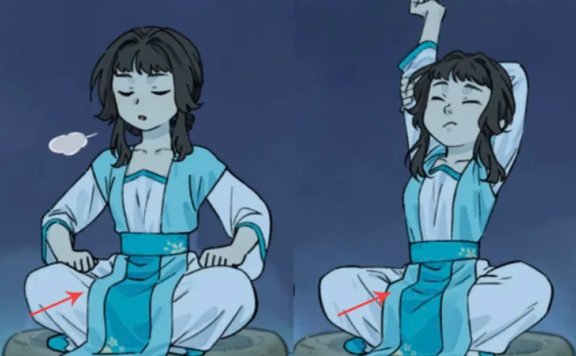
Why Did Ancient Robes Have That Hanging Cloth?
If you watch historical dramas, you have likely noticed a distinctive strip of fabric hanging down the front of many costumes. This is not a random design choice but a faithful recreation of an ancient garment accessory known as the Bixi (蔽膝). Its journey from a practical tool to a ceremonial symbol encapsulates centuries of social change, weaving together threads of necessity, status, and cultural memory. A Tool for Life The origins of the Bixi are fundamentally practical. In early antiquity, clothing was simple and often incomplete. This long cloth panel served a basic yet vital function: modesty. It acted as an apron, shielding the front of the body. Scholars like Xu Shen (许慎), in his ancient dictionary Shuowen Jiezi (说文解字), clarified that early attire merely "covered the front," with the Bixi fulfilling this role. Beyond modesty, it offered protection. For people laboring in fields or navigating rugged landscapes, the sturdy fabric guarded against scratches from thorns and prevented dirt from soiling the garments underneath. It was a piece of durable workwear. Some evidence suggests wider versions might have even served as a makeshift pouch for gathering herbs or crops, a versatile tool in daily life. This phase represents the… -
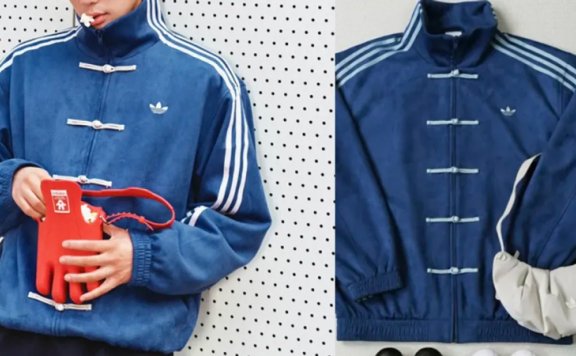
Why Adidas’ Frog Button Collection Triggered a Backlash
Adidas’s latest New Year apparel line, heavily featuring an ornamental fastening known as the "frog button," has ignited a heated online debate in China. While gaining some popularity overseas, the collection faced significant domestic criticism and even calls for a boycott. At its core, the controversy highlights a persistent and frustrating issue: foreign brands repeatedly offer a superficial and narrow interpretation of Chinese sartorial heritage. This incident underscores a growing public awareness and a demand for deeper cultural understanding and respect, moving beyond simplistic stereotypes. The Frog Button Flaw The primary issue is not the use of the frog button itself, a decorative fastening historically used in Man Zu (满族) clothing during the Qing Dynasty. The problem lies in Adidas presenting this single element as a definitive symbol of "Chineseness." For many, this reduces millennia of diverse Chinese clothing history to the aesthetics of its last imperial dynasty. This approach overlooks the foundational garments of the Han ethnic tradition, which emphasize crossed collars, right-side closure, and concealed ties. By equating a Man Zu detail with the entirety of Chinese dress, the brand displayed a shallow understanding. This is not an isolated misstep for Adidas. The previous year, their "blue Chinese… -
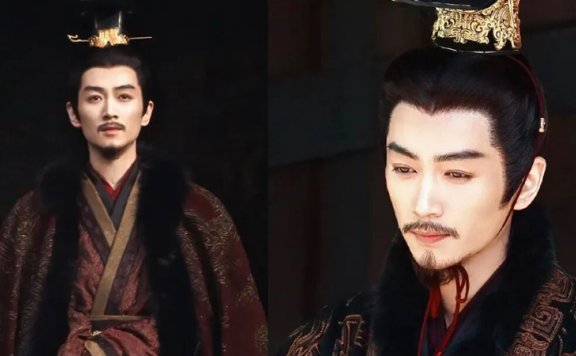
The Endless Search for a Real Emperor Qin Shihuang
Every few years, a new actor steps into the formidable shoes of Emperor Qin Shihuang (秦始皇), the First Emperor of China, and the cycle of debate begins anew. The latest is actor Chen Xiao (陈晓) in the new series Qi Mi (秦谜), whose portrayal has been met with online commentary ranging from approval to the dismissive quip that a teenage actor from decades ago did it better. This recurring public scrutiny highlights a central dilemma: how does one visually embody a figure shrouded in millennia of history, myth, and political narrative? The search for the "real" Emperor Qin Shihuang is less about finding historical accuracy—an impossible task—and more a reflection of what audiences, and times, need him to be. Is he a ruthless tyrant with the face of a predator, a visionary unifier burdened by solitude, or something else entirely? Each performance becomes a mirror held up to our own era's understanding of power, legacy, and the weight of history. The Historical Blueprint What little we have originates from a handful of ancient texts. The most cited description comes from Wei Liao (尉缭), a former Qin state official, who described the king as having a "bee-stung nose", long eyes, the… -
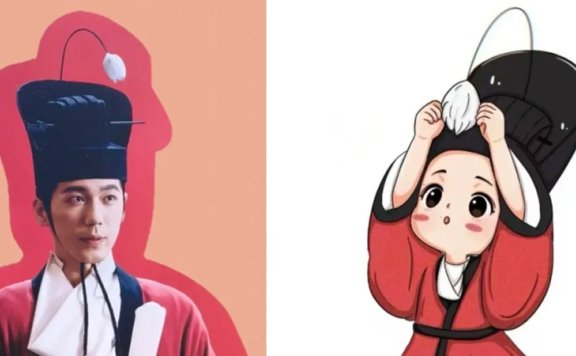
The Cat Teaser on Bai Yu's Head in Swords into Plowshares
Viewers of the historical drama Swords into Plowshares (太平年) were met with an unexpected sight: actor Bai Yu (白宇), playing a court official, sporting what looked unmistakably like a cat teaser stuck in his headwear. This peculiar accessory, far from a whimsical costume designer's choice or an ancient fashion faux pas, is actually a meticulously researched detail rooted in centuries of Chinese bureaucratic tradition. Known as a Zanbi (簪笔), or "hairpin brush," this item tells a story of practicality evolving into potent symbolism, marking the wearer's rank, duty, and intellectual authority within the rigid hierarchy of the imperial court. A Practical Beginning The origin of the Zanbi is wonderfully utilitarian. During the Han Dynasty, officials attending court sessions needed to record the emperor's commands directly onto their handheld Hu boards (笏板), tablets made of jade, ivory, or wood. Once a note was taken, the official had no desk to place his brush. The simplest solution was to tuck it behind an ear or slot it into a headband or cap, keeping it readily accessible for the next command. This act of carrying a brush in one's hair is recorded as early as the Records of the Grand Historian (史记·滑稽列传), in… -
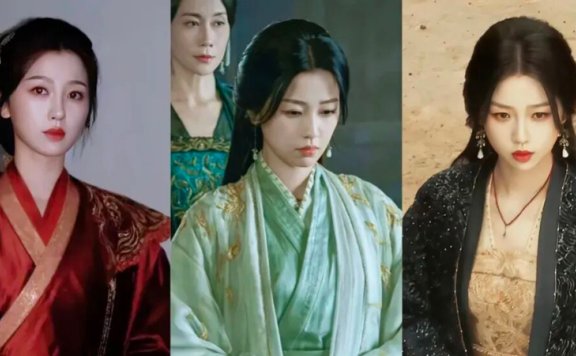
Did Yu Shuxin’s New Period Drama Copy Her Last Look?
When photos from the set of Yu Shuxin's (虞书欣) new series, Yun Chu Ling (云初令), surfaced online, many fans did a double take. The styling—center-parted hair with wispy strands framing the temples and volume at the sides—looked strikingly familiar. It bore a close resemblance to her iconic look from the popular Wuxia drama My Journey to You (云之羽). This sparked immediate debate: was this a case of repetitive styling, or was there a deeper logic at play? The two characters, however, inhabit vastly different worlds. Yun Chu Ling draws its aesthetic inspiration from the grandeur of the Tang and Song dynasties, a style often referred to broadly as "Pan-Tang-Song" in Chinese costume design circles. In contrast, My Journey to You is rooted in the bleak, austere atmosphere of the martial arts world known as Jianghu. Their core spirits are distinct. The similarity lies not in copying, but in finding a universally flattering style template for the actress's specific facial features. This "center part + side volume + face-framing wisps" formula happens to be her sweet spot. Decoding The Face Shape To understand the styling, we must first examine the canvas. Yu Shuxin possesses a roundish oval face, a shape often… -
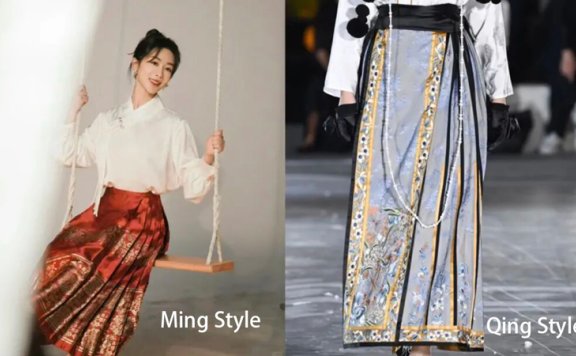
Decoding Ming & Qing Dynasty Mamianqun
At first glance, the flowing skirts known as Mamianqun (马面裙) from China’s Ming and Qing dynasties appear nearly identical. Both feature the iconic flat front and back panels—the “horse-face” or Mamian—flanked by pleated sides. This similarity often leads modern viewers to see them as one and the same. Yet, to the trained eye, they speak different visual languages, each whispering secrets about the era that created it. You don't need a history book to tell them apart. Instead, focus on four key details: the behavior of the pleats, the character of the Mamian panel, the philosophy of its patterns, and the finish of its waistband. These elements transform the skirt from a mere garment into a legible text, revealing a profound shift in aesthetics and worldview between two defining dynasties. Reading the Pleats The most immediate clue lies in the pleats. A Ming dynasty skirt typically employs what experts call "live pleats." These pleats are secured only at the waist and the hem, leaving the middle section free. As the wearer moved, the pleats would swing open and close dynamically, creating a sense of lightness and fluidity. The pleats themselves were fewer in number and spaced wider apart, contributing to… -
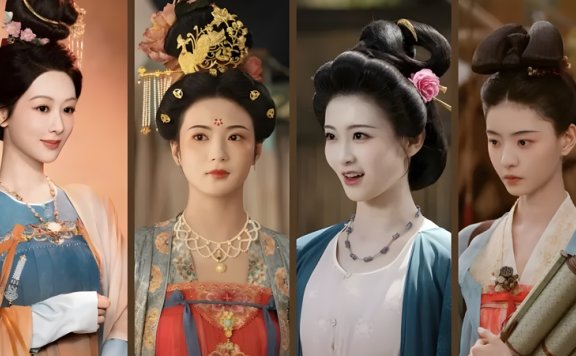
How Chinese Period Dramas Bring Traditional Clothing to Life
Audiences often question the authenticity of clothing in period dramas. What appears on screen blends artistic vision with historical reference, creating a visual language that speaks to modern viewers while hinting at the past. Accurate garment reconstruction offers more than beauty; it provides a tangible link to bygone eras, functioning as an informal guide for those curious about traditional dress. Yet, perfect fidelity remains elusive, as every production makes compromises between fact and spectacle. Several recent series have attempted serious sartorial homage. For instance, The Wind Blows From Longxi (风起陇西), set in the Three Kingdoms period, features layered robes and specific sleeve cuts that reference Han Dynasty styles. Similarly, The Longest Day in Chang'an (长安十二时辰) meticulously presents Tang era Hanfu, with its distinctive silhouettes and rich fabrics. These details matter, as they ground the narrative in a specific time and place, allowing viewers to sense the weight of history through cloth and stitch. Other productions, like Generation to Generation (江湖夜雨十年灯) and Flourished Peony (国色芳华), draw inspiration from Wei-Jin and early Tang aesthetics. They capture a certain mood—the flowing drapery, the subdued palette—but often blend elements for dramatic effect. This approach can illuminate broader stylistic trends while sacrificing precise replication. Even well-regarded… -
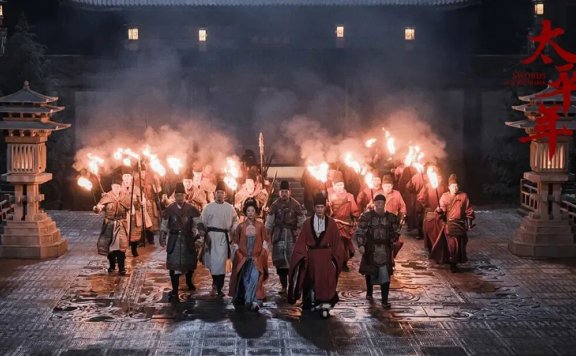
Swords into Plowshares: The Wuyue King’s Sacrifice for a Unified China
What does true leadership look like when an empire is at stake? This is the central question posed by Swords into Plowshares (太平年), a sweeping 40-episode historical saga premiering on China Central Television. Set against the chaotic backdrop of the Five Dynasties and Ten Kingdoms period, the series promises more than just palace intrigue and battlefield heroics. It delves into the profound moral weight of power, asking what a ruler must ultimately surrender for the sake of his people's welfare. With a powerhouse creative team behind acclaimed works like The Red (红色) and The Three-Body Problem (三体), and a cast filled with revered performers, the drama aims to transform dusty historical records into a gripping, human-centered narrative. It frames a pivotal, often-overlooked moment of Chinese unification not as a simple conquest, but as a deliberate, agonizing choice made by a king. Converging Paths The narrative hinges on the intertwined destinies of three ambitious men. Qian Hongchu (钱弘俶), played by Bai Yu (白宇), ascends to the throne of the Wuyue (吴越) kingdom. His reign is defined not by expansion, but by a dogged pursuit of stability and prosperity for his subjects within a fragmented empire. In the north, Zhao Kuangyin (赵匡胤) employs… -
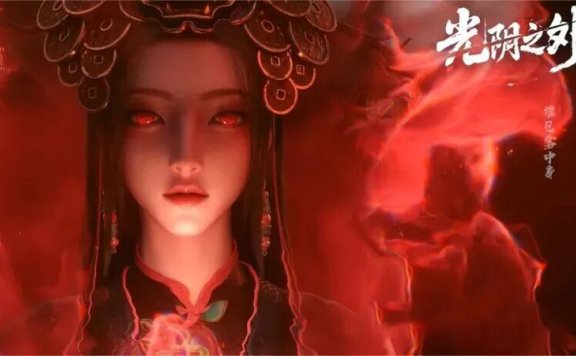
Unpacking the Haunting Brilliance of Beyond Time's Gaze Episode 4
Has a Chinese animation series finally cracked the code for genuinely chilling, emotionally resonant storytelling? The latest episode of Beyond Time's Gaze (光阴之外) delivers a masterclass in atmospheric tension and raw character drama, leaving viewers stunned. Moving beyond its initial world-building, Episode 4 plunges its protagonist into a nightmarish scenario where post-apocalyptic desolation collides with folkloric horror. This isn't just another cultivation fantasy; it's a gripping tale of survival, sacrifice, and the unbreakable bonds that persist even in the darkest of worlds. The episode’s power lies not in spectacle alone, but in its fearless commitment to a specific, haunting mood and its profound respect for its characters' emotional journeys. A Chilling Aesthetic The episode's most immediate impact comes from its visual and thematic embrace of what fans term "Chinese Gothic" horror. This is a significant departure from the vibrant, effects-laden style common in many 3D animations. Instead, the palette turns cold and desaturated, with eerie background details hinting at unseen terrors. The introduction of the crimson wedding shoe is a standout moment, executed not with a jump scare but with a slow, dreadful inevitability. It evokes the unsettling folk horror of games like Paper Bride (纸嫁衣), grounding its terror in… -

The Epic Narrative of The Demon Hunter Season 1
In 2023, a new name surged to the forefront of Chinese animation, breaking through the crowded fantasy genre with a combination of raw emotional power and visual spectacle. The Demon Hunter (沧元图), adapted from the popular web novel, became an undeniable phenomenon. It dominated platform charts, amassed billions of views in related discussions, and earned high praise from critics. Its success lies not in a simple tale of power escalation, but in a deeply personal story of trauma, resilience, and the heavy weight of a promise made in blood. The series follows Meng Chuan (孟川), whose childhood is shattered in an instant, setting him on a path where his blade becomes both an instrument of vengeance and a shield for the innocent. The Blood Oath The story's foundation is laid in tragedy. A young Meng Chuan witnesses the brutal destruction of his village by demonic forces. In a final, desperate act of protection, his mother reveals her true, powerful form to shield him, only to fall to a treacherous foe. This searing loss ignites something within the boy. In his grief, a latent and formidable power awakens, allowing him to strike back. It is in this moment of anguish that… -
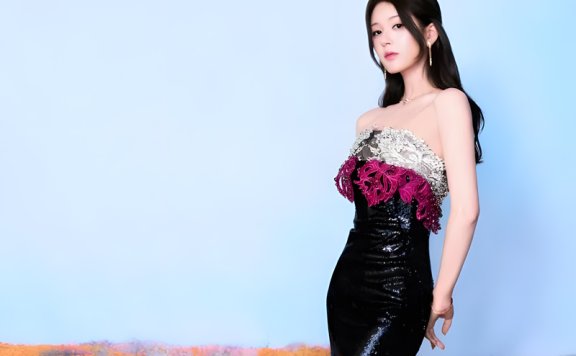
Zhao Lusi Stuns in Floral Fantasy
When actress Zhao Lusi (赵露思) appeared against a boundless sea of blossoms, the image instantly captivated millions. The setting was not merely a backdrop but a narrative device, framing her not as a fleeting trend but as a timeless vision. Her latest ensemble, a masterful juxtaposition of shimmering silver and deep noir, sparked a conversation that transcends typical celebrity fashion commentary. It presented a compelling case study in balancing audacious glamour with relatable charm, a formula increasingly sought after but rarely perfected in today's entertainment landscape. This look, achieved through meticulous design and atmospheric staging, signals a deliberate and sophisticated evolution in her public persona. The Dress Code The centerpiece was a gown of remarkable duality. Its bodice, a Moxiong (抹胸) style, was a constellation of silver sequins meticulously arranged beside panels of rose-pink woven texture. This wasn't just sparkle; it was topographic, catching light in varied, fascinating ways. It drew the eye immediately to her collarbone and shoulders, highlighting their elegant line without overt exaggeration. The choice of a cool metallic silver against a warm, floral pink created a visual tension that was both modern and romantic, avoiding any hint of saccharine sweetness. From the waist descended a sleek,… -
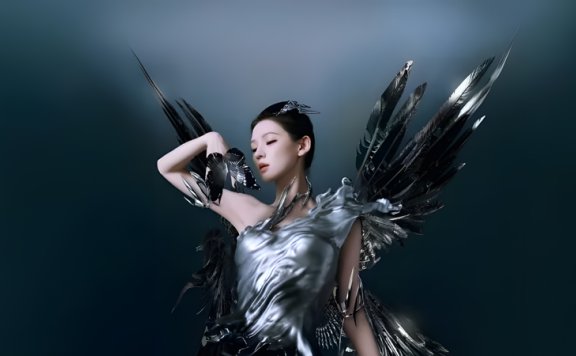
Zhang Yuxi’s Bold Cyberpunk Style Leap
A recent public appearance by actress and style icon Zhang Yuxi (张予曦) has sent waves through fashion circles. Stepping out in a stunning silver-to-black gradient gown, she embodied a character straight out of a cyberpunk fantasy—a dark elf from a futuristic realm. The look masterfully blended cold, metallic elegance with an edgy, avant-garde sensibility, marking a significant departure from her previous style chapters and signaling a bold new direction. Anatomy of a Look The power of the ensemble lies in its meticulous construction. The single-shoulder design immediately commands attention, creating an asymmetrical line that feels both modern and daring. The seamless gradient from luminous silver to deep matte black mimics the look of molten metal cooling into obsidian, a visual metaphor for fluidity meeting solid form. This is not mere color transition; it is a statement of metamorphosis. Further examination reveals the genius in the textile manipulation. The gown’s folds are not accidental gathers but sculpted, three-dimensional waves frozen in time. They add profound depth and a tactile quality to the silhouette. This interplay between the soft, flowing fabric and the garment’s sharp, architectural lines generates a captivating tension, a sartorial representation of controlled power. Accessories were chosen not as… -
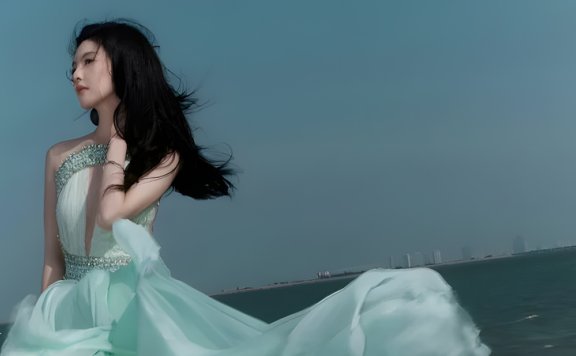
Zhang Ruonan’s Sea Mist Noble Moment
The image is arresting: an expanse of pale, hazy green billowing against a windswept shore. Actress Zhang Ruonan (章若楠) stands as the focal point, her mint-colored gown melting into the sea mist behind her. This is more than a celebrity photoshoot; it is a character study, a fleeting scene from an unwritten film. She is not merely wearing a dress. She embodies a persona—a 'Sea Mist Noble,' ethereal yet grounded, delicate but commanding. This single look, captured against the elemental backdrop of ocean and sky, has sparked widespread admiration, transcending typical fashion commentary to become a cultural talking point. It represents a pivot in red carpet narrative, away from overt glamour and toward a more resonant, atmospheric storytelling. Anatomy of an Aura The power of the look lies in its masterful contradictions. The gown’s construction balances structure and fluidity. A halter neckline, meticulously embroidered with gradient crystals, frames the shoulders and provides a defined silhouette. This jeweled element suggests luxury and craftsmanship. From this anchored top flows an immense skirt of layered tulle, a weightless cloud of fabric that surrenders completely to the coastal breeze. The deep V-neck adds a subtle hint of classic Hollywood sensibility without overshadowing the overall… -
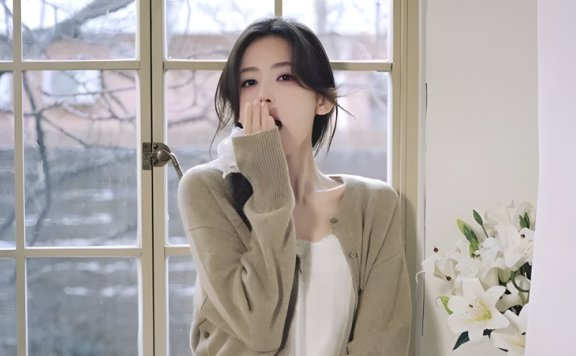
Na Zha's Khaki Knit and White Lace Dress Charm
A recent series of photos featuring actress Na Zha (娜扎) has sparked widespread admiration, offering a masterclass in winter styling that feels both cozy and enchanting. Against a backdrop of white lilies and soft, golden-hour light, she presents a vision of gentle elegance that seems to defy the season's chill. The outfit, a study in tonal harmony and textural contrast, moves beyond mere clothing to evoke a specific mood—a warm, languid afternoon feel. This look challenges the conventional wisdom of bulky winter wear, proving that warmth and a soft, romantic aesthetic are not mutually exclusive. It serves as a compelling entry point into a broader discussion about seasonal style, personal expression, and the subtle art of crafting an atmosphere through what we wear. The Relaxed Knit The cornerstone of this look is a light khaki knitted cardigan. Its power lies not in structure, but in its deliberate lack of it. The soft, draped fabric and slightly oversized silhouette create an immediate sense of ease and comfort. This approach to knitwear shifts the focus from shaping the body to encompassing it in a soft, tactile layer. The color itself—a muted, earthy tone—acts as a neutral canvas, warm without being loud, perfectly… -
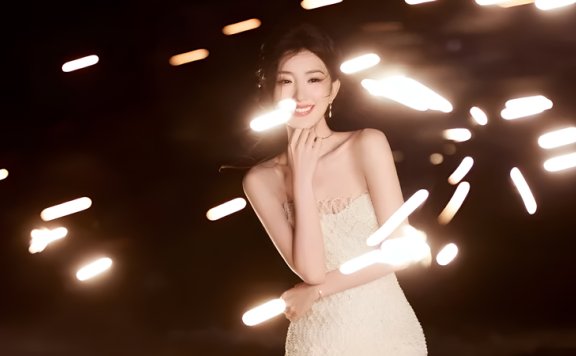
Mao Xiaotong’s Firework-Ready Gown
A summer night, a sky alight with fleeting blooms of fire, and on the ground, a vision emerged that seemed spun from the same ethereal magic. Actress Mao Xiaotong (毛晓彤) recently captivated all in attendance at an event, not with a dramatic entrance or a grand speech, but simply by wearing the night sky itself. Her appearance became an instant sensation, a perfect synergy of person, place, and meticulously crafted attire that transcended a mere red-carpet moment and entered the realm of a living fairy tale. The Dress of Dreams The centerpiece was a breathtaking off-white mermaid gown. Its structure was a masterclass in silhouette, with a sweetheart neckline and a torso-hugging bodice that celebrated her form with elegant precision. The true magic, however, began at the waist. The skirt flared gently, its layers of tulle and fabric cascading like soft, luminous waves with her every step. This was no ordinary fabric. It was a canvas for intricate, painstaking beadwork and delicate crystal embroidery. Countless tiny sequins and pearls covered the dress, each one catching and refracting the ambient light. Under the warm glow of the venue's lights, the gown shimmered with a gentle, pearlescent sheen. Yet, its full potential… -
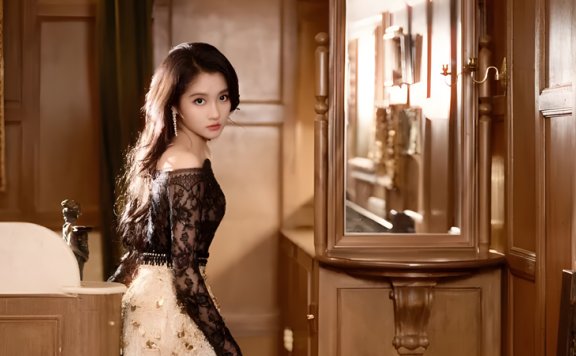
Guan Xiaotong's Black-and-Gold Outfit
The recent appearance of actress Guan Xiaotong (关晓彤) has sent fashion circles into a frenzy. Stepping out in a stunning ensemble that masterfully blended dark allure with luxurious shimmer, she presented a masterclass in sophisticated styling. Her look, centered on a black lace top paired with a beige gown dusted with golden accents, transcended typical red-carpet glamour. It wasn't just an outfit; it was a statement of poised power and cool refinement. The striking contrast of the deep black against the warm, sparkling gold created a visual magnetism that was impossible to ignore, proving that true style lies in the balance of bold choices and elegant execution. Crafting The Look The magic of this outfit lived in its meticulous details. The off-shoulder black top utilized lace with a delicate, translucent texture. This design offered a hint of allure without overt exposure, its long sleeves ensuring the overall effect remained firmly in the realm of grace. This subtle suggestion of skin proved far more intriguing and advanced than any straightforward reveal. It demonstrated a mature understanding of sensual dressing, where what is implied often holds more power than what is shown. The true showstopper was the floor-length gown. Its beige base…