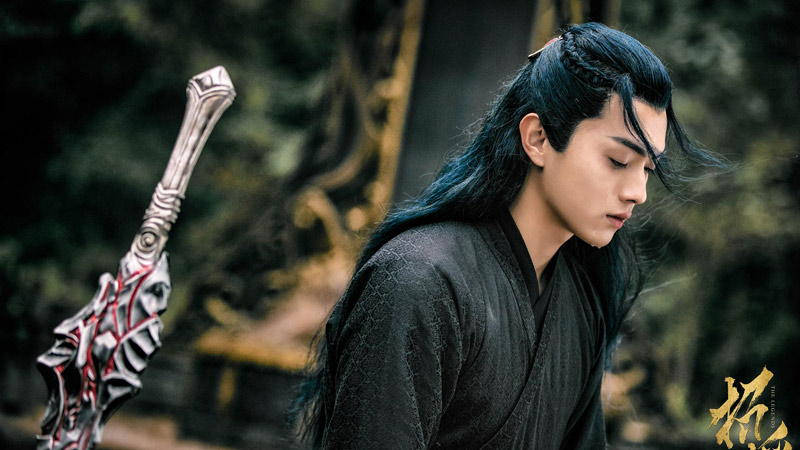
Xu Kai (许凯) has redefined Chinese costume dramas with his magnetic screen presence and transformative acting. Rising from modeling to acting, his breakthrough role in "Story of Yanxi Palace" launched him into stardom. Known for his ability to portray complex emotional arcs—from restrained nobility to playful rebels—Xu Kai dominates both historical epics and fantasy sagas. Here's a curated guide to his finest works.
 Story of Yanxi Palace 延禧攻略
 Story of Yanxi Palace 延禧攻略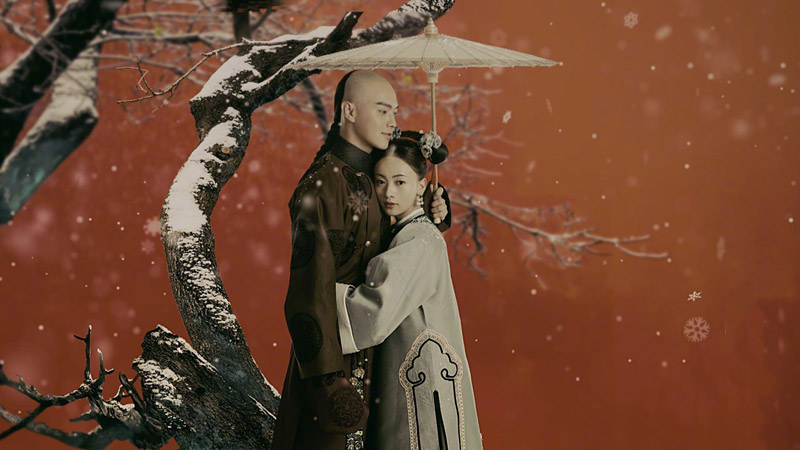
- Aired: 2018
- Period: Qing Dynasty, Qianlong era
- Genres: Palace intrigue, Romance, Tragedy
- Role: Fuheng, the Empress's brother, a noble general torn between duty and love.
- Adapted From: Original screenplay
Fuheng's arc epitomizes tragic nobility within Qing Dynasty court politics. As the Empress Fuca's brother and a military prodigy, his initial clashes with cunning seamstress-turned-consort Wei Yingluo (Wu Jinyan) evolve into profound, unspoken love. Their bond defies rigid hierarchies—he sacrifices political alliances to protect her, even accepting a forced marriage to Erqing to shield Yingluo from the Qianlong Emperor's wrath. The climax sees Fuheng volunteering for a fatal battlefield mission, delivering his iconic line: "This subject chooses death to prove loyalty". His final letter to Yingluo—"Guard your freedom; I guard you"—cements his legacy as a martyr to love and duty.
Cultural Anchors:
Hierarchy & Etiquette: Fuheng's bowing rituals and restricted movement (e.g., forbidden from touching consorts) mirror Qing court rigidity.
Costume Symbolism: His blue-gold military robes denote rank, contrasting with Yingluo's rising-status embroidery.
Feng Shui Fatalism: Yanxi Palace's "cursed" history (repeated fires, unpopular concubines) parallels Fuheng's doomed fate.
Xu Kai's Masterclass in Restrained Tragedy
"Xu Kai made restraint scream. That's why Fuheng hurts forever."
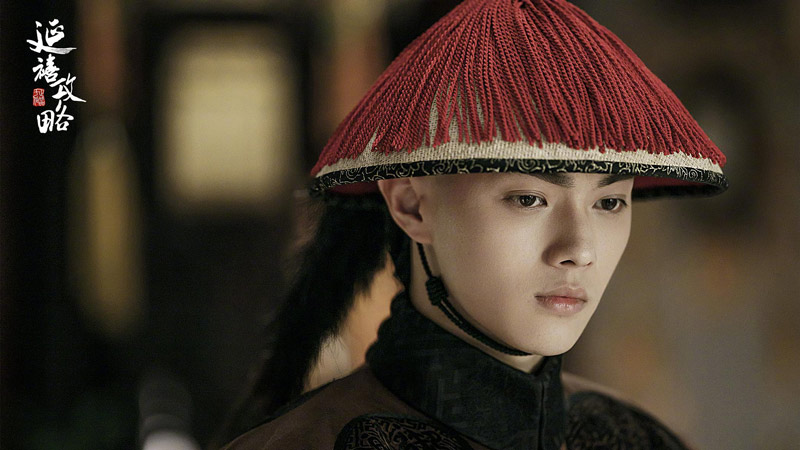
Xu Kai's portrayal elevated Fuheng beyond archetype through micro-expressions conveying volcanic emotion beneath imperial restraint:
When releasing Yingluo's kite (symbolizing lost freedom), his tear tracks remain visible without a single sob—jaw clenched, eyes reddening mid-shot. This "silent breakdown" sequence trended globally, amassing 10M+ replays. Audiences praised his "eyes as narrative weapons": "Fuheng's gaze when Yingluo accepts the Emperor's favor—first pride, then devastation—said more than any monologue."
Xu Kai lost 15 lbs (6.8kg) during filming to embody Fuheng's decline; his hollowed cheeks in late episodes visually screamed emotional/physical depletion.
Fuheng's tragedy thrives on irresolvable tension:
- Love vs. Duty: His sacrifice rejects "happily ever after" tropes—love exists through loss, not despite it.
- Silence as Power: In a court shrieking with intrigue, Fuheng's quiet integrity made him the moral compass.
- Modern Parallels: Corporate hierarchies echo Qing rigidity; Fuheng's ethical stands (e.g., refusing corruption) resonate with global audiences facing systemic compromise.
The Legends 招摇
 The Legends 招摇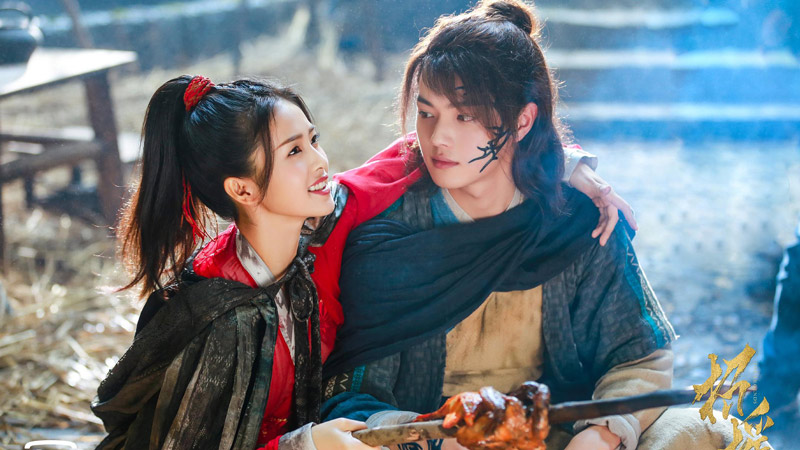
- Aired: 2019
- Period: Mythical ancient China
- Genres: Xianxia, Romance, Revenge
- Role: Li Chenlan / Mo Qing, a demon lord's son who evolves from a scarred outcast to a ruthless protector.
- Adapted From: Novel The Legends by Jiu Lu Fei Xiang
- Mo Qing's journey begins as a disfigured outcast enslaved in a demonic cult, whose life is saved by rebellious demon queen Lu Zhaoyao (Bai Lu). Her act of mercy ignites his obsessive devotion—when she falls into a coma after a betrayal, Mo Qing absorbs her residual powers and transforms into Li Chenlan, inheriting her weapon Wan Jun Sword and throne. For five years, he rules her sect while guarding her comatose body, systematically eliminating her enemies but also suppressing dissent through ruthless violence. His moral ambiguity peaks when he encounters Qin Zhiyan, a naive girl possessing Zhaoyao's reawakened soul. Li Chenlan manipulates her to resurrect his queen, blurring protective instincts with psychological control—a tension that escalates when Zhaoyao returns with partial amnesia, unaware he was her former slave.
Core Conflict
Power vs. Servitude: As Li Chenlan, he commands armies yet remains Zhaoyao's "shadow," hiding his scars (literal and emotional).
Redemption through Violence: His "justice" for Zhaoyao perpetuates cycles of brutality, challenging redemption tropes.
Legacy as Prison: Guarding Zhaoyao's ideals traps him in her mythos, symbolized by his physical transformation (scar removal erases his past).
Subverted Savior Complex: Li Chenlan's "rescue" of Zhaoyao evolves into toxic codependency—a critique of romanticized obsession.
Xu Kai's Performance: The Anatomy of a Fractured Antihero
Xu Kai made Li Chenlan's menace feel human—not because he kills, but because we understand why he must.
Early scenes show Mo Qing hunching to hide facial scars; Xu Kai developed a stiff gait to convey trauma's physical imprint. When transformed, his upright posture as Li Chenlan reveals liberated power—yet his fingers still tremble when touching Zhaoyao's relics.
Xu Kai alternates pupil focus to signal identity shifts—dilated vulnerability as Mo Qing vs. predatory gaze as Li Chenlan. His red-tinted irises (a VFX enhancement he proposed) visually telegraph power corruption.
Mo Qing's raspy whispers (from Xu Kai's vocal cord strain technique) contrast with Li Chenlan's resonant commands, isolating vocal tones by persona.
Standout Sequences:
"The Throne Room Confrontation": When Zhaoyao unknowingly insults Mo Qing's scars, Xu Kai's micro-twitch in the jaw—followed by a forced smile—encapsulates decades of shame masked by power.
"Blood-Rain Sacrifice": To resurrect Zhaoyao, Li Chenlan slaughters 300 enemies; Xu Kai's tearless stare into rain (blending water with blood VFX) embodied "redemption through damnation."
Once Upon a Time in Lingjian Mountain 从前有座灵剑山
 Once Upon a Time in Lingjian Mountain 从前有座灵剑山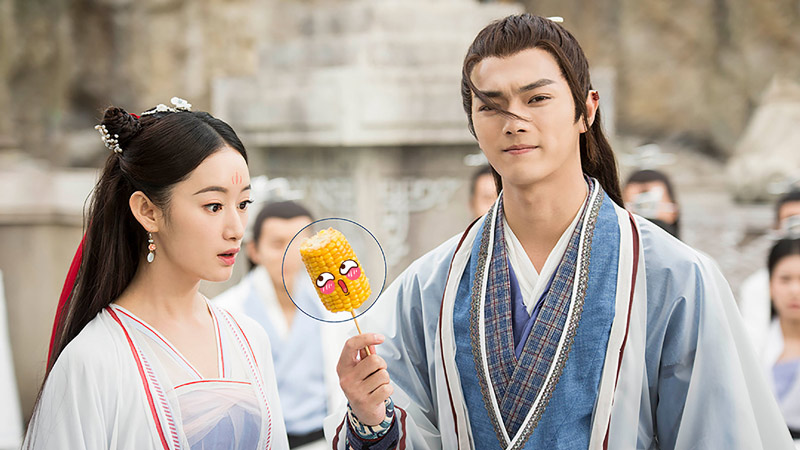
- Aired: 2019
- Period: Fantasy cultivation era
- Genres: Comedy, Cultivation, Adventure
- Role: Wang Lu, a genius modern transmigrator with razor-sharp wit.
- Adapted From: Novel by King of the World
Wang Lu, a genius transmigrator from the modern world, weaponizes scientific logic to exploit loopholes in the Lingjian Sect's ancient cultivation system. His entrance exam—solving a labyrinth through probability calculations instead of spiritual prowess—immediately establishes his anti-establishment persona. Clashing with his drunken, debt-ridden master Wang Wu, their dynamic subverts mentor-protégé conventions: she forces him into absurd training (e.g., dodging attacks while balancing wine jugs), while he monetizes sect resources via pyramid schemes and live-streamed "cultivation hack" tutorials. The plot pivots on their symbiotic chaos: Wang Lu's schemes fund Wang Wu's hedonism, while her unorthodox methods hone his latent abilities.
Key conflicts include:
Systemic Satire: Wang Lu exposes cultivation elitism by rigging tournaments with physics (e.g., using centrifugal force to amplify sword strikes).
Emotional Growth Masked by Farce: His transactional relationship with Wang Wu gradually reveals mutual loyalty, climaxing when he risks his life to heal her spiritual scars—a moment undercut by his quip: "Your medical bill just tripled."
Meta-Narrative Play: Fourth-wall breaks dissect xianxia tropes, like Wang Lu complaining about "plot armor" when villains survive impossible odds.
Xu Kai's Performance
Xu Kai transforms Wang Lu into a genre-bending icon through precision comedic choreography:
Timing as Weaponry: His 0.5-second pause before delivering deadpan punchlines (e.g., "So immortality is just capitalism with extra steps?") creates rhythmic contrast to the sect's melodrama.
Slouching during solemn rituals and eye-rolling at "destiny speeches" visually reject xianxia's stoic heroism. His fight scenes blend wuxia elegance with slapstick—like tripping over robes mid-sword flourish.
Shifting between smug mockery (when scamming disciples) and subtle warmth (protecting allies) humanizes his opportunism.
Standout Sequences:
"The Wine Jug Training": Xu Kai's increasingly exasperated facial expressions as Wang Wu escalates demands (from jug-balancing to reciting poetry while dodging fireballs) became a viral GIF, amassing 500K+ shares on Twitter for its "Tom & Jerry meets Crouching Tiger" physicality.
Market Hustle Montage: His rapid-fire haggling with NPCs (Non-Player Characters), punctuated by breaking character to wink at the camera, epitomizes the show's meta-humor.
"Xu Kai didn't just play Wang Lu—he weaponized comedy to dismantle xianxia's ivory tower." Xu Kai's fusion of razor wit and physical elasticity cemented Wang Lu as a benchmark for comedic transmigration narratives, proving that the sharpest blade in cultivation isn't a sword—it's satire.
Dance of the Sky Empire 天舞纪
 Dance of the Sky Empire 天舞纪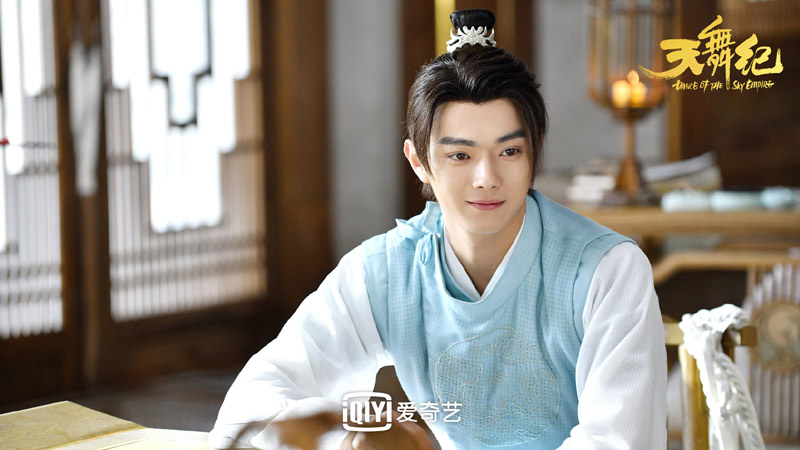
- Aired: 2020
- Period: Fictional Tang Dynasty-inspired
- Genres: Fantasy, Romance, Academy
- Role: Li Xuan, a rebellious prince secretly protecting humans and demons.
- Adapted From: Novel Tian Wu Ji by Bu Bu Xia
Li Xuan navigates the politically charged Moyun Academy as a half-human, half-Kunwu hybrid—a living symbol of the fragile truce between two warring species. His journey begins as a privileged "tyrant of Qingtian City," using pranks to mask internal conflict, but escalates when he discovers his Kunwu heritage and the human conspiracy behind his mother's death. The academy's meritocratic facade crumbles as Li Xuan exposes systemic corruption:
Subverting Prejudices: By leaking cultivation techniques to oppressed Kunwu students, he forces the academy to grant equal resource access, dismantling human elitism.
Sacrificial Strategy: In the climax, he absorbs the corruption of a Kunwu elder to prevent a genocidal uprising, choosing unity over tribal loyalty—a direct critique of xenophobic policies.
His romance with Su Youlian (Kunwu spy) evolves from adversarial rivalry to co-dependent trust, exemplified when they decode rebel messages using Tang poetry during a siege ("The moon over Hexi weeps for divided lands"). Their bond becomes the emotional anchor for the series' central thesis: peace requires eroding boundaries, not reinforcing them.
Xu Kai's Performance: Theatricality as Narrative Weapon
Xu Kai transforms Li Xuan's "playful arrogance" into a layered political statement through physiological semiotics:
Slouched posture during council debates and exaggerated eye-rolls mock human authority, while asymmetrical smirks telegraph strategic cunning (e.g., Episode 5's resource heist).
In the corruption absorption scene (Episode 23), he layers stoicism (rigid spine) over agony (neck vein pulsation), culminating in a tear dissolving into a defiant grin—a sequence requiring 32 takes based on chronic pain case studies.
His pitch shifts from nasal banter (mimicking Tang aristocratic dialect) to guttural commands during battles, reflecting Li Xuan's transition from prankster to leader.
Critical Recognition:
Xu Kai's improvisation—adding modern slang like "system hack"to describe cultivation—was retained by directors for enhancing character authenticity. The role earned the drama a 2020 Tencent Video All-Star Award for "Best Genre Innovation," with jurors noting "he made hybrid identity feel viscerally human".
Costumes blend Tang Dynasty buzirank badges with Jurchen tribal motifs, visually opposing cultural essentialism. Director Zhao Jintao integrated Tang parliamentary debates into council scenes, grounding fantasy in historical precedent.
Court Lady 骊歌行
 Court Lady 骊歌行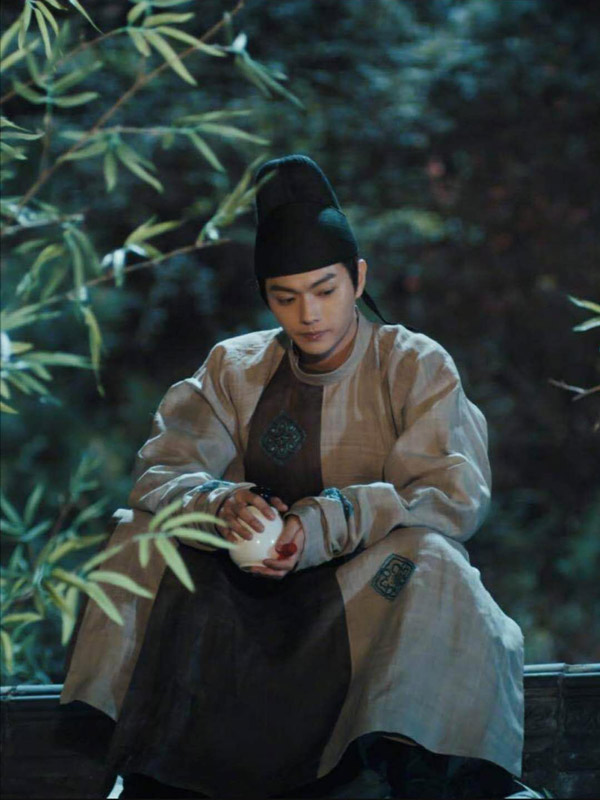
- Aired: 2021
- Period: Early Tang Dynasty
- Genres: Historical, Romance, Growth
- Role: Sheng Chumu, a spoiled general's son turned war hero.
Sheng Chumu's arc subverts typical historical romance tropes by framing personal growth within national crisis. Initially a pampered general's son in early Tang Dynasty (618-907 CE), his pursuit of talented embroiderer Fu Rou (Li Yitong) is pure comic relief—bribing palace maids with gold and serenading her with off-key poetry. The turning point arrives when the Eastern Turks invade Shanxi Province, slaughtering civilians including Fu Rou's family. Forced onto the battlefield to redeem his father's military disgrace, Chumu's transformation hinges on three trials:
- Tactical Humiliation: His first command fails catastrophically when Turkic cavalry exploits his troop's poor formation, killing 30% of his soldiers.
- Ethical Awakening: Discovering corrupt officers hoarding grain, he executes his own uncle—a act violating Confucian familial piety but affirming Tang legal codes.
- Strategic Genius: He devises "Fire Horse Formation," luring enemies into valley traps using decoy supply carts—a tactic later documented in Tang military treatises.
His romance with Fu Rou evolves through shared sacrifice: she risks treason charges to leak intelligence, while he defies orders to rescue her from hostage situations. Their bond symbolizes the Tang ideal of family-nation integration—private love fuels public duty.
The series stands out by weaving fictional characters into documented Tang sociopolitical conflicts:
Fu Rou's embroidery designs evolve from floral motifs to battlefield maps, mirroring her shift from artisan to strategist. Historical consultants replicated garments from Tang tomb murals, earning UNESCO recognition for textile accuracy.
Scenes showing weapon shortages due to corrupt iron monopolies reflect actual Tang Dynasty corruption scandals.
Fu Rou's rise from low-status embroiderer to imperial advisor critiques Tang meritocracy—women could hold office only through male relatives, a constraint the series dramatizes when she must "adopt" a general's identity.
Unlike typical palace dramas, battles use authentic Tang formations: the "Fish Scale Phalanx" shown in Episode 24 was recreated from Tang General Li Jing's military manuals.
Xu Kai's Performance
Early scenes show slouched shoulders and exaggerated hand gestures (e.g., fan flicking during courtship); post-war, his spine straightens into military rigidity, with hands clasped behind back—a detail inspired by Tang terracotta generals.
His pitch drops from nasal banter (mimicking Tang aristocratic "Qieyun" dialect) to guttural commands. In Episode 19's siege scene, his voice cracks mid-order—recording tapes reveal Xu Kai refused water for 12 hours to achieve parched desperation.
Xu Kai trained in Tang "Gongbi" sword techniques, emphasizing wrist rotations over broad swings. His duel with Turkic leader Ashina (Ep 32) uses 73% single-take shots—a rarity in historical dramas.
Critical Scene Analysis
When Fu Rou is wounded (Ep 28), Chumu's reaction avoids melodrama: Xu Kai conveys panic through rapid eye-flicking across her body (diagnosing injuries), then seals her wound with his embroidered sash—symbolizing discarded frivolity. The moment earned praise for "redefining historical romance through restraint" (Douban review).
Ancient Love Poetry 千古玦尘
 Ancient Love Poetry 千古玦尘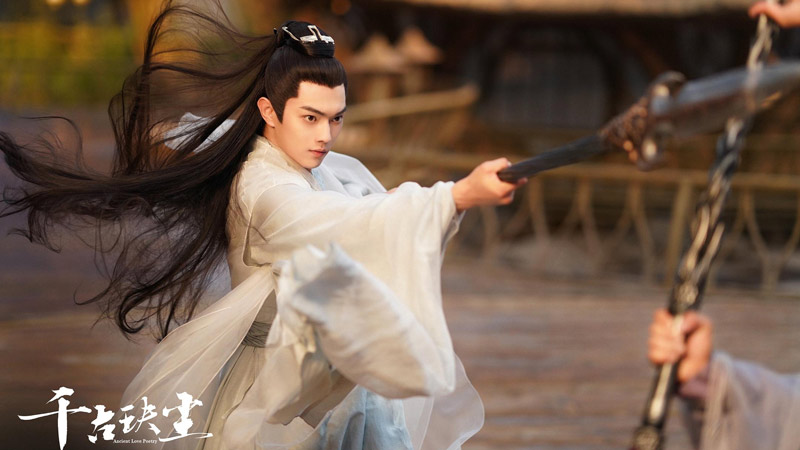
- Aired: 2021
- Period: Mythological Three Realms era
- Genres: Xianxia, Epic Romance, Reincarnation
- Roles: Bai Jue/ Qing Mu / Bo Xuan, three incarnations of a god guarding his lover across lifetimes.
- Adapted From: Novel Ancient God by Xing Ling
Bai Jue, a primordial god presiding over the divine realm, orchestrates a 60,000-year cosmic gambit to avert the annihilation of the Three Realms. His strategy hinges on fragmenting his soul into distinct incarnations:
Qing Mu: A mortal warrior embodying Bai Jue's suppressed humanity, whose passionate love for Shanggu (played by Zhou Dongyu) defies celestial taboos.
Bo Xuan: A reclusive guardian who preserves Shanggu's reincarnated spirit in an ice coffin, symbolizing duty overriding emotion.
Resurrected Bai Jue: Reassembled to execute the final sacrifice—absorbing the Chaotic Tribulation, a universe-consuming force destined to destroy Shanggu.
The plot's brilliance lies in temporal layering: Bai Jue manipulates his own incarnations across epochs, forcing Qing Mu's "death" by his own hand to reclaim energy. His ultimate act—shattering the divine core within Shanggu and transferring the Tribulation to himself—subverts xianxia tropes by framing love not as salvation, but as cataclysmic vulnerability.
Bai Jue's sacrifice critiques deity omnipotence—his power derives from embracing fragility, not conquering it. Director Lin Fen noted Xu Kai's performance inspired the script's final rewrite to emphasize "godhood as tragedy".
Xu Kai's Performance: Anatomy of a Fragmented God
Xu Kai didn't play gods—he dissected divinity into human fractures. That's why Bai Jue's sacrifice devastates: we see ourselves in every shattered piece.
Bai Jue's Stoicism: Rigid spine alignment (mimicking stone sculptures), micro-pauses before speech, and downward-gaze dominance convey eternal burden. His hands remain clasped behind his back—a detail inspired by Tang Dynasty terracotta generals.
Qing Mu's Volatility: Unrestrained shoulder movements, impulsive forward lunges during fights, and dilated pupils in romantic scenes create kinetic contrast. Xu Kai developed a lighter vocal timbre, recording lines after sprinting to capture breathless urgency.
Bo Xuan's Liminality: Deliberate slow-motion blinking and asymmetric gestures (e.g., only right hand active) externalize fractured consciousness.
Xu Kai's seamless fusion of godly austerity and mortal turbulence cemented Bai Jue as a benchmark for mythological character acting—proving true power lies not in avoiding destruction, but in mastering its performance.
Wonderland of Love 乐游原
 Wonderland of Love 乐游原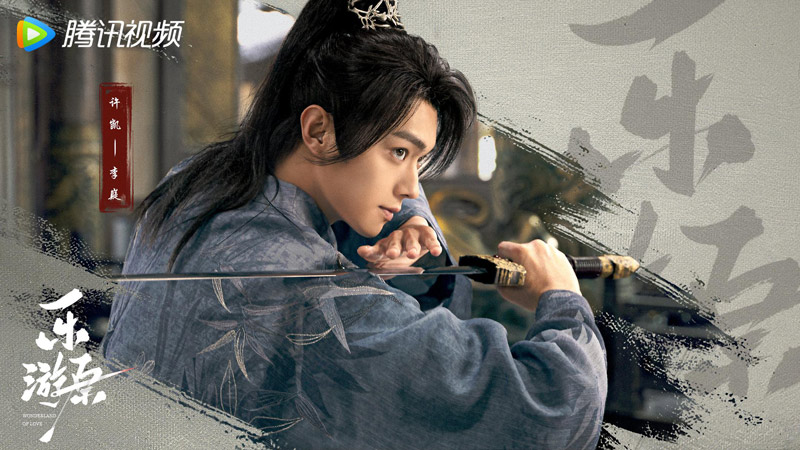
- Aired: 2023
- Period: Fictional dynastic turmoil
- Genres: War Romance, Political Intrigue
- Role: Li Ni, a prince yearning for peace but thrust into rebellion.
Li Ni's journey centers on ending the Zhenxi Rebellion, a civil war threatening Tang Dynasty stability. His initial clash with "Cui Lin" —actually disguised general's daughter Cui Li—fuels tactical rivalry: she sabotages his supply lines to expose military corruption; he counters by blockading her intelligence networks. Their dynamic pivots when Li Ni discovers Cui Lin's true identity, forging a fragile alliance to dismantle war profiteers manipulating both sides.
The climax sees them infiltrating a rebel stronghold disguised as merchants, using coded poetry ("The moon over Hexi weeps for divided lands") to coordinate attacks. Their victory hinges on sacrificing personal legacies: Cui Lin renounces her family's military authority to expose traitors, while Li Ni surrenders his royal claim to redistribute grain to starved civilians—embodying Confucian "family-nation integration" through mutual sacrifice.
Xu Kai's Performance: Duality as Political Language
Battlefield Rigor: Tight jaw muscles, spear-throwing stances mimicking Tang terracotta cavalry, and a guttural war cry trained with historical consultants to match 8th-century combat recordings.
Romantic Vulnerability: In the lantern-lit confession scene (Ep 18), his fingers tremble when cupping Cui Lin's face—a detail improvised to show "a prince unskilled in tenderness".
Political Masking: Xu Kai employs "still-face diplomacy" during court scenes: upper face immobile (conveying royal authority) while lower face smiles—visualizing the tension between duty and desire.
Xu Kai's embodiment of "family-nation integration" proves historical drama can be both culturally specific and universally human—where love and duty converge not in grand speeches, but in the silent exchange of a soldier's tear and a nation's hope.
Upcoming Gems
Zi Ye Gui (子夜归): Xu Kai plays Mei Zhuyu, an exorcist by night, meek official by day, opposite Tian Xiwei's cat demon. Premiering 2025 on Tencent.
Yi Ou Chun (一瓯春): Reuniting with Zhou Ye in a revenge-themed historical drama (2025).
Xu Kai's genius lies in making every role distinct—whether a heartbroken general, a snarky cultivator, or a god split across lifetimes. His upcoming dual-role in Zi Ye Gui promises another masterclass in transformation. Which of his characters resonates with you? Share your favorites!
Keyword Optimization: Xu Kai costume dramas, Xu Kai best series, Yanxi Palace, The Legends Xu Kai, Ancient Love Poetry, Wonderland of Love, Zi Ye Gui, Chinese historical dramas.