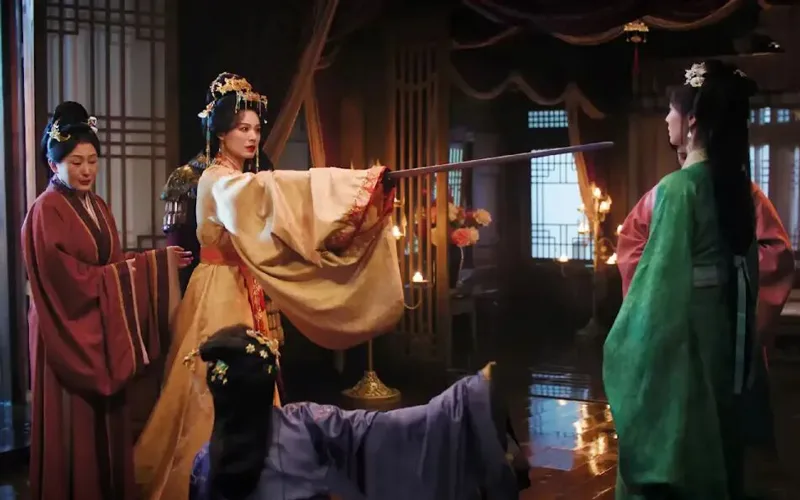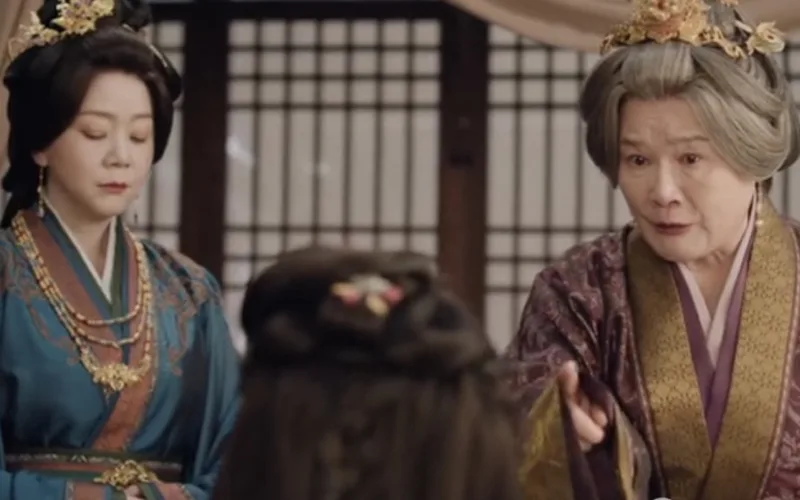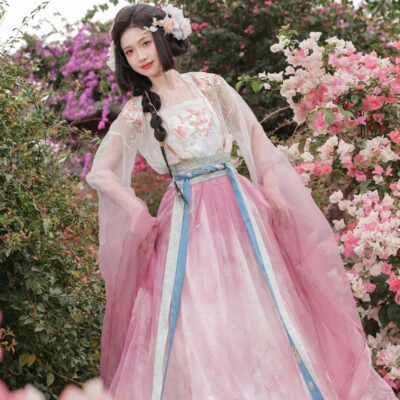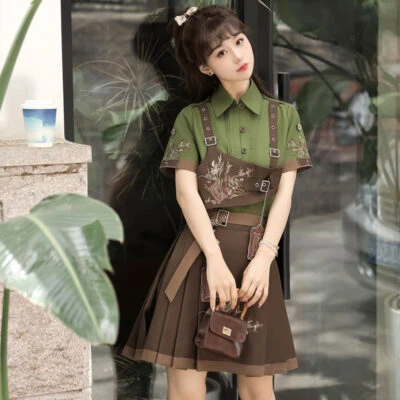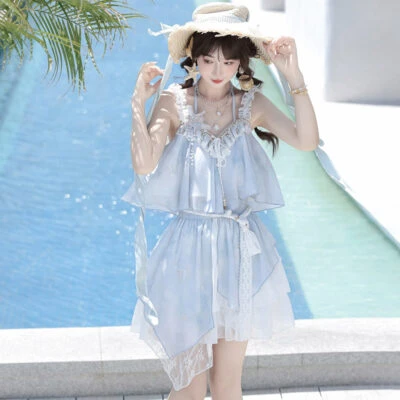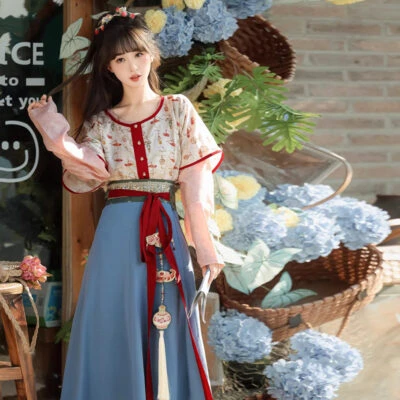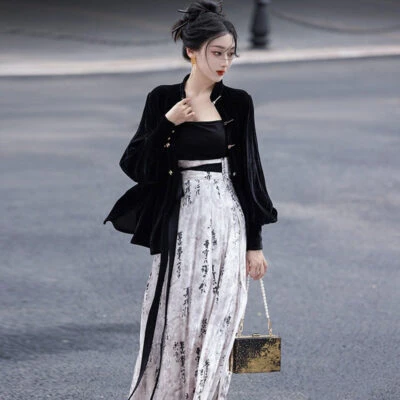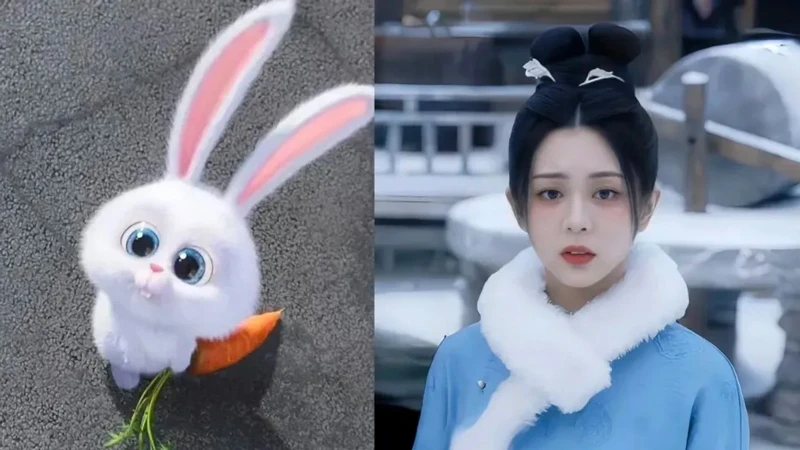
In the popular series Strange Tales of Tang Dynasty Ⅲ: Chang’an (唐朝诡事录之长安), the character Xi Jun (喜君) captivates audiences with her charming hairstyle that resembles rabbit ears. This look has sparked curiosity and admiration online, with many viewers wondering about its name and origins. Far from being a modern invention, this hairstyle has deep roots in Tang Dynasty fashion, where it symbolized youth and vitality. It frequently appears in historical dramas, often paired with traditional attire like Qixiong Shanqun (齐胸衫裙), enhancing the playful and innocent aura of female characters. This article delves into the history, variations, and enduring appeal of this distinctive style, revealing how ancient beauty standards continue to influence today’s media.
Ancient Origins
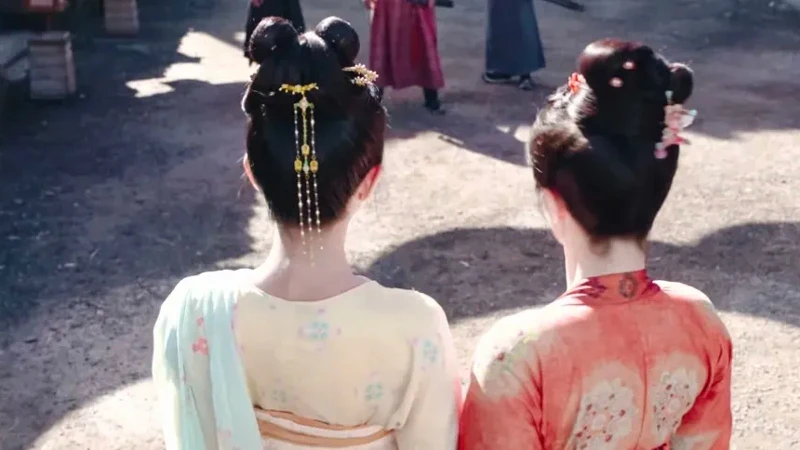
The rabbit ear hairstyle is broadly categorized as Shuangji (双髻), meaning “double bun.” This style was especially popular during the early to high Tang period, characterized by two buns positioned on the head, sometimes with a central gap or crossed sections. Historical records, such as those from the Five Dynasties period, note its prevalence among young women, reflecting societal norms where hairstyles indicated age and marital status. For instance, unmarried girls often wore Shuangji to showcase their youth, while mature women opted for more elaborate single buns. This distinction helped communicate social roles without words, making hairstyles a silent language of identity in ancient China.
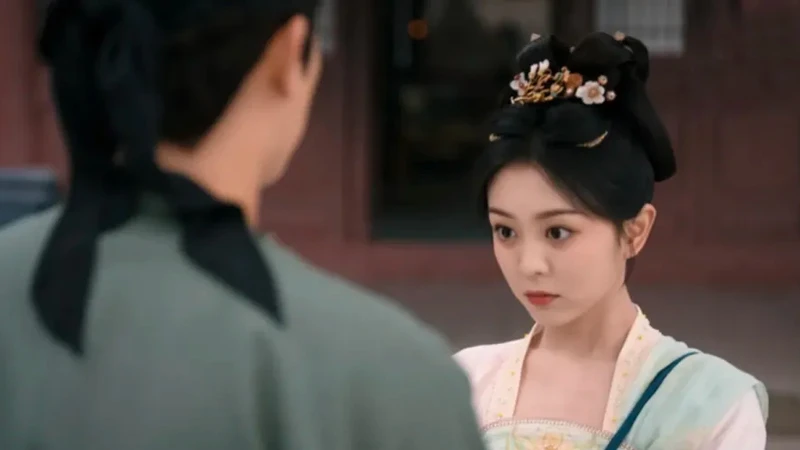
One early reference comes from the text Zhonghua Gujin Zhu (中华古今注) by Ma Gao (马缟), which documents various hairstyles of the Tang era. It mentions that during the Zhenguan era, styles like the Baiheji (百合髻), or Lily Bun, were in vogue. This version of Shuangji involved neatly wrapped buns that stood upright, evoking a sweet and demure appearance. Typically, it was adorned by young ladies in royal courts or affluent households, emphasizing grace and simplicity. The design allowed for creative expression, with hair strands sometimes intertwined to form intricate patterns, showcasing the craftsmanship of Tang hairdressers.
Another variant, the Jiaoxinji (交心髻), or Crossed Heart Bun, gained traction during the Wu Zhou (武周) and high Tang periods. It shared similarities with the Lily Bun but featured a distinctive crosswise wrap of hair around the buns, adding a dynamic twist. This style exemplified the era’s innovation in beauty, where even slight modifications could signify different aesthetics or personal tastes. Such hairstyles were not just about looks; they conveyed emotions and status, with some designs meant to appear cheerful or elegant depending on the occasion.
Styling Variations
Beyond the basic Shuangji, Tang fashion embraced numerous interpretations that added diversity to the rabbit ear theme. For example, the Shuanghuan Chui ji (双环垂髻) involved loops that draped downward, mimicking drooping ears for a softer effect. In contrast, exaggerated forms like the Shuangdao ji (双刀髻), or Double Knife Bun, featured sharper, more pronounced shapes that projected confidence and strength. These variations demonstrate how ancient hairdressers played with form and volume, using hair as a medium for artistic expression that could transform a person’s entire demeanor.
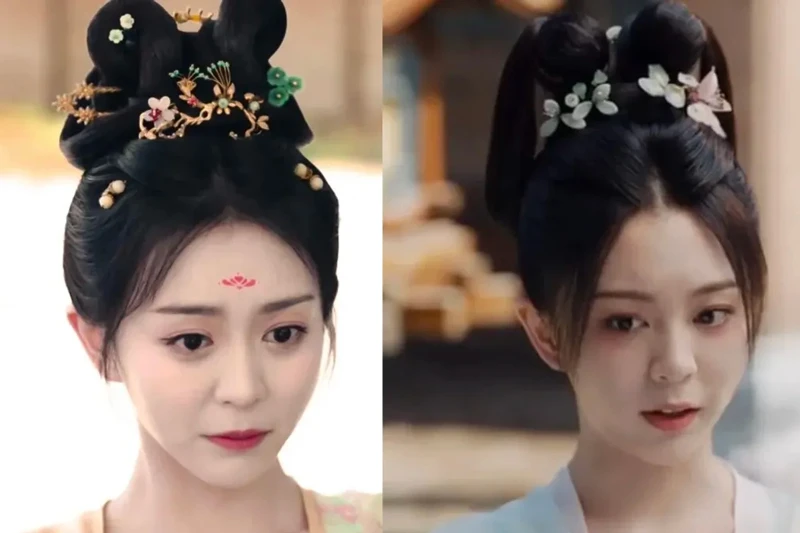
In modern adaptations, such as the drama Flourished Peony (国色芳华), characters like Yulu (玉露) sport similar double-bun styles, often evolving from traditional Shuangya ji (双丫髻), or Double Maiden Bun. This evolution highlights how contemporary stylists draw inspiration from history while infusing fresh elements. The rabbit ear look, with its playful vibe, remains a favorite for portraying youthful characters in period pieces. By studying old paintings and texts, designers recreate these styles with authenticity, ensuring they resonate with today’s audiences while honoring their origins.
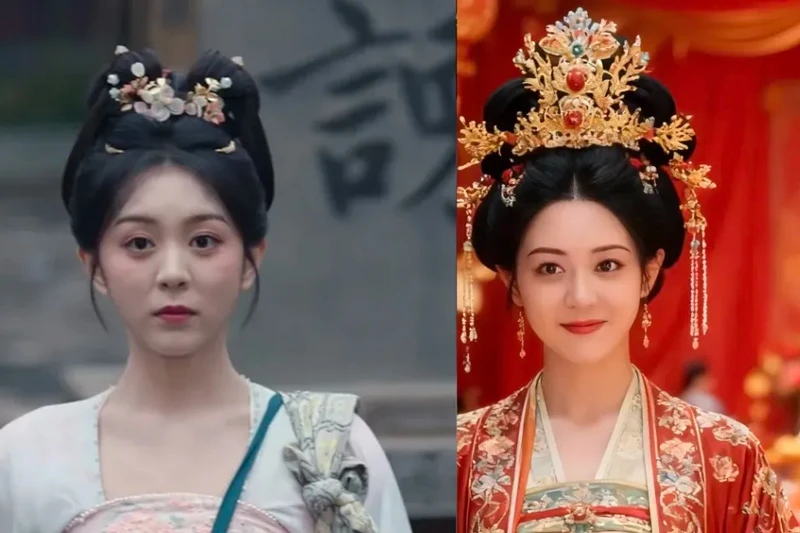
The versatility of these hairstyles lies in their basic structure—two buns that can be manipulated into countless forms. Ancient women might add accessories like flowers or pins to enhance the look, reflecting their social standing or the season. For instance, a simple Baiheji could be elevated with pearl decorations for formal events, while a casual Jiaoxinji might suit daily activities. This adaptability made double buns a staple in Tang beauty culture, allowing wearers to express individuality within societal frameworks.
Modern Appeal
Today, the rabbit ear hairstyle enjoys a revival through historical dramas and cosplay communities, where it symbolizes a connection to China’s rich past. In Strange Tales of Tang Dynasty Ⅲ: Chang’an, Xi Jun’s consistent use of this style helps define her character as lively and relatable, making it a visual shorthand for innocence and charm. Fans often emulate the look in fan art or social media posts, discussing its details online and sparking conversations about Tang aesthetics. This engagement shows how ancient fashion can bridge generations, turning historical elements into trendy topics.
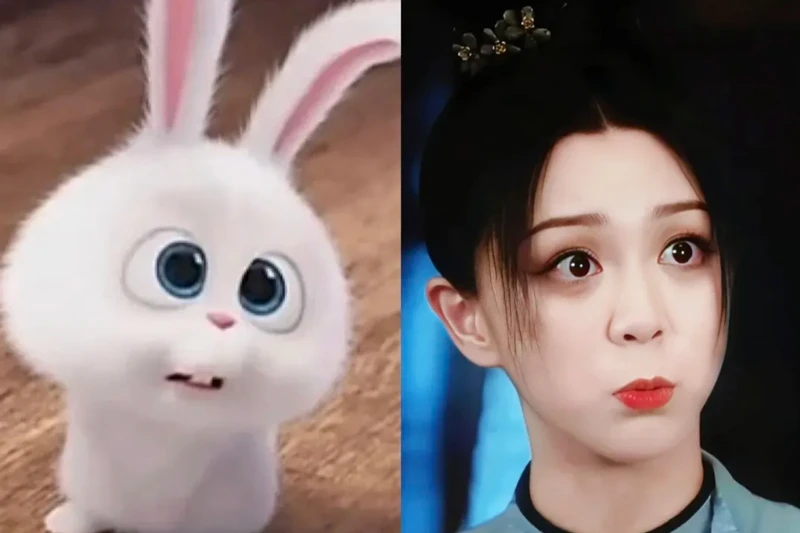
The hairstyle’s enduring popularity stems from its ability to blend nostalgia with modernity. As viewers seek authenticity in period dramas, accurate hairstyles like Shuangji enhance immersion, making stories feel more genuine. Moreover, its cute and approachable appearance appeals to global audiences, transcending cultural barriers. In an era where people explore identity through style, this Tang-inspired look offers a unique way to celebrate heritage while embracing playful self-expression.
Looking at broader media, the rabbit ear trend influences contemporary fashion and beauty industries. Designers incorporate elements of Shuangji into modern updos or festival looks, proving its timelessness. By understanding its history, enthusiasts appreciate it not just as a “bunny style” but as a piece of living history. So next time you spot those adorable ears on screen, remember they carry centuries of tradition—a testament to how beauty evolves yet remains rooted in culture.