-

Top 5 Iconic Lightning Users in Chinese Animation
Chinese animation has a peculiar obsession with lightning. Not the gentle static of a winter sweater, but the sky-splitting, mountain-crushing, god-defying kind. From Taoist priests who treat thunder like morning tai chi to warriors who wear storm clouds as capes, these five characters don't just use electricity—they are the storm. But what makes each of them terrifyingly unique? And why does the medium keep returning to this elemental force? Let's meet the bolt-bringers. 1. Zhang Zhiwei (张之维) In the world of The Outcast (一人之下), power scales are meaningless. There is only Zhang Zhiwei, the 65th Heavenly Master of Dragon Tiger Mountain. He stands at the absolute ceiling of combat ability—so far above everyone else that his peers might as well be playing with sparklers. His signature tools are the Golden Light Curse and Thunder Method, but those are just names for something far more primal. When he descended the mountain to purge the Quanxing (全性, All-Sex) sect, he didn't fight—he executed. A single summoning of lightning erased entire squads of opponents in instants. His full-powered Thunder Method allegedly surpasses even the legendary Eight Divine Techniques, breaching the boundary between "unusual human" and "immortal cultivator." Others in the series—Zhang Lingyu (张灵玉),…- 0
- 0
- 20
-
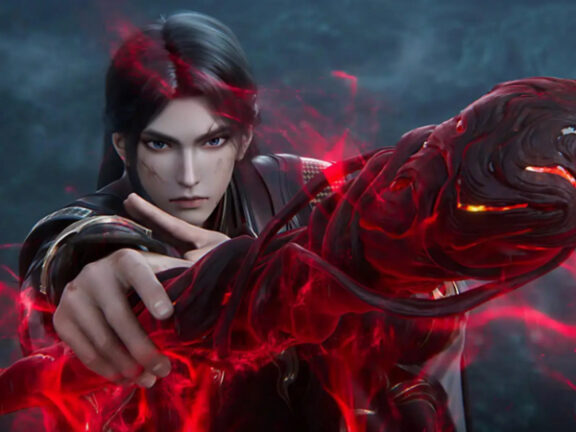
Top 5 Forbidden Weapons With Terrible Prices
Jade Dynasty (诛仙), The Legend of Qin (秦时明月) , and Rakshasa (镇魂街) have captivated millions with their epic tales, but the most thrilling part isn't the hero's journey—it’s the weapon in their hands. In the realm of Chinese animation, the line between a savior and a monster is often drawn by the edge of a blade. The question isn't just who wields the sword, but who survives it. Each mythical artifact promises unlimited power, yet it always demands a terrible price from its wielder. Why does ultimate power always come with a catch? 1. The Staff That Devours the Soul In the world of Jade Dynasty, the Soul-Stealing Staff represents a horrifying fusion of two demonic relics. It wasn't forged in fire, but born from the blood of its owner, Zhang Xiaofan (张小凡). This forced bond created a weapon of immense destructive force. However, it operates like a parasite that slowly feeds on the user's sanity, turning kindness into rage and discipline into bloodlust. The staff's primary side effect is its ability to erode the mind. During his youth, Zhang Xiaofan suffered continuous deterioration, nearly losing himself to its violent impulses. It wasn't until he mastered the equilibrium of Buddhist, Taoist,…- 0
- 0
- 97
-
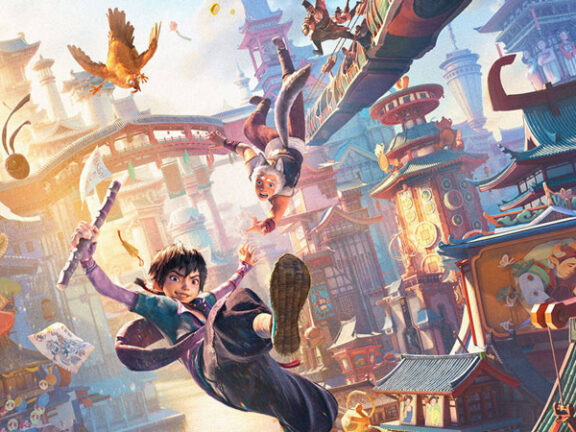
Demon Agent releases August 8 as comedy detective animation
Di Shao (狄少) has a tongue sharp enough to cut through lies. Asa (阿萨) has fists strong enough to punch through walls. One is a human detective who dreams of becoming the greatest investigator in Chang'an (长安). The other is a wolf demon who just wants to pass his probation as a constable. They have nothing in common except a murder case neither of them asked for — and an August 8 release date that just might make Demon Agent (大唐妖探) the most unexpected animated hit of 2026. Directed by Cheng Teng (程腾), the filmmaker behind Jiang Ziya (姜子牙), and co-directed by Huang Min (黄珉), this is China's first comedy detective animated feature. It's also a film that refuses to play by the rules. Instead of epic battles or tragic heroism, it gives us bickering partners, a city built on gears and secrets, and a mystery that threatens to unravel everything. The result? A summer movie that families can laugh through, mystery fans can puzzle over, and animation lovers can genuinely geek out about. Here's why this odd couple — and their even odder city — is worth your attention. The Bickering Duo You Didn't Know You Needed Di Shao…- 0
- 0
- 145
-
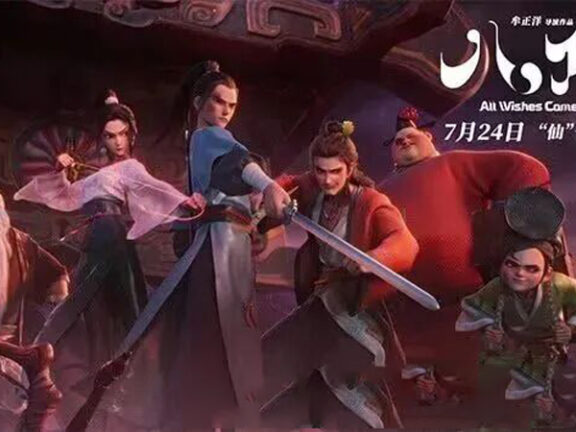
Ba Xian arrives July 24 with funny mortal god trick story
Forget the celestial beings you know. The new animated feature Ba Xian! (八仙!), arriving on July 24, rewinds the clock to a time before immortality, before magic, before the legendary "crossing of the ocean." It presents a comedic, chaotic, and deeply human portrait of the Eight Immortals as a ragtag crew of ordinary folks from the bustling streets of ancient China. United not by destiny, but by a singular, relatable goal—to get rich quick—this motley "amateur team" embarks on a wild scheme to impersonate gods in the magnificent city of Penglai (蓬莱). The premise is a brilliant twist on the classic myth: what happens when everyday hustlers, armed with only wit and street smarts, try to pull a fast one on the divine? The Hustle Begins The film's first trailer introduces us to this "mortal crew" in all their flawed glory. The plan is simple: pretend to be gods and make a fortune. But the execution is pure chaos. We see Lü Dongbin (吕洞宾) dangling the ultimate temptation, "Want money you can't spend in ten lifetimes?" We see Zhong Liquan (钟离权) quickly shedding his skepticism for the promise of riches. Tieguai Li (铁拐李), the crippled beggar immortal, jumps in without…- 0
- 0
- 392
-
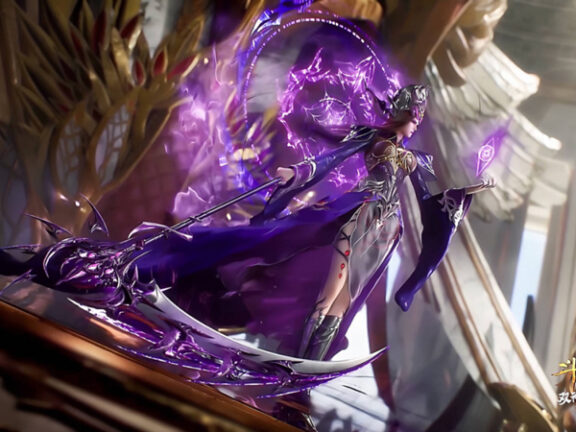
4 Unmatched Female Villains in Chinese Anime
Was there ever a moment when the villain stole the entire show? In the realm of Chinese animated series, the so-called "female antagonists" have evolved far beyond mere obstacles for the hero. They are now the gravitational center of entire story arcs—commanding, complex, and hauntingly beautiful. Between 2018 and 2023, four such characters emerged from different studios, each redefining what it means to be the "bad guy." Their faces graced billboards, their catchphrases trended on social media, and their backstories sparked heated debates in online forums. What makes them unforgettable isn't just their power levels or their flawless 3D models. It is the raw, human wound at their core—betrayal, obsession, or a desperate bid for freedom. They don't wait for the hero to save them; they build their own thrones. And even as new series flood the market every season, no one has yet dethroned these four. So, who are they, and why does their legend persist while countless other villains fade into pixels? 1. Bibi Dong (比比东) - The Broken Goddess She walks into every scene like a winter storm—cold, untouchable, and devastating. Bibi Dong from Soul Land (斗罗大陆) is not your typical power-hungry tyrant. Her origin story reads…- 0
- 0
- 126
-
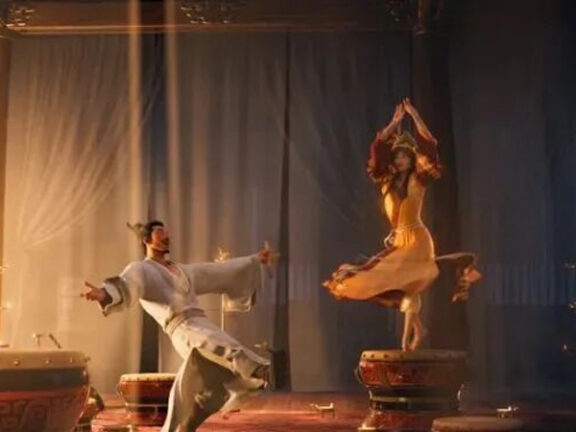
Three Kingdoms: The Fight for Luoyang Hits Theaters July 10
Three Kingdoms fans know the epic battles of Red Cliffs and the strategic genius of the later era. But what about the very beginning? The new animated feature Three Kingdoms: The Fight for Luoyang (三国第一部:争洛阳), hitting Chinese cinemas on July 10, skips the familiar turf and dives straight into the chaos of 190 A.D. It doesn't show you the empire’s fall; it shows you the first crack. And that crack started in one city. This isn't just another period piece. It is a story about young men who believed they could save a dynasty, only to accidentally tear it apart. The film focuses on the power vacuum left by a dying Han Dynasty, where the real battle wasn't for land, but for the soul of the crumbling empire itself. The City Why Luoyang? For centuries, it was the heart of the Han Empire, a symbol of its cultural and political might. The film’s director, Xie Junwei (谢君伟), deliberately chose this setting because it represents the center of the world that is about to shatter. Here, the protagonists Cao Cao (曹操) and Yuan Shao (袁绍) are not yet warlords; they are idealistic young officials. He and his ally plan to use…- 0
- 0
- 114
-
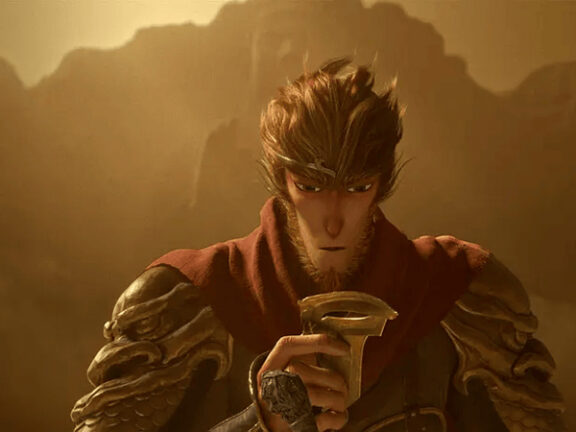
The Great Sage Rises Hits Cinemas July 10, 2026
Is July 10, 2026, the Date Chinese Animation Finally Conquers Its Past? On that day, The Great Sage Rises (大圣崛起) arrives, promising not just a sequel but a cultural reckoning. This is not merely another retelling of the legendary Monkey King's tale. It is a cinematic event born from over 30,000 hours of meticulous work, helmed by a creative team known for the groundbreaking Kui Ba (魁拔) and the beloved Monkey King: Hero Is Back (大圣归来). The film ambitiously weaves a narrative of rebellion with the very fabric of ancient Chinese folk life, creating a world that feels both epic and intimately grounded in history. The film’s core is a bold paradox: a supernatural hero navigating a hyper-realistic human world. The trailer reveals a stunningly detailed urban landscape from the Song Dynasty, a bustling marketplace teeming with life. This is not a distant, mythical realm, but a vivid recreation of a historical reality, complete with the thunder of drums, the energy of Yangge (秧歌), and the storytelling of Shan Bei (陕北) storytelling. The hero, a figure of immense power, is not scaling a celestial mountain but walking among the people, and it is from this human environment that he must draw his…- 0
- 0
- 390
-
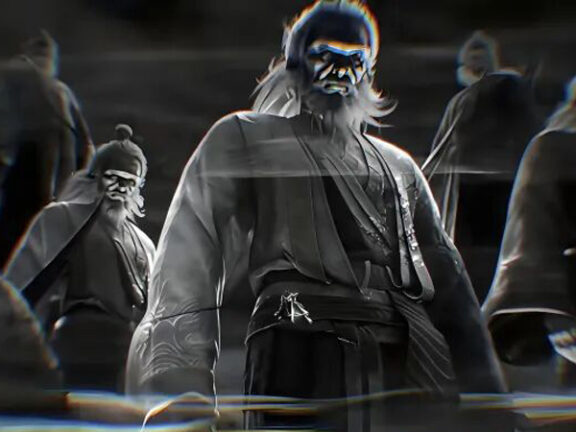
Perfect World: Shi Hao & Liu Shen’s Cross-Era Battle
Shi Hao (石昊) and Liu Shen (柳神) have never fought side by side in the original novels. That changes this July. The second theatrical film for the Perfect World (完美世界) anime, titled Nine Tribulations Burning Heaven (九劫焚天), just dropped its official trailer and key visual. It is not a sequel or a side story. It goes back. Way back. To the Immortal Ancient Era, a time before the main plot even begins, a time the books only mentioned in fragments and lore drops. The announcement alone has sent shockwaves through the Chinese animation community, not just because it is new content, but because it promises to answer a question fans have asked for years: what really happened when Liu Shen made those legendary nine forays into enemy territory? This film is built on that mystery. It is a prequel in the truest sense, filling the biggest blank space in the entire Perfect World mythos. For those who have followed Shi Hao's journey from a village boy to a sovereign who stands alone against eternity, this is the missing chapter they have been waiting for. And it arrives with a visual upgrade that makes the ancient battlefield look devastatingly real. Battle…- 0
- 0
- 176
-
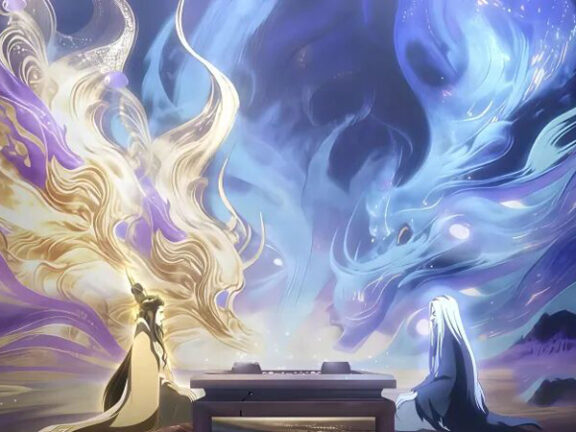
A Will Eternal Premieres July 22
Bai Xiaochun (白小纯), the chicken-stealing, cowardly boy from Mao'er Village, is finally facing his ultimate test. The final season of A Will Eternal (一念永恒) has officially been announced, and it's arriving with a bang on July 22. The production team, Vision Animation, is making a bold move: instead of splitting the conclusion into a fourth season, they are integrating all remaining arcs from the Immortal Realm and the Eternal Continent into one grand, cohesive finale. For the fans who have followed this 2D animated series for six long years, this is the culmination of a journey that has defined a generation of Chinese animation. With a premiere that drops three episodes at once on Tengxun Video (腾讯视频) and a weekly release schedule every Wednesday at 10:00 AM, the stage is set for a showdown that will determine the fate of an entire world. This isn't just an ending; it's a testament to the power of character growth, from a pathetic survivalist to a protector of the masses, and it promises to deliver a narrative punch that is both intimate and epic in scale. From Coward to Cultivator When we first met Bai Xiaochun six years ago, he was a master…- 0
- 0
- 458
-
4 Unbeatable Iconic Anime Male Villains
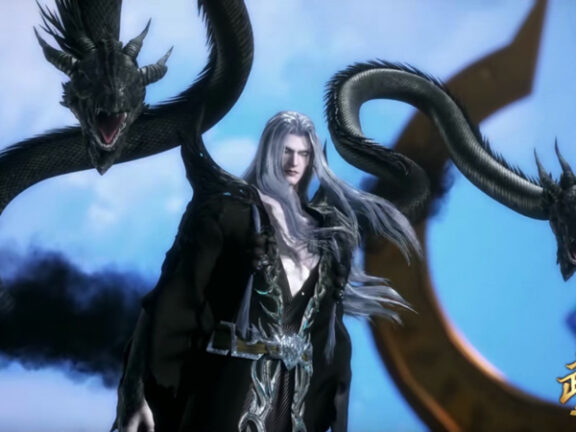
Wei Zhuang, Tian, Yun Shan, and Xue Yang—these four names are far more than just a list of antagonists in the vast landscape of Chinese animation. In a medium often criticized for its disposable, one-dimensional villains designed only to make the hero look good, these four break every mold. They are not merely obstacles to be overcome; they are the very reason we remember the stories. They possess a chilling charisma and a commanding presence that often eclipses the protagonists, making them the heart of the narrative. We don't just fear them; we are fascinated by them, and their complicated legacies are the pillars upon which their respective worlds are built. From the ancient streets of the Warring States period to the celestial planes of the gods, these characters have proven that true power in storytelling isn't about being good or evil, but about being unforgettable. 1. Tian (天) - The Apex of Power The one who sits at the very top of the pyramid, a figure of absolute, unchallengeable power, is Tian from the epic saga Wu Geng Ji (武庚纪). He is not simply a king; he is the "Heaven" that his subjects worship. The sheer scale of his…- 0
- 0
- 65
-

4 Tragic Anime Heroines That Left Fans Heartbroken
Four animated characters, each dead in their own way, each leaving behind a wound that refuses to heal. Jiang Yanli's gentle smile, Bi Yao's reckless devotion, Chen Duo's tragic freedom, Wang Qiu'er's silent sacrifice. These are not just plot points. For millions of viewers across China, these deaths are emotional scars that time hasn't faded. A recent fan poll asked: if you could resurrect one Amine character, who would it be? These four names dominated the list. Not because their stories were unfinished, but because their endings felt fundamentally unfair. They died for love, for choice, for others. And in every case, the living were left broken, carrying guilt that no sequel could erase. 1. Jiang Yanli (江厌离) - A Sister's Grace She was never the strongest cultivator. Never the smartest, never the most powerful. Jiang Yanli from The Founder of Diabolism (魔道祖师) was simply the best senior sister the cultivation world had ever seen. Her talent was mediocre, her cultivation average, but her heart was immense. She raised Wei Wuxian (魏无羡) as her own brother, defended him against every insult, and never once wavered in her loyalty. Even when the Lotus Pier fell because of him. Even when her…- 1
- 0
- 49
-
Why Xu Xiaohui Lost Her Light in Beyond Time's Gaze?
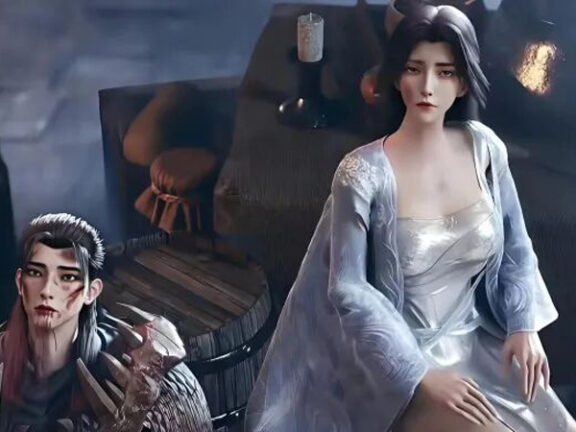
In the brutal cultivation world of Beyond Time's Gaze (光阴之外), a bright-eyed girl named Xu Xiaohui (徐小慧) once smiled like sunshine. She worked hard, dreamed big, and believed kindness could carve a place in the sect. But by the end of her arc, she becomes hollow, numb, and abandoned by hope. Her fall isn’t a sudden betrayal or a villain’s curse. It’s a slow, grinding death—crushed by debt, betrayal, and the one loss that broke her completely. This is the story of how a gentle soul faded, and why Zhou Qingpeng’s (周青鹏) death became the final nail in her coffin. The Debt Noose Xu Xiaohui entered the Seven Blood Eyes sect as nobody special. No powerful bloodline. No secret inheritance. Just another poor recruit hoping to survive. She trained beside Xu Qing (许青) and Zhou Qingpeng, two other bottom-dwellers, and found joy in small victories—a little progress, a warm meal, a glimpse of tomorrow. Her eyes held real light then, the kind that comes from believing effort matters. But the sect has a cruel rule: every new disciple must earn 100,000 contribution points within three years to buy a ritual boat. Without it, you get expelled and your cultivation destroyed.…- 0
- 0
- 737
-

Wang Lin vs Blood Ancestor in Renegade Immortal
Amine fans are holding their breath. Renegade Immortal (仙逆), the cult-favorite cultivation saga, is about to drop its second theatrical film Battle of Immortal Slayer (弑仙之战) in the 2026 summer season. After the first movie Battle of the Divine Descent crashed hard due to forced romance, weak effects, and bloated filler, the new 110-minute project has already crossed 1.05 million pre-bookings. Production budget reportedly tripled. The studio, Zhuming (铸梦) Animation, faces a do-or-die moment. Can Wang Lin (王林), a mere mortal cultivator, truly kill a bloodthirsty immortal god inside a collapsing thunder realm? Or will history repeat itself? Past Failure The first Renegade Immortal film promised raw, ruthless cultivation action. Instead, audiences got a love story no one asked for. Special effects looked rushed. Key battles felt stretched and hollow. Fans left theaters disappointed, and the once-loyal community turned skeptical. That backlash hit Zhuming Animation hard. They lost trust, and worse, they lost the core identity of the IP: a mortal’s lone war against heaven’s tyrants. But failure taught hard lessons. The studio spent months analyzing every complaint. They realized the original novel’s most beloved arc — Wang Lin’s desperate fight against the Blood Ancestor Yao Xinghai (姚星海) inside the…- 0
- 0
- 1.5k
-
Ling Cage 2: Magnolia & Annecy Nominee
In May 2026, the Chinese sci-fi animation Ling Cage 2 (灵笼 2) earned two nominations at the 31st Shanghai TV Festival's Magnolia Award: Best Animated Film and Best Animation Script. Just two months earlier, it had already entered the main competition of Annecy International Animated Film Festival in France, often called the “Oscars of Animation.” No Chinese animated series had ever achieved both in the same year. From Shanghai to Annecy, this show proved that original Chinese sci-fi animation now stands on the global stage. The following sections break down how it earned this honor, what audiences and critics say, and why its craft matters for the future of Amine. Double Nomination Breakthrough The Magnolia Award is one of China’s most respected TV prizes. This year’s animation jury was led by Irish director David McCamley. Every nominated work goes through strict reviews. Meanwhile, the Annecy festival, founded in 1960, is the world’s largest and most authoritative animation event. Getting into its main competition is a “hard currency” for animators worldwide. Ling Cage 2 stood out from thousands of entries. It became the first Chinese sci-fi animation ever to enter that core category. Why does this matter? For years, Chinese animation…- 0
- 0
- 106
-
5 Invincible Chinese Anime Characters
In the world of Chinese animation, some characters are written as invincible from the start. They never taste defeat, never struggle for a comeback, and never wonder what losing feels like. From a Taoist master who slaps down demons to an immortal general who plots for centuries, these five figures stand at the absolute peak. Their stories challenge the very idea of conflict—because against them, every battle ends before it truly begins. 1. The Outcast (一人之下) - Zhang Zhiwei (张之维) Zhang Zhiwei from The Outcast holds a title no one dares challenge. He is the head of Dragon Tiger Mountain, the sixty-fifth generation Tian Shi (天师) or “Heavenly Master.” Every living Yiren (异人) agrees: if Zhang claims second place, no one can claim first. His power makes no logical sense. As a young man, he slapped down Wu Gensheng (无根生), the feared leader of the Quanxing (全性) sect. Decades later, he did the same to Lu Jin, one of the Ten Elders. Age does not weaken him. His opponents train in martial arts; he fights like an immortal playing with children. In the original comic, Zhang never loses. Not once. Fans joke that a group of fighters trying to beat…- 0
- 0
- 166
-
Broken 52-Episode Promise in Apotheosis
Apotheosis (百炼成神) Season 3 launched with great fanfare on December 9, 2025, promising a full 52-episode Nian Fan (年番) that would follow Luo Zheng’s journey from weakling to powerhouse. The Amine quickly gained a loyal following thanks to its sharp 3D visuals, fast-paced plot, and the popular Bai Lian Girls. Yet on May 26, 2026, after just 26 episodes, the official Weibo account posted a cryptic goodbye: “The road is long, see you later.” No explanation. No promise to finish. The story stopped cold inside the Tianyu (天羽) Secret Realm, with Luo Zheng’s (罗征) revenge arc and key conflicts left hanging. Fans felt cheated. This wasn’t a creative pause—it was a quiet cancellation. And it’s not an isolated incident. The same fate hit Purple River (紫川) before. The pattern raises an urgent question: why do so many big-budget Amine series promise the world but deliver only half a story? The Broken Promise of a Full Year When Apotheosis announced its 52-episode Nian Fan plan, viewers celebrated. Finally, a long-form fantasy show that wouldn’t vanish after three months. The studio released a roadmap with multiple story arcs, detailing Luo Zheng’s rise, the mysteries of the Tianyu Secret Realm, and a showdown with…- 0
- 0
- 201
-
4 Powerful Mothers in Douluo
Douluo (斗罗) novels span generations of godly battles and epic adventures. But behind every legendary child stands an even more terrifying figure—their mother. When danger threatens, these women don't call for backup. They become the backup. From the gentle rabbit who shares a god's throne to the dragon queen who destroys armies, from a hate-filled villain who finally sacrifices herself to an evil sovereign who turns berserk for her sons. Meet four mothers who prove that maternal fury is the ultimate power in the Douluo universe. 1. Xiao Wu (小舞) Xiao Wu started as a sweet spirit beast who fell in love with Tang San (唐三). After both became gods, she gave birth to twins—a daughter named Tang Wutong (唐舞桐) and a son named Tang Wulin (唐舞麟). While she only holds a second-level divine position, she shares her husband's godly status completely. That means whatever power Tang San possesses, she possesses too. She can switch between the Sea God and Asura God identities at will. This gives her combat strength at the God King level, equal to the five supreme gods of the divine realm. Don't let her gentle appearance fool you. Tang San might handle the children's training and…- 0
- 0
- 47
-
5 Stunning Purple-Haired Female Characters
Amine fans have noticed a striking trend: purple-haired female characters often steal the show. From icy assassins to gentle goddesses, this color signals rarity, power, and mystery. In 2024 alone, five heroines from top series like Perfect World and Big Brother prove that purple isn't just a shade—it's a statement. What makes them unforgettable? It's not only their looks but also their layered personalities. Let's meet them, one by one. 1. Big Brother (师兄啊师兄) - Yunxiao (云霄) She appears like a dream from ancient myths. Yunxiao floats onto the screen with waist-length violet hair that flows like a waterfall. Her outfit—a loose lavender gown with drifting cloud sleeves—moves as if alive. Yet her beauty isn't what makes her the "Number One Goddess of the Primordial Era," a title fans gave her. It's the contrast: cold arrogance mixed with genuine kindness. In Big Brother, she rarely raises her voice. But when she stands among the Jiejiao (截教) disciples, her aura silences everyone. She protects her close ones with quiet determination and ignores worldly squabbles. Viewers love her because she feels real—a powerful immortal who also offers tea and a listening ear. No wonder she's called the "purple-haired big sister" everyone wishes…- 0
- 0
- 127
-
5 Iconic Anime Hammers Beyond Haotian
When fans talk about powerful hammers in Chinese animation, one name always comes first: the Haotian (昊天) Hammer from Soul Land. It carries the title of the number one weapon spirit. But is it truly the strongest? A closer look at five other hammer-wielding characters reveals that raw power comes in many forms. Some hammers summon storms. Others freeze entire battlefields. And a few are so heavy that only giants can lift them. From the forests of ancient China to the mystical seas of a demon child's world, these weapons prove that the Haotian Hammer might not even crack the top three. 1. The Legend of Qin (秦时明月) - Da Tiedui (大铁锤) In the world of The Legend of Qin, a massive warrior named Da Tiedui swings a weapon called the Thunder God Hammer. It is not a simple sledgehammer. A heavy iron chain connects its base to its wielder. Only a man of incredible strength can control it. The hammer’s power splits into two terrifying levels. The first level creates a storm within ten meters. Enemies feel trapped in a whirlpool, unable to move or strike back. The second level is an instant kill. Standing just three meters away…- 0
- 0
- 72
-
4 Powerful Spears Beyond Swords
In the world of Chinese animation, long weapons often steal the show. Swords get all the glory, but spears follow a brutal truth: one inch longer, one inch stronger. The following five legendary spears from hit Amine series prove that reach and power can crush any blade. They don't just fight—they dominate. From soul-draining artifacts to electric-charged poles, each weapon tells a story of its wielder's rise. Let's examine why these polearms leave swords in the dust. 1. Stellar Transformations (星辰变) - Canxue Shenqiang (残雪神枪) Canxue Shenqiang comes from the series Stellar Transformations. It belongs to Qin Yu (秦羽), the main character. A divine weapon forged by a master artisan in the god realm, its power rivals legendary cosmic treasures. Two abilities make it terrifying: spirit devouring and body shattering. The spear has a dark blue-gray shaft. Blood-red veins twist around its tip. When Qin Yu first got it, those veins looked dull. After he refined it, they turned bright crimson, pulsing with hunger. Even when held still, it warps the air around it. Opponents feel its presence before the fight starts. A suffocating pressure leaks from the weapon, like a predator's growl. In Stellar Transformations, no other armament matches…- 0
- 0
- 85
-
Zhong Kui: Arrives May 30 for Di Fu Adventure
The summer movie season kicks off with a surprise. On May 30, a new animated feature titled Zhong Kui (钟馗) arrives in theaters, just in time for Children’s Day. It tells the story of a legendary demon hunter who keeps the balance between the human realm and the underworld, known as Di Fu (地府). One day, he saves a brave young girl named Chu Jiu (初九) from a monster attack. To heal her wounds, he takes her down to Di Fu. There, she meets a strange and funny group: a psychic ear from the spirit world, a gentle woman named Meng Niang (孟娘), and two lovable creatures called Niu Tou (牛头) and Ma Mian (马面). What begins as a simple rescue quickly turns into a wild adventure. But a dark force hides behind the recent monster attacks. A powerful villain named Mo Bai (墨白) plans to overturn both the human world and Di Fu. Can Zhong Kui stop him in time? And will a mortal girl become his unexpected apprentice? A Bold New Hero Zhong Kui is not your average ghost hunter. He wears a robe decorated with the Beidou Qixing (北斗七星)—the Big Dipper constellation. In his hand, he carries…- 0
- 0
- 29
-
What Makes Tang Wutong's Sea God Manifestation the Most Unfair?
In the vast power system of Soul Land 2: The Peerless Tang Clan (斗罗大陆: 绝世唐门), a spirit master's ninth spirit ring is supposed to be the ultimate trump card. Hunters risk their lives in forbidden zones, slay ancient spirit beasts, and pray for that one godly skill that can flip any battle. But among all ninth spirit techniques ever shown, only one truly breaks every rule and ignores every limit: Tang Wutong's (唐舞桐) Sea God Manifestation. It is not a skill earned through blood and luck. It is a gift directly carved from a Divine King's own consciousness, and its single appearance on the Douluo Continent turned a hopeless slaughter into a frozen miracle. Divine Gift Tang Wutong's ninth spirit ring does not come from any beast. Her father, Tang San, the Asura and Sea God in the divine realm, personally stripped away a strand of his own divine thought to forge a God-bestowed Spirit Ring. While other spirit masters hunt for tens of thousands of years to fuse beast souls with their own, she received a direct projection of a Divine King's authority. This is not a power-up; it is a fragment of the divine realm itself, dropped into…- 0
- 0
- 49
-
Renegade Immortal: Wang Ping and Qing Yi’s Thousand-Year Reunion
Few characters in Renegade Immortal (仙逆) leave fans as torn as Wang Ping. Is he a tragic burden or a beautifully written son? His short mortal life ends in tears, yet a hidden detail in the sequel San Cun Ren Jian (三寸人间) flips the sorrow into joy. After a thousand years of waiting inside a magical bead, Wang Ping (王平) gets a second chance. He returns not as a ghost or a curse, but as a real person. This article explores his painful origin, the woman who loved him beyond death, and how the sequel finally gives him the peace he deserves. The Cursed Son Wang Ping’s story begins with a lie. In the original novel, he is the biological child of Wang Lin and Liu Mei (柳眉). But his mother cruelly turns him into a vengeful infant, born from pure resentment. The anime adaptation changes this. Here, he is not a real son. Instead, Liu Mei uses Wang Lin’s blood essence and her own anger to create a special spiritual clone. He is a ghost made of leftover hatred. This rewrite sparks fierce debate among fans. Some say it weakens the original tragedy. Others argue it makes Wang Ping more…- 0
- 0
- 158
-
Perfect World: The Immortal Ancient Era’s Final Showdown
Perfect World fans, are you ready to witness the Willow Deity (柳神) in her youthful prime and Shi Hao (石昊) crossing time to fight beside her? The new theatrical film Perfect World: Nine Tribulations Burning Heaven (完美世界:九劫焚天) drops its latest trailer, with the full movie expected online in June. A young, bare-faced Willow Deity appears. The future Desolate Heavenly Emperor Shi Hao debuts a new look. The two sit across time and space for a game of chess—and then, for a battle. This is not just a side story. It fills the tragic finale of the Immortal Ancient Era and unlocks the deep bond of protection, legacy, and fate between Shi Hao and his mentor. For fans, this is a must-watch event. Why a Youthful Willow Deity? Since Perfect World became a benchmark for Guochao (国潮) animation, its weekly series has never lost heat. Right now, in the main storyline, Shi Hao just trained in the Causal Pool and mastered the Indestructible Golden Body. His power jumps. He moves toward higher realms. The weekly episodes keep delivering fierce battles. And now the theatrical film arrives with peak drama. Two layers of surprise let fans fully immerse in the legend of the…- 0
- 0
- 501
Anime



Scan to open current page
-
$CouponsLimitation of use:Expired and UnavailableLimitation of use:
before
Limitation of use:Permanently validCoupon ID:×Available for the following products: Available for the following products categories: Unrestricted use:Available for all products and product types