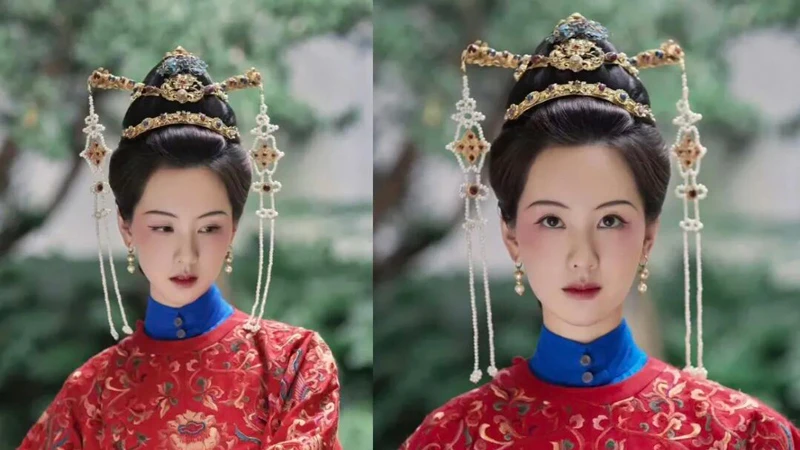
A modern celebrity steps out in full historical regalia, and the internet buzzes. When actress Chen Duling (陈都灵) recently appeared in a meticulously crafted Ming Dynasty (明朝) ensemble, the focus wasn’t just on the gorgeous silks. It was the towering, intricate headdress that captivated everyone. This wasn’t mere costume play. It was a portal to a world where hair was architecture, and every pin held meaning. Her look taps into a growing fascination with historical accuracy and the sophisticated beauty standards of ancient China, proving that an elaborate 500-year-old hairstyle can feel strikingly relevant today.
Architecture for the Head
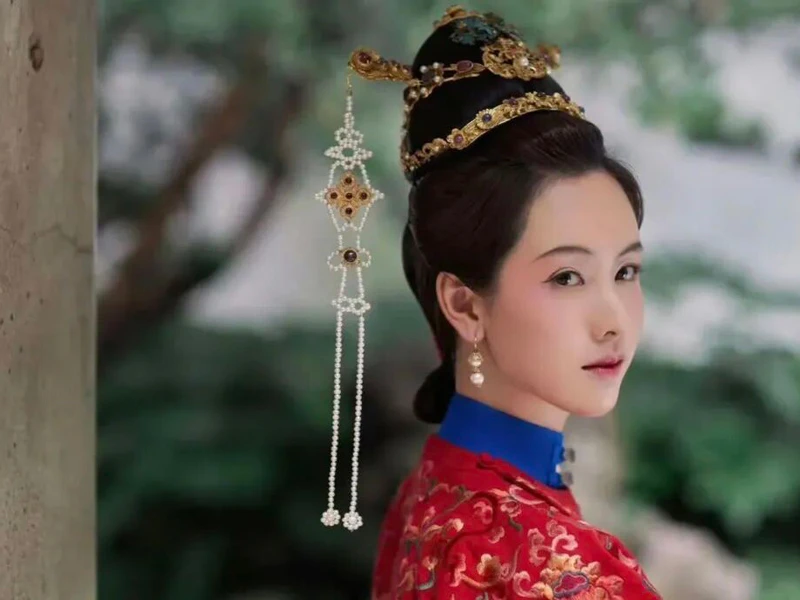
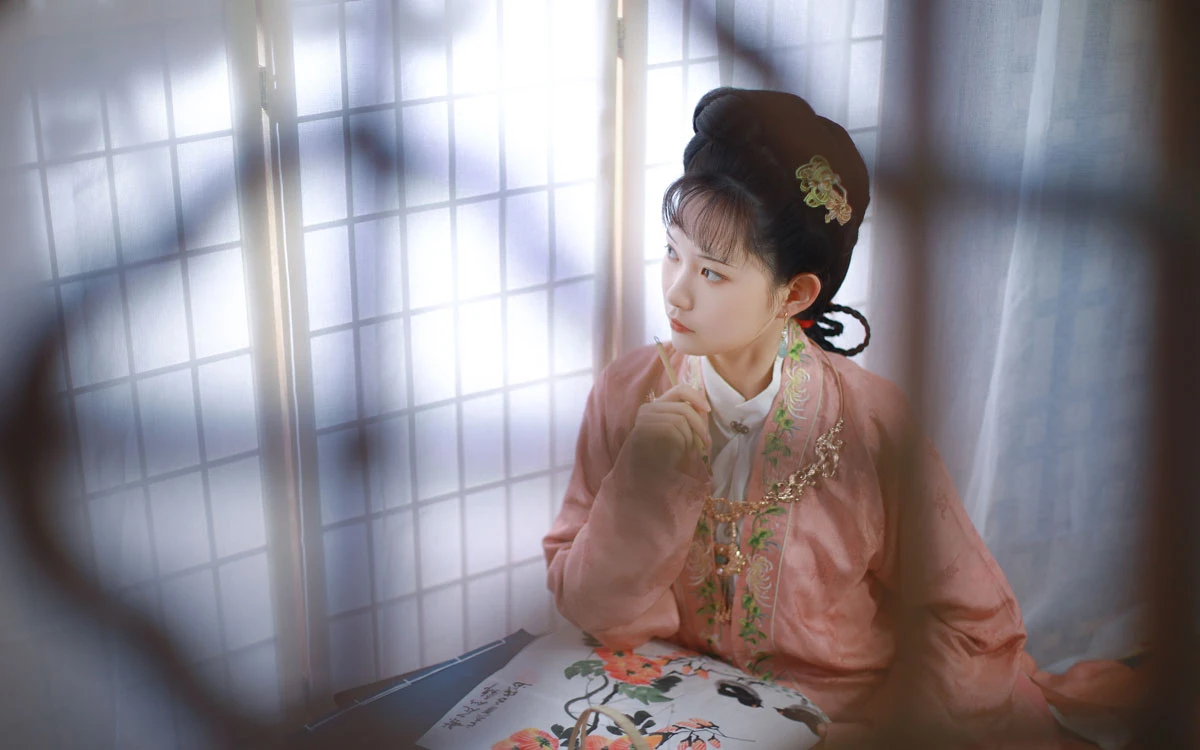
The foundation of Chen’s look is the Jiaji (鬏髻), a pivotal Ming invention. This was not just styled hair. It was a wearable structure. Artisans created a lightweight frame from wire or bamboo, then meticulously covered it with real hair or silk. Worn over the wearer’s own tied-up locks, it instantly added height and volume, creating a majestic silhouette. Available in styles like the Luohan Ji (罗汉鬏) or Shuangfeiyan (双飞燕), these were purchased ready-made from shops, much like buying a statement hat or hairpiece today. The Jiaji was more than a trend; it was a necessary canvas for the stunning jewelry to come.
This modular approach to beauty speaks to a surprising practicality within the opulence. The Jiaji allowed for consistent form, ensuring the complex arrangement of ornaments always had the perfect foundation. It separated the demanding art of hairstyling from the daily act of getting dressed. One could own several Jiaji for different occasions, transforming one’s appearance efficiently. In this sense, it functioned like a sophisticated wig or hair extension system, demonstrating that the desire for versatile, impressive hair is truly timeless.
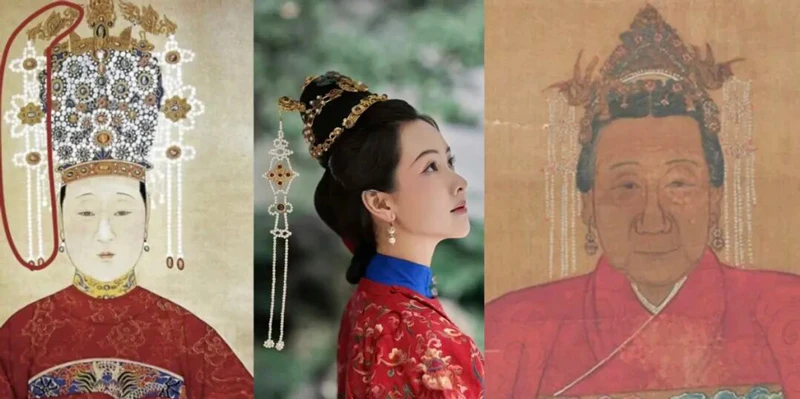
The popularity of the Jiaji also reflected social and economic shifts during the Ming Dynasty. A growing merchant class with disposable income could access fashions once reserved for the elite. The commercial production of these hairpieces meant refined style was becoming more democratized. Wearing a elaborate Jiaji was a visible sign of taste and status, a way to signal one’s family’s prosperity and cultural refinement without saying a word.
A Symphony of Gold
The true spectacle lay in the Tou Mian (头面), the complete set of hair ornaments. Each piece had a specific name, position, and purpose, assembling into a harmonious whole. The centerpiece was the Tiaoxin (挑心), inserted front and center into the Jiaji. Often the most exquisite piece, featuring intricate openwork or gemstones, it was the focal point, akin to a necklace’s pendant.
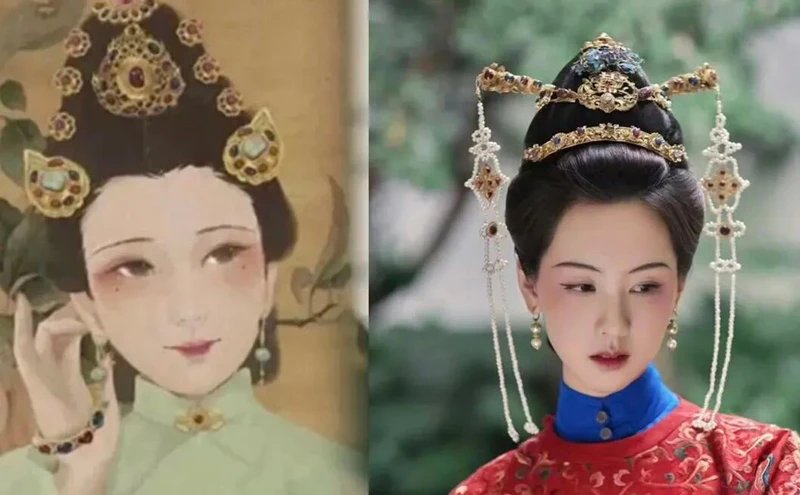
Flanking it were various supporting ornaments. The Dingzan (顶簪) pinned down the structure from the top. Yanbin (掩鬓) adorned the temples. At the back, the large Manguan (满冠) acted as a dramatic backdrop. Delicate Dian (钿) or hairbands might edge the hairline, while Weiji (围髻) with tiny pendants encircled the base. Small hairpins, often shaped like flowers or insects, secured everything in place. Each element, from the grand to the tiny, was essential to the balance and stability of the entire creation.
This wasn’t random decoration. It was coded symbolism. Phoenixes symbolized nobility and grace. Butterflies and flowers hinted at youth and beauty. Buddhistic lotus motifs conveyed piety. The choice of motifs, the quality of the gold, and the vibrance of the gemstones like kingfisher feathers told a story about the wearer’s identity, aspirations, and social standing. Putting on a full Tou Mian was an act of personal and public presentation.
Modern Resonance
Chen Duling’s adaptation, while admired, sparked debate among history enthusiasts. She wore Tiaopai (挑牌), long, symmetrical pendants of beaded knots typically reserved for the most formal occasions and highest ranks, like imperial consorts. Their inclusion in a relatively simplified hairstyle highlights a modern reinterpretation. Designers today borrow elements for visual impact, blending historical inspiration with contemporary styling sensibilities.
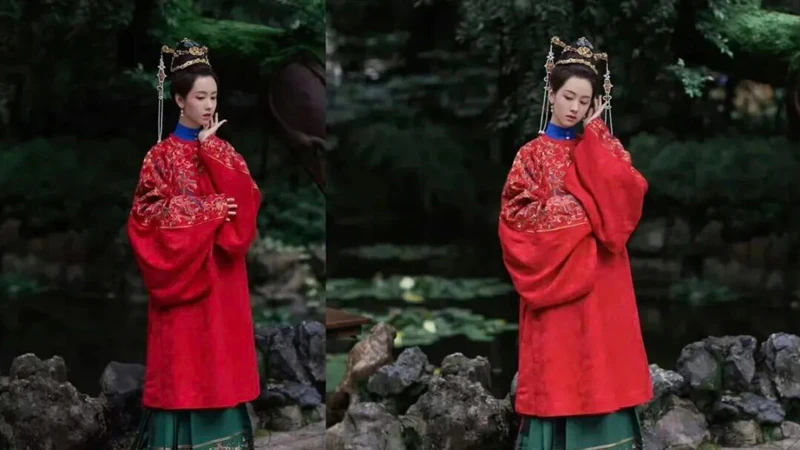
This fusion is key to the style’s current appeal. The modern eye sees more than antique ritual. We see audacious silhouette, masterful craftsmanship, and a powerful aesthetic statement. The bold colors of her clothing—ruby red against emerald green—paired with the gleaming headdress feel unexpectedly vibrant and confident. In an era of minimalist fashion, such unapologetic opulence and detail is captivating.
Ultimately, the fascination with looks like Chen’s goes beyond celebrity. It represents a reconnection with cultural memory through aesthetics. People are not just looking at a pretty picture; they are learning the language of Dian, Zan, and Ji. They appreciate the engineering of the Jiaji and the symbolism in a golden phoenix. This hairstyle, complex and laden with meaning, becomes a tangible link to the past, reminding us that the human desire to create beauty and express identity through adornment is a constant, flowing through dynasties straight into our modern feeds.