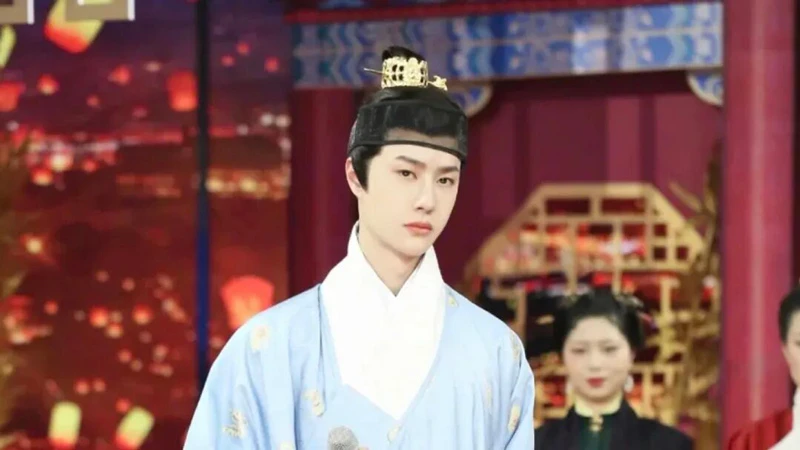
When Chinese actor and singer Wang Yibo (王一博) appeared on the variety show Day Day Up (天天向上) years ago, a specific costume detail ignited online curiosity. His headpiece, resembling a sparse fishnet, led many to wonder if it was a styling error. However, this accessory was a deliberate choice, rooted in centuries of tradition. Far from a mistake, it represents the Wangjin (网巾), a functional hair net from China’s Ming Dynasty. This glimpse into historical fashion, facilitated by a modern celebrity, opens a window to understanding how everyday items from the past carried significant cultural weight. The conversation it sparked highlights a common disconnect between contemporary perceptions and historical reality, urging a closer look at the artifacts that shaped daily life in ancient China.
Origins and Use
The Wangjin was a foundational item in the wardrobe of Ming Dynasty men. Designed as a mesh net, its primary function was to bind one’s hair, or bundle the hair, containing loose strands and creating a neat base for headwear. Its adoption was not merely a fashion trend but a practical solution for managing hair, which was typically worn long. The net also provided grip, preventing hats and official headdresses from slipping during daily activities or ceremonial events. For commoners, it often served as the sole head covering, emphasizing its utility in all spheres of life.
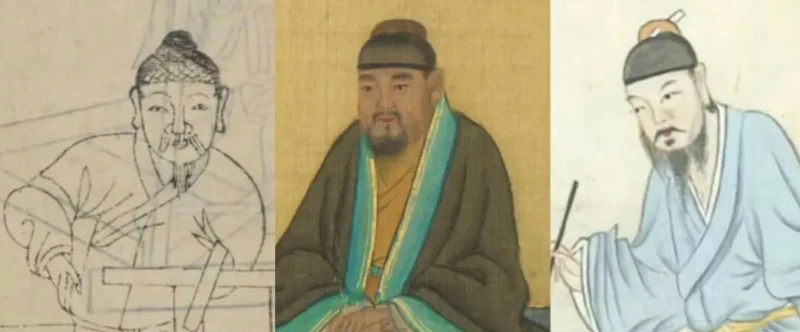
This accessory’s journey to ubiquity is credited to the Ming founder, Emperor Zhu Yuanzhang (朱元璋). Historical records, such as the Ming Shi (明史), recount that he discovered the net during an incognito visit to the Shenleguan (神乐观) temple. Observing a Taoist priest weaving it, he learned of its purpose and swiftly ordered its nationwide use. This decree standardized male grooming across social strata, from officials to farmers. The emperor himself reportedly wore the Wangjin with his casual attire, symbolizing its universal acceptance.
Constructed from materials like black silk thread, horsehair, or even human hair, the net was both durable and flexible. Its design featured a drawstring at the crown, known as the “net band,” for securing it around the hair bun. The lower border had two small cords that passed through Wangjinquan (网巾圈), rings made of jade or metal, allowing for adjustment and a snug fit against the forehead. This intricate yet straightforward design made it adaptable to various head shapes and hairstyles throughout adult life.
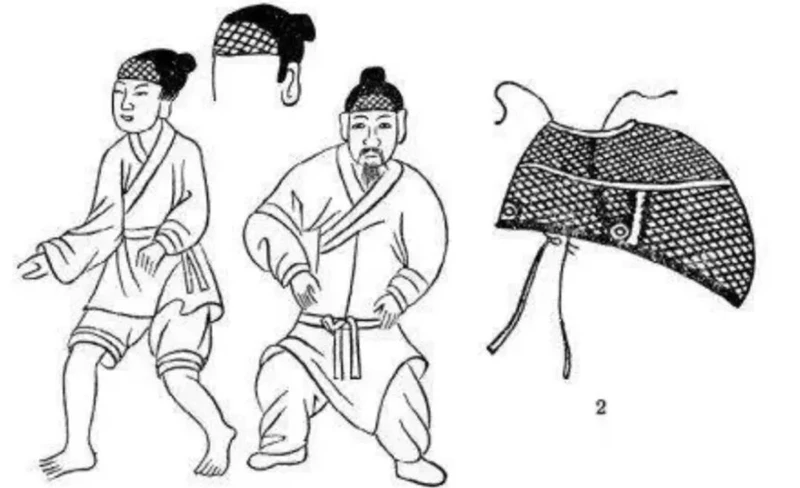
In social terms, the Wangjin was a great equalizer under the Ming code. While elites layered ornate Guanjin (冠巾) over it for formal appearances, its base presence was constant. This practice reinforced a visual order and conformity that aligned with imperial ideals. Portraits and texts from the era consistently show this net, confirming its role as an unspoken marker of Ming identity. Its widespread use demonstrates how mandate and practicality could fuse to create a lasting sartorial norm.
Variations and Legacy
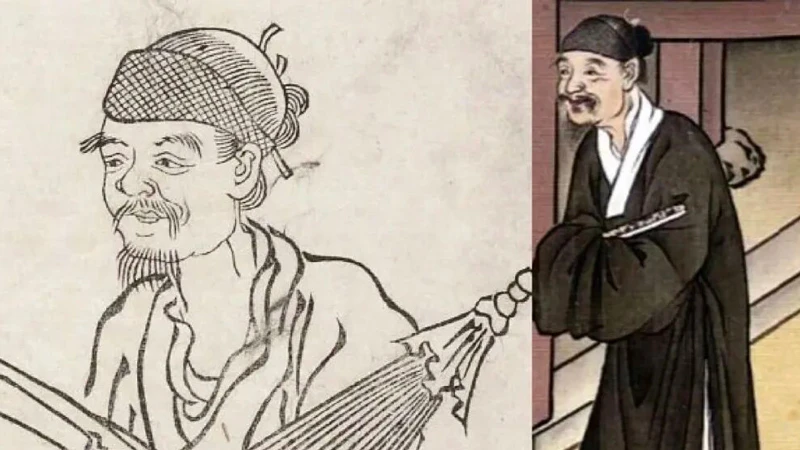
As the Ming Dynasty progressed, particularly toward its end, the Wangjin evolved. A simplified version called the Lan Shou Wangjin (懒收网巾), or “lazy collecting net,” became popular. This design omitted the top drawstring, making it easier to put on and remove quickly. Initially used by prisoners or those in haste, it gradually entered mainstream fashion, though some literati frowned upon it. Texts like Yin An Suo Yu (蚓庵琐语) document this shift, showing how convenience often drives stylistic change, even at the expense of traditional form.
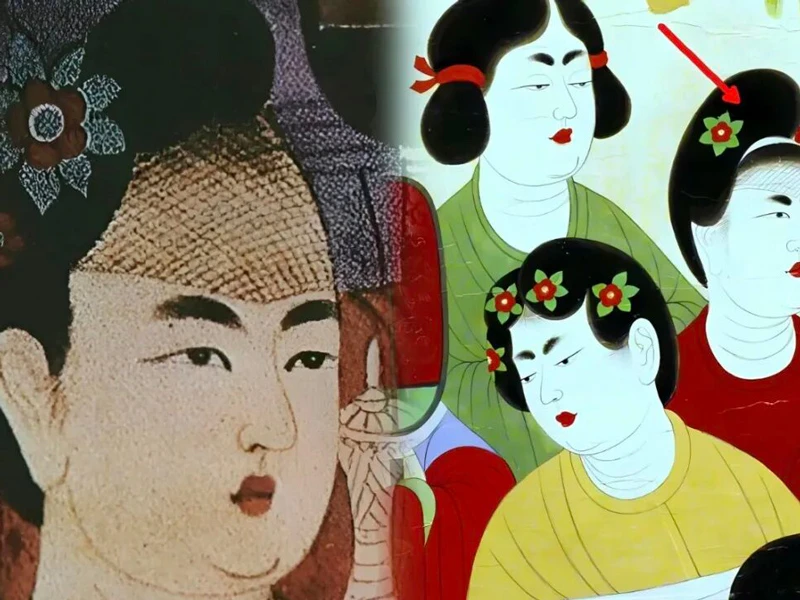
The concept of hair nets was not exclusive to the Ming or to men. During the earlier Tang Dynasty, a similar accessory called Tou E Luo (透额罗) was used, primarily by women. It featured a distinctive pointed frontal curve and was often worn with male-style Yuanlingpao (圆领袍) for a disguised or practical look. Poet Yuan Zhen mentioned it in his work, indicating its role in blurring gender lines in attire. This parallel underscores a recurring theme in history: the management of hair and presentation transcended specific eras or genders, adapting to social needs.
In modern times, the Wangjin is frequently misidentified as a traditional Korean hair net. Key distinctions exist. The Ming-style net, especially the lazy variant, typically had a wider front that narrowed toward the back, constructed entirely of mesh. Korean adaptations often incorporated fabric panels or different silhouettes. Such confusion arises from shared historical influences across East Asia, where Chinese customs spread to regions like Korea and Vietnam. Recognizing these nuances is crucial to appreciating each culture’s unique adaptations and avoiding reductive comparisons.
Wang Yibo’s unintentional spotlight on this artifact has valuable implications. It demonstrates how pop culture can trigger public interest in historical detail, moving beyond amusement to genuine inquiry. For costume designers, historians, and enthusiasts, such moments are opportunities to educate and inspire. The Wangjin story reminds us that what seems bizarre today might be tomorrow’s revived trend, as the past continually informs contemporary expression. This dialogue between eras enriches our understanding of identity, utility, and the silent language of clothing.