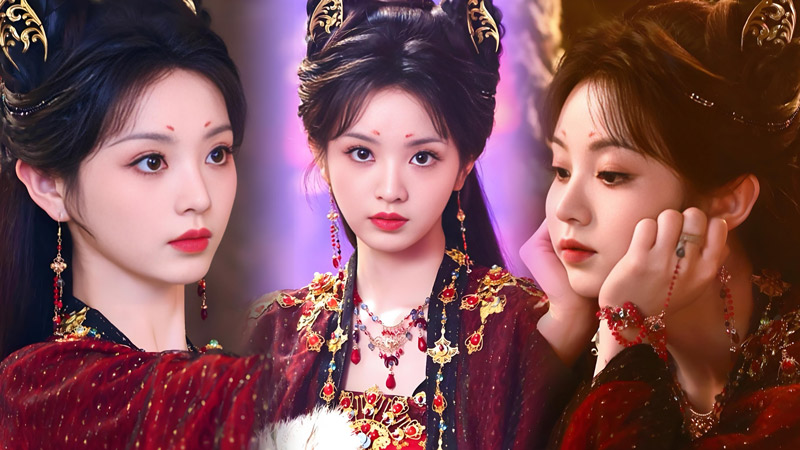
Who hasn’t been mesmerized by Tian Xiwei’s (田曦薇) stunning looks in the hit drama Moonlit Reunion (子夜归)? From the flowing Qixiong Shanqun (齐胸衫裙) to the intricate updos adorned with hairpins, let’s uncover the Chinese aesthetic secrets behind these viral styles that have taken the internet by storm.
Clothing: Timeless Hanfu Silhouettes
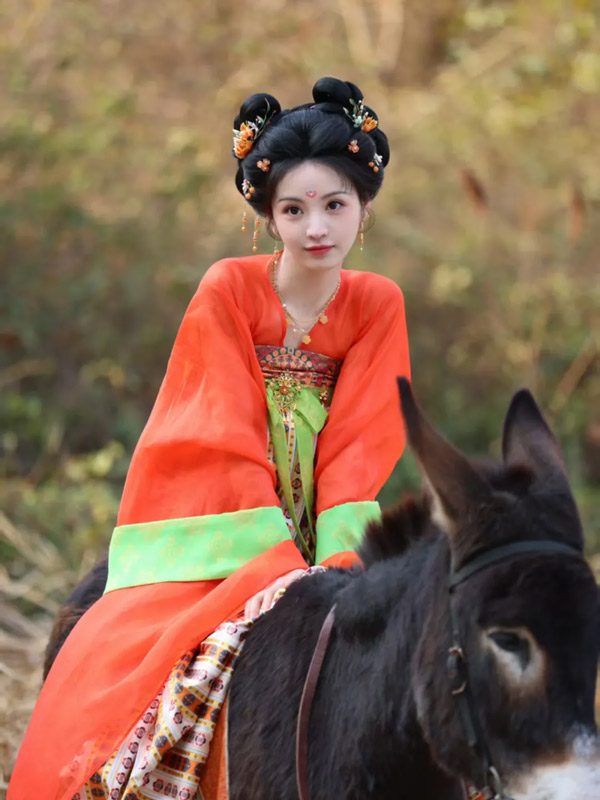
Qixiong Shanqun is a signature skirt style for women during the Sui, Tang, and Five Dynasties. Its defining feature is an extremely high waistline—usually positioned above the chest—which elongates the figure and creates a graceful, flowing effect when walking.
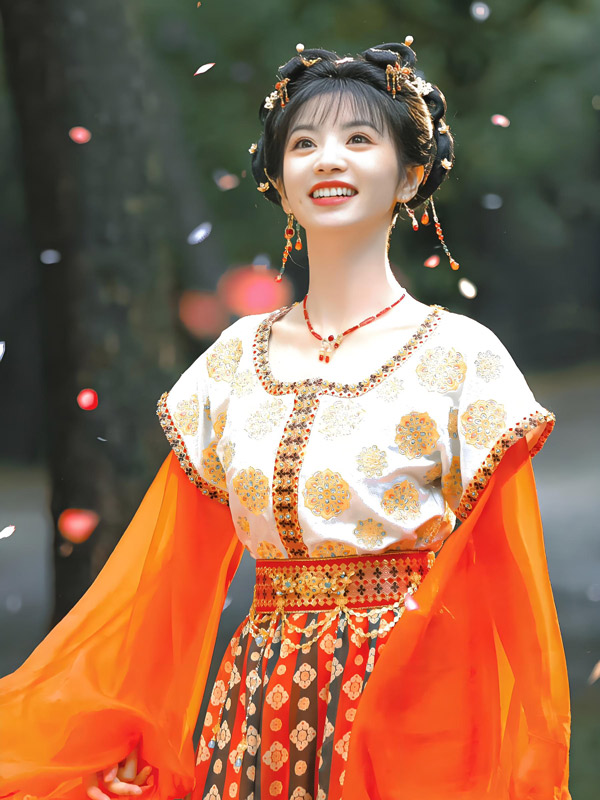
Tanling Banxiu (坦领半袖) is a standout short outer layer in the Hanfu system. “Tanling” refers to its wide, curved or square neckline, which gracefully reveals the neck and collarbone, while “Banxiu” denotes short sleeves that end at the elbows. Worn over a short inner shirt, it adds depth and layers. Its origins trace back to the upper jacket of the Wei and Jin dynasties, evolving over time into its current form.
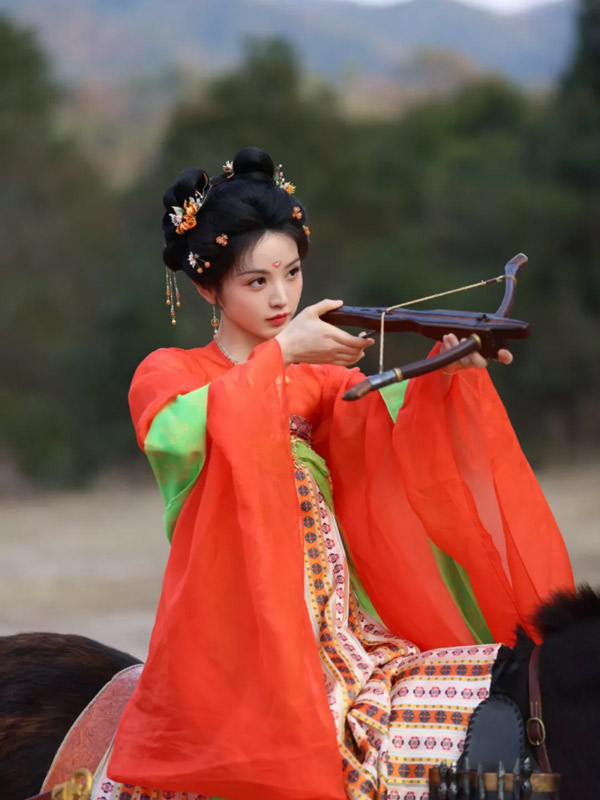
Duopo Jianse Qun (多破间色裙) gets its name from the number of fabric panels—terms like “six-panel skirt” or “twelve-panel skirt” highlight its complex sewing technique. In the Sui and Tang dynasties, multi-panel skirts were all the rage with high-chest long skirts. Made by piecing together narrow-top, wide-bottom panels, they form an A-line silhouette that flatters the figure, emphasizes the waist, and allows for fluid movement during dances. Notably, crafting one in the Tang Dynasty (without sewing machines) was labor-intensive—even Emperor Gaozong (高宗) issued an edict to limit production to spare manpower.
Hairstyles: Elegant Updos with Cultural Roots
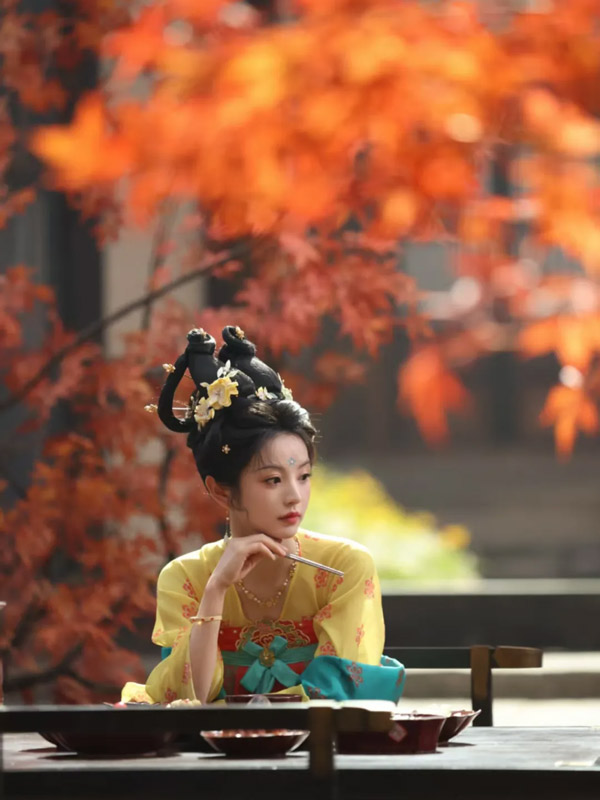
Shuanghuan Wangxian Ji (双环望仙髻) developed from the ancient double-ring bun. It first appeared in the Wei, Jin, Southern, and Northern Dynasties and solidified its shape in the early Tang. Early styles were full and round, ranging from small, casual versions to tall, formal ones. By the mid-to-late Tang, it evolved into wavy, more flowing shapes, breaking from the earlier uniform look. In the Song Dynasty, it became popular among commoners—lower, softer, and adorned with pearls for everyday wear. The styling steps: part hair down the middle, tie into two side knots, add hair extensions to form rings, and secure the base with remaining hair at the back.
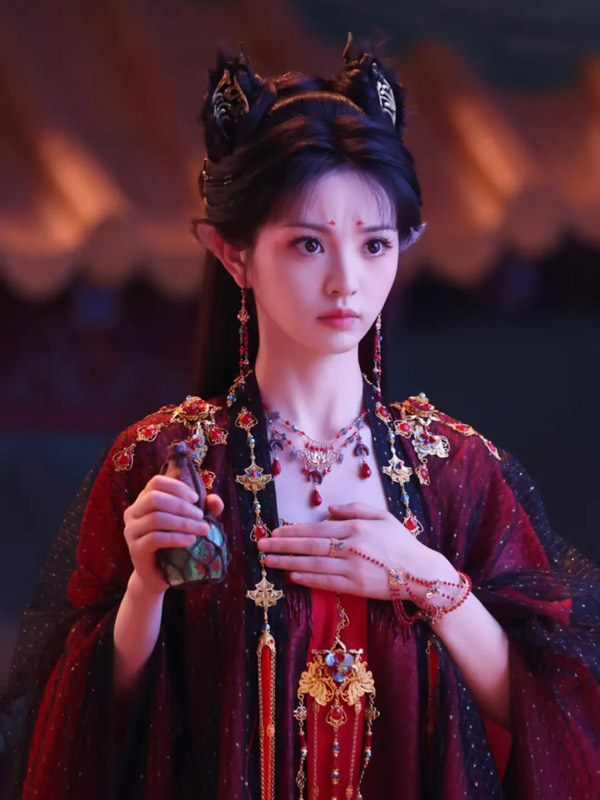
Shuangluo Ji (双螺髻) was prevalent from the early Tang to the Wu Zhou (武周) period, possibly influenced by Buddhist spiral hair ornaments. It’s divided into single and double spirals—for the double version, hair is split into two sections, each twisted into a spiral and fixed on either side of the head, resembling snail shells. Its popularity stemmed from practicality (keeping hair in place for activities like horse riding or polo) and aesthetics—its rounded spiral lines and symmetrical structure reflect traditional Chinese values of harmony and balance.
Makeup: The Exquisite Huadian (花钿)
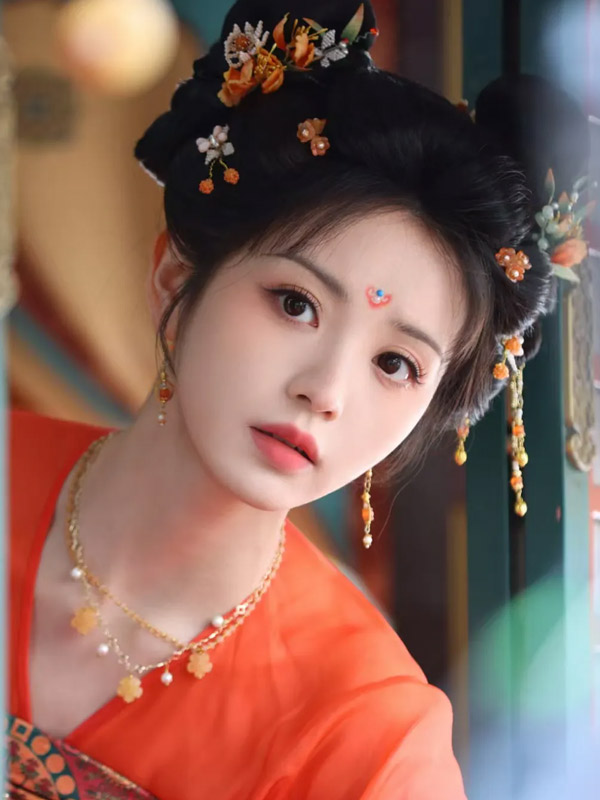
Huadian is a traditional facial decoration for women—thin pieces of gold, silver, colored paper, or pearls applied to the forehead, cheeks, or between the brows. Its history is rich: in the pre-Qin period, the Chu Ci·Jiu Ge (楚辞·九歌) wrote of “colorful clothes like flowers,” hinting at plant-juice totem painting in Chu culture. Han Dynasty wooden figurines from Mawangdui (马王堆) have cinnabar dots on the brow, confirming the “Zhu Yan Fu” (朱颜敷) trend. The Tang Dynasty saw a boom in Huadian—over 30 shapes existed, including moons, circles, cones, peaches, plum blossoms, pomegranate flowers, and birds/insects. These vibrant decorations added a touch of luxury and elegance to women’s makeup.
Crossover Impact
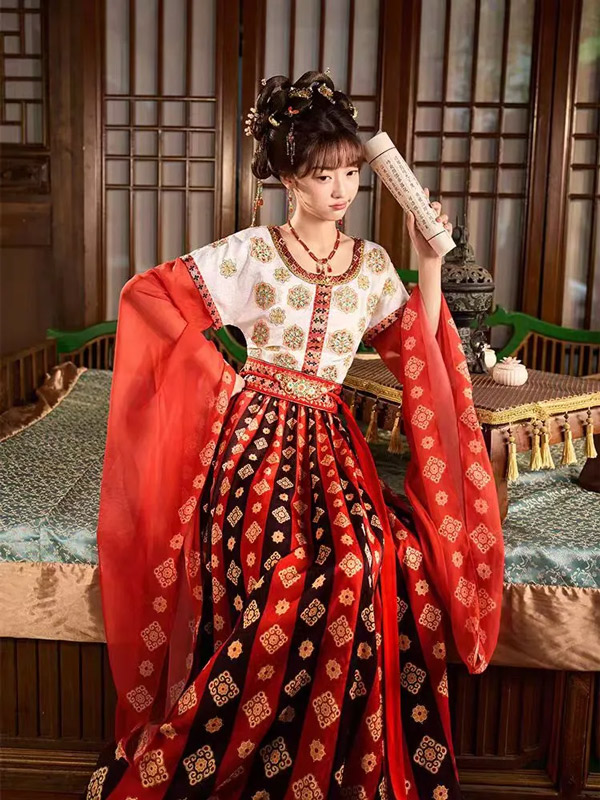
The popularity of Moonlit Reunion has ignited a crossover collaboration trend! Renowned Hanfu brand Shisanyu (十三余) is working with the drama to release Wu Zhen’s style collections. These co-branded pieces replicate the drama’s iconic red-black color palette and Baoxiang (宝相) flower patterns while enhancing modern comfort—preserving Han elements so fans can “step into the drama.” Online data shows searches for “Hanfu” and “Qixiong Ruqun” have skyrocketed, with many stores quickly launching Moonlit Reunion-inspired hairpins and accessories. The drama’s styling team skillfully merged traditional Hanfu elements with visual appeal and wearability, creating a “visual feast” that respects history while captivating audiences.