Article
Search results:
-
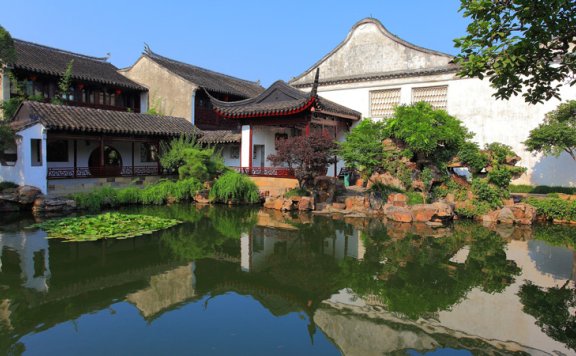
Suzhou: Where Classical Gardens and Living Culture Intertwine
Nestled in the heart of Jiangnan, Suzhou emerges as a living canvas where ancient design breathes through time. This city unfolds like an open-air museum, celebrated for its UNESCO-listed classical gardens—not as static relics, but as dynamic spaces where nature and philosophy merge. Within their walls, miniature mountains and reflective ponds capture the essence of each season, while beyond, the pulse of daily life echoes through narrow, historic lanes. From the delicate melodies of Kunju (昆剧) opera floating over water to the intimate storytelling of Pingtan (评弹) in cozy teahouses, Suzhou engages all senses. Its culinary traditions, rooted in seasonal harmony, offer a taste of the region’s rhythm. Here, every garden path, cobbled alley, and steamy bowl tells a story—inviting travelers to wander, contemplate, and immerse in a living culture where past and present gracefully intertwine. 1. Suzhou's Living Canvases: Where Design Breathes 1.1 Suzhou's Gardens: Four Seasons, One Step Suzhou unfolds like a living museum, its cityscape woven with 108 classical gardens. No single visit can capture them all, demanding thoughtful selection. These are not static relics but dynamic spaces where the ancients bottled nature's essence: stone mimicking mountains, ponds mirroring lakes, ensuring every season painted new scenes within… -
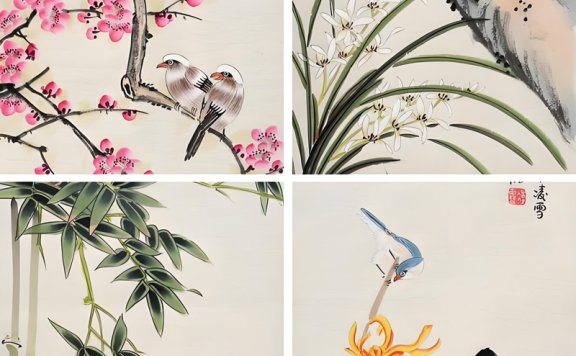
Mastering the Techniques of China’s 4 Gentlemen
In Chinese culture, the "Four Gentlemen" — plum blossom, orchid, bamboo, and chrysanthemum — are revered as emblems of moral integrity and spiritual ideals, embodying the virtues of resilience, elegance, perseverance, and purity. Known collectively as the "Four Gentlemen," they have long served as foundational subjects in Chinese literati painting and poetry, reflecting the Confucian and Daoist aspirations toward inner nobility and harmonious coexistence with nature. This artistic tradition, deeply rooted in symbolic expression, transcends mere representation to convey philosophical depth and personal character. Through evolving techniques and stylistic developments across dynasties, the depiction of these plants has become a refined language of the spirit, capturing both the tangible beauty and intangible essence of these enduring natural symbols. 1. The Unbroken Line of Ink Plum Blossoms 1.1 Echoes on Paper The journey of monochrome plum blossom painting began centuries ago. Records trace its emergence to the Northern and Southern Dynasties, flourishing notably in the Northern Song era. Monk Zhongren pioneered this form, abandoning colour entirely. He found inspiration in moonlight casting a plum's shadow onto paper, capturing its essence solely through ink's subtle shades and washes. His vision sparked a tradition. Yang Buzhi (杨补之) followed, refining Zhongren's (仲仁) technique. He… -
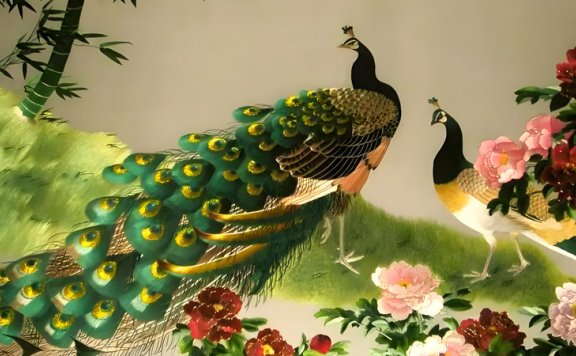
Dynastic Development of China’s Ancient Embroidery Craft
China, recognized as the birthplace of silk, boasts the earliest invention of sericulture, silk reeling, and weaving in human history. Chinese silk textiles and embroidery, born from exquisite craftsmanship and continuous technical innovation, represent an integral part of the nation’s cultural heritage. For millennia, Chinese embroidery has been distinguished by its long history, sophisticated techniques, stunning variety, and exceptional artistry, maintaining a unique aesthetic appeal and technical supremacy across centuries. Known as “needle embroidery” or “flower embroidery,” this art form employs colored threads of varying thicknesses stitched into fabric to depict figures, flora, fauna, and landscapes, producing distinctive decorative effects. Unconstrained by the limitations of weaving, embroidery allows fluid and vivid compositions. With its capacity to render texture and three-dimensionality, it is sometimes regarded as “superior to painting,” rivaling the expressive power of ink and brush. 1. Zhou Dynasty In 1975, excavations at Rujiazhuang (茹家庄) in Baoji (宝鸡), revealed a silent whisper from the Western Zhou dynasty. Inside two tombs, faint imprints on earth bore witness to humanity's earliest known encounter with embroidery. These traces, analyzed as patterns formed by the locked-stitch method, represent China's foundational needle technique. Two twisted threads meticulously formed large, regular designs, likely swirling thunder-cloud motifs.… -
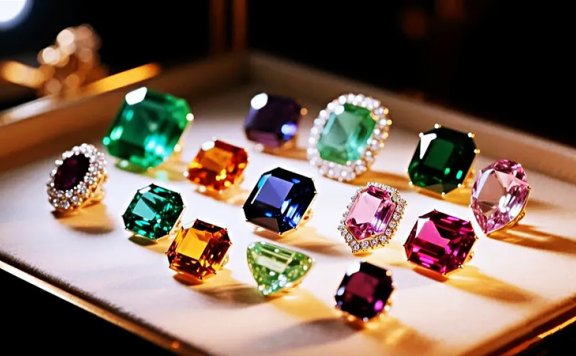
Why Women Can't Resist These 8 Crystals
For many women, crystals represent far more than decorative accessories. They serve as personal talismans that blend aesthetic appeal with emotional resonance. In today's fast-paced world, these natural treasures offer psychological comfort and a tangible connection to positive aspirations. Beyond their visual charm, they fulfill a deeper need for self-expression and mindful living. 1. Tourmaline Tourmaline stands out in the colored gemstone world with its spectacular color range. A single stone often displays multiple hues, creating rainbow-like effects within its structure. This versatility makes matching with various outfits effortless. What truly captivates women is its accessible luxury. It delivers vibrant, eye-catching beauty without extravagant pricing. This combination of visual impact and value creates irresistible appeal for personal collections. 2. Garnet Known as the "woman's stone," garnet enjoys enduring popularity for good reason. Its rich, saturated tones complement skin tones beautifully, creating a brightening effect. Unlike some precious gems, it remains comfortably within reach for most enthusiasts. This gemstone pairs seamlessly with both gold and silver settings. Its warm glow adds instant sophistication to any look, making it a versatile choice for everyday elegance. 3. Sugilite Sugilite commands attention with its regal purple hues. Its distinctive coloration isn't commonly found in… -
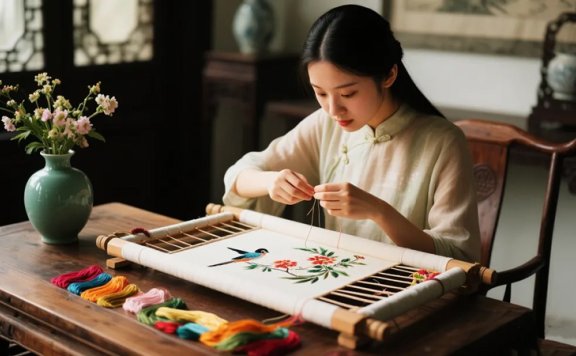
The Unseen Labor Behind Su Embroidery’s Luxury
When you see the price tag on a piece of Su embroidery, it's natural to wonder why intricate stitching on fabric commands such value. The answer lies not in the visible threads, but in the invisible realms of time, skill, and profound dedication woven into every square inch. This ancient craft transcends mere decoration; it represents centuries of accumulated wisdom passed down through generations of artists whose hands translate fleeting thoughts into enduring silk. The Alchemy of Thread and Time Silk-splitting defies imagination. Finer than a human hair, premium silk threads are painstakingly divided into 1/16, 1/32, or even 1/64 strands. This delicate process demands absolute focus – a momentary lapse means starting over. Handling such fragile material requires eyesight sharp enough to count dust motes and hands steady as mountain stones. Time becomes tangible in Su embroidery. A single panel can consume months or years. Embroiderers transform into living statues, bent over wooden frames for endless hours. Their world shrinks to the rhythmic dance of needle and thread, repeated thousands of times daily. Backaches, calloused fingers, and strained eyes are silent partners in this creation. This relentless physical endurance forms the foundation of the craft’s cost – a testament… -
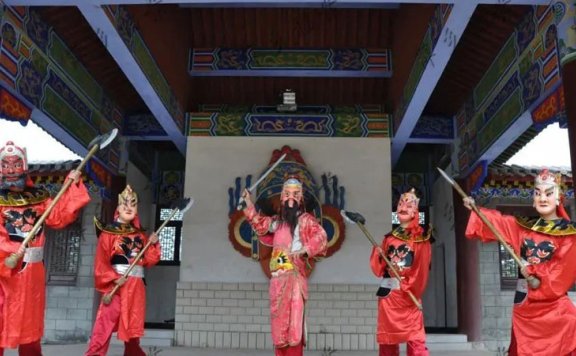
The Masked Echo: Witnessing Nuo Dance in Pingxiang
Tucked away in the hills of Jiangxi province, Pingxiang carries an old, whispered nickname: "The Home of Chinese Nuo Culture." For centuries, the rhythmic beat of drums and the haunting crack of dancers’ footsteps have been part of the fabric of life here. This isn’t performance art designed for a stage; it’s something far more ancient and visceral. Recently, I went to Pingxiang to see Nuo Dance (傩舞) for myself, not as a tourist spectacle, but as a living, breathing practice. A Conversation with Ghosts To call Nuo Dance a "dance" feels insufficient. It’s a ritual, an exorcism, and a story told through the body. Often called a "living fossil" of ancient Chinese dance, its origins are rooted in shamanistic rites meant to drive away pestilence and evil spirits. The dancers, all men, become vessels. The transformation begins with the masks. Each one is a carved, wooden face, painted in bold, dramatic strokes—some fierce and terrifying to scare demons, others benevolent and kind to welcome gods. When a dancer ties one on, he ceases to be himself. He becomes the deity or spirit the mask represents. Then, the movement begins. The local terminology describes it not in flowery terms, but… -
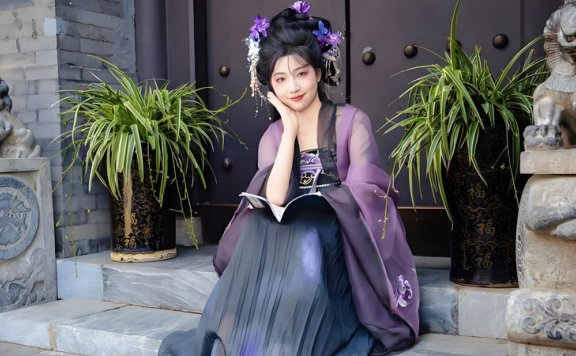
The Fabric of Culture: Unwrapping the Modern Hanfu Movement
I remember the first time I properly wore Hanfu. It wasn’t for a costume party or a photoshoot. It was a simple, linen-lined top and a flowing skirt, worn on a casual afternoon. As I tied the final sash, something clicked. It wasn’t about looking ancient; it was about feeling a profound sense of connection. This, I realized, is the subtle, enduring romance of Hanfu. It’s a wearable language, a quiet conversation between the past and the present, and it’s experiencing a beautiful revival far beyond China's borders. A Silent Language of Pattern and Form To the untrained eye, Hanfu might just look like beautiful fabric. But every stitch, every fold, speaks a deliberate language. It’s a design philosophy where aesthetics are deeply intertwined with meaning and function. The patterns are a lexicon of positive wishes. A peony embroidered on a collar isn’t just a flower; it’s a silent prayer for prosperity and honor. Swirling cloud patterns trailing down a sleeve aren’t mere decoration; they represent a desire for freedom and a carefree spirit. Even the choice of a solid, unadorned fabric reflects a core tenet of Chinese philosophy: the elegance of simplicity, the idea that true beauty often lies… -
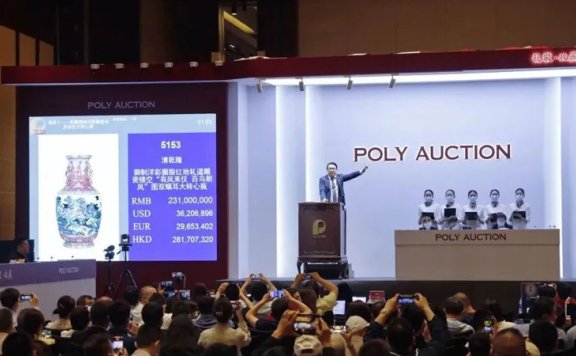
The Billion-Dollar Code: Decoding the Qianlong Yangcai Phenomenon
In the hushed, high-stakes auction rooms of Hong Kong and Beijing, a specific type of artifact consistently commands breathless attention and record-shattering bids. The names are poetic—a "Gourd Vase with 'Longevity' Design," a "Revolving Vase with Dragons," and a "Phoenix and Hundred Birds Vase." The prices are astronomical, soaring past hundreds of millions. The common thread weaving through these sales isn't just the Qianlong era; it's a specific, dazzling technical achievement: Yangcai (洋彩), or "foreign colors." This isn't just porcelain. It's a story of imperial ambition, a virtuoso craftsman, and a unique moment of East-West fusion, frozen in glaze and fired to perfection. So, what is the secret code that makes Qianlong (乾隆) Yangcai the undisputed emperor of the auction world? The Master & The Monarch: A Partnership For The Ages The story of Yangcai is inextricably linked to two men: the Qianlong Emperor, one of China's most powerful and artistically ambitious rulers, and Tang Ying (唐英), his genius Superintendent of Pottery. Tang Ying wasn't just a bureaucrat; he was a visionary artist and technologist. Stationed at the imperial kilns in Jingdezhen (景德镇), he personally oversaw the creation of the emperor's wares. Under constant pressure to innovate and impress, Tang… -
Stitches Through Time: How Chinese Embroidery Really Developed
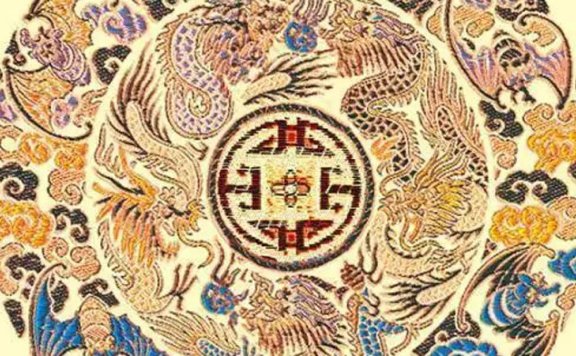
When a beautifully preserved embroidery piece appears on cultural programming, it does more than showcase visual splendor—it opens a window into one of China's most enduring art forms. While modern viewers marvel at the technical mastery, the true story of Chinese embroidery reveals a history far more complex and fascinating than most realize, characterized by unexpected turns, technical revolutions, and constant evolution. A Non-Linear Path of Development The common assumption that embroidery developed in a straight line from simple to complex misses the remarkable twists in its historical journey. The earliest beginnings trace back to prehistoric times when bone needles joined animal hides—functional stitching that would eventually evolve into decorative expression. By the Shang and Zhou dynasties, embroidery had emerged as a recognized craft, although it was still in its developmental stages. The real breakthrough came during the Warring States period with the invention of chain stitch, a technique that created flowing, interconnected lines that brought dramatic new life to textile designs. The magnificent embroideries discovered at the Mashan No. 1 Chu Tomb in Hubei, featuring paired phoenixes and dragons, demonstrate how this period established embroidery as a medium for sophisticated artistic expression. The Tang Dynasty witnessed another leap forward… -
Dough as Art: The Women Keeping a 1000-Year-Old Chinese Tradition Alive
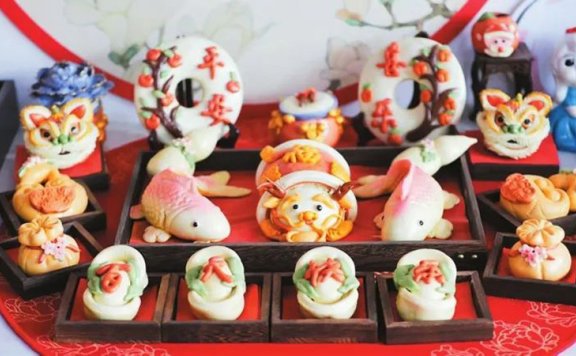
The air in Zhaojiashan (赵家山) Village hangs heavy with the sweet, earthy scent of steamed wheat. In Hao Qingling’s (郝庆玲) workshop, a cloud of steam erupts as she opens the lid of a massive bamboo steamer, revealing a stunning, intricately sculpted peach-shaped steamed bun, a traditional birthday offering. A few miles away, in another workshop, Wang Xiaoping’s (王小萍) fingers carefully shape a piece of dough into a lifelike koi fish, its scales meticulously defined, its tail fin poised as if ready to flick and swim away. This is Jinyang Hua Mo (晋阳花馍), an art form where dough becomes poetry, and two artisans are ensuring its thousand-year-old story continues, one delicate fold at a time. The Language of Dough To call Hua Mo merely a decorative snack is to miss the point entirely. In China’s northern Shanxi province, and specifically in the Jinyang (晋阳) region, these sculpted steamed buns are a vital language of ritual and respect. Recognized as a provincial-level intangible cultural heritage in 2011, their origins are ancient, tracing back to ceremonial bronze vessels. “Our Jinyang Hua Mo isn’t just food for the stomach,” explains Yao Fusheng (姚富生), head of a local research association focused on folk culture, cradling… -

An Autumnal Guide to Wellness According to TCM
As the relentless heat of summer finally begins to soften, we enter Chushu (处暑), the "End of Heat" solar term in the traditional East Asian calendar. For me, this isn’t just a date on a page; it’s a tangible, almost visceral shift in the environment. In the framework of Traditional Chinese Medicine (TCM), this period is a pivotal, gradual moment to align our daily habits with the season’s inherent energy—which is fundamentally about harnessing the "harvest" and consciously turning inward. This transition isn’t about a drastic life overhaul; it's about integrating subtle, intuitive tweaks to what we eat, how we rest, and how we move to feel genuinely balanced and resilient as the world changes around us. Working with the Autumn Air The most immediate change you’ll likely feel during Chushu is the rise in dryness, or what TCM calls Zao (燥) , or pathogenic dryness. This environmental shift can subtly yet significantly affect our respiratory and integumentary systems, often showing up as a scratchy throat, slightly tighter or flaky skin, a dry cough, or even a feeling of mild irritation. My first and most enjoyable line of defense is always in my kitchen. I consciously begin to swap out… -
Can 10 Healing Artifacts Bridge Ancient Wisdom and Modern Wellness?
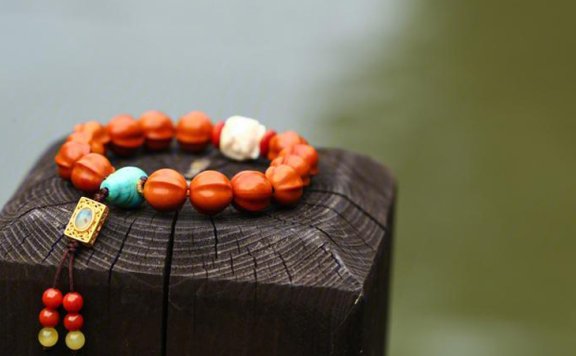
For centuries, people across Asia have carried small, polished objects in their palms, turning them over and over. Many see this as a calming habit or a connection to tradition. But beneath the smooth surfaces of these cherished beads and carvings lies a hidden truth: they are tiny vaults of ancient medicine. These aren't just ornaments; they are concentrated nature, offering subtle wellness benefits that unfold with every touch. This practice transforms idle moments into sessions of natural healing, where the warmth of your hand activates the dormant virtues within wood, seed, and vine. Each rotation is a silent conversation with centuries of herbal wisdom, turning stress into serenity and touch into therapy. Agarwood: Fragrant Therapy First among these natural treasures stands Agarwood, revered as the diamond of the plant kingdom. Its extraordinary value, sometimes reaching staggering sums per gram, speaks to its rarity and profound significance. This precious substance forms within specific trees when they suffer injury, secreting a dark, aromatic resin that embeds within the wood itself. The resulting material carries an exquisite, complex scent profile – notes of sweet vanilla, cool mint, floral hints, or deep amber can emerge, varying with origin and tree species. Beyond its… -
A Guide to Painting Lotus in Traditional Chinese Art
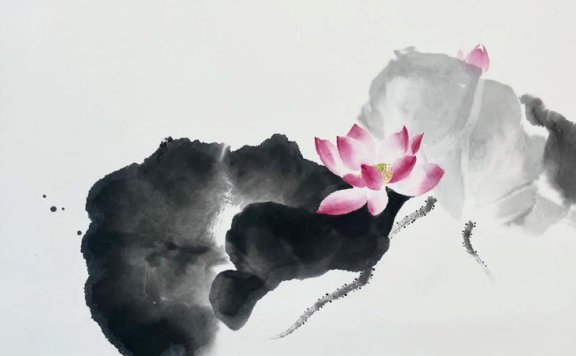
As an extension of the chrysanthemum painting technique—one of the Four Gentlemen in traditional Chinese ink wash painting—the lotus holds a significant place in floral and bird compositions. In method, the lotus blossom can be understood as an enlarged, multi-petaled version of the chrysanthemum’s core, while its leaves, though broader, are rendered through similar brushstroke techniques. This makes the lotus an excellent subject for practicing essential brushwork and ink wash skills, such as tonal variations, textural strokes, and compositional balance. Furthermore, its elegant form and cultural symbolism have established it as a recurring and cherished theme in classical and contemporary bird-and-flower paintings. Therefore, any serious study of this artistic genre would be incomplete without mastering the depiction of the lotus. 1. Decomposed Drawing of Lotus Structure 1.1 The Outlining Technique Outline Method begins at the petal tip. A single stroke flows left, another right – single outline complete. Three strokes form a spoon shape – complex outline. For half-open blooms, strokes converge tightly at the heart. 1.2 The Sketch-Fill Method White Lotus: Outline first three petals inward. Use complex outline for the fourth. Wash the seedpod in grass green. Touch petal bases with gamboge. Dab pale vermilion on upper petals.… -
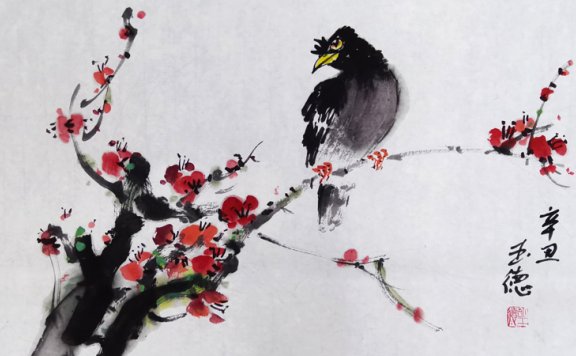
How Ink and Brush Define China's Soul?
On the soft surface of Xuan paper (宣纸), a wolf-hair brush outlines the bones of mountains, while ink washes breathe life into rivers and clouds. Guohua (国画), honed over millennia, transcends mere visual art. It is a silent symphony of Eastern philosophy. When Northern Song master Fan Kuan (范宽) imprinted his signature "Raindrop Texture Strokes" onto Travelers Among Mountains and Streams (溪山行旅图), or when Yuan dynasty recluse Ni Zan (倪瓒) conjured vast, empty landscapes with minimalist strokes, they weren't just depicting scenery. They were probing the essence of heaven and earth itself. The beauty of Guohua lies in its profound artistic conception, a measured rhythm of ink and void, exploring the philosophical depth of harmony between man and nature. The Dance of Ink and Brush Guohua developed its language, a highly symbolic system built on brush and ink. Tang dynasty theorist Zhang Yanyuan (张彦远), in History of Famous Paintings across Dynasties (历代名画记), emphasized "Bone Method Brushwork", linking painting strokes to the disciplined energy of calligraphy. Southern Song painter Liang Kai (梁楷) embodied this in his The Splash-Ink Immortal (泼墨仙人图). Bold, sweeping strokes define the robe, echoing cursive script, proving the brush itself held intrinsic beauty – a concept of "writing"… -
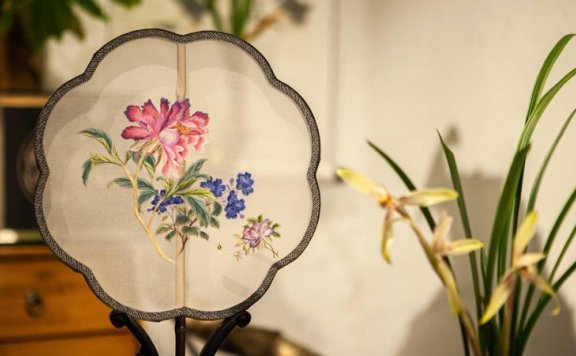
How China's 4 Embroidery Styles Captured the World?
For over three millennia, Chinese embroidery has transformed simple thread into breathtaking art. Emerging during the Shang and Zhou dynasties, it initially served ritual purposes and marked social status. Its journey saw lockstitch mastery in the Qin and Han, absorbed painting aesthetics in the Tang and Song, and crystallized into four distinct, revered regional styles by the Ming and Qing: Su, Xiang, Yue, and Shu embroidery. More than decorative craft, this intricate artistry weaves together ceremonial tradition, feminine skill, and global exchange, embodying China's aesthetic spirit. Its enduring legacy earned it global recognition as an intangible cultural treasure. 1. Su: Double-Sided Elegance Hailing from Jiangsu, Su Embroidery embodies "finesse, delicacy, elegance, and purity." Its crown jewel is the astonishing double-sided technique, where identical images appear flawlessly on both fabric sides. Finesse demands microscopic precision, with stitches accurate within 0.01mm and subtle shifts across 200 silk hues. Delicacy is legendary: a single thread splits into 128 filaments, and a cat's eye requires 15 painstaking layers; its pupil comes alive with Shizhen (施针) creating light reflections. Elegance shines through Xuzhen (虚针), mimicking ink wash painting's ethereal beauty. Purity means perfection – no knots, skipped stitches, or stray ends mar the reverse. Mastering this… -
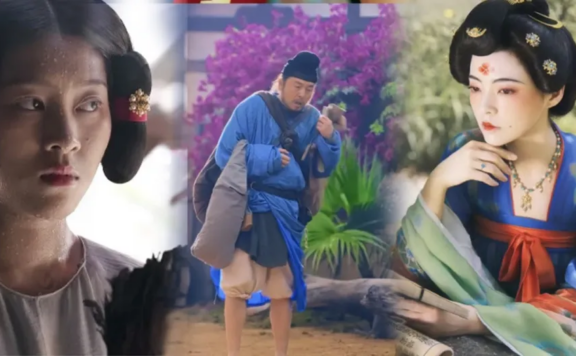
Why Wear Long Sleeves in Southern China, Lingnan?
In the ancient cdrama The Lychee Road, Li Shande was sent to Lingnan to transport litchis for the emperor. Attentive netizens noticed that in this drama, Lingnan was extremely hot, with almost everyone sweating. However, except for Governor He, almost everyone wore long sleeves. Weren't they hot? Let's start with the conclusion. During most of the Tang Dynasty, the temperature in Lingnan was actually a bit higher than our current summers. Some scholars pointed out that the temperature at that time was about 1 - 2℃ higher than it is now. People wore long sleeves mainly because of the basic etiquette for formal occasions. Another reason is that although the clothes were long - sleeved, they were made of natural fabrics, which weren't as stuffy as chemical fibers. Moreover, long - sleeved shirts and long trousers could effectively prevent mosquito bites. As we've popularized before, the short - sleeved clothes worn by Governor He were generally used as an inner layer with a round - collared robe. For someone like Governor He to appear directly in short - sleeved clothes alone, such occasions were basically at home or other informal settings. Also, some laborers or working people who needed to… -
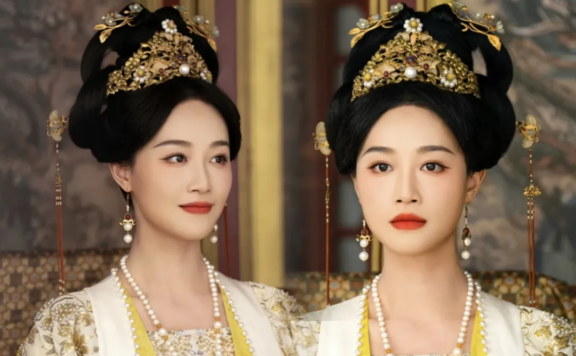
Lan Yingying Wears Song Style Hanfu
In the cdrama Perfect Match, Lan Yingying (蓝盈莹) played the role of an imperial concubine, a legitimate daughter favored by the emperor. She also planned for her family, and we witnessed her growth and transformation. Let's start with the conclusion. The outfit Lan Yingying wore was a style of the large-sleeved shirt and skirt in Song Dynasty clothing. This kind of large-sleeved shirt was usually worn by women. It had a straight collar and a front-opening design and was mainly used as an outer garment. From Tang Dynasty paintings and unearthed clothing from the Song and Ming dynasties, we can see that the large-sleeved shirt was popular in the Tang, Song, and Ming dynasties. In the Song Dynasty, it developed into an important formal dress for noble women, especially as the daily wear for concubines. By the Ming Dynasty, the way of wearing the large-sleeved shirt was similar to that in the Song Dynasty. It was also listed as the regular clothing for queens and noble women. Typical styles included the bright red large-sleeved shirt and the bright yellow large-sleeved shirt. This evolution of the style reflects the historical continuity of traditional formal dress culture. The exquisite materials and elaborate… -
Chen Yanxi's Mother Costume in The Legend of Zang Hai
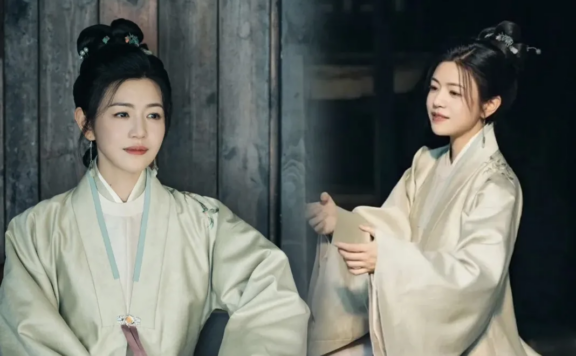
In the ancient cdrama The Legend of Zang Hai (藏海传), although Chen Yanxi only appeared in a few scenes, she left a deep impression. She played the mother of Zang Hai (played by Xiao Zhan), wearing a Ming-style cape, showing a different kind of mature charm from before. Let's first talk about the outfit on the left side of the main picture. Chen Yanxi wore a front-buttoned narrow-sleeved cape, with a round-collared shirt and a cross-collared middle garment inside, and a horse-faced skirt below. The whole set was in the Ming style. The overall color of this outfit was a combination of light blue and light colors, so it looked gentle and elegant. Her hair was simply styled in double buns or a single bun, making her look fresh, elegant, and refined. The cape is a relatively formal style in Ming Dynasty clothing. Its style features a straight collar and slits on both sides. It evolved from the Bei Zi in the Song Dynasty. In some Ming Dynasty books, the terms 'Bei Zi' and 'cape' were often used interchangeably. The main difference between them is that in the middle and late Ming Dynasty, the collar of the cape was mostly… -
What Made Duel on Mount Hua's Finale Truly Resonate?
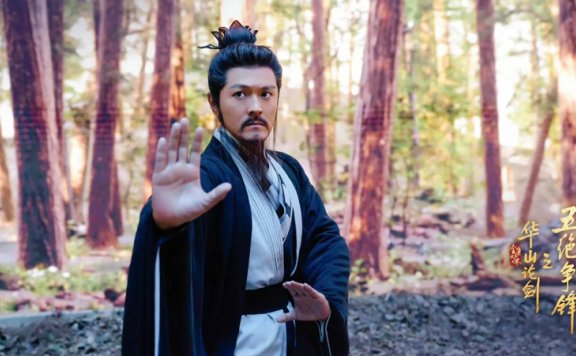
The grand finale of the Wuxia drama Wujue Zhengfeng (五绝争锋) delivered its last six episodes, culminating the series' intricate saga. This concluding segment resolved the central conflict surrounding the legendary Nine Yin True Sutra (九阴真经) and the fate of Zhong Juesheng (钟绝圣), the ambitious leader of the Ming Cult. The resolution wasn't merely about victory over evil; it offered a poignant, character-driven denouement that resonated deeply, moving beyond predictable tropes to find warmth and quiet closure amidst the martial world's chaos. Unmasking the Scheme The climactic gathering at Mount Hua, intended as a decisive contest for possession of the coveted Nine Yin True Sutra, took a shocking turn. When the sacred text's container was finally opened, it stood empty. This pivotal moment revealed an elaborate deception masterminded by Zhong Juesheng. His plan was insidious: dangle the promise of ultimate power to ignite a destructive war among the martial sects. Amidst the ensuing conflict, he aimed to advance his radical doctrine of "learning martial arts to destroy martial arts," believing his path was one of necessary, righteous purification. The revelation shattered the expectations of the gathered heroes. Zhong Juesheng's motives, while extreme, stemmed from a warped sense of purpose, challenging the… -
How Hanfu and Ancient Architecture Echo China’s Soul
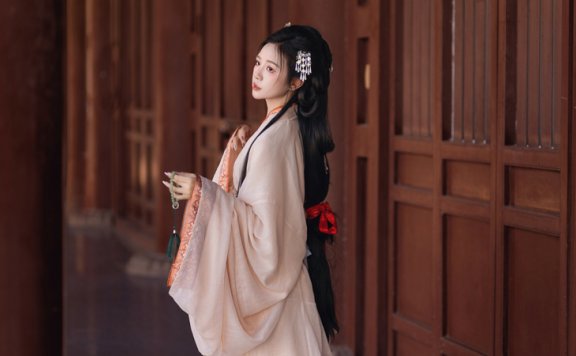
Silk whispers against stone. Graceful sleeves dance with upturned eaves. Across centuries, Hanfu and ancient Chinese architecture engage in a silent, breathtaking dialogue. These two pillars of Chinese civilization embody shared principles of balance, symbolism, and profound respect for nature. Walking through a courtyard in flowing robes isn't merely a photo opportunity; it's stepping into a living canvas where fabric and form converse in the language of heaven, earth, and humanity. This encounter reveals the deep, interwoven roots of China’s aesthetic soul. Shared Foundations Both Hanfu and ancient structures spring from the core principle of Tian Ren He Yi (天人合一) – harmony between heaven and humankind. The classic Shenyi (深衣) garment, with its distinct upper and lower sections, mirrors the division between sky and land. Its wide sleeves symbolize boundless capacity, embracing the universe's vastness. Similarly, imperial palaces stand as testaments to cosmic order through strict axial symmetry, reflecting the belief in a central, governing power. The iconic swooping rooflines, known as Feiyan (飞檐), defy their earthly anchors, reaching skyward with dynamic elegance. Observing a figure in a Ruqun (a short jacket over a long skirt) within the Forbidden City reveals uncanny visual echoes. The layered skirt echoes the tiered…
