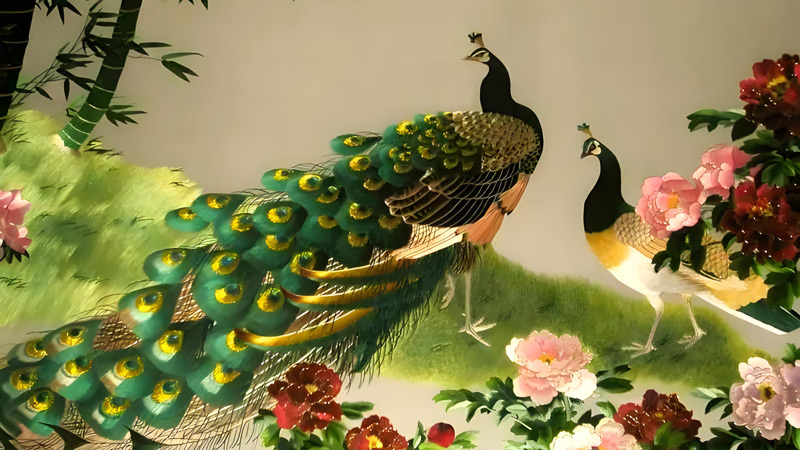
China, recognized as the birthplace of silk, boasts the earliest invention of sericulture, silk reeling, and weaving in human history. Chinese silk textiles and embroidery, born from exquisite craftsmanship and continuous technical innovation, represent an integral part of the nation’s cultural heritage.
For millennia, Chinese embroidery has been distinguished by its long history, sophisticated techniques, stunning variety, and exceptional artistry, maintaining a unique aesthetic appeal and technical supremacy across centuries. Known as “needle embroidery” or “flower embroidery,” this art form employs colored threads of varying thicknesses stitched into fabric to depict figures, flora, fauna, and landscapes, producing distinctive decorative effects. Unconstrained by the limitations of weaving, embroidery allows fluid and vivid compositions. With its capacity to render texture and three-dimensionality, it is sometimes regarded as “superior to painting,” rivaling the expressive power of ink and brush.

1. Zhou Dynasty
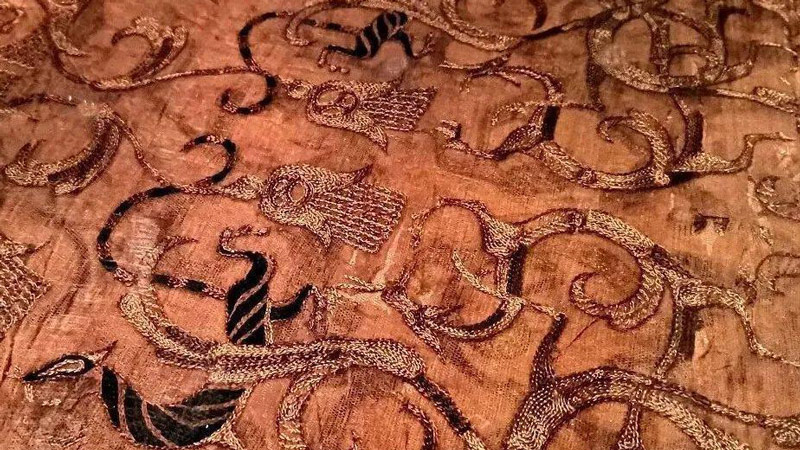
In 1975, excavations at Rujiazhuang (茹家庄) in Baoji (宝鸡), revealed a silent whisper from the Western Zhou dynasty. Inside two tombs, faint imprints on earth bore witness to humanity's earliest known encounter with embroidery. These traces, analyzed as patterns formed by the locked-stitch method, represent China's foundational needle technique. Two twisted threads meticulously formed large, regular designs, likely swirling thunder-cloud motifs. Found on fragments of burial shrouds or garments, they demonstrate a deliberate turn from pure utility. Here, over three thousand years ago, threads transcended function, becoming tools for personal adornment and visual delight.
2. Warring States Period
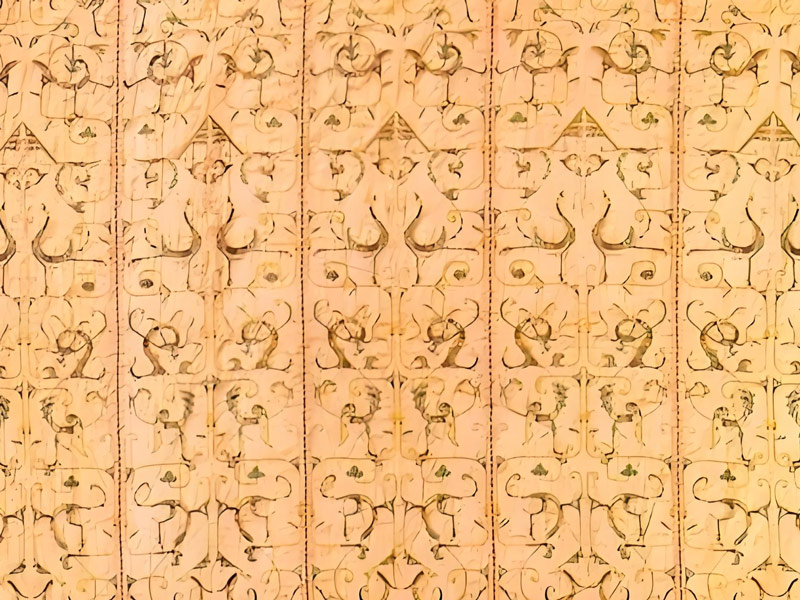
Centuries later, the Warring States period witnessed an explosion of needlework ambition. Tombs like Changsha's Mausoleum No. 3 yielded astonishing finds: entire coffin interiors lined with embroidered silk. Eastern panels featured intertwined dragons, phoenixes, and scrolling flora; southern walls bloomed with stylized cranes and deer amid vibrant foliage. This wasn't mere decoration, but a narrative woven in thread. The 1982 discovery at Jiangling's Mashan (江陵马山) further astounded. Two quilt covers, four robes, three gowns, and even a pair of trousers emerged, their brilliance undimmed.
Artists first sketched designs directly onto fine silk using vermilion or ink, then brought them to life. Mastery of both locked-stitch and newly refined flat-stitch allowed unprecedented detail and fluidity. Serpents dissolved into vines, deer antlers sprouted leaves. Realistic animal heads merged with geometric plant stems, creating a dynamic visual language where creatures danced with geometries. This fluidity, this confident blend of abstraction and naturalism, marked embroidery's arrival as a sophisticated, mature art.
3. Han Dynasty
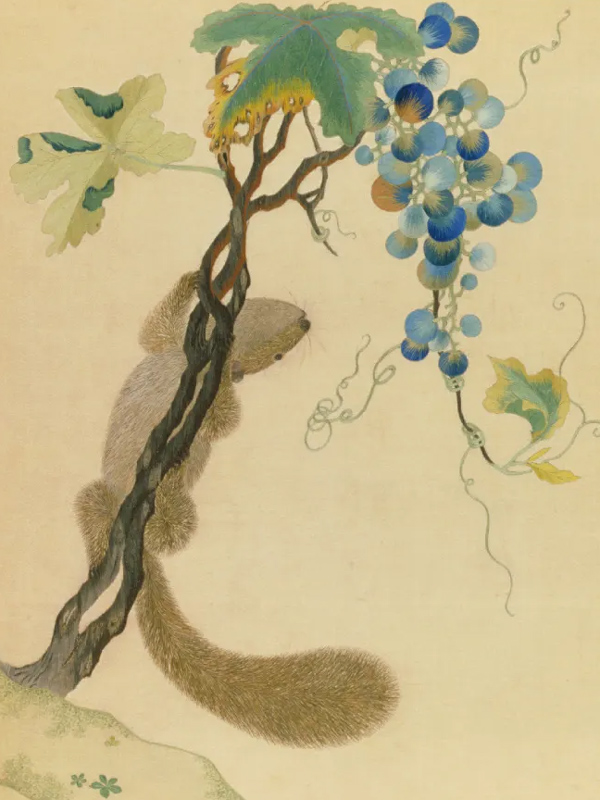
Han dynasty embroiderers inherited this vibrant legacy and scaled unprecedented heights. Finds stretch across empires: Mawangdui (马王堆) in Changsha, Dabaotai (大葆台) in Beijing, Wuwei (武威) in Gansu, Minfeng (民丰) in Xinjiang, even distant Noin-Ula in Mongolia. Each site unveils distinct regional palettes and themes. Mawangdui dazzles with saturated colours and cloud-scrolls dominating swirling compositions where dragon heads emerge from mist.
Beijing's Dabaotai favoured rhythmic, twisting botanical forms executed solely in locked-stitch. Hebei's Huai'an county offered mythical landscapes with figures and beasts, while Xinjiang introduced distinctive floral patterns and Ruyi scepters (如意纹). Nomadic tastes in Mongolia favoured powerful dragon motifs and fish-bird combinations on sturdy felts. Technical prowess became paramount.
Needleworkers wielded a broader arsenal: flat-stitch, locked-stitch, stem-stitch, and couching. Their genius lay in expressive simplicity – using line alone, varying thickness, balancing light and dark threads to create astonishing depth and movement. A singular treasure emerged at Mawangdui: the “Jian Di Tree Pattern Pan-Luo Embroidery” (缣地树纹铺绒绣). This piece employed the rare Pan-Luo technique, meticulously counting warp threads to fill the entire ground except for a hairline "water path" defining the pattern. Its geometric precision stands as a unique testament to Han ambition, the sole surviving large-scale example of this demanding early method.
4. Wei-Jin and Northern-Southern Dynasties
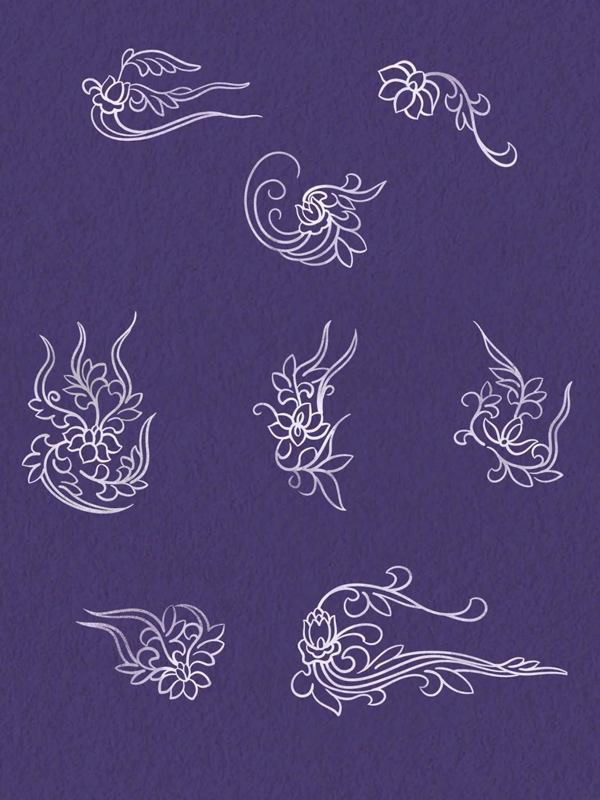
Records and physical evidence of embroidery from the Wei, Jin, and Northern-Southern Dynasties are scarce. Surviving pieces reveal a strong link to Buddhist devotion. Emperor Wu of Liang (梁武帝) commissioned a five-color skirt adorned with pearls, possibly an early precursor to bead embroidery. The most significant find is a Dunhuang (敦煌) embroidery from Mo Gao Grotto (莫高窟), dated to the Northern Wei period. This piece depicts a Buddha flanked by Bodhisattvas, with dedicatory inscriptions and donor figures below. Executed almost entirely in satin stitch, it stands as China's earliest known pictorial embroidery covering the entire ground.
5. Tang Dynasty
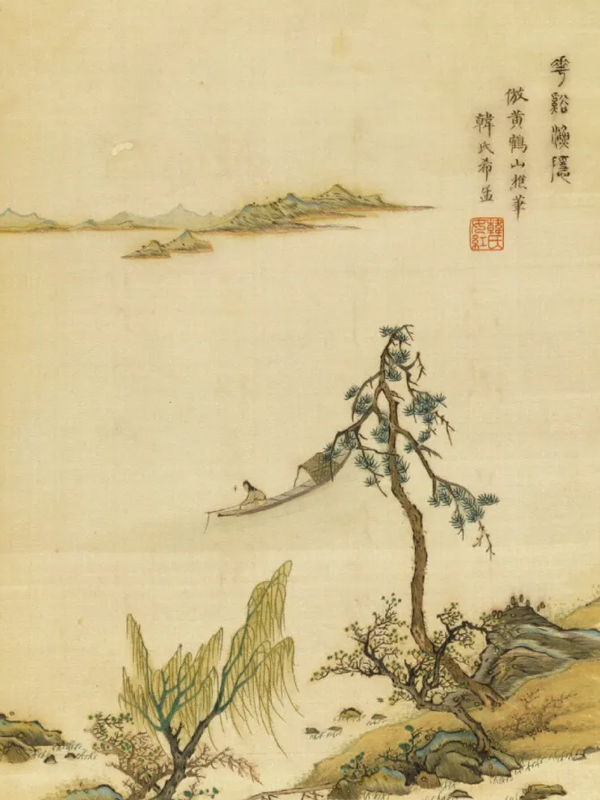
The Tang Dynasty witnessed embroidery flourish both technically and artistically. Buddhist subjects remained prominent; Empress Wu Zetian (武则天) famously commissioned four hundred embroidered depictions of the Pure Land. These works evolved beyond ritual objects into standalone art, paving the way for Song dynasty pictorial embroidery. Technical mastery surged.
Artisans developed sophisticated stitches like Qiangzhen (short, layered straight stitches creating color gradation), Souhezhen (long-and-short stitch), Zhazhen (seed stitch), Pingjin (couching gold thread), and Panjin (twisted gold thread). Qiangzhen, in particular, allowed unprecedented subtlety in shading and texture, enabling artisans to mimic brushstrokes and achieve painterly effects. This toolbox of techniques transformed embroidery into a medium capable of nuanced artistic expression.
6. Song Dynasty
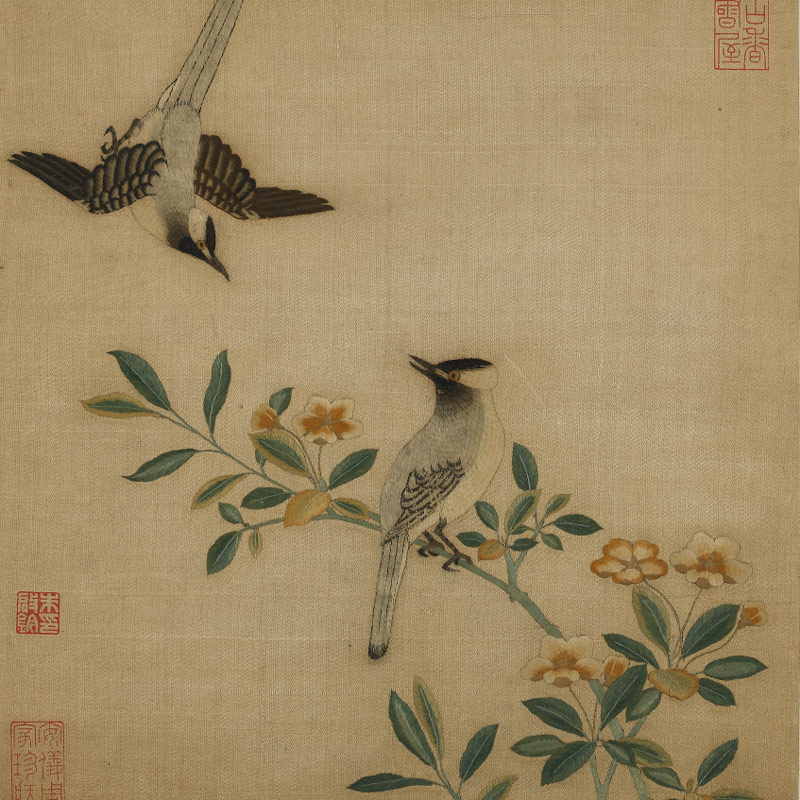
Song Dynasty embroidery crystallized into two distinct paths: utilitarian pieces for daily life and purely artistic works for appreciation. The latter shifted focus from religious icons to meticulous reproductions of esteemed paintings and calligraphy. Embroiderers pursued the original artist's brushwork, ink tones, and expressive spirit with remarkable fidelity.
Emperor Huizong's (徽宗) passion for art directly fueled this elevation. He established an embroidery academy within the Imperial Painting Academy, employing over three hundred stitchers. Masters like Si Bai, Mo Lin, and Qi Mei emerged, refining the craft. These artistic endeavors demanded deep cultural literacy, often flourishing among educated women of elite families, earning the name "boudoir embroidery". Ming scholar Dong Qichang lauded its brilliance, noting landscapes conveyed depth, figures possessed vitality, and flowers achieved a lifelike grace surpassing painting.
Driven by artistic ambition, Song techniques advanced significantly. Evidence from Ruiguang Pagoda (瑞光塔) in Suzhou and Hui Guang Pagoda (慧光塔) in Rui'an confirms the emergence of double-sided embroidery by the early Northern Song. Pieces like the embroidered sutra wrapper with paired phoenixes in a roundel demonstrate sophisticated use of slanting chain stitch to create identical images on both sides of the silk.
Beyond this innovation, artisans mastered a vast repertoire: couching, rolling stitch, whirl stitch, net embroidery, scale stitch, laid work, long and short stitch, drawn thread work, knot stitch, seed stitch, and loop stitch. This technical explosion solidified embroidery's place as a sophisticated, independent art form.
7. Yuan Dynasty
7.1 Imperial Threads
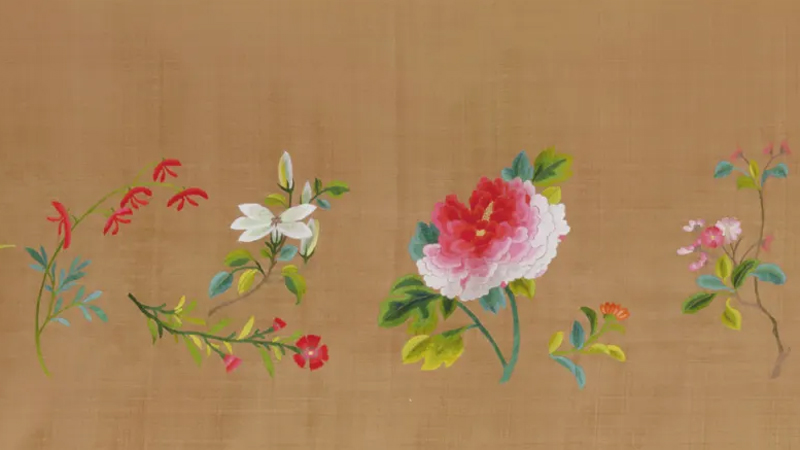
The Yuan court transformed fine needlework into a potent emblem of authority. Rulers mandated intricate embroidery for the robes of officials across nine distinct ranks, reserving certain techniques and materials exclusively for the highest echelons. Beyond the grand halls, the state's presence was further asserted through proclamations: imperial decrees stitched in white thread upon deep blue satin, a visible declaration of power carried across the realm . This systematic use elevated embroidery far beyond mere adornment.
Archaeology provides tangible proof of this imperial craft's sophistication. Excavations at Beijing's Shuangta Qingshou Temple (双塔庆寿寺) in the mid-14th century revealed treasures like a silk wrapping cloth embroidered with the phrase "Xianghua Gongyang" (Offerings of Fragrant Flowers). Crafted on a silk tabby foundation, it featured the era's signature roundel frames.
Within these circles danced patterns of auspicious clouds and dragon chasing pearls, while the spaces between bloomed with meticulously rendered plum blossoms, wild chrysanthemums, and morning glories. Mastery was evident in the diverse stitches employed – flat stitches, seed stitches, couched gold, and thread wrapping – showcasing exceptional skill .
7.2 Beyond Court Walls
While serving imperial ambitions, the art flourished among the elite. The tomb of Li Yu'an in Shandong yielded a breathtaking panel depicting figures, birds, and pavilions. Its precise composition and vivid detail highlight the aesthetic heights needlework achieved beyond strict court symbolism . Similarly, finds from the ancient city cache at Jining in Inner Mongolia included delicately crafted pieces like an embroidered crane, revealing a widespread appreciation for the medium's potential .
The finest surviving examples reside in major institutions. The Liaoning Provincial Museum safeguards the Embroidered Vajra Sutra (刺绣金刚经册), its folios a testament to devotional skill. These works transcend their original purpose, standing as pinnacles of Yuan textile art.
7.3 Stitches of Identity
The Yuan period saw a distinct visual language emerge. Motifs like the powerful dragon, symbols of imperial might, coexisted with complex floral arrangements signifying prosperity and continuity. The technical repertoire expanded significantly. Artisans combined flat stitches for smooth backgrounds with raised seed stitches adding texture. The gleam of couched gold thread introduced luxury, while intricate thread wrapping defined sharp contours and delicate patterns . This fusion of Mongol imperial themes with established Chinese decorative traditions created a unique aesthetic signature.
Surviving pieces, whether grand court commissions or refined private works, offer a silent narrative. They speak of political hierarchy enforced through dress, of spiritual devotion rendered in silk, and of an artistic flourishing where the humble needle became an instrument of both power and beauty. The legacy of Yuan embroidery lies not just in its stitches, but in the complex story of an empire woven into every thread.
8. Ming Dynasty
Ming Dynasty embroidery witnessed significant evolution, broadly categorized into southern and northern schools. The southern style, epitomized by Guxiu (顾绣), and its northern counterpart, Luxiu (鲁绣), gained renown for their technical brilliance.
8.1 Guxiu: Threads of Genius
Originating from the Gu family's Luxiang Garden in Shanghai, Guxiu flourished under talented women like Han Ximeng (韩希孟). Her crowning achievement, the eight-panel Album Embroidering Masterpieces of Song and Yuan (韩希孟绣宋元名迹图册, 1634), consumed years of meticulous effort. Han pioneered techniques, splitting silk threads with astonishing fineness and devising innovative color palettes. She masterfully fused stitch techniques with painting principles, elevating embroidery to fine art. Scholar Dong Qichang marveled at her work, declaring it "beyond human capability."
From late Ming through early Qing, Guxiu pieces commanded premium prices, prized alongside ancient bronzes. Yet, quality declined post-Qianlong era. Embroiderers increasingly relied on painting over stitching, even resorting to "void embroidery" where only outlines were stitched, filling the rest with paint. This hastened the craft's artistic decline.
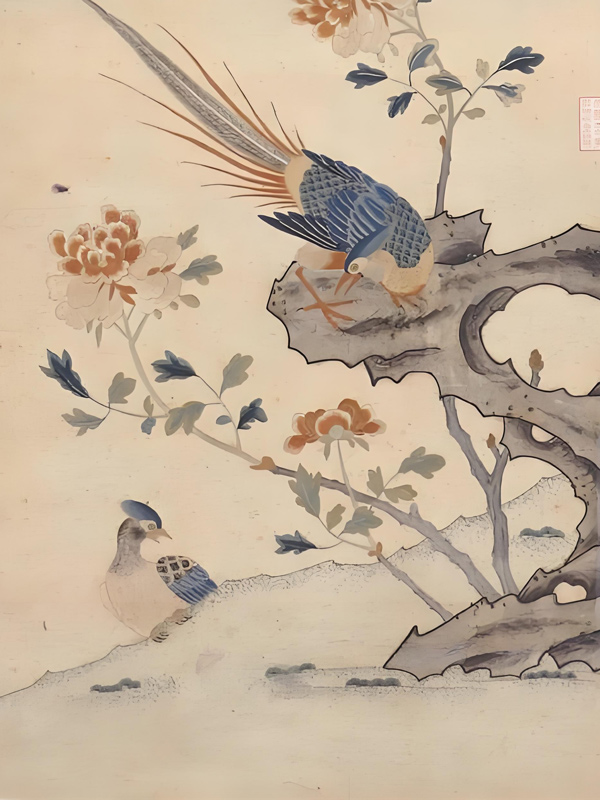
Guxiu artistry featured distinct traits: Firstly, designs directly copied renowned paintings, like Zhao Zi’ang's (赵子昂) horse scenes or Mi Fu's (米芾) landscapes. Secondly, materials extended beyond silk to human hair, horse mane, pheasant feathers, and flat gold thread, enhancing texture and realism. Thirdly, a vast repertoire of stitches was employed – tao stitches (flat, scattered, gathered), qi stitches (horizontal, vertical, oblique), along with rolling, netting, couching, gold-wrapping, and seed stitches.
The Fifty-Three Buddhist Pilgrims (顾绣五十三参图) scroll exemplifies this, using over ten stitch types to render varied textures vividly. Fourthly, color palettes were exceptionally rich; the Fifty-Three Buddhist Pilgrims alone used over twenty hues. Finally, a unique "painted-embroidery" hybrid emerged, where brushes supplemented threads in difficult areas, creating ethereal effects, as seen in the Eight Immortals Celebrating Longevity (顾绣八仙庆寿挂屏) screen.
8.2 Luxiu: Bold Northern Strokes
In Shandong, Luxiu, known as "yixian embroidery" (clothing-thread embroidery), presented a stark contrast. It utilized thick, twisted paired silk threads on subtly patterned damasks, satins, or twills. Characterized by thick threads, long stitches, open spacing, and muted colors, it possessed a durable, rustic strength. Its bold, straightforward techniques and vigorous motifs diverged sharply from the delicate, refined style of southern boudoir embroidery.
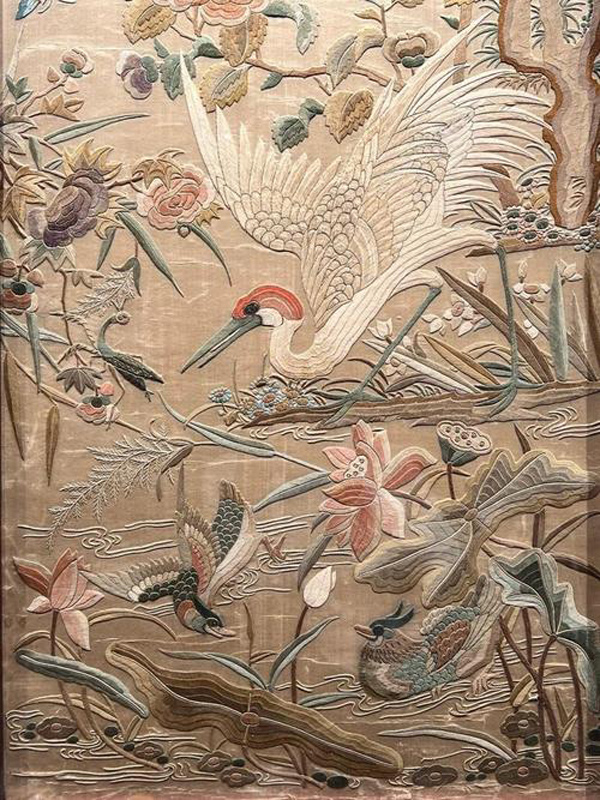
These two schools embodied the Ming's diverse artistic spirit. Guxiu pushed boundaries, merging craft with high art through technical innovation and painterly ambition. Its eventual reliance on paint, however, signaled a loss of its core thread-based essence. Luxiu, rooted in northern practicality, offered robust beauty through its distinctive materials and forthright execution. Together, they represent the rich, contrasting legacy of Ming Dynasty needlework – one seeking painterly illusion on silk, the other celebrating the inherent texture and strength of the thread itself. Their trajectories highlight how artistic ambition, market forces, and regional identity shaped the fate of vanishing stitches.
9. Qing Dynasty
The Qing Dynasty marked a pinnacle in Chinese feudal society, where embroidery evolved into a refined art form. Across regions, artisans developed distinct techniques, creating pieces celebrated for realism and beauty. Among these, four styles stood out for their innovation and cultural impact.
9.1 Su Embroidery
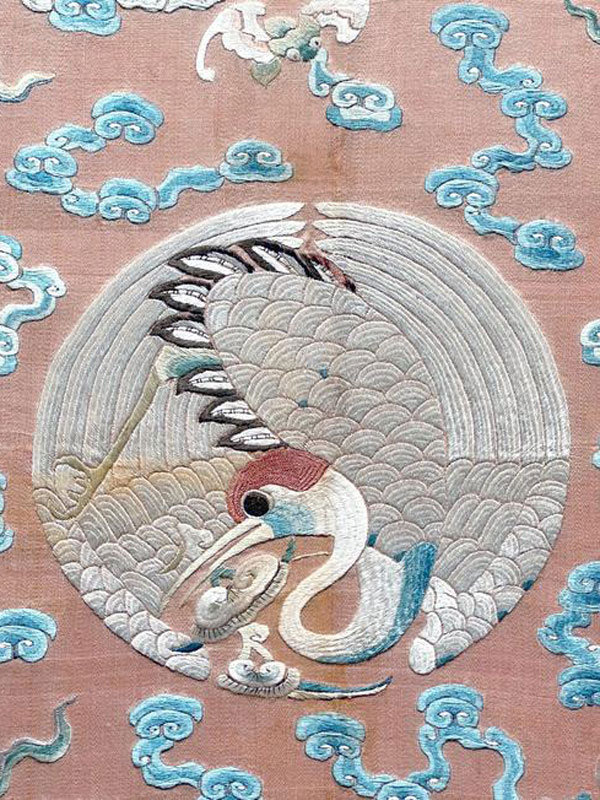
Su Embroidery, centered in Jiangsu, is renowned for elegance and subtlety. It dominated imperial courts with techniques like set stitches for seamless color transitions. Artisans used soft hues, achieving effects through methods summarized as "even, smooth, and dense." Subjects ranged from flowers to religious themes, with works showcasing intricate detail. This piece, nearly three meters tall, features hundreds of figures and multiple stitch types, highlighting Su's precision and harmony.
9.2 Guang Embroidery
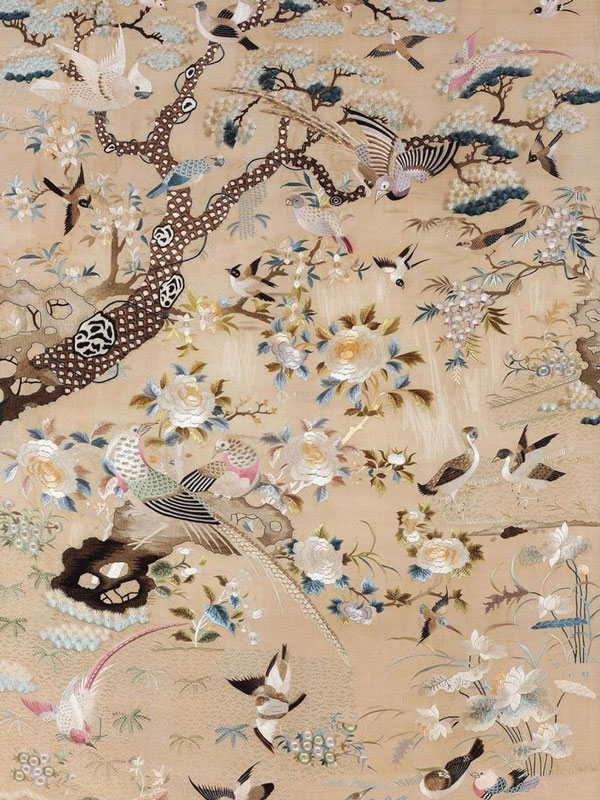
Originating in Guangzhou, Guang Embroidery is known for rich colors and dynamic compositions. Techniques like padding stitches create relief effects, while gold threads outline vibrant patterns. Artisans employed over forty methods, focusing on texture and light contrast. Themes often included birds and mythical scenes, exemplified by Hundred Birds Worshiping the Phoenix (广绣百鸟朝凤图). This work uses varied stitches to depict lifelike figures, emphasizing Guang's festive and decorative flair.
9.3 Xiang Embroidery
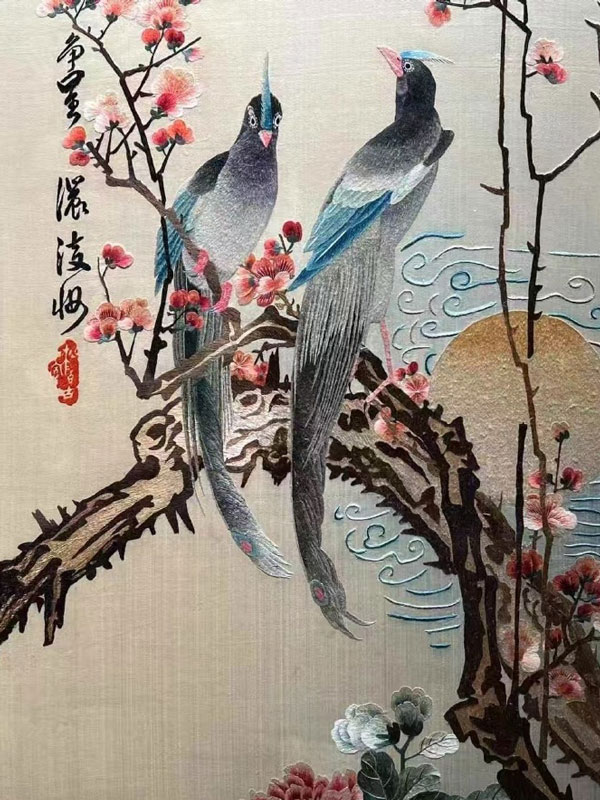
Xiang Embroidery, from Hunan, blends influences from Su and Guang for vivid realism. Finely split threads, treated to prevent fraying, produce a lustrous finish. Techniques like gradient stitches mimic painting, capturing depth in subjects such as animals and landscapes. Pieces demonstrate Xiang's ability to evoke sensory experiences, with stitches applied irregularly for natural transitions.
9.4 Shu Embroidery
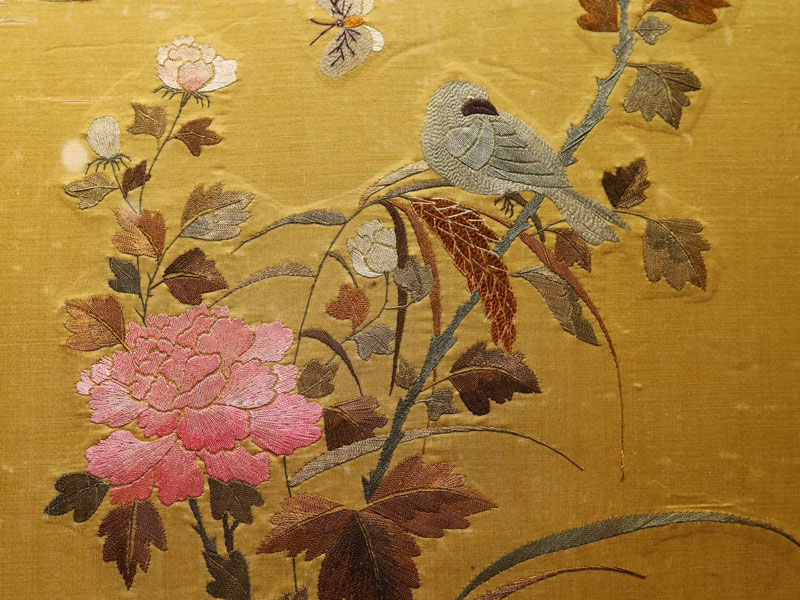
Based in Sichuan, Shu Embroidery features clean lines and understated elegance. Over a hundred stitch types, including oblique rolls for textures, allow for precise depictions. Artisans used bold colors sparingly, focusing on open compositions with motifs like fish or flowers. This style, noted for folk charm, avoids excess, emphasizing clarity and balance in works that reflect daily life.
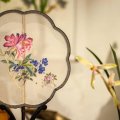
Beyond these four, other regional styles like Beijing embroidery contributed to Qing's rich heritage, each adding unique elements to China's artistic tapestry.

Summary
This article chronicles the evolution of Chinese embroidery over 3000 years, highlighting its status as a vital cultural heritage born from sericulture. Beginning with the earliest physical evidence from the Western Zhou Dynasty, which used the locked-stitch for decorative motifs, the art form developed through successive dynasties. The Warring States period saw narrative compositions and technical refinement with stitches like the flat-stitch. Han Dynasty artisans achieved unprecedented technical prowess and regional diversity, employing methods like stem-stitch and the rare Pan-Luo technique.
During the Wei-Jin and Northern-Southern Dynasties, embroidery became strongly linked to Buddhist devotion.
The Tang Dynasty witnessed a technical explosion with new stitches enabling painterly effects, while the Song Dynasty elevated needlework to fine art, meticulously reproducing paintings and calligraphy and pioneering double-sided embroidery. The Yuan Dynasty systematized embroidery for imperial symbolism and rank designation. The Ming Dynasty was defined by distinct regional schools: the refined, painting-inspired Guxiu and the bold, rustic Luxiu. Finally, the Qing Dynasty saw the flourishing of four major regional styles—Su, Guang, Xiang, and Shu—each celebrated for their unique techniques and aesthetic contributions, cementing embroidery's role as a sophisticated art form.