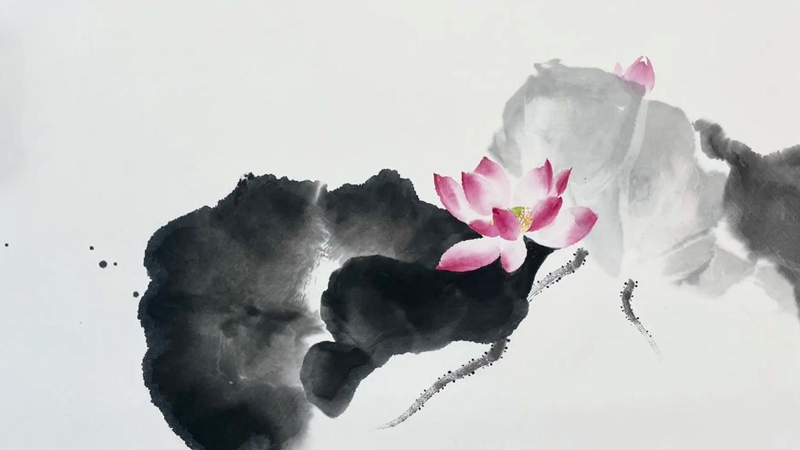
As an extension of the chrysanthemum painting technique—one of the Four Gentlemen in traditional Chinese ink wash painting—the lotus holds a significant place in floral and bird compositions. In method, the lotus blossom can be understood as an enlarged, multi-petaled version of the chrysanthemum’s core, while its leaves, though broader, are rendered through similar brushstroke techniques. This makes the lotus an excellent subject for practicing essential brushwork and ink wash skills, such as tonal variations, textural strokes, and compositional balance.
Furthermore, its elegant form and cultural symbolism have established it as a recurring and cherished theme in classical and contemporary bird-and-flower paintings. Therefore, any serious study of this artistic genre would be incomplete without mastering the depiction of the lotus.
 1. Decomposed Drawing of Lotus Structure
 1. Decomposed Drawing of Lotus Structure
1.1 The Outlining Technique
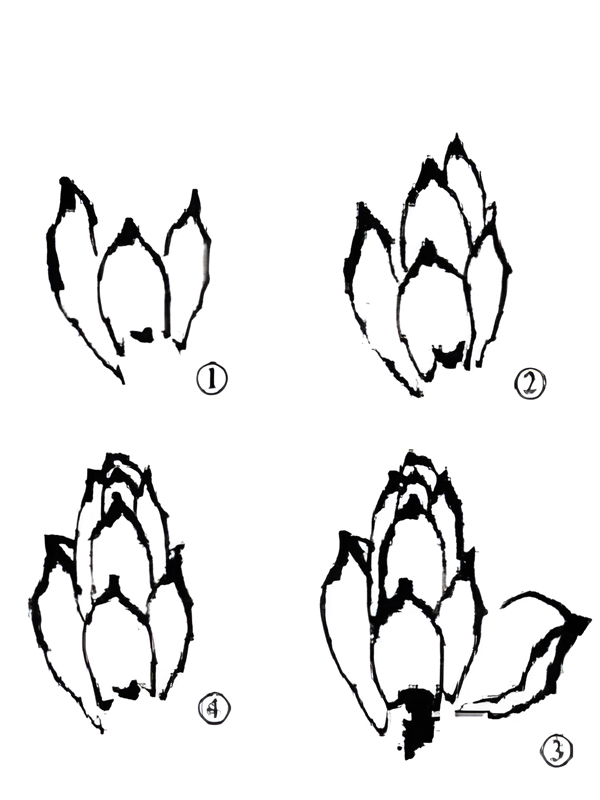
Outline Method begins at the petal tip. A single stroke flows left, another right – single outline complete. Three strokes form a spoon shape – complex outline. For half-open blooms, strokes converge tightly at the heart.
1.2 The Sketch-Fill Method
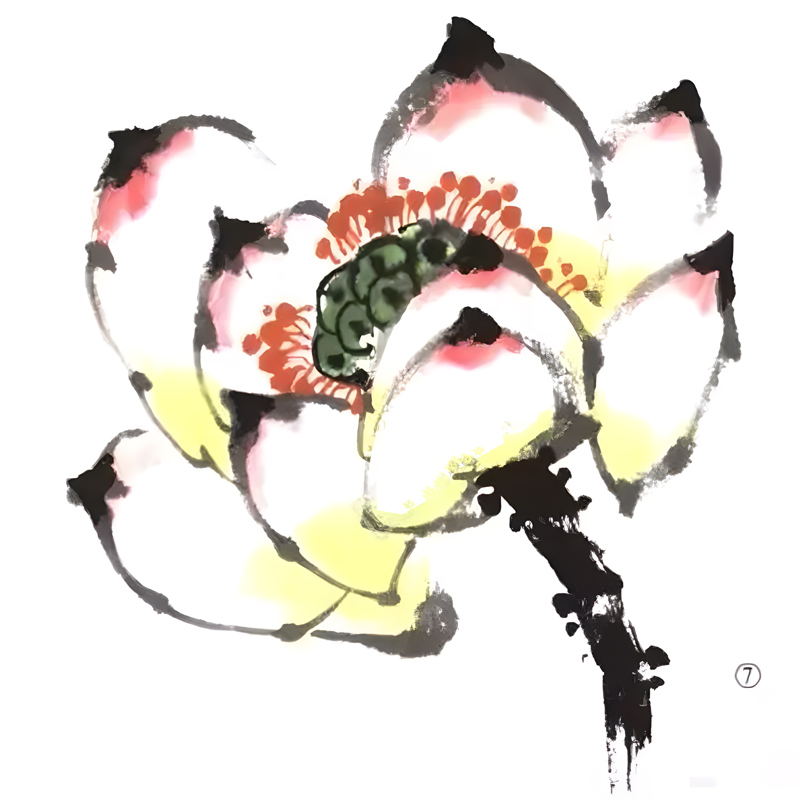
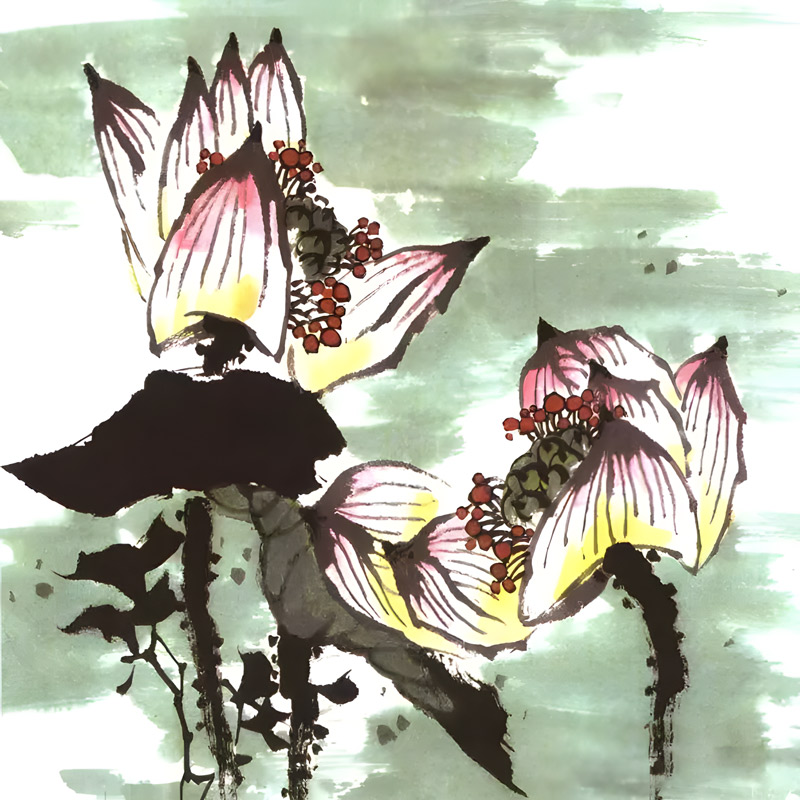
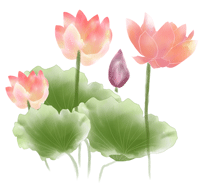
White Lotus: Outline first three petals inward. Use complex outline for the fourth. Wash the seedpod in grass green. Touch petal bases with gamboge. Dab pale vermilion on upper petals. Define the pod with strong ink, add stem, reinforce petal tips with burnt ink for depth. Finish with cinnabar-tipped stamens – seven steps total.
Pink Lotus: Outline the full shape. When dry, wash petals with pale vermilion, leaving white gaps. Dot the pod base with grass green. Define pod, stamens, and stem in strong ink. Alternatively, apply wet vermilion to damp outlines, letting colors bleed naturally.
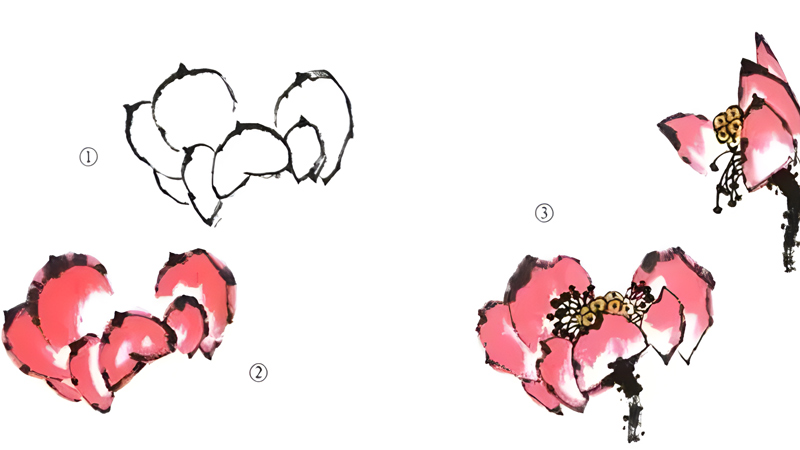
1.3 The Contour-Line and Filling Method
Ink Lines, Color Wash: Fine brush traces petal shape and veins. Dry. Wash petals with pale vermilion. Outline the grass-green pod in strong ink, add stamens and stem. For opening blooms, wash petal bases with gamboge, tops with vermilion – no stamens needed.
Color Lines, Color Wash: Sketch bloom shape directly in vermilion, reserving space for the pod. Wash petals with pale vermilion, maintaining gaps. Apply grass green to the pod base. Outline pod, stamens, and stem in strong ink. Finally, accent petal tips with rich vermilion.
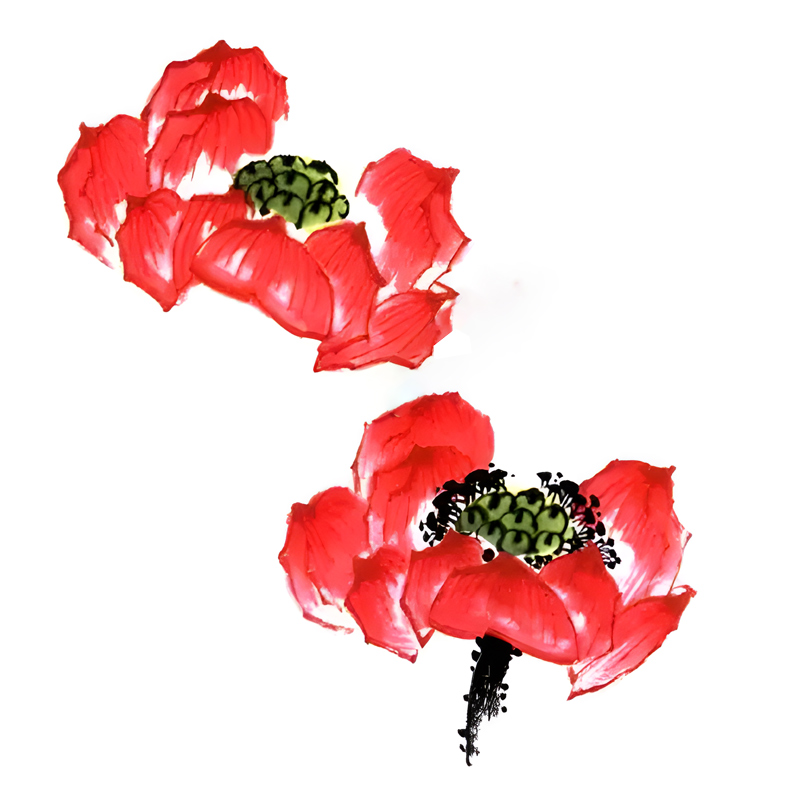
1.4 The Boneless Painting Technique
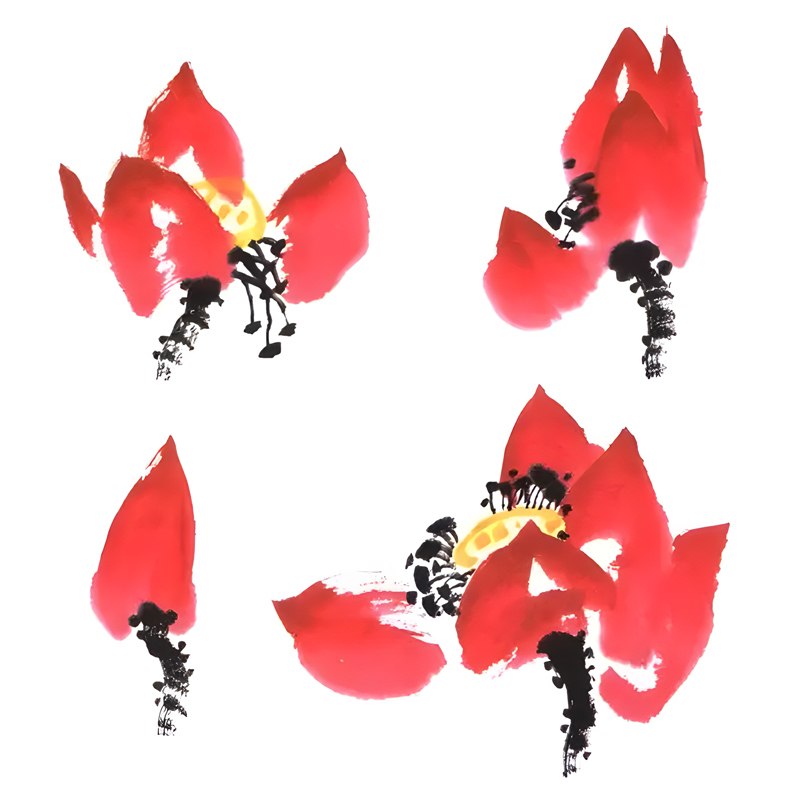
Boneless Technique breaks the bloom into core shapes. Like puzzle pieces, these components combine to form buds, half-open, or full flowers.
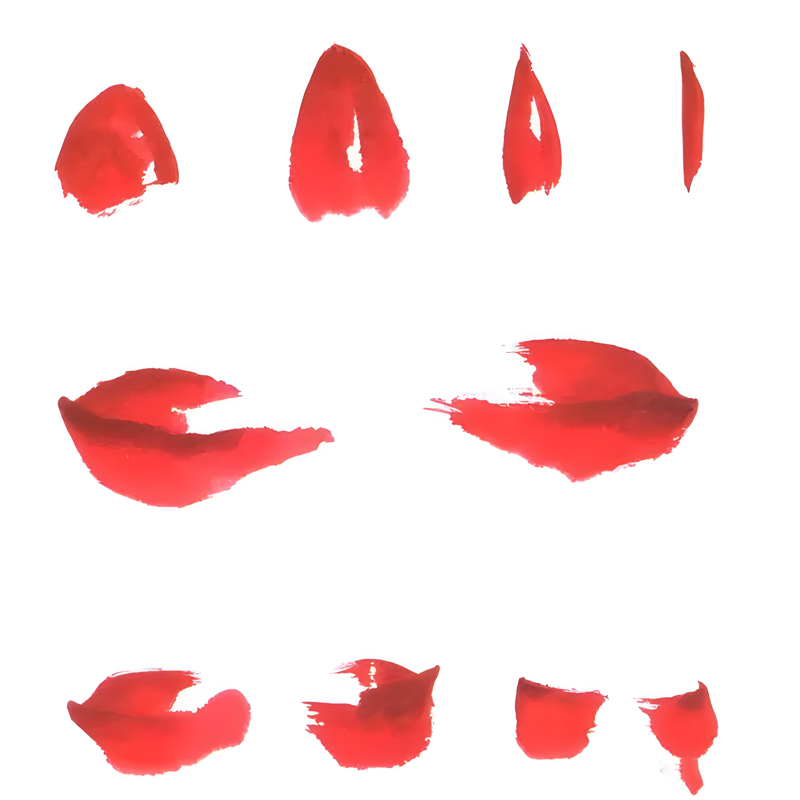
Assembling the Bloom: Load a large brush with vermilion (darker at tip, lighter at root). Use components decisively, placing each stroke accurately. Employ ample water for slight bleeding. Preserve white gaps in petals. Aim for calligraphic energy – avoid flat washes.
1.5 Combining Methods
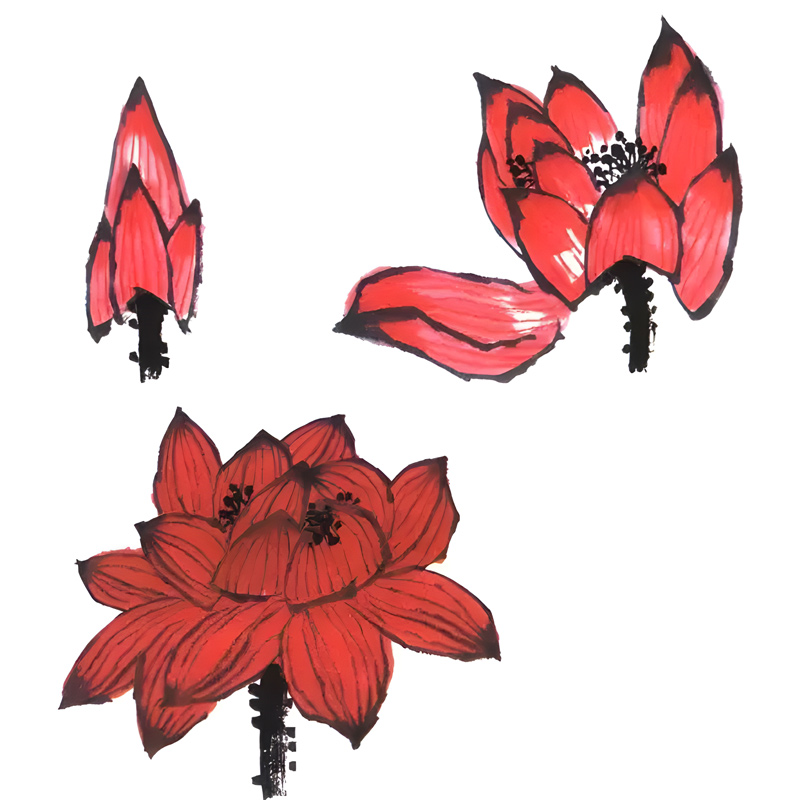
Half-Open Flower: A medium brush holds layered vermilion. Paint the nearest petal boldly with boneless strokes. Work outward to form the bloom. When partly dry, trace veins in carmine or ink with a fine brush. Dot stamens. Finish with a strong ink stem.
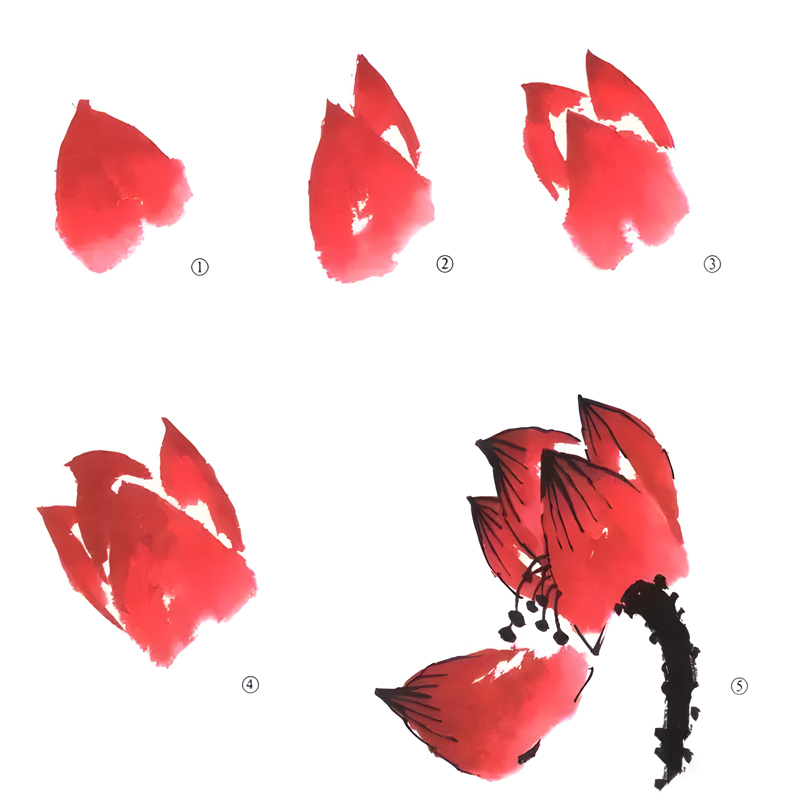
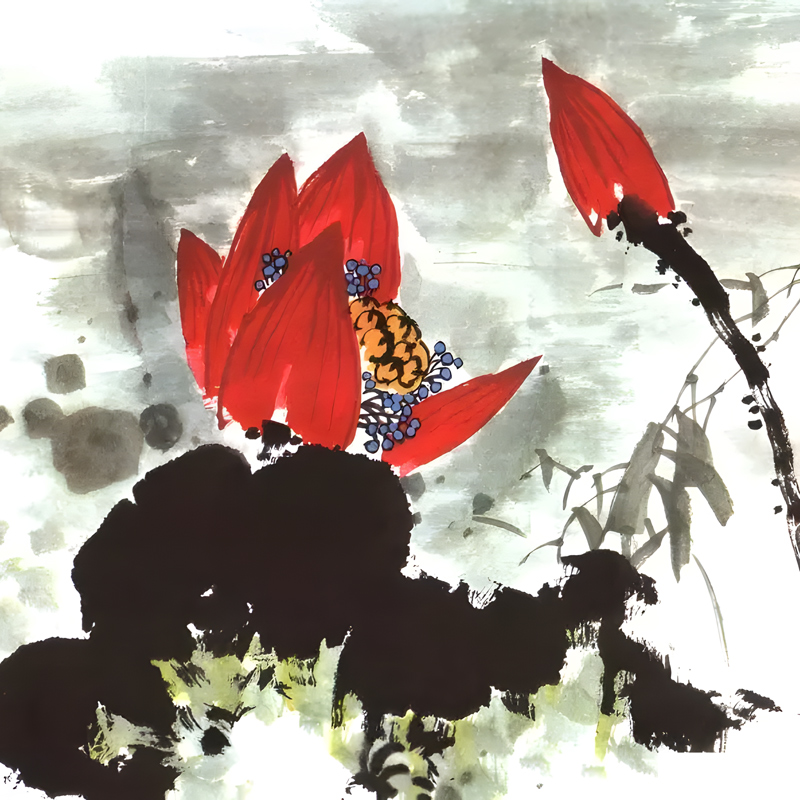
Full Bloom: Block in the shape with vermilion. While semi-dry, trace veins with carmine mixed with a touch of ink. Dot the pod base with grass green. As it dries, outline the pod in deep carmine and add stamens.
1.6 Techniques for Drawing Flower Buds
Bud: Techniques mirror the full bloom, differing only in form. Various methods yield distinct bud shapes.
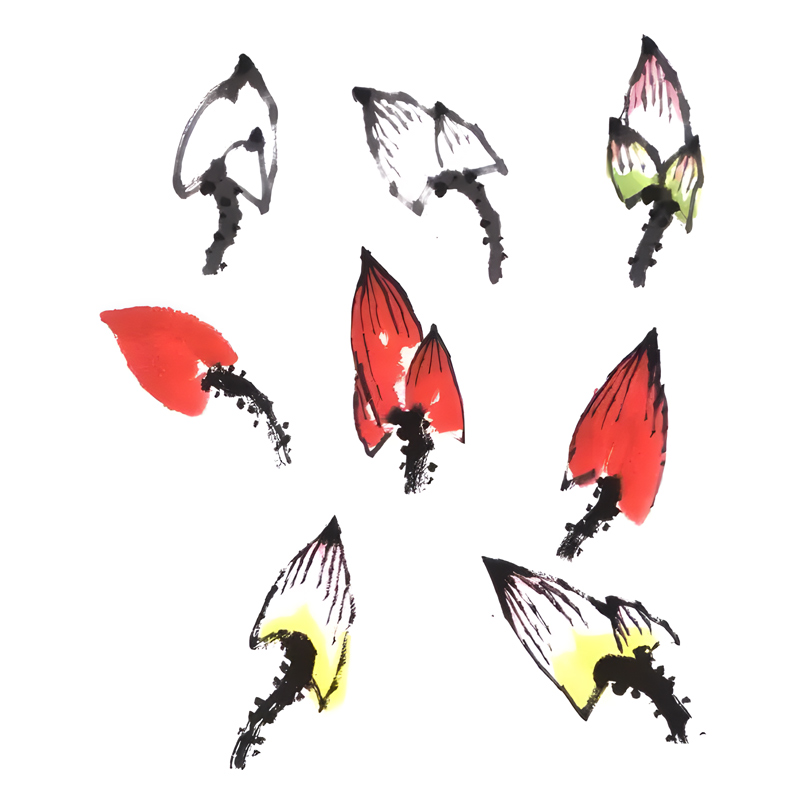
Withered Bloom: Depicts one to four petals, drooping steeply. Technique matches the full flower but uses fewer, downward-slanting petals.
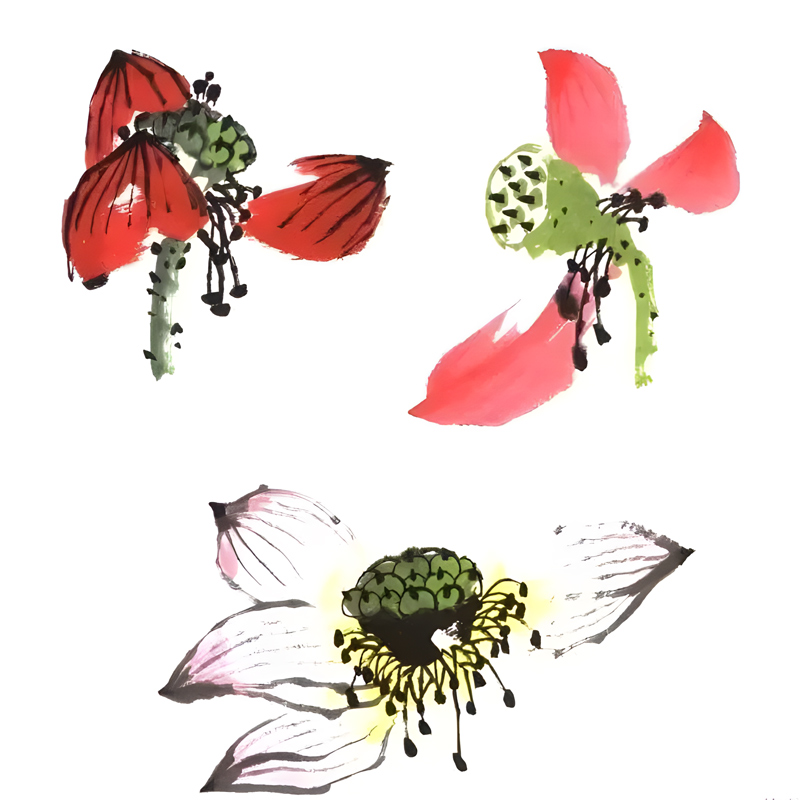
1.7 How to Paint Withered Lotus Corollas
Withered lotus corollas have one, two, three, or four petals. Their painting method is the same as that of fully bloomed corollas, except that the petals are fewer and tilt downward.
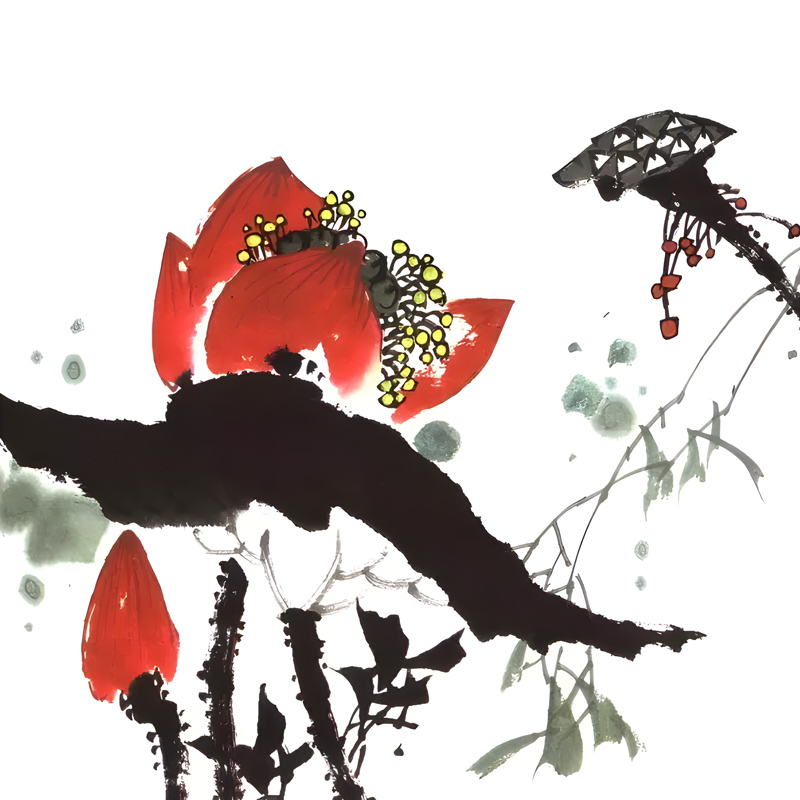
1.8 Seedpod
Paint the top green, yellow, or grey-green. Dot the pod chambers. Complete the lower section. Connect the stem. Outline stamen threads.
Masters' Touch
Qi Baishi (齐白石) sought the spirit between likeness and abstraction. His lotuses burst with bold ink, vibrant color, and powerful strokes.
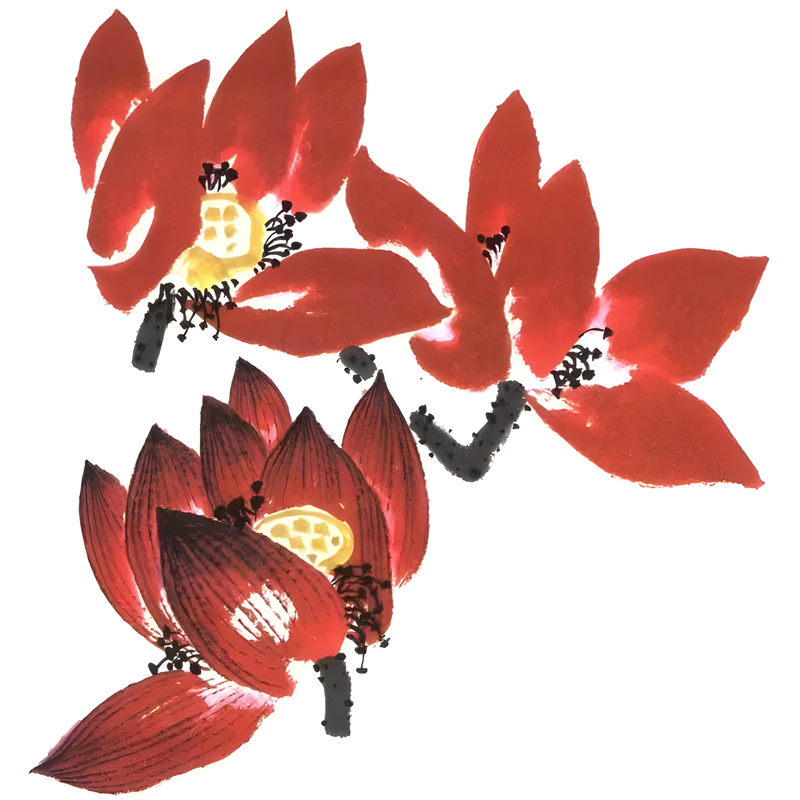
Pan Tianshou (潘天寿) demanded fierce energy and momentum. He built forms with strong color lines, creating dynamic, unusual shapes full of rhythmic vitality.
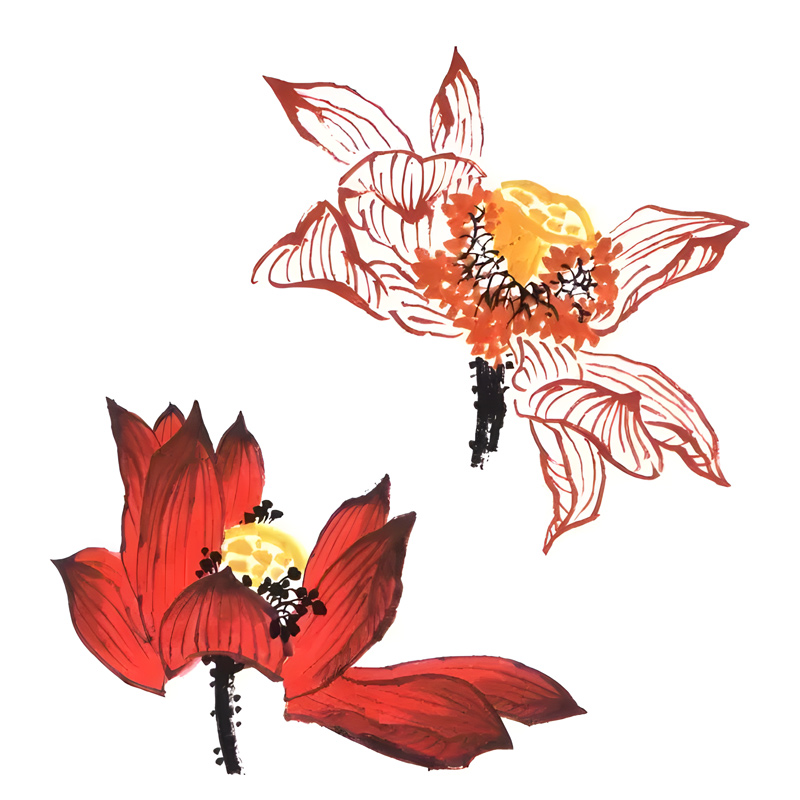
Li Kuchan (李苦禅) painted monumental lotuses, blossoms wide as basins. Petals multiplied. He favored outlined color washes with heavy strokes, conveying immense power and inner strength.

2. Techniques for Painting Lotus Leaves
2.1 Basic Leaf Techniques
2.1.1 Mastering Frontal Leaves
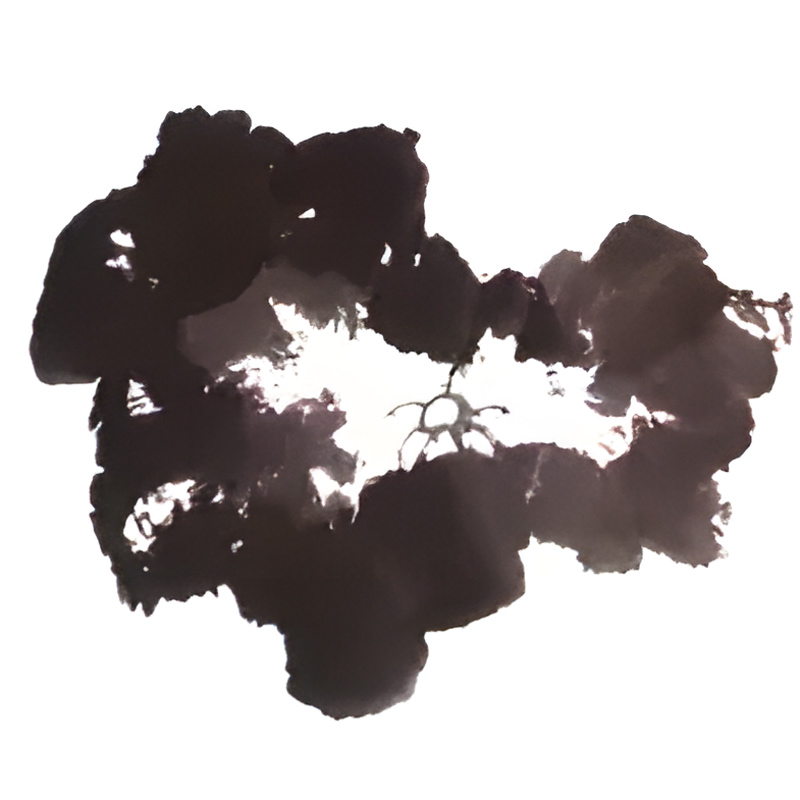
Use a large goat-hair brush. Start with diluted ink, dip the tip in deep black, then apply using the brush's side. Work from edge to center or vice versa. Vary stroke size and edge contours, creating solid outlines that soften towards the middle. Complete the leaf with deliberate shifts between dry and wet strokes, dark and light tones, solid and airy spaces. Capture the leaf's natural curves and folds.
2.1.2 Depicting Side Views
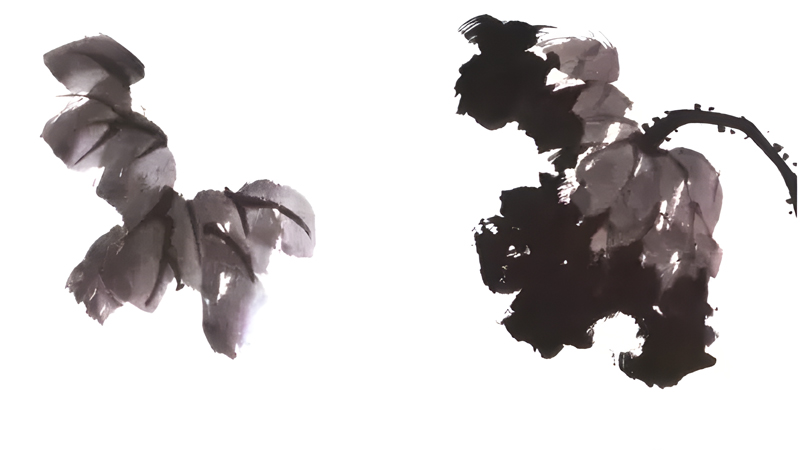
Outline the curled section and its veins with faint ink. Connect this immediately with strokes of dense black ink to form the main leaf surface. Define the uneven, scalloped outer edge. Finally, add the supporting stalk.
2.1.3 Capturing Drooping Forms
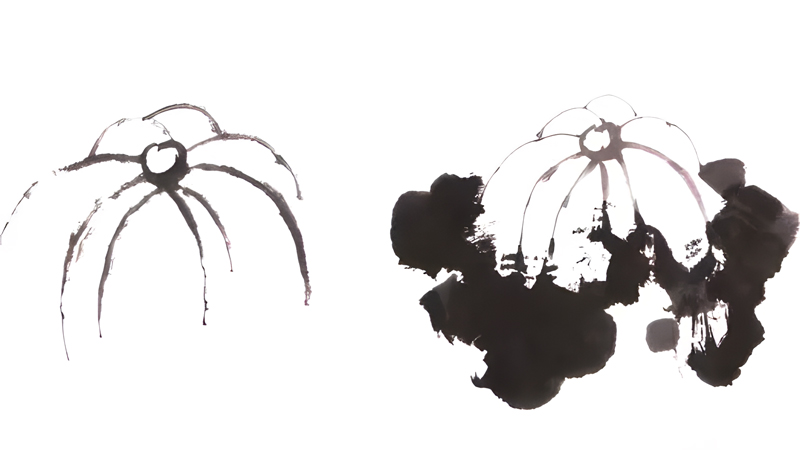
Begin by painting the central vein structure. Build the leaf downward using rich black ink, shaping it like an inverted umbrella.
2.2 Outline and Fill Methods
2.2.1 Line and Wash Approach
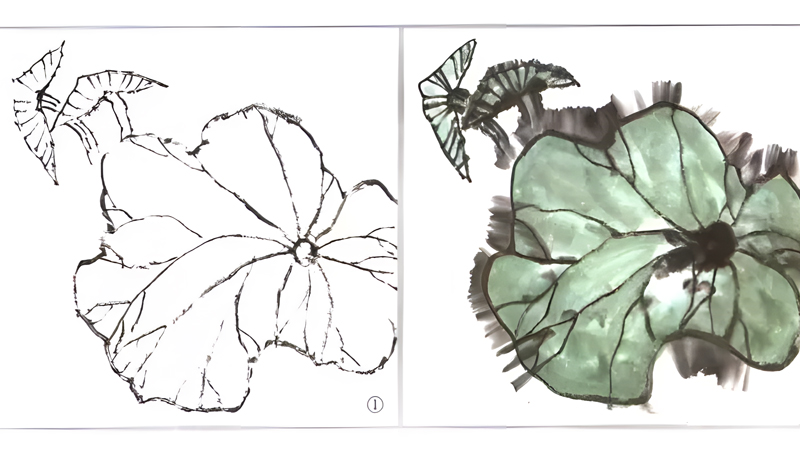
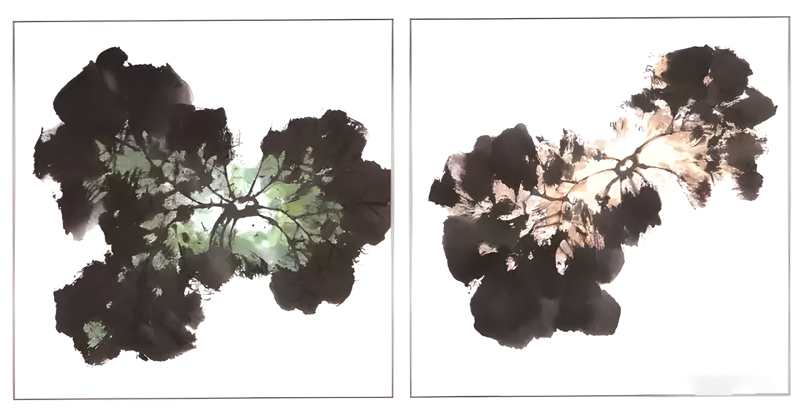
Sketch the lotus leaf contour and veins using sharp, dark ink. While still wet, wash over with green pigment. This allows the ink lines to soften slightly, creating a subtle, blurred effect where ink and color meet.
2.2.2 Textured Wash Technique
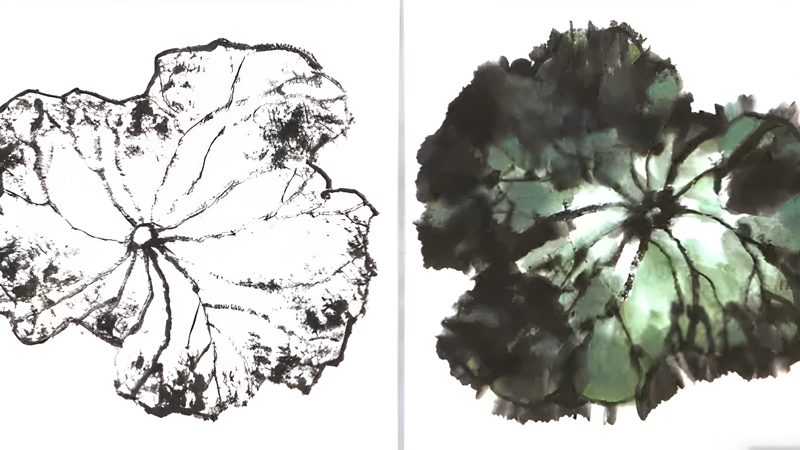
Draw the outer shape with strong ink lines, adding light, dry strokes for texture. Apply a green wash while the ink is damp. Aim for seamless integration where the ink, color, and drawn lines naturally flow together.
2.3 Dotting Technique
2.3.1 Expressive Ink Dots
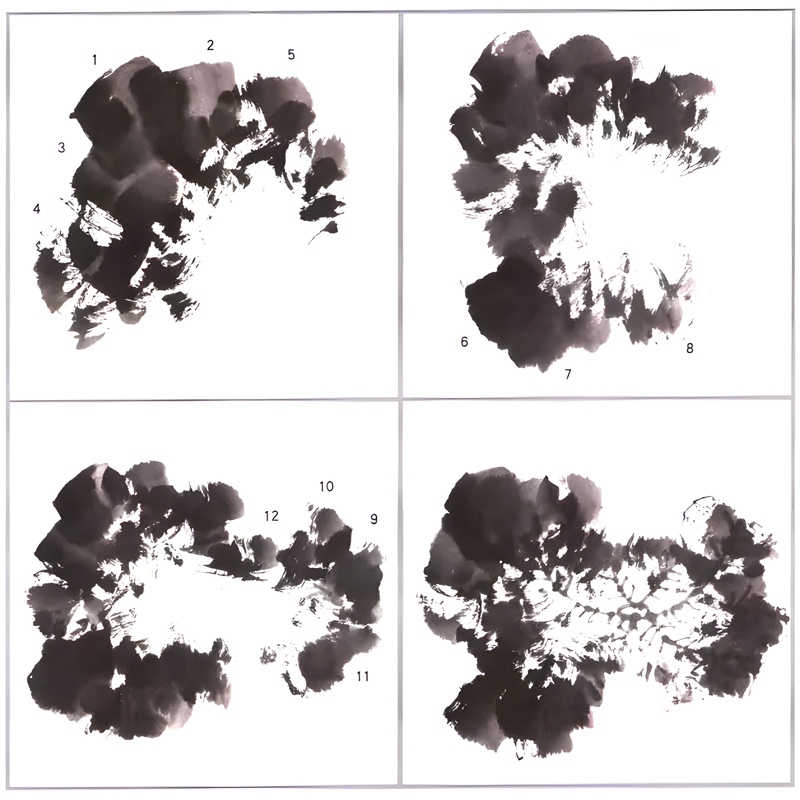
Load the brush with varied ink intensities. Make five distinct strokes with the brush's side, differing greatly in size, pressure, and definition. Then, splay the bristles. Use alternating light and heavy touches to connect these marks with scattered dots. Finish by adding vein lines resembling a fish skeleton.
2.3.2 Coloring the Dots
After the dotted ink work dries completely, apply a thin green wash. Avoid heavy pigment that would obscure the underlying ink. Use a lighter green near the leaf center. An ochre wash is another option.
2.4 Special Effects
2.4.1 Using Gum Solution
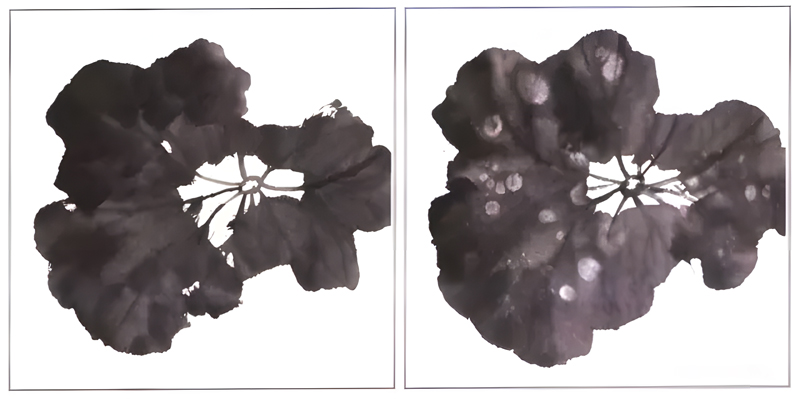
Dissolve peach or bone gum in hot water. Mix this solution into your ink. Load a big brush with the gum-infused ink, adding a touch of dark ink to the tip. Paint the leaf freely without outlines. Add veins while wet; the lines will show through softly. Dropping gum water onto the damp surface creates white spots resembling dewdrops.
2.4.2 Detergent Methods
Spot Application: Dilute dish detergent in water. Paint the leaf shape with dark and light ink. While wet, drip detergent solution onto it. This pushes the ink aside, forming clear spots ringed by fine, natural ink lines.
Spray Texture: Fill a small spray bottle with detergent. Paint the leaf in varied ink tones. Spray detergent lightly onto the damp surface for a mottled, textured appearance.
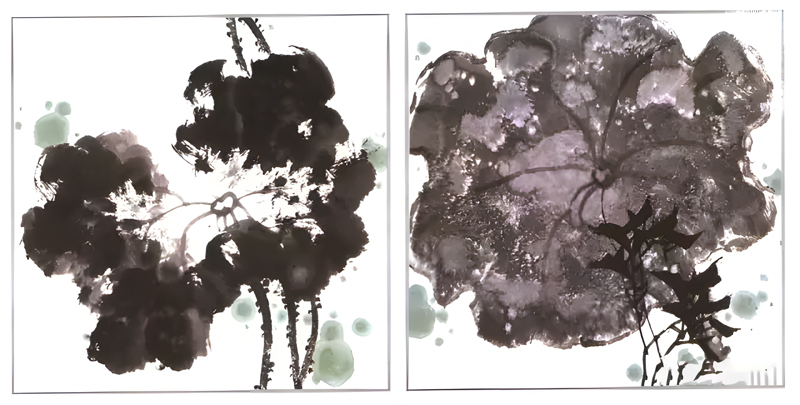
Background Spray Example: Paint leaves and stalks freely. Outline flowers and seed pods precisely. Let everything dry completely. Spray detergent water onto blank areas. While damp, wash these areas with pale green, avoiding the flowers. Once dry, unique textures emerge, forming an abstract background that complements the main subjects.
3. Principles of Framing Lotus in Artworks
3.1 Subject and Support
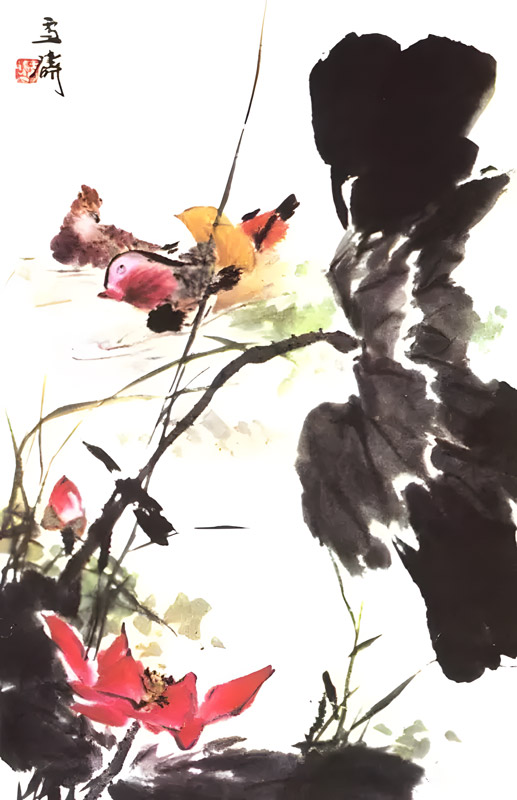
Dominance Defined: A core principle demands clear distinction between subject and supporting elements. The subject commands attention through size, position, and intensity—like lotus blooms rendered in bold strokes and rich hues. Supporting elements, such as mandarin ducks in a pond scene, recede subtly into the background. This interplay creates lively contrasts—stillness versus movement—anchoring the viewer's focus on the primary motif.
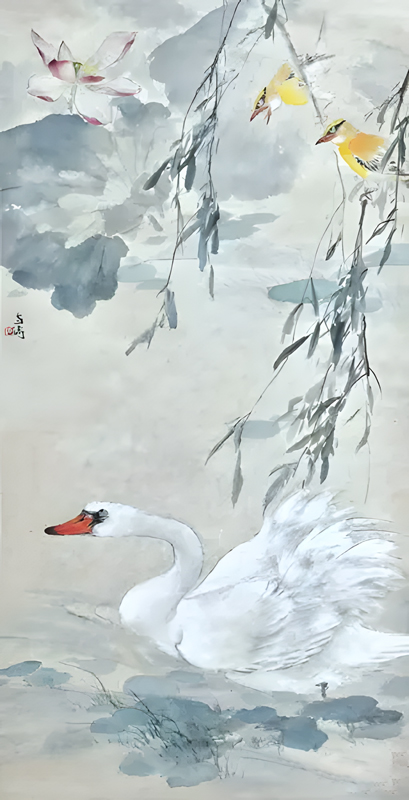
Subtle Support: Lotus elements can also serve as counterpoints to highlight other subjects. Here, blossoms, orioles, and willow branches frame a white egret. By softening the lotus's color and position, the egret emerges powerfully. This approach preserves the flower's inherent elegance while enhancing the pond's summer atmosphere. Similarly, leaves and reeds recede to emphasize a kingfisher's vivid form, capturing the pond's vibrant spirit.
3.2 Dynamic Tension
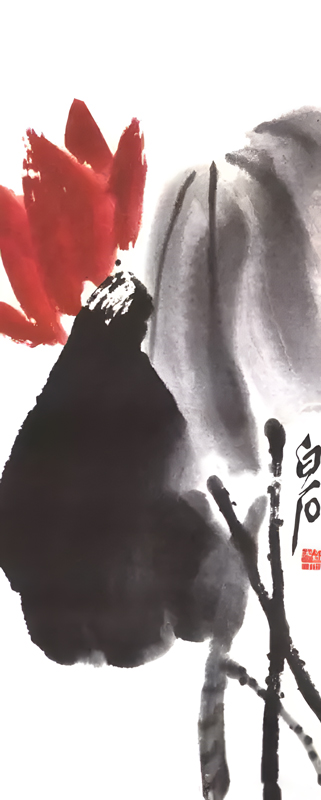
Weight of Ink: The interplay of density manifests strongly in ink application. Dark, saturated strokes read as solid presence; lighter washes suggest space and atmosphere. This contrast defines form and depth, particularly evident in lotus leaf techniques and overall arrangement. A single leaf requires internal variation; multiple leaves need deliberate contrast—darker leaves advance, lighter ones recede, establishing spatial layers.
Breathing Space: Effective composition balances crowded areas with openness. Dense clusters feel tangible; open spaces imply airiness. Veins on leaves, aquatic plants, and flower outlines form linear patterns requiring careful distribution. Water droplets and stamens vary in size and grouping, preventing monotony and creating visual harmony through calculated dispersal.
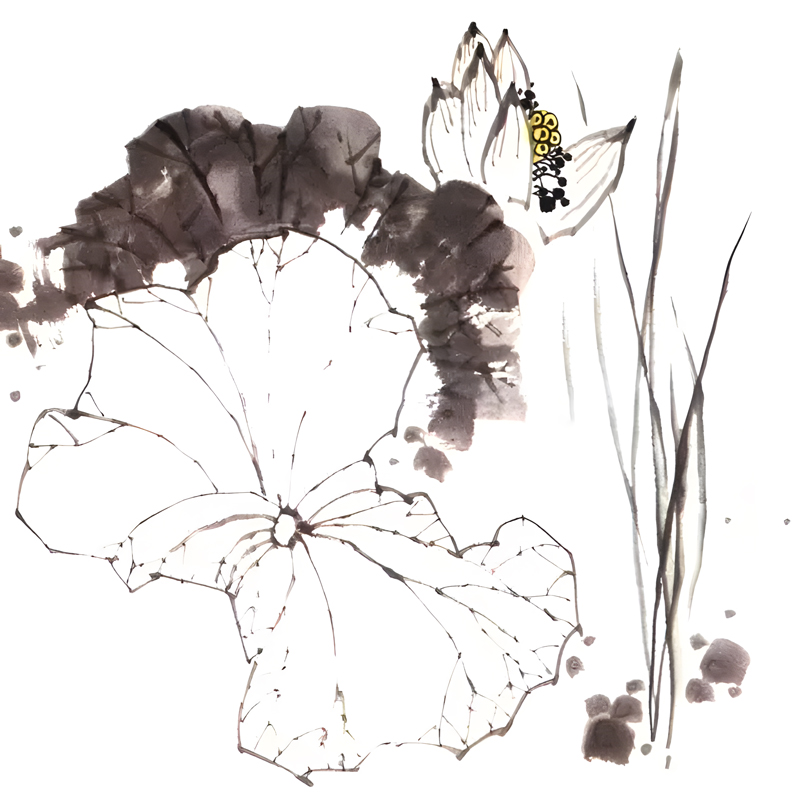
3.3 Balanced Asymmetry
Counterpoise: Asymmetry (deliberate tilting or off-centering) injects dynamism. Large lotus leaves and stems angled sharply create visual tension. Smaller elements, like a lower leaf intersecting a stem or a carefully placed signature, provide counterweight, restoring stability through tangible connection. A dragonfly's wing direction offers subtle balance without direct contact—an invisible anchor. Both tangible and implied support work together to achieve equilibrium.
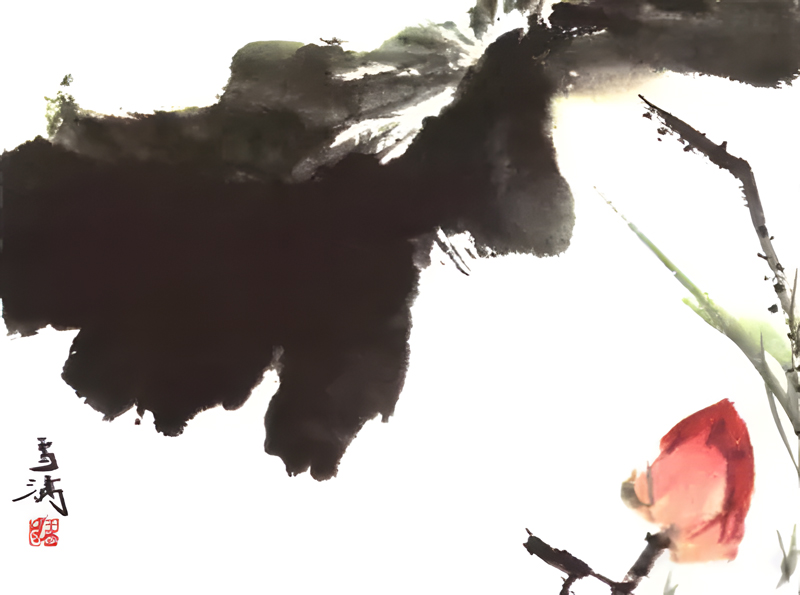
3.4 Essential Contrasts
Scale Matters: Juxtaposing large and small elements prevents flatness. Lotus scenes thrive on variety: fully open blooms alongside half-open buds and tight pods; leaves differing in size; even water dots and stamens needing irregular distribution. Uniformity resembles arranged beads—avoid it.
Reveal and Conceal: Suggesting form engages the viewer. Partially obscured flowers or leaves, hidden behind others, create intrigue. A red lotus peeking through dense foliage possesses more poetic mystery than a fully exposed bloom, inviting imagination.
Form and Flow: Leaf shapes should vary. Contrasting elongated forms with rounder ones adds visual interest. Combined with differences in ink saturation and size, plus the rhythmic spacing of stems, this creates movement. Masters like Qi Baishi and Xu Wei mastered this interplay.
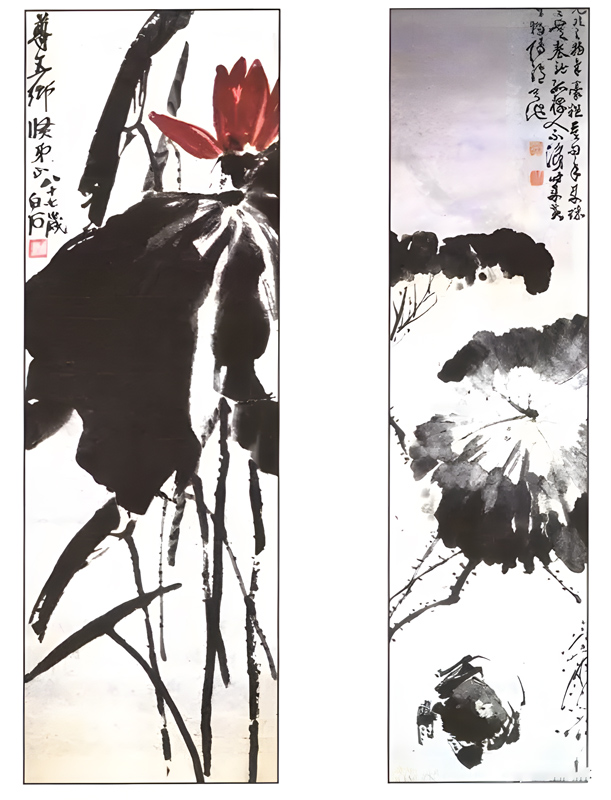
Mark and Stroke: The interaction of dots and lines is fundamental. Their contrasting shapes generate visual energy. Petals, stamens, and seedpods often blend both: lines enclosing dots, dots within lines, varying in size and density. Water dots below stems lift the scene above an implied surface.
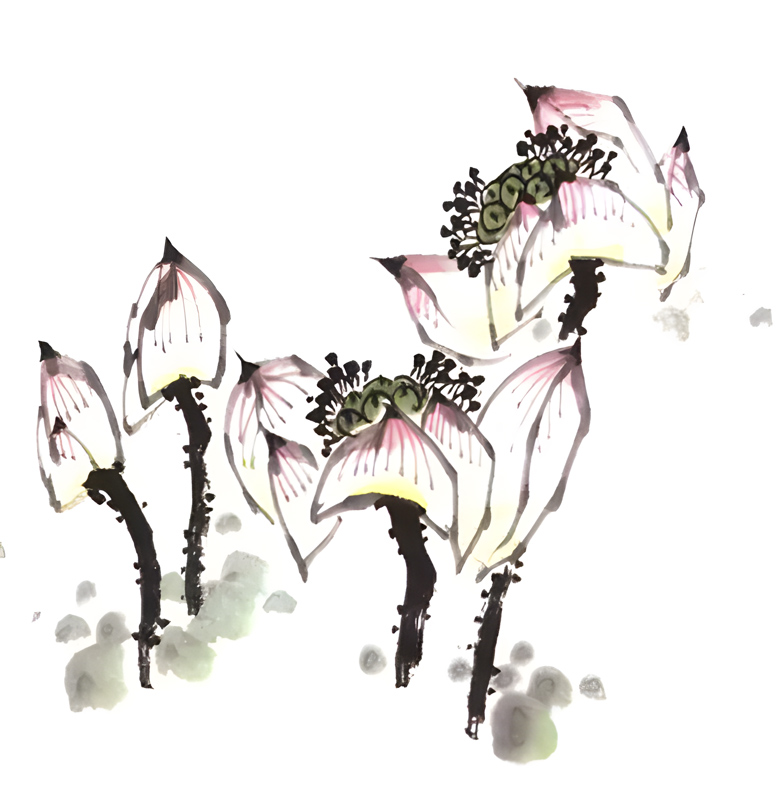
Structure and Mass: Relying solely on washes creates formlessness. Integrating precise lines with ink washes provides essential structure. The combination gives life and definition, as seen in masterworks balancing fluid washes with calligraphic strokes.
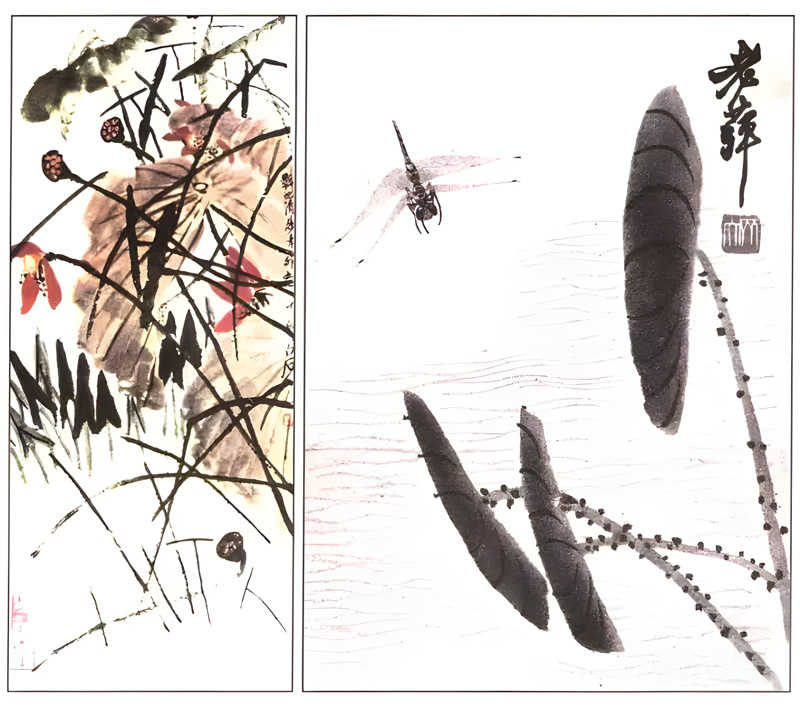
Integrated Elements: Dots, lines, and washes form the core vocabulary. They work best in concert: dots accent lines, lines define washes. This layered approach builds depth and clarity within the composition.
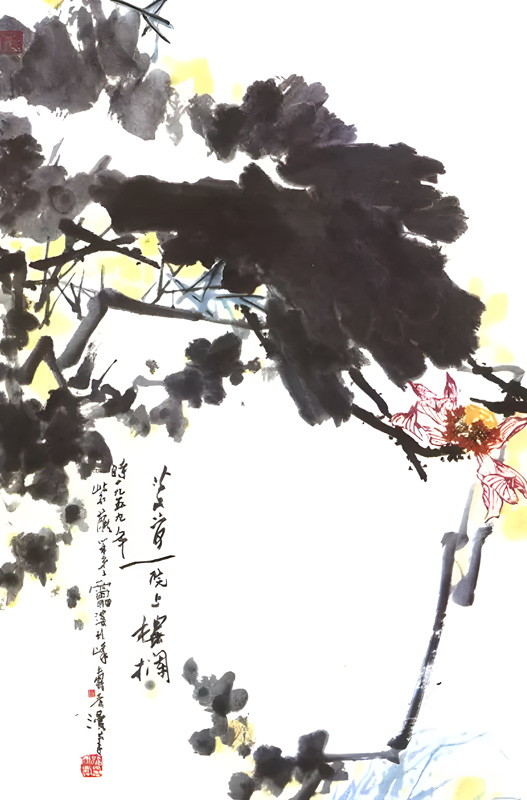
3.5 Elemental Shifting
Fluid Forms: Compositional elements transform. Clustered dots become lines; expanded dots form washes. Curves folding back create planes. Techniques are interchangeable—outlined forms can shift to wash techniques, and vice versa.
Practical Shifts: Outlined leaves could become washes; washes defining rocks or flowers could shift to line. This flexibility underscores that point, line, and wash are interconnected expressions of form.
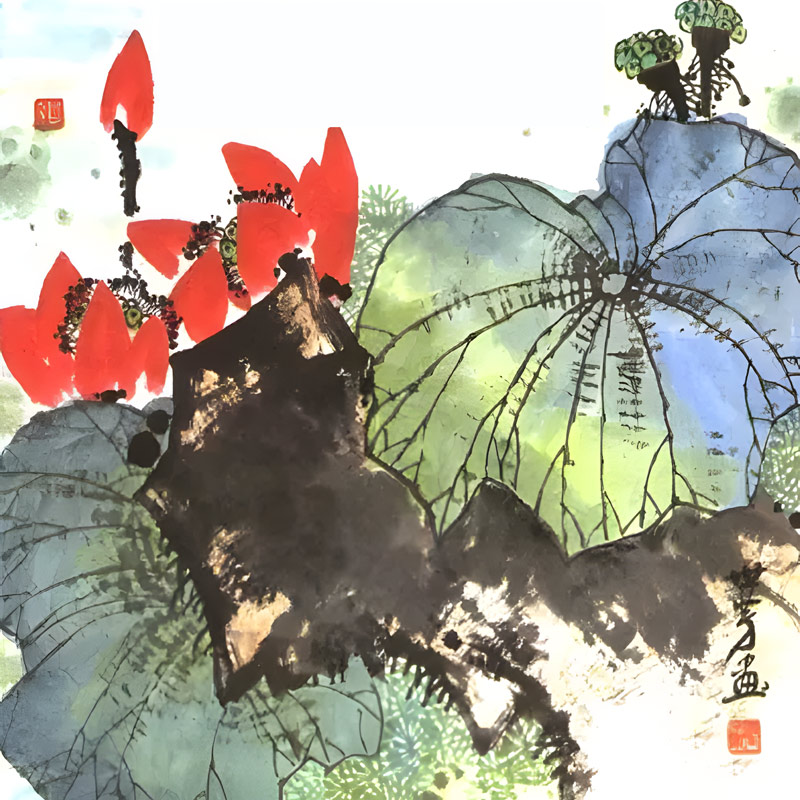
3.6 Triangular Foundations
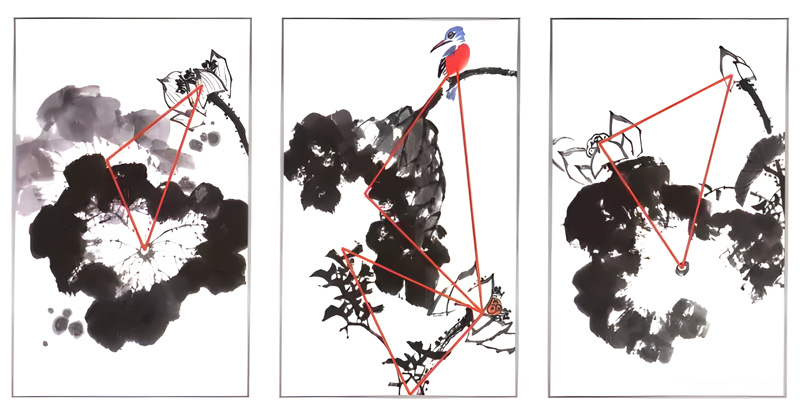
Floral Placement: Avoiding rigid symmetry is key. Grouping elements in odd numbers creates dynamic balance. For multiple blossoms, arranging them within an implied triangle prevents linear stacking, fostering visual harmony regardless of number.
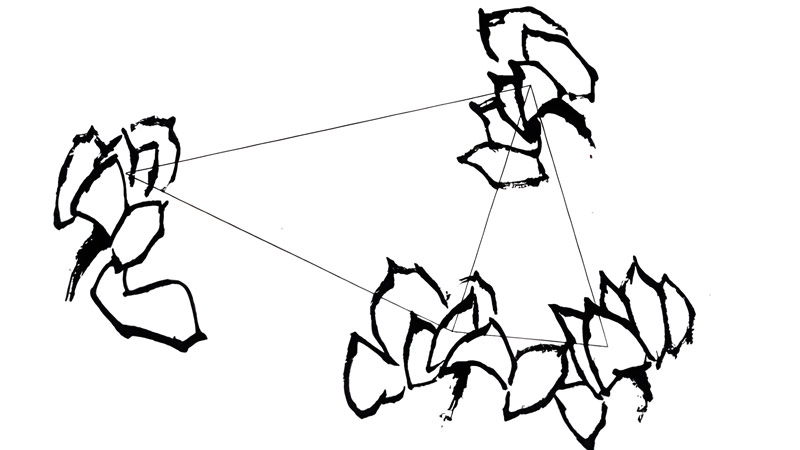
Foliage Framework: Positioning multiple leaves follows the same logic. Three leaves, or groups of leaves, connect through an unseen triangular structure. This principle guides placement, as seen in arrangements linking leaves or small fish within this stable shape.
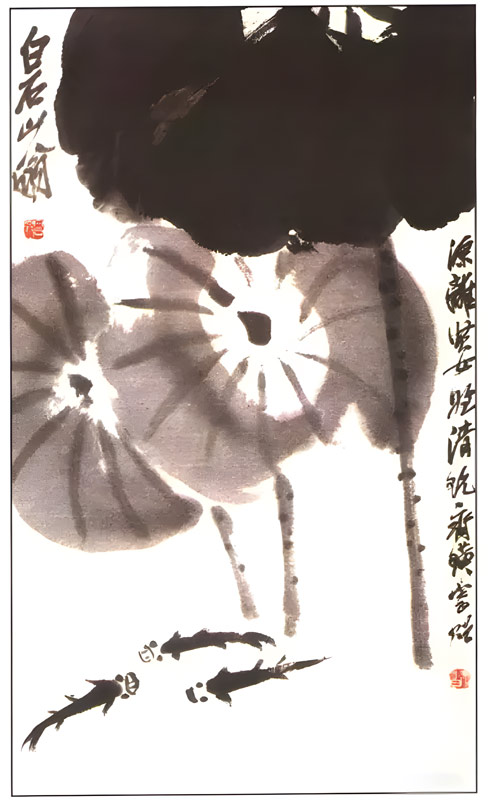
Integrated Harmony: Scenes combining lotuses with birds, fish, or insects rely on triangular organization for their placement. Various configurations—large, small, implied—demonstrate this adaptable approach. Rules exist, but their creative application yields originality and surprise.
Final Notes
This text details the significance and techniques for painting the lotus in traditional Chinese ink wash painting. As a fundamental subject extending from the chrysanthemum technique, the lotus is ideal for mastering essential brushwork, ink tonal variations, and composition due to its complex structure and cultural symbolism. Its depiction is considered crucial for any serious study of the bird-and-flower genre.
The guide methodically decomposes the process. For the blossom, it explains multiple techniques: the Outline Method, the Sketch-Fill Method (for both white and pink lotuses), the Contour-Line and Filling Method (using ink or color lines), and the Boneless Technique, which constructs the flower from core shapes. Instructions are provided for various stages, including buds, full blooms, and withered corollas, followed by painting the seedpod. The distinct styles of masters Qi Baishi, Pan Tianshou, and Li Kuchan are highlighted to illustrate different artistic interpretations.
For leaves, the text covers basic techniques for frontal, side, and drooping views using a large brush to manipulate ink dilution. The Outline and Fill methods and the Expressive Dotting Technique are explained, along with special effects using gum solution or detergent to create unique textures like dewdrops or mottled backgrounds.
The text outlines core compositional principles. These include establishing a clear hierarchy between the primary subject and supporting elements, creating dynamic tension through ink density and breathing space, and employing balanced asymmetry. Essential contrasts in scale, form, and the interplay of dots, lines, and washes are emphasized. The principle of arranging elements—whether flowers, leaves, or integrated subjects like birds—within implied triangular structures is presented as a foundation for achieving dynamic yet harmonious compositions that avoid rigidity.