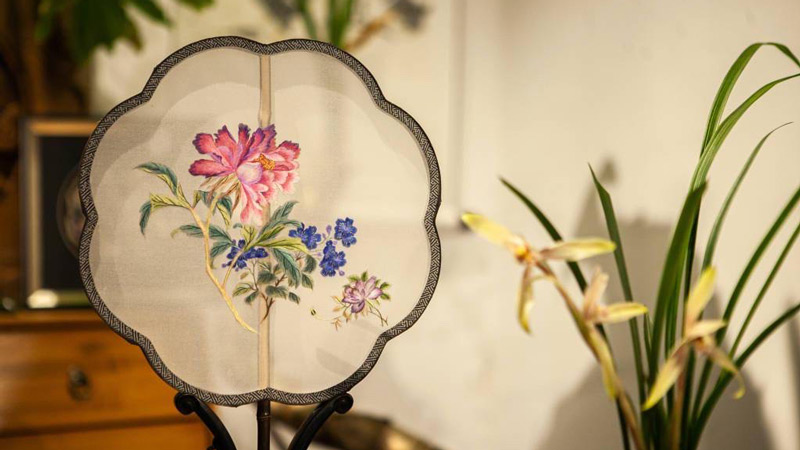
For over three millennia, Chinese embroidery has transformed simple thread into breathtaking art. Emerging during the Shang and Zhou dynasties, it initially served ritual purposes and marked social status. Its journey saw lockstitch mastery in the Qin and Han, absorbed painting aesthetics in the Tang and Song, and crystallized into four distinct, revered regional styles by the Ming and Qing: Su, Xiang, Yue, and Shu embroidery. More than decorative craft, this intricate artistry weaves together ceremonial tradition, feminine skill, and global exchange, embodying China's aesthetic spirit. Its enduring legacy earned it global recognition as an intangible cultural treasure.
1. Su: Double-Sided Elegance
Hailing from Jiangsu, Su Embroidery embodies "finesse, delicacy, elegance, and purity." Its crown jewel is the astonishing double-sided technique, where identical images appear flawlessly on both fabric sides. Finesse demands microscopic precision, with stitches accurate within 0.01mm and subtle shifts across 200 silk hues. Delicacy is legendary: a single thread splits into 128 filaments, and a cat's eye requires 15 painstaking layers; its pupil comes alive with Shizhen (施针) creating light reflections. Elegance shines through Xuzhen (虚针), mimicking ink wash painting's ethereal beauty. Purity means perfection – no knots, skipped stitches, or stray ends mar the reverse.
Mastering this demands extraordinary patience and control. Artists become conduits for the silk, guiding it with breath-like precision. The result transcends craft; it's a meditation rendered in thread, where stillness and movement coexist on a single plane. Observing a Su masterpiece feels like discovering a hidden world within the fabric, inviting quiet contemplation.
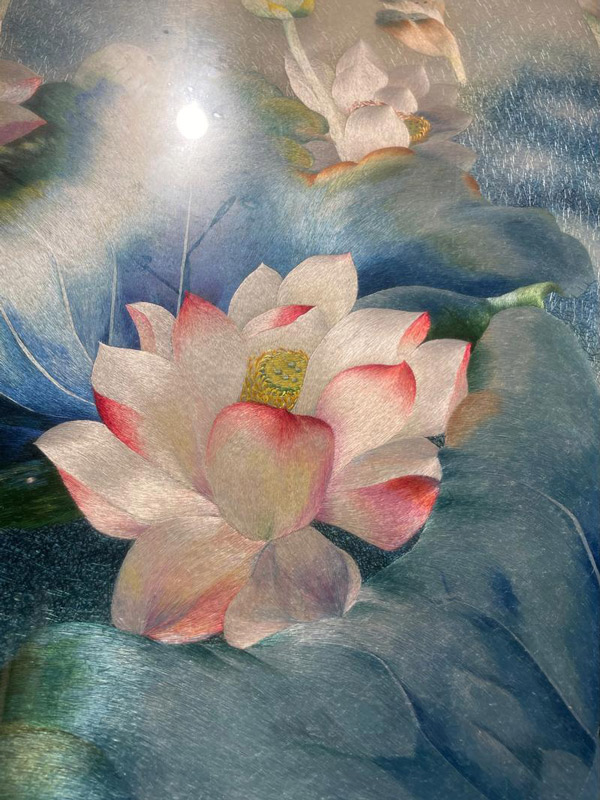
Beyond technical brilliance, Su embroidery captures the poetic essence of southern China. Misty landscapes, delicate blossoms, and serene figures emerge with a softness that rivals brushstrokes. It speaks of refinement, a quiet confidence born from centuries of perfected skill passed down through generations of dedicated artisans.
Today, Su masters continue to innovate while honoring tradition. Contemporary pieces might blend classic subjects with modern compositions, proving the style's timeless adaptability. This living art form bridges dynasties, proving that precision and beauty remain eternally relevant.
2. Xiang: Fur Alive with Colors
Xiang Embroidery, rooted in Hunan, is renowned for its bold, realistic style, particularly in depicting animal fur through the revolutionary Pengmaozhen (鬅毛针). Evolved from blending techniques, this innovation uses radiating stitches. Coarser, widely spaced threads at the base create volume, while fine, densely packed threads at the tips conceal ends, achieving an astonishingly lifelike, "fluffed" texture.
This realism relies on a sophisticated layering process. First, thick threads establish the underlying form. Next, mid-layer stitches blend colors for natural shading. Finally, the surface layer employs Xuanyouzhen (旋游针) for highlights, creating depth and sheen. The combination of varying thread thicknesses and this structured build-up captures the vibrant hues and tactile quality of fur and feathers.
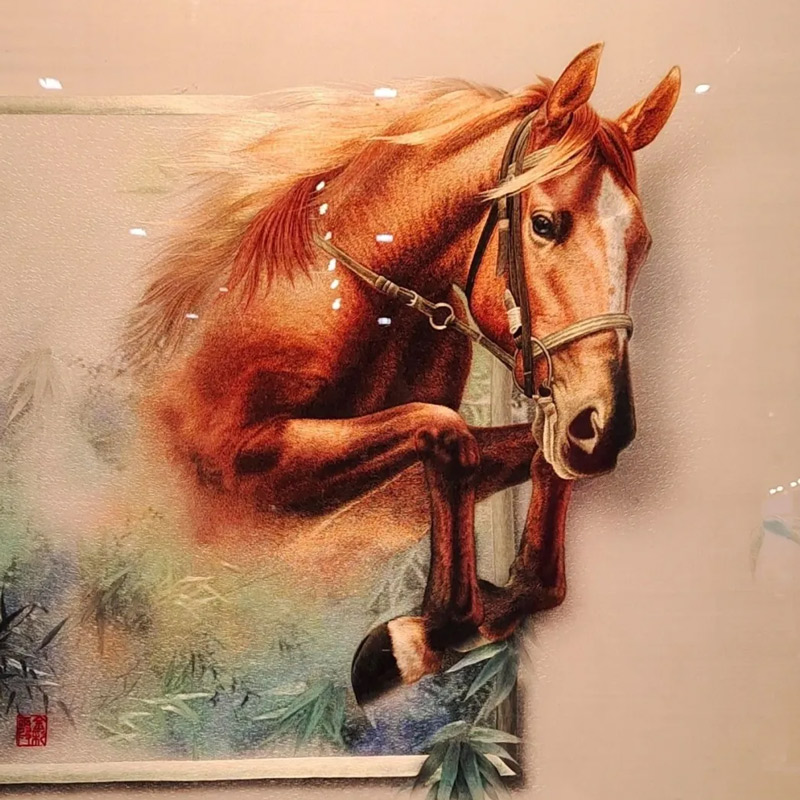
Xiang embroidery reflects the bold spirit of its central China origin. Subjects often feature majestic tigers, powerful eagles, or vibrant floral displays, rendered with striking color contrasts and dynamic composition. It’s an art of confident statement, unafraid of intensity and rich visual impact.
The mastery lies in making static thread convey movement and life. The Pengmaozhen technique doesn't just depict fur; it suggests the animal's vitality, the potential for motion captured in a moment. This technical prowess elevates embroidery from depiction to evocation.
3. Yue: Gold and Dimension
Yue Embroidery, flourishing in Guangdong, dazzles with its dense, ornate compositions and lavish use of color. Characterized by intricate, fully covered designs featuring mythical creatures like dragons and phoenixes, alongside vibrant flora and fauna, it embodies "richness, brilliance, ingenuity, and dimension." A signature technique is Gold Embroidery, where gold and silver threads dominate, complemented by silk floss (known as Baojinxian in Guangzhou and Dingjin in Chaozhou).
Its most dramatic innovation is Diangaoxiu (垫高绣). Artists first pad the design area with cotton or paper twists, then meticulously cover this base with coiled metallic threads. This creates striking three-dimensional relief, making figures like dragons appear to leap from the satin ground. The effect is one of sculptural luxury.
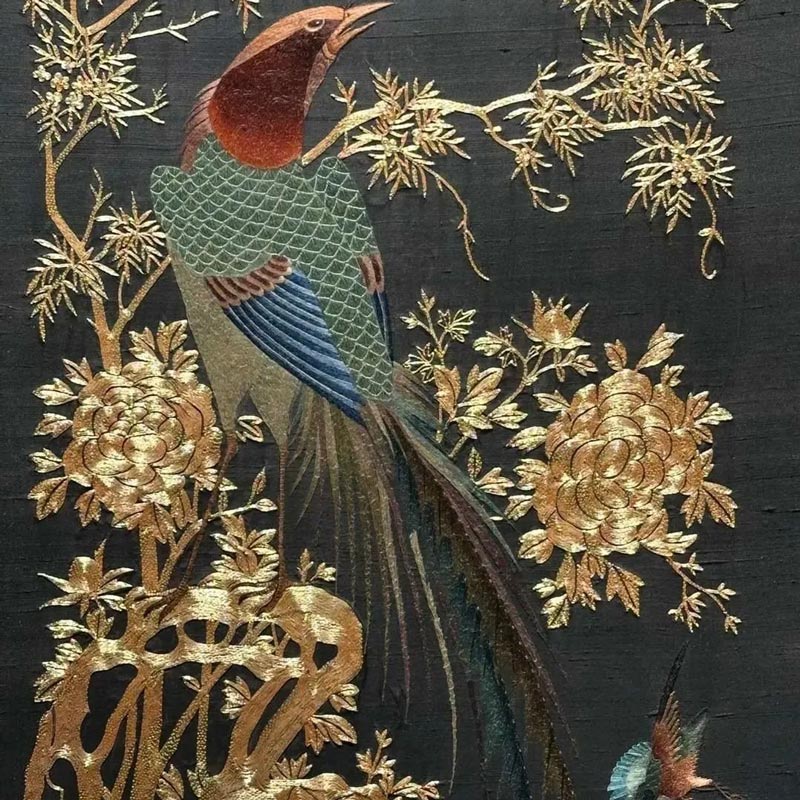
Yue embroidery speaks of abundance and auspiciousness. Influenced by maritime trade and southern China's vibrant aesthetics, its crowded, joyous compositions and shimmering surfaces reflect a culture celebrating prosperity. The metallic threads catch the light dynamically, making the work seem alive.
This style showcases embroidery as architectural decoration. The Diangaoxiu technique transforms flat fabric into a textured landscape, demanding not just stitching skill but sculptural understanding. It’s a testament to the ingenuity born from cultural crossroads.
4. Shu: Stitches Like Rain
Born in Sichuan's misty landscapes, Shu Embroidery captivates with its fine, dense stitches and evocative ink-wash painting effects. Boasting the most diverse repertoire, it utilizes over 130 distinct needle techniques, including 70 unique to Shu – representing 60% of all stitches found across the four major styles. Key techniques like Yijinwen Zhen (衣锦纹针) and Yunzhen (晕针) masterfully replicate the soft gradients and blurred edges of traditional Chinese brushwork.
Techniques such as Zhi Xuzhen (直虚针) manipulate thread direction to achieve subtle light effects, like the shimmering scales of a carp viewed from different angles. This mastery transforms silk thread into flowing water, misty mountains, and the delicate texture of panda fur, capturing the ethereal beauty of the Sichuan basin.
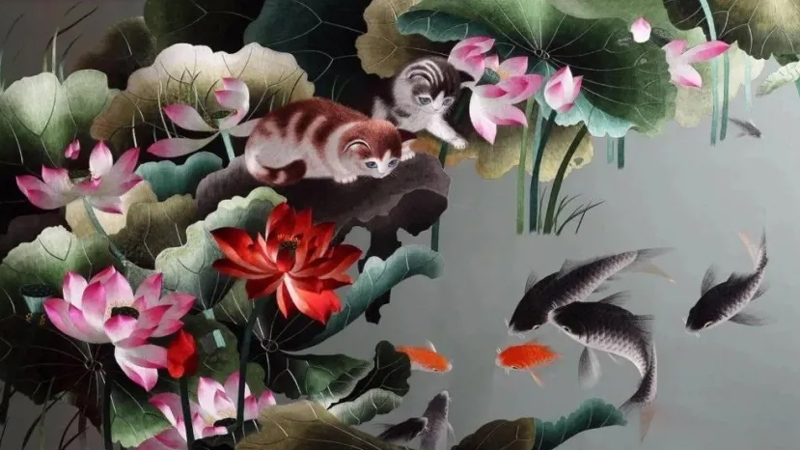
Shu embroidery possesses a lyrical quality. Its subjects – mist-shrouded rivers, bamboo groves, serene pandas – echo the contemplative nature of classical Chinese poetry and painting. The density of stitches creates a tapestry-like richness, yet the overall effect remains soft and atmospheric.
The artistry lies in conveying mood and atmosphere through thread. Shu embroiderers are painters with needles, using meticulous stippling and blending to achieve depth and emotion, proving embroidery's power to mirror the soul of a landscape.