The cheongsam, once a modest Manchu robe, now epitomizes timeless elegance. Over centuries, this iconic garment transformed from rigid imperial attire into a canvas for contemporary artistry. Its stitches carry stories of rebellion, craftsmanship, and cultural renaissance. Today, designers navigate tradition and innovation, ensuring the cheongsam remains not just clothing, but a living testament to Chinese aesthetics. From Shanghai’s jazz-age salons to global runways, the cheongsam’s evolution mirrors China’s own metamorphosis—honoring roots while embracing change.
The Evolution of Cheongsam
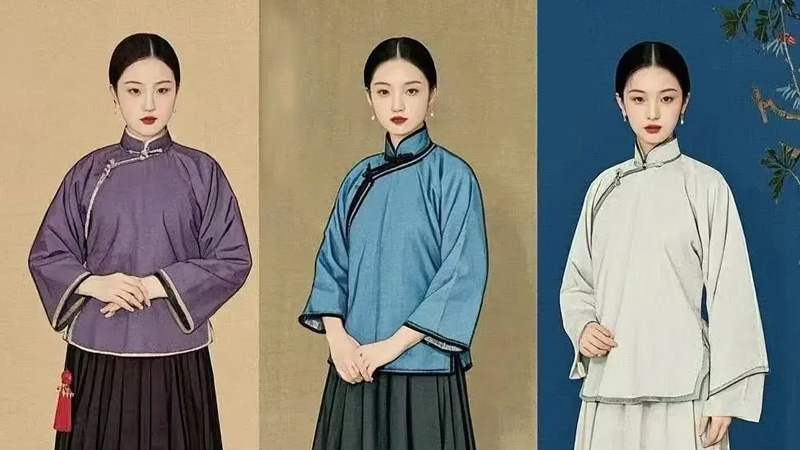
In the Qing Dynasty (1644–1911), the cheongsam served as ceremonial dress. Straight cuts and layered embellishments concealed the body, reflecting Confucian ideals. Intricate "Eighteen Trims" embroidery featured dragons and florals, symbolizing status rather than individuality. By the 1920s, Shanghai’s cosmopolitan spirit reshaped the garment. Western tailoring techniques introduced darts and fitted sleeves, shortening hemlines to the knee. The modern cheongsam emerged—sleek, body-conscious, and emblematic of liberated women.
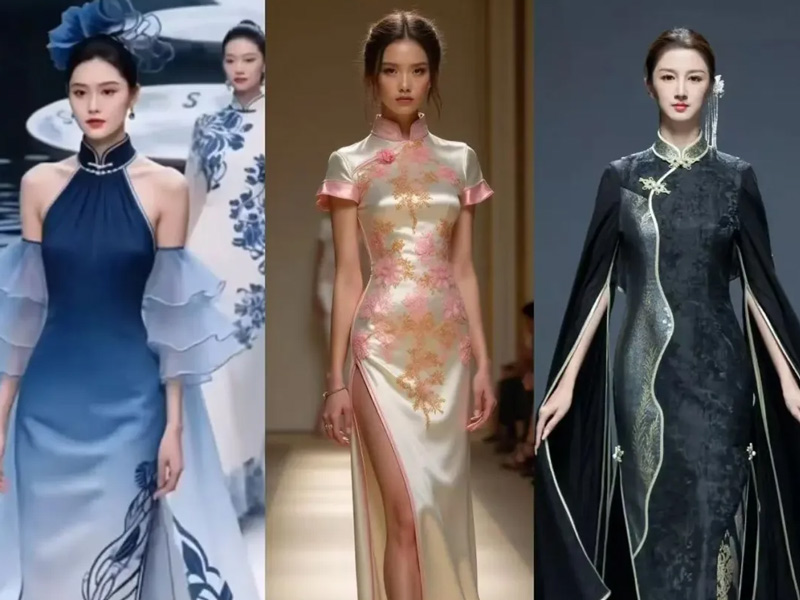
Post-1980s, designers revived the cheongsam by blending tradition with practicality. Cotton and linen replaced heavy silks for daily wear, while ink-wash patterns and celadon blue evoked classical art. Cities like Suzhou became hubs for lightweight, adaptable designs. This era shifted the cheongsam from ceremonial rarity to accessible elegance, worn by professionals and artists alike. Its resurgence wasn’t mere nostalgia—it was a reinvention for modern lifestyles.
Needlework Narratives: Crafting Meaning
Master artisans wield techniques like fabric molding, using steam to shape cloth into fluid curves. Chen Yuqiu (陈玉秋), a Jilin-based inheritor of Manchu techniques, employs nearly invisible stitches—each garment demanding over 10,000 precise seams. "Like snow melting into a river," she describes the seamless fit. Her work preserves methods unchanged for centuries, resisting industrial shortcuts.
Details whisper cultural tales. Frog buttons transformed into art: Shenzhen’s Long Teng Han Tang (龙腾汉唐) reimagined them as jewelry, while Dongying’s Liu Nian studio crafted clasps shaped like oriental storks, celebrating wetland ecology. Color symbolism evolved too—once restricted, imperial yellow now flows freely. Shandong designers blend it with ocean blues, capturing the Yellow River’s journey to the sea. Every choice reflects a dialogue between history and innovation.
Reinventing Tradition, Stitch by Stitch
Non-heritage workshops merge legacy methods with sustainability. Liu Xiaoqin (刘小琴) of Wenjiang Studio champions "single-piece cutting," minimizing waste while maintaining structural integrity. Shenzhen designer Chen Xiaoju (陈小菊) sources biodegradable silks and plant dyes, proving eco-innovation complements tradition. Her sleek, reversible designs reduce environmental strain without sacrificing grace.
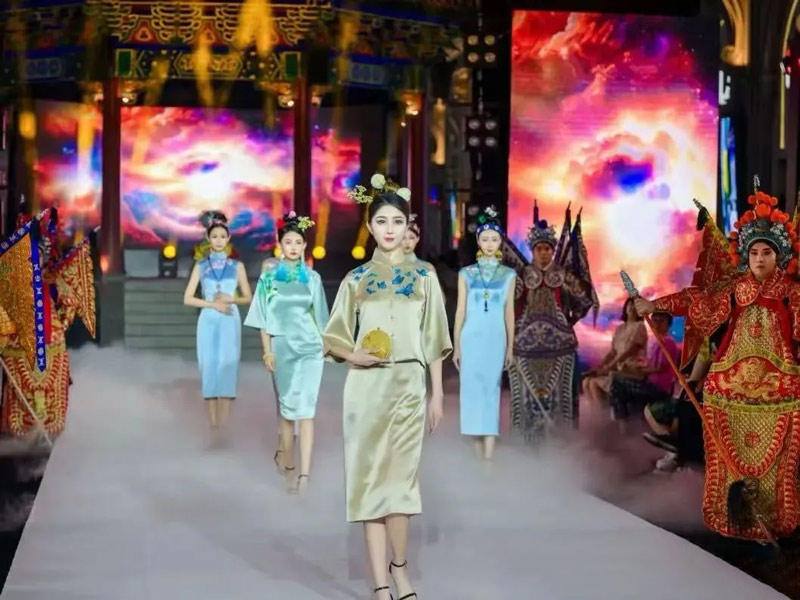
Technology amplifies artistry. Holographic runways in Shenyang resurrect 1930s Shanghai glamour, while silicone-edged embroidery merges with Suzhou’s silk traditions. Yet debates simmer: Can machine-aided patterns honor hand-stitched legacy? Chen Yuqiu argues yes—if innovation serves craftsmanship. Her year-long creation cycles embody deliberate artistry in an age of haste.
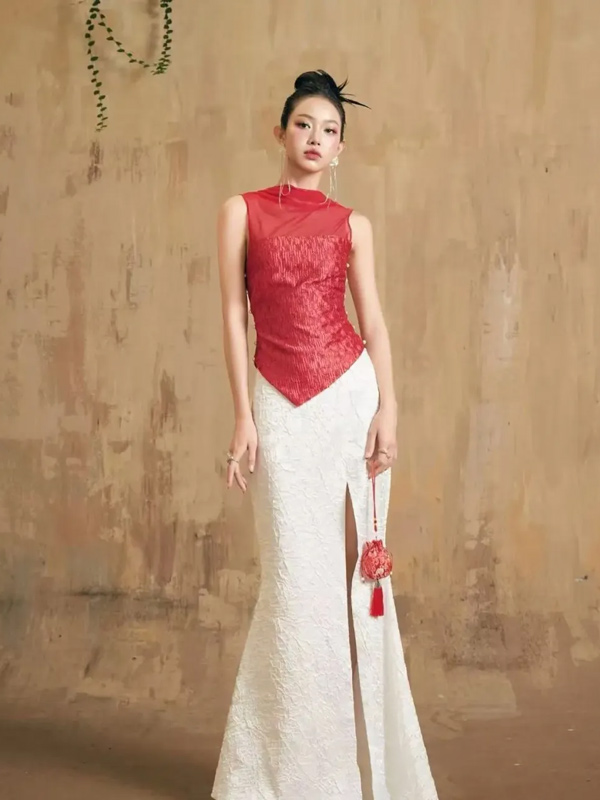
Cultural Threads Weaving Futures
Beyond fashion, the cheongsam fuels cultural diplomacy. At Shanghai’s Silk Road festivals, it bridges histories—Indonesian tourists marvel at Jilin’s "Frozen Wonder" collection, where hidden stitches mimic ice patterns.
Cities brandish the cheongsam as cultural capital. Shenyang’s 2024 Cheongsam Week transformed aircraft hangars and historic pagodas into runways, fusing industrial and imperial motifs. As Long Teng Han Tang’s commute-friendly cheongsams enter offices worldwide, they carry a quiet revolution: tradition needn’t retreat to museums.
The cheongsam’s journey continues—not as a relic, but as a revolution stitched in silk. Each innovation, from biodegradable fabrics to digital displays, anchors it firmly in the present. In the hands of today’s artisans, this garment transcends time, proving that true heritage isn’t preserved behind glass. It’s worn, reimagined, and lived—one precise, deliberate stitch at a time.