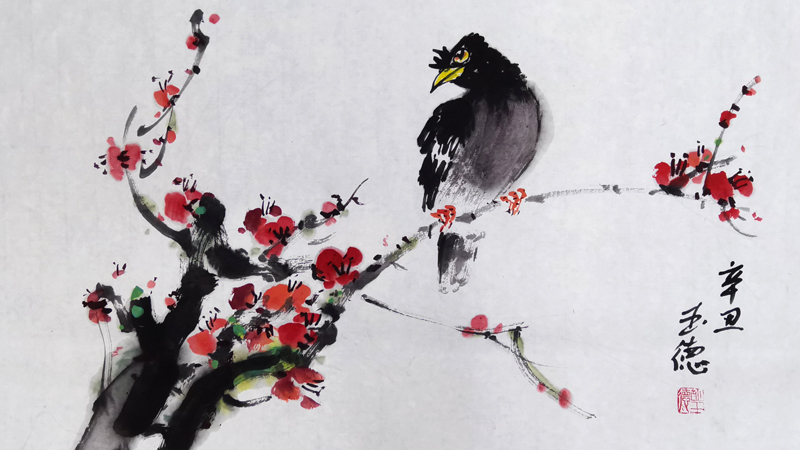
On the soft surface of Xuan paper (宣纸), a wolf-hair brush outlines the bones of mountains, while ink washes breathe life into rivers and clouds. Guohua (国画), honed over millennia, transcends mere visual art. It is a silent symphony of Eastern philosophy. When Northern Song master Fan Kuan (范宽) imprinted his signature "Raindrop Texture Strokes" onto Travelers Among Mountains and Streams (溪山行旅图), or when Yuan dynasty recluse Ni Zan (倪瓒) conjured vast, empty landscapes with minimalist strokes, they weren't just depicting scenery.
They were probing the essence of heaven and earth itself. The beauty of Guohua lies in its profound artistic conception, a measured rhythm of ink and void, exploring the philosophical depth of harmony between man and nature.
The Dance of Ink and Brush
Guohua developed its language, a highly symbolic system built on brush and ink. Tang dynasty theorist Zhang Yanyuan (张彦远), in History of Famous Paintings across Dynasties (历代名画记), emphasized "Bone Method Brushwork", linking painting strokes to the disciplined energy of calligraphy. Southern Song painter Liang Kai (梁楷) embodied this in his The Splash-Ink Immortal (泼墨仙人图). Bold, sweeping strokes define the robe, echoing cursive script, proving the brush itself held intrinsic beauty – a concept of "writing" rather than mere painting.
Ming scholar Dong Qichang (董其昌) asserted "Brush and Ink Must Follow the Times", seeing tradition as a springboard for innovation. Qing master Shi Tao (石涛) elevated brushwork to cosmic principle in his "One Stroke Theory", stating: "In the primordial chaos, there was no method; only when the primal unity dispersed did method arise." This philosophy enables minimal materials to convey an infinite range of meaning.
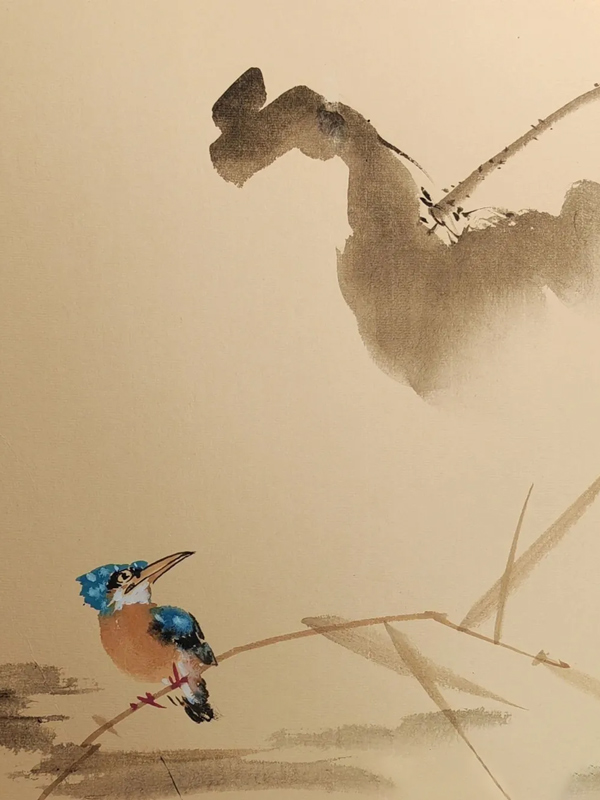
Water's interaction with ink creates ethereal effects essential to artistic conception. Five Dynasties master Jing Hao (荆浩), in The Treatise on Brush Techniques (笔法记), noted ink's power to render depth and atmosphere. Yuan painter Huang Gongwang (黄公望), in his monumental Dwelling in the Fuchun Mountains (富春山居图), used "Dry Brush Strokes" for a rugged, weathered feel. This interplay between solid and void, presence and absence, forms the core aesthetic principle of Guohua.
The Philosophy of Empty Space
Guohua rejects single-point perspective. Its "scattered perspective" allows viewers to journey through time and space. Northern Song artist Zhang Zeduan's (张择端) Along the River During the Qingming Festival (清明上河图) employs "Three Distances" composition. It compresses miles of Kaifeng's bustle onto a handscroll, unfolding like a visual pilgrimage. This approach stems from a traditional "grand view" perspective, observing patterns in heaven and earth.
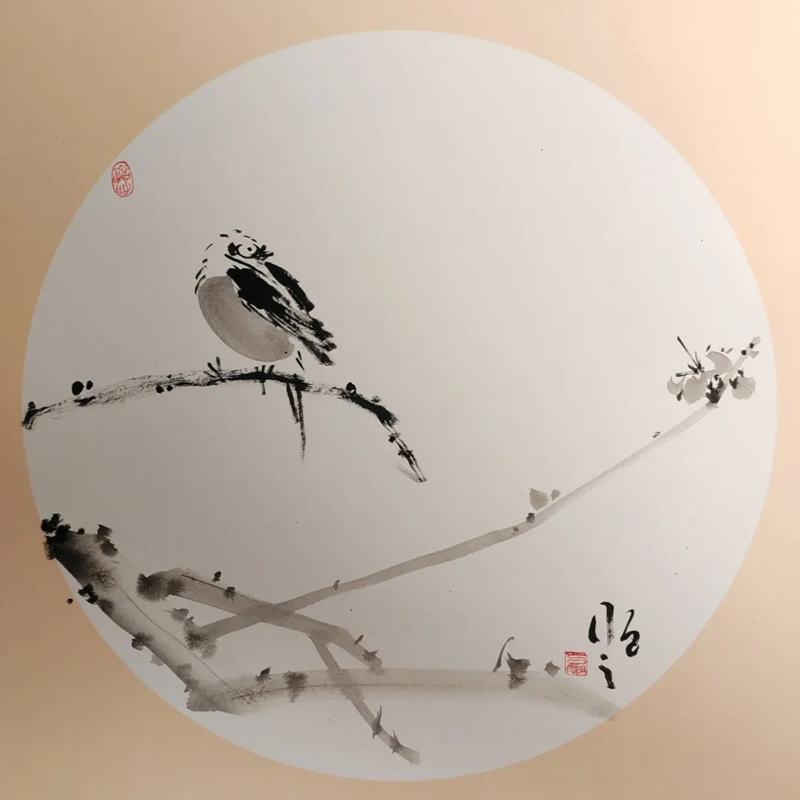
Blank space, far from emptiness, resonates with Daoist philosophy. Qing recluse Bada Shanren (八大山人) often isolated subjects like a lone bird or fish against vast white expanses. Early Qing theorist Da Chongguang (笪重光), in Hua Quan (画筌), crystallized this: "Void and solidity give birth to each other; the uninked areas become realms of wonder." This pursuit of the intangible contrasts starkly with Western ideals of a filled canvas.
Spirit Meets Form
"Learning from Creation, Drawing from the Heart Source" is Guohua's ultimate goal. Northern Song painter Guo Xi (郭熙), in Linquan Gaozhi (林泉高致), urged artists to merge with nature: "Take the mountains and rivers as your own body." Yuan master Huang Gongwang spent years observing the Fuchun River, distilling its essence into his masterpiece. Dwelling in the Fuchun Mountains blends realism with Daoist philosophy, reflecting unity with all things.
The standard of "Spirit Resonance" has guided Guohua for centuries. Southern Qi critic Xie He (谢赫) placed it first among his "Six Principles". Tang master Wu Daozi's (吴道子) flowing drapery lines ("Wu's Ribbons in the Wind") and Jin dynasty master Gu Kaizhi's (顾恺之) ability to capture inner spirit ("Conveying Spirit Through Appearance") exemplified this. Qing painter Yun Shouping (恽寿平) perfected "boneless" flower painting, using color washes to create vibrant, lifelike blossoms. Modern master Qi Baishi advocated for "Wonder Residing in Resemblance and Non-Resemblance", refining the art of capturing essence over exact likeness. This pursuit of life's vitality allows Guohua to transcend the physical, touching the intrinsic spirit of its subjects.
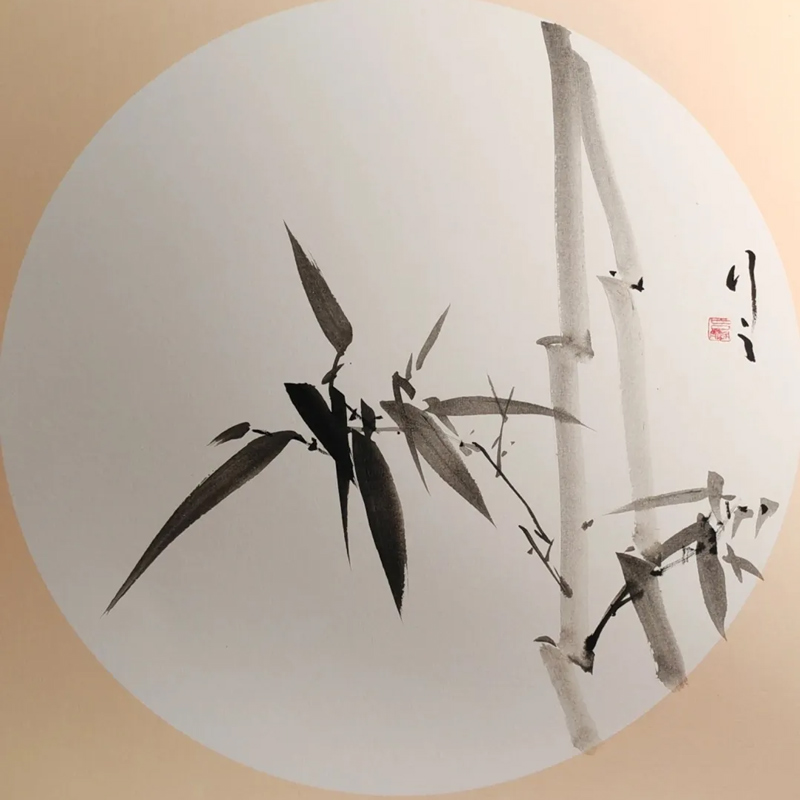
From the flowing silks of Dunhuang frescoes to imperial treasures spanning three millennia, Guohua's essence persists through reinvention. Contemporary pioneer Wu Guanzhong championed "A Kite That Never Breaks Its String", proving tradition can anchor bold modern expression. In our globalized era, the silent poetry of ink and void stands not just as a pinnacle of Chinese civilization, but as profound wisdom addressing modernity's discontents. Even as digital art reshapes vision, the ink swirling on Xuan paper remains a deep meditation on our spiritual home. As Shi Tao observed, "Brush and ink must follow the times," yet the enduring pursuit of "Dao following nature" and the ideal of "unity of heaven and humanity" ensure Guohua remains an eternal sanctuary for the human spirit.