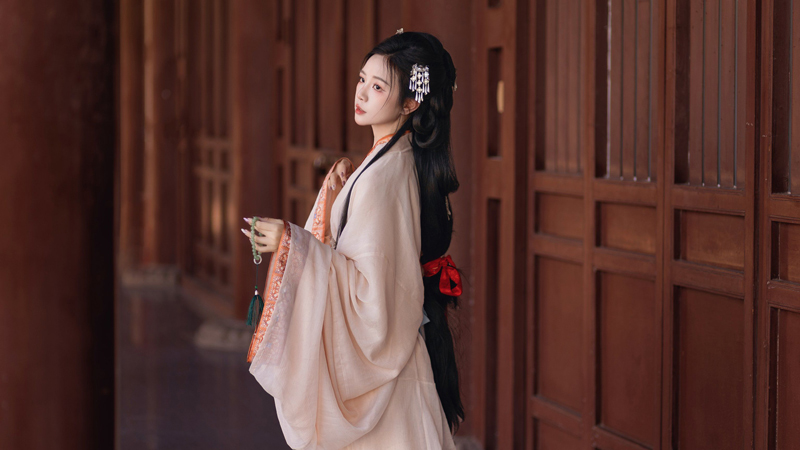
Silk whispers against stone. Graceful sleeves dance with upturned eaves. Across centuries, Hanfu and ancient Chinese architecture engage in a silent, breathtaking dialogue. These two pillars of Chinese civilization embody shared principles of balance, symbolism, and profound respect for nature. Walking through a courtyard in flowing robes isn't merely a photo opportunity; it's stepping into a living canvas where fabric and form converse in the language of heaven, earth, and humanity. This encounter reveals the deep, interwoven roots of China’s aesthetic soul.
Shared Foundations
Both Hanfu and ancient structures spring from the core principle of Tian Ren He Yi (天人合一) – harmony between heaven and humankind. The classic Shenyi (深衣) garment, with its distinct upper and lower sections, mirrors the division between sky and land. Its wide sleeves symbolize boundless capacity, embracing the universe's vastness. Similarly, imperial palaces stand as testaments to cosmic order through strict axial symmetry, reflecting the belief in a central, governing power. The iconic swooping rooflines, known as Feiyan (飞檐), defy their earthly anchors, reaching skyward with dynamic elegance.
Observing a figure in a Ruqun (a short jacket over a long skirt) within the Forbidden City reveals uncanny visual echoes. The layered skirt echoes the tiered complexity of the brackets that support the grand roofs. The proportional balance between the Ruqun's jacket and skirt resonates with the rhythmic relationship between sturdy pillars and gracefully extending eaves. This structural kinship creates an inherent visual calm.
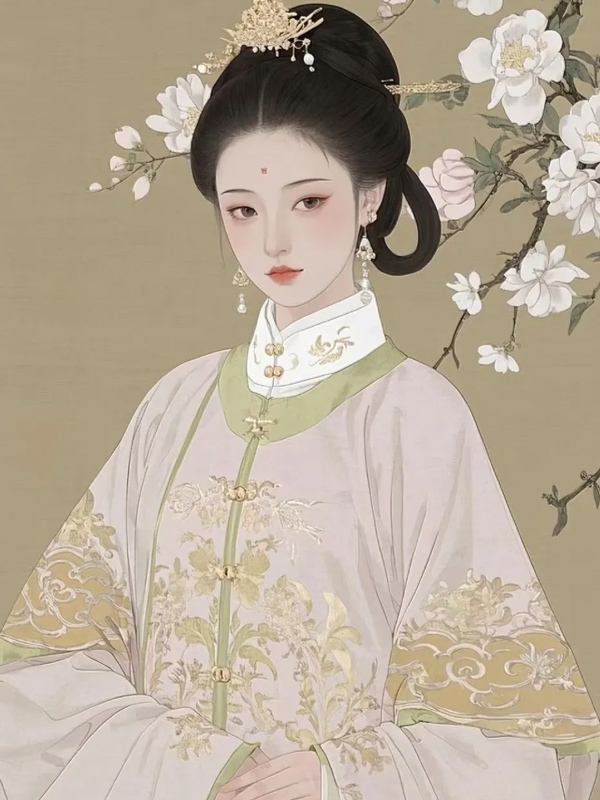
Movement deepens this connection. Wide sleeves catch the breeze, their fluid arcs mimicking the uplift of palace eaves and the gentle sway of ceremonial banners. This shared dynamism transforms static stone and silk into a performance of balance and flow. It’s a tangible manifestation of shared cultural DNA, where every line speaks of interconnectedness.
Color Dialogues
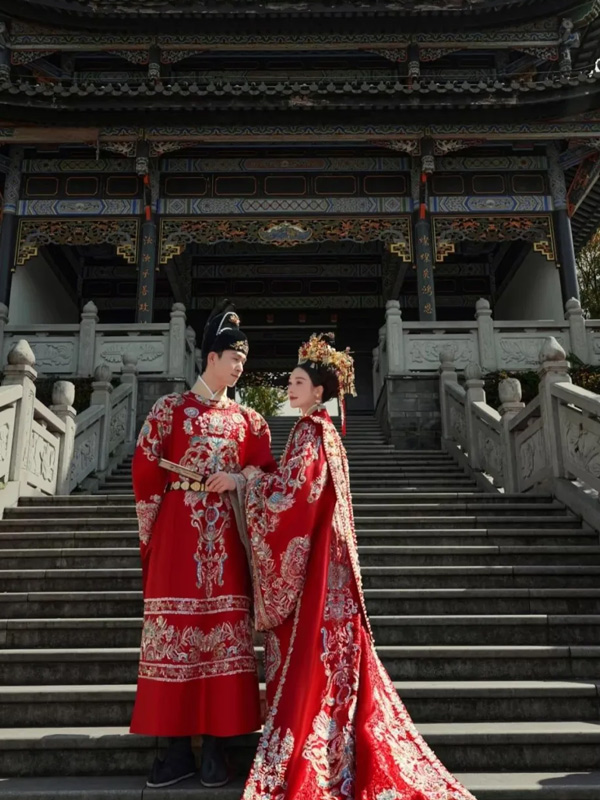
Color in traditional China transcended decoration; it carried profound meaning and strict conventions. Hanfu employed a sophisticated palette where hues signaled status, occasion, and cosmic alignment. Vibrant vermilion, associated with fire and the revered south, denoted nobility and celebration, often reserved for ceremonial garments. Cooler shades like cyan, evoking serene skies and lush landscapes, were favored for everyday wear, embodying tranquility and connection to the natural world.
Architecture painted its own vibrant story. Imperial power radiated from the bold combination of vermilion walls and gleaming golden-yellow tiles, a visual declaration of supreme authority reserved for the emperor. Journey south to the Jiangnan region, however, and the palette softens dramatically. Whitewashed walls and dark grey tile roofs define canalside homes and gardens, creating compositions as subtle and evocative as monochrome ink wash paintings.
Imagine a figure clad in a moon-white Ruqun drifting through a classical Suzhou garden. The garment’s pale hue dissolves into the white plaster walls, while its flowing lines echo the gentle curves of garden pathways and moon gates. This deliberate harmony crafts scenes reminiscent of poetry – an embodiment of the Jiangnan ideal where human artistry seamlessly blends with nature’s tranquility. Color becomes the silent narrator of place and purpose.
Living Legacy
The encounter between Hanfu and ancient architecture is far more than an aesthetic pairing; it’s a vibrant act of cultural reclamation. Donning Hanfu within spaces designed by ancestors forges a tangible link to the past. It transforms historical appreciation into a deeply personal, embodied experience. Walking the same stones, shaded by the same eaves, while clothed in the style of those who came before fosters a profound sense of continuity and belonging often eroded in the modern world.
This powerful synergy fuels a dynamic contemporary revival. Enthusiasts seek out temples, gardens, and historic villages not just as backdrops, but as essential partners in experiencing tradition. Photography and gatherings in these spaces celebrate the enduring beauty of China's design heritage, showcasing its relevance. The movement consciously pushes back against cultural homogenization, asserting the unique value of indigenous aesthetics.
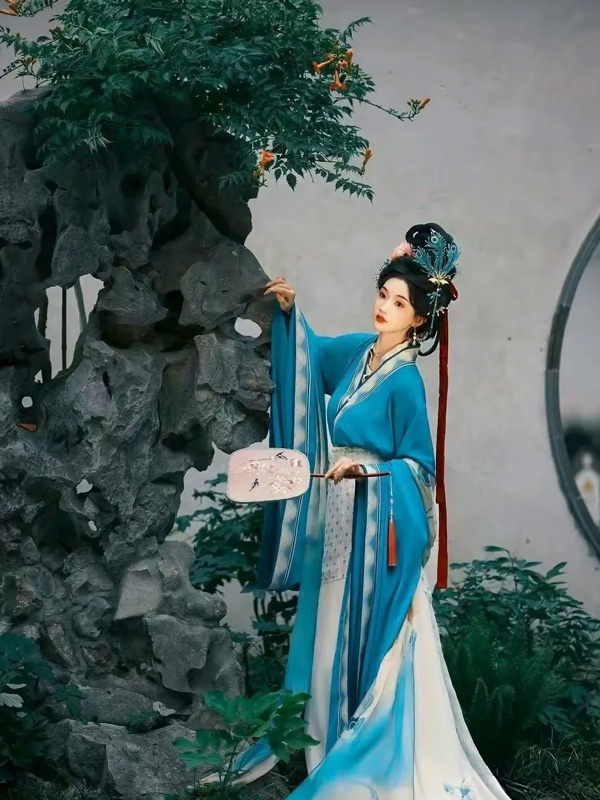
Preservation efforts gain emotional resonance through this connection. Understanding the shared philosophies binding fabric to masonry fosters greater appreciation for safeguarding both. Seeing Hanfu come alive against weathered wood and carved stone makes the past feel immediate and vital. It transforms heritage sites from static museums into stages for living tradition.
The dialogue continues. Each fold of silk, each weathered beam, speaks volumes. This enduring conversation between Hanfu and ancient architecture offers not just beauty, but a compass. In their shared language of form, color, and philosophy lies a powerful invitation to understand China's artistic soul and find one's place within its timeless narrative. The harmony endures.