-

Why Moonlit Reunion’s Lozenge Look Sparked Debate
When Tian Xiwei (田曦薇) appeared in Moonlit Reunion (子夜归) wearing a diamond-lattice top, viewers split quickly. Some enjoyed its foreign flavor; others called the styling chaotic, overdecorated, and simply odd. The quarrel, however, misses the real issue. The lozenge pattern is not the villain. For thousands of years, this geometric motif has traveled through Chinese ceramics, woven cloth, cave murals, and court dress. It can be bold or restrained, sacred or everyday. What failed on screen was not the grid itself but the way costumers stacked colors, motifs, and trims until its clean rhythm vanished. To see why the criticism landed, follow the pattern’s long life across time, trade, and taste. Its story is bigger than one costume. Ancient Grid, Modern Shock Many people assume checked and diamond patterns belong to modern fashion, especially Scottish tartan. Chinese evidence says otherwise. The lozenge appears on painted pottery from Banshan culture (半山文化), where makers drew red outlines and filled them with black. Inside each diamond, they often placed dots, net lines, or crosses. The result was orderly yet alive, never mechanical. That balance—a strict frame with tiny surprises—became a lasting habit in Chinese ornament. It also shows that early craftsmen were not… -

Are Luxury Brands Stealing China’s Ancient Beauty?
Walk through a museum, then walk through a luxury mall. A jolt may follow. A pattern on a ceramic bowl looks like a print on a scarf. A curve on a bronze mirror echoes a handbag clasp. In recent years, Dior faced anger over a skirt resembling the horse-face skirt, while Louis Vuitton drew attention for a persimmon-calyx motif. These cases are not lonely accidents. They are flashpoints in a longer conversation about credit, memory, and money. The question is not whether old designs can inspire new work. The question is who gets praised, who gets paid, and who gets erased when China’s ancient beauty becomes a global trend. That tension is not abstract. It sits in shop windows, on social feeds, and in the quiet gap between a museum label and a price tag. Old Patterns, New Bags In Niya (尼雅), dry sand protected more than ruins. It kept leather bags, half-finger gloves, and shapes that feel shockingly current. Open a fashion magazine today, and you may see the same clean lines and practical cut. A round-toed ballet flat? Eastern Jin graves already held something close. A bracelet of two dragons chasing a pearl? Chinese artisans made that motif… -
Were Ancient Children's Toys Better Than Ours?
A child in the Song Dynasty (960–1279) did not have a smartphone. They had no apps, no video games, no plastic action figures. Yet, when you look at the painted scrolls from that era, their faces are lit with the same joy you see in any playground today. The difference lies in the objects that caused that joy. A new look at paintings like Shengping Leshi Tu (升平乐事图) and works by the master Su Hanchen (苏汉臣) shows that ancient toys were not simple or dull. They were small marvels of design. They used natural materials, clever physics, and social play that we are only now beginning to appreciate again. This article argues that the toys of old China were not just culturally rich; they were technologically and socially advanced for their time. They offered a kind of depth that modern factory-made gadgets often miss. The Hardware: Physics and Artistry Let us begin with the most astonishing piece: the rolling lantern. In the Shengping Leshi Tu, a child pulls a spherical lantern across a courtyard. To modern eyes, it looks like a glowing ball. But inside lies a gimbal mechanism. The candle stays upright on a fixed axis while the shell… -
The 5 Endless Houseworks of Old Chinese Women
Could You Survive a Day of Ancient Housework? The famous poet Li Bai (李白) once wrote, “The moon over Chang'an (长安) shines bright, and from ten thousand homes comes the pounding of washing clubs.” To modern ears, that line feels romantic—a quiet night, silvery light, distant rhythm. But if you actually stood in that courtyard, you would hear no poetry. You would hear the gasping breath of women swinging heavy wooden mallets, their arms burning, their backs aching, while the moon did nothing but illuminate their sweat. No washing machines, no running water, no gas stoves. For a woman in ancient China, housework was not a chore—it was a war of attrition fought from dawn past midnight, waged with muscle, bone, and sheer will. Before Dawn The rooster crowed once—just once—and she was up. Not by alarm clock, but by the iron grip of duty. According to the Book of Rites (礼记), the mistress of the household had to rise at the first cockcrow, tidy the rooms, greet her in-laws, and prepare washing water for her husband. But first, her own appearance: combing, twisting her hair into a tight bun, inserting jade pins and earrings—all in near-total darkness, all in… -
6 Bizarre Ancient Jobs That Shock Modern People
Did Our Ancestors Have Wild Jobs? 6 Bizarre Careers That'll Blow Your Mind Think ancient China was all about emperors, generals, and eunuchs? Think again. While history books highlight the "scholar, farmer, artisan, merchant" quartet, our forebears dreamed up a lineup of gigs so strange you'd swear they were from a fantasy series. From a human alarm clock to royal fart analysts, these jobs prove that work culture has always been, well, interesting. And they're not just folklore – each one is stamped in official records and archaeological finds. So before you complain about your 9-to-5, consider these six historical positions that will make you grateful for your modern desk. 1. The Cockcrow Crier Meet the Ji Ren (鸡人) – a bona fide state position recorded in the Rites of Zhou (周礼). Their entire job? Imitating roosters. Before mechanical clocks, this human timepiece stood ready at dawn to crow loudly, waking the entire court. During major sacrificial ceremonies, they'd shout "Dawn!" through the night to keep everyone alert. Think of it as a living alarm clock with full government benefits. But that's not all. The Ji Ren also managed sacrificial poultry, distinguishing feather colors for ceremonial rites. They both raised… -
Why Do Chinese Movie Zombies All Dress Like Qing Dynasty Officials?
Every year during the Hungry Ghost Festival, a particular image haunts Chinese screens and memories: a stiff, hopping figure in a dark blue official robe, arms stretched straight forward, wearing a peaked hat with a red tassel. This is the Jiangshi (僵尸), China’s most recognizable cinematic monster. But have you ever wondered why these creatures, unlike their Western vampire cousins in capes, are almost always clad in the formal attire of Qing Dynasty bureaucrats? The answer weaves through ancient mythology, political satire, and the practical economics of filmmaking, revealing that the zombie's outfit is far more than a costume choice—it is a historical statement. The Ancient Origins of a Hopping Monster The concept of a reanimated corpse didn't start with the Qing. Its earliest ancestor can be found in the Classic of Mountains and Seas (山海经), where it is called Hanba (旱魃), a drought demon. According to legend, the Yellow Emperor summoned his daughter, Hanba, to defeat the storm god Chiyou (蚩尤). Her power dried up the rains, securing victory, but she was then banished from heaven. Wherever she dwelled, the land turned to dust. Here, the creature wasn't a mindless seeker of blood, but a cursed being of elemental…- 0
- 0
- 28
-
Is That a Lotus or a Battle Over Cultural Identity?
A Spider-Man (蜘蛛侠) promotional poster for the Chinese market has unexpectedly ignited a heated debate across the internet, particularly among Indian audiences. The image features a stylised lotus flower, and many online commenters from India immediately claimed it as their own cultural emblem, accusing the design team of misappropriation. Meanwhile, Chinese netizens pushed back, pointing out that the lotus has been part of their artistic tradition for millennia. At first glance, this seems like a trivial squabble over a single decorative detail. Yet beneath the surface, it reveals a much deeper misunderstanding: the lotus is not the exclusive property of any one civilisation. The flower that blooms in Chinese paintings and the sacred padma of Indian scriptures share a botanical lineage but have followed entirely different cultural trajectories. Their meanings, aesthetics, and emotional resonance have diverged so sharply that treating them as the same symbol is a mistake. Two Flowers, One Root Many people casually use the terms “lotus” and “water lily” interchangeably, and in everyday language, that confusion is harmless. Botanically, the sacred lotus is the same species whether it grows in the Ganges or the Yangtze. However, in India, the red and white varieties of Padma (the Sanskrit… -
4 Eco‑Friendly Hacks Before Plastic Bags Existed
Have you ever stood at a supermarket checkout, clutching a rainbow of plastic bags, and wondered—how did our ancestors carry their purchases home without a single disposable sack? Before polyethylene and petrochemicals, ancient Chinese shoppers mastered a system so clever, so sustainable, that we might blush at our own throwaway habits. They didn't need factories or fossil fuels; they used leaves, grass, fabric, and even their own clothing. Their “shopping bags” were biodegradable, reusable, and often fragrant. Let’s unwrap these forgotten arts—and ask whether we’ve lost more than just convenience along the way. Nature’s Wrapping Desk Long before Styrofoam trays and cling film, the natural world served as the ultimate packaging plant. Lotus leaves were the MVP: waterproof, subtly scented, and sturdy enough to hold raw meat, fresh fish, pastries, or even steamed rice. In the classic novel Water Margin (水浒传), the burly monk Lu Zhishen (鲁智深) orders a butcher to mince pork—and receives it wrapped in exactly such a leaf. No plastic, no waste, just a biodegradable bundle that added a faint floral note to the food. Grass and willow twigs worked wonders for seafood. Fish sellers threaded a willow branch or straw rope through the gills, and the… -
The Red Sash Trend Sparked by The Road to Splendor
Why does Ding Yuxi (丁禹兮) wear a red sash in his new costume drama? And why did ancient Chinese grooms and scholars drape themselves in crimson silk? The answer lies in a forgotten tradition called Pi Hong (披红), or "red draping," which once marked life’s biggest milestones—from wedding chambers to imperial exam halls. Today, that same vibrant hue survives in graduation sashes and award ceremony ribbons, though we barely recognize its thousand-year-old roots. This article unpacks the ritual, its symbolism, and why a simple piece of red fabric still carries the weight of joy, honor, and human hope. The Crimson Cloak of Celebration In the hit period drama The Road to Splendor (花开锦绣), actor Ding Yuxi reprises his role opposite Deng Enxi (邓恩熙), and his character Zhao Ling (赵凌) appears in a striking red sash during a wedding scene. Social media buzzed with curiosity—why the extra cloth? Historically, this was Pi Hong, a broad silk or brocade band worn over the shoulder and across the chest. It flourished during the Ming Dynasty (1368–1644), when red symbolized fire, fortune, and yang energy. Unlike a full ceremonial robe, it was a versatile overlay, used for both scholar’s triumph and a commoner’s nuptials.… -
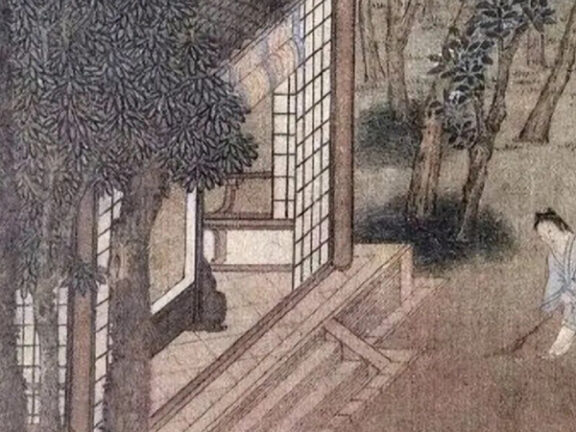
What Did Ancient Chinese Use Instead of Wardrobes?
Open any modern closet, and you will see rows of hangers, folded stacks, and perhaps a chaotic pile of clothes you keep meaning to organize. Now, imagine traveling back in time to ancient China. You would search in vain for a closet as you know it. So where did they keep their garments? The answer is surprisingly sophisticated. Without a single wardrobe, they developed a complete system of storage, using furniture that was practical, beautiful, and often symbolic. Their solutions, from insect-repellent chests to hidden compartments, reveal a culture that valued order, ceremony, and the careful preservation of belongings. These weren't just containers; they were pieces of art and engineering that tell a story of daily life and deep-seated traditions. Let's explore the ingenious methods our ancestors used to keep their clothes safe and organized. The Trusty Chest For most of Chinese history, the primary storage unit was the clothes chest, known as a Yi Xiang (衣箱). This was the go-to solution for centuries, and its design was both practical and meaningful. Early chests, often called Yi Qie (衣箧) or Qie Si (箧笥), were constructed from wood or bamboo. The term "chest" has a fascinating history; the character for 'box'… -
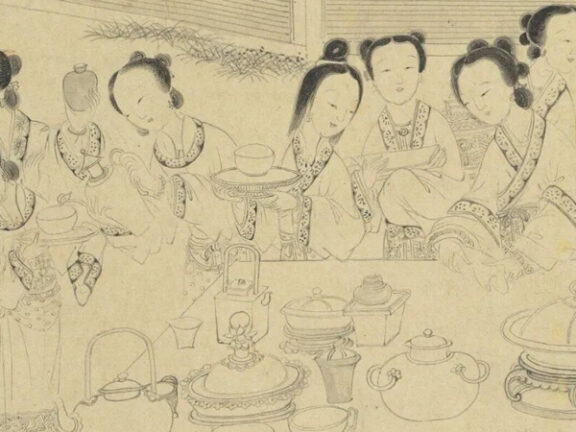
Why Qixi Was a Festival for Women Only
Every year on the seventh day of the seventh lunar month, a flurry of pink marketing campaigns and romantic clichés floods the internet, urging couples to celebrate "Chinese Valentine's Day." But this modern interpretation misses the point entirely. The actual historical and spiritual essence of Qixi (七夕) has nothing to do with candlelit dinners or romantic getaways. In fact, it is a day that strictly forbids romantic indulgence. Instead, this ancient festival belongs exclusively to women—a day for them to celebrate their skills, sharpen their minds, and channel their inner power. It is a day for the "Sisters of the Galaxy" to reclaim their narrative. The Wrong Date for Romance The confusion surrounding Qixi stems from a fundamental misunderstanding of traditional Chinese cosmology. The seventh lunar month is traditionally considered the "Ghost Month," a time when the spiritual world is closest to ours. To designate the seventh day of this month as a day for passionate love would be energetically incongruent. Historical texts explicitly warn against such behavior. Records from ancient medical and folkloric books, such as Jiexu Tongfeng Lu (节序同风录), clearly state that this day is for moral cultivation and abstaining from physical desires. To engage in intimacy on… -
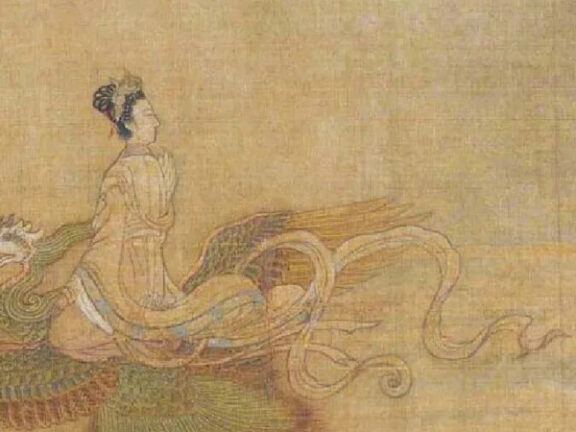
What Happened to the Real Qixi Festival?
Forget the flowers and chocolates. The modern commercial spectacle of Qixi (七夕) as a Chinese Valentine's Day barely scratches the surface of its true story. This festival, which falls on the seventh day of the seventh lunar month, is a tapestry woven from ancient astronomy, a myth of star-crossed lovers, and a vibrant celebration of female skill. It was never just about romance. It was a night when the most brilliant star in the summer sky became a symbol of hope and dexterity for women across the land, connecting the divine with the daily toil of the loom. Before it was a day for couples, it was a night for young women to prove their worth under the watchful gaze of a goddess. The Lovers in the Stars The magic of Qixi begins not on earth, but in the heavens. Its origin is rooted in the observation of two specific stars: Altair and Vega. In Chinese mythology, they are the cowherd and the weaver girl, lovers separated by the Milky Way, a celestial river that the gods placed between them. Their union is permitted only once a year, on the seventh night of the seventh month, when a bridge of… -
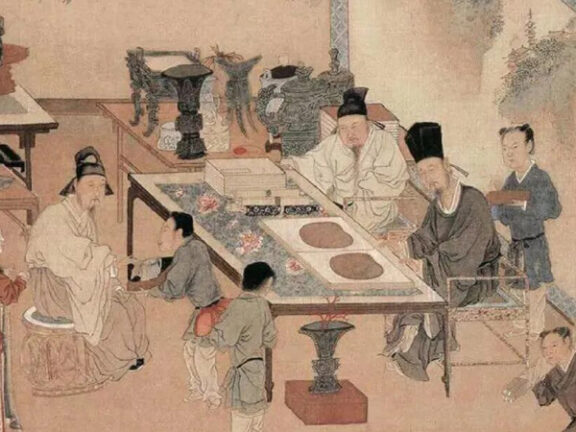
Were Scent‑Producing Body Pills Real in Old China
Forget synthetic sprays. Long before Parisian perfumers bottled their first concoctions, ancient Chinese elites were already mastering the art of personal fragrance—not as a luxury, but as a language of power, ritual, and identity. From jade-adorned sachets to ingestible pills that made one's very sweat smell of orchids, the quest for a "natural" body scent was anything but natural. It was a meticulous craft, a political statement, and a daily discipline. So, what exactly was in those fragrant pouches, and why did emperors care more about a minister's breath than his policies? The answers lie in a history that spans millennia, where aroma wasn't just about smelling pleasant—it was about being fully human in a civilized world. Ritual Beginnings The earliest evidence of fragrance use in China dates to the Neolithic era, where shamans burned aromatic woods to send prayers skyward through curling smoke. But it was the Zhou dynasty's rigid etiquette that codified scent into daily life. According to the Book of Rites (礼记), young men and women undergoing coming-of-age ceremonies had to rise at cockcrow, wash their faces, rinse their mouths, comb their hair, and finally—fasten a scented pouch called a "rong chou" (容臭, literally "container of smell")… -
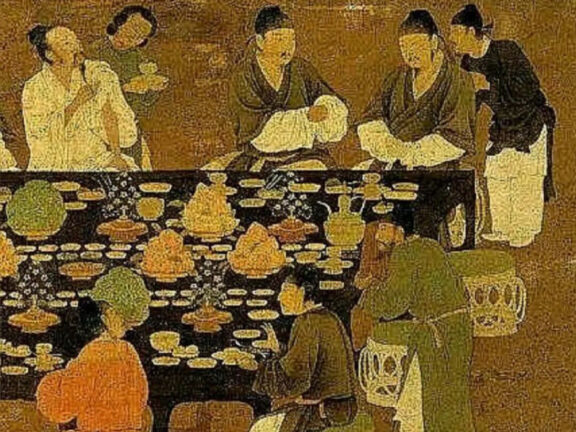
Why Most Ancients Could Not Eat Midnight Hot Food
Could You Satisfy Midnight Cravings in Ancient China? It Depends on Who You Were and When You Lived. For anyone scrolling through a food delivery app at 2 AM, a hot meal is just a few taps away. But for our ancestors, who followed a "rise with the sun, rest with the sunset" rhythm, grabbing a warm bite after dark was a logistical nightmare. The reality is that for centuries, the concept of a midnight snack simply didn't exist for the vast majority. It was a privilege reserved for the elite, and even then, it required navigating a maze of strict laws and practical hurdles. The journey from a dark, silent night to the brightly lit, sizzling night markets of today is a fascinating story of social change, technological limits, and a hard-won freedom that we now take for granted. Before the Song: A World Without Supper To understand why a late-night meal was so rare, we first have to look at the daily eating schedule. For most of Chinese history, from the Shang and Zhou dynasties onward, the average person ate only two meals a day. The first, known as yong (饔), was a hearty breakfast consumed between 7 and 9… -
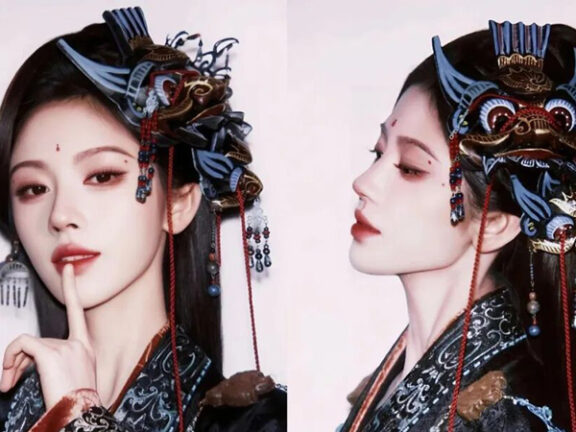
Why Is Ju Jingyi Wearing a Beast-Face Crown in Wanhua Shijie?
Recently, set photos from the upcoming Chinese costume drama Wanhua Shijie (万花世界) have been circulating online, and one particular look worn by actress Ju Jingyi (鞠婧祎) has sparked widespread curiosity. Instead of the usual hairpins, combs, or dangling step-shakes that dominate historical dramas, her character Su Lüxia (苏绿夏) sports a striking headpiece—two blue-and-gold beast-face ornaments flanking her temples, complete with dangling red tassels. It looks like a miniature mask perched on her head, utterly different from the conventional ancient Chinese hairstyles audiences are used to seeing. Was this bizarre design simply made up by the costume department, or does it draw from something deeper? The answer lies in an ancient Chinese theatrical tradition known as Nuo opera (傩戏), a living piece of intangible cultural heritage that most viewers have never encountered in a female lead’s wardrobe before. A Mask That Isn't a Mask At first glance, Ju Jingyi’s headpiece might seem puzzling—why would a costume drama put what looks like a fearsome mask on someone’s head instead of their face? The production team behind Wanhua Shijie didn't invent this design from scratch. They adapted it from traditional Nuo opera masks, but with a crucial twist: instead of having the actress… -
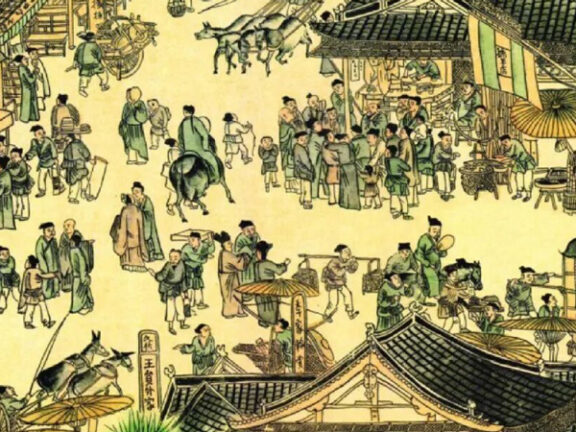
The 5-Step History of Ancient Dental Hygiene
Ancient China wasn't a place for the faint of heart, especially if you valued fresh breath. While you might grumble about reaching for your Oral-B first thing in the morning, your ancestors faced an ordeal that could take the better part of an hour. The evolution of oral care was less about convenience and more about survival, ingenuity, and a whole lot of elbow grease. From the first salt rinse to a horsehair brush that could make your gums bleed, the journey to a clean mouth is a story of human resourcefulness against the daily grind of decay. So, before you complain about your electric toothbrush, consider the sheer hassle of a morning routine in the Tang Dynasty. Step 1: Rinsing with Salt The first line of defense was simply rinsing. Records as old as the Book of Rites (礼记), dating back over two millennia, mention that upon the rooster’s crow, one should wash their face and rinse their mouth. The intent was clear: get rid of that "morning breath." For the commoner, this meant taking a pinch of salt—a commodity that wasn’t cheap—and dissolving it in warm water. The famed physician Sun Simiao (孙思邈) prescribed this exact method in… -
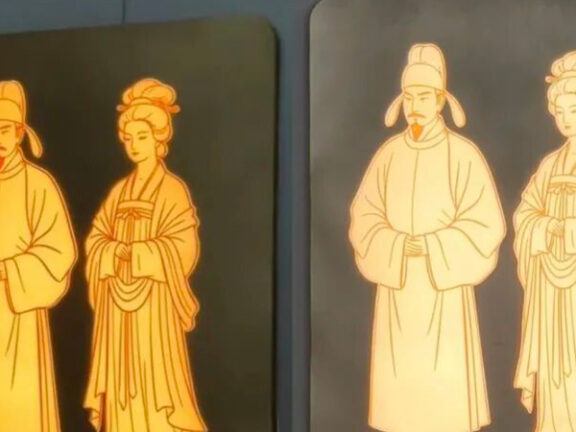
Viral Tang Restroom Signs Win National Praise
Ancient fashion meets modern infrastructure, and the internet can’t stop talking. At Xi'an East Railway Station, restroom signs no longer rely on the usual stick figures in pants or skirts. Instead, a mustachioed man in a round-collar robe and a Futou (幞头, black gauze cap) points one way, while a woman with an elaborate coiled hairdo in a chest-high Shanqun (衫裙, shirt-skirt) gestures the other. The design has gone viral, earning a nod from the state-run Renmin Daily. For many, it is more than a quirky civic upgrade—it is a vivid, everyday manifestation of cultural confidence. Yet as the trend spreads from train stations to museums and even storefront restrooms, it raises an interesting question: can a symbol from the Tang dynasty (618–907) reliably guide a modern traveler to the correct door, or does creativity sometimes come at the cost of clarity? Tang Dynasty Posters Xi'an has essentially turned its public facilities into a miniature Tang dynasty fashion gallery. The viral signs at the railway station draw directly from historical murals and figurines. The male figure, sporting a Futou and a practical round-collar robe, and his female counterpart, wearing a layered skirt with a long draped shawl, are not generic… -
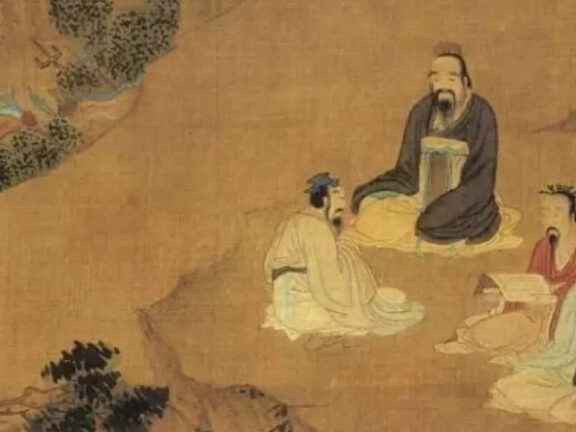
All Supplies in an Ancient Scholar’s Book Box
What did ancient students carry to school? If you picture a simple cloth bag with a single book and a brush, think again. Their schoolbags were packed with everything from carved wooden boxes and self-sharpened ink sticks to miniature knives for scraping off mistakes. They carried stacked meal boxes, lime sachets as hand warmers, wooden clogs for muddy roads, and sometimes even their own discipline rulers—gifted to the teacher with a polite request for strict correction. Beneath all this gear lay one unchanging weight: parental hope. For every brush and battered textbook carried the dream of a better future, a burden that feels just as heavy in today’s classrooms. So before you envy the "simplicity" of ancient schooling, let’s unpack the real load—and you might find your own child’s backpack suddenly looks a lot lighter. The Hardcore Toolkit The ancient "schoolbag" was no flimsy cloth pouch. The wealthy used Hongmu (红木, rosewood) boxes, intricately carved with dragons and phoenixes, complete with compartments that rival any modern pencil case. Meanwhile, poorer students had to make do with woven bamboo baskets—otherwise, they had nowhere to store their precious scrolls. The three essential writing tools were brush, ink, and paper, but the reality… -
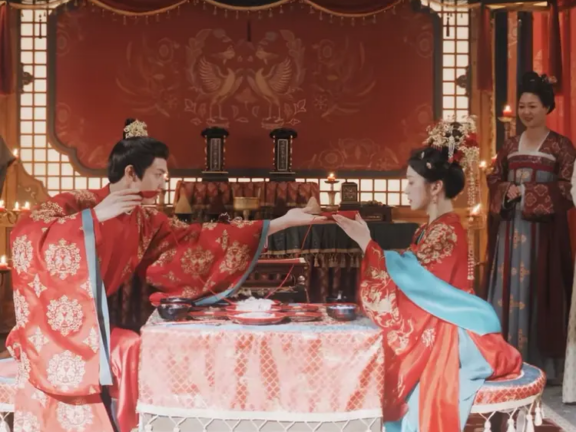
Chinese Wedding Rituals: Three Letters, Six Rites, Hejin and Jiefa
On August 19, 2026 — the eve of Qixi, the Chinese Valentine's Day — collective weddings in traditional style are sweeping cities across China: Chifeng's "Jade Dragon as Witness, Rendezvous at Qixi" wedding-culture carnival is recruiting 50 couples, Guiyang's Confucius Academy is holding its 13th Chinese wedding ceremony, and nine departments led by the Yunnan Provincial Department of Civil Affairs are organizing the province's third collective wedding. Growing numbers of couples are choosing Zhou-style or Han-style weddings to mark their big day. The joined-gourd cup toast, the loosening of the bridal tassel, the binding of hair, the three bows — these ancient rituals are walking out of the classics and into contemporary ceremonies. How did this thousand-year wedding system evolve, and what cultural code does each step carry? This guide follows the Yili chapter on the wedding rites of a common officer (仪礼·士昏礼) and the "Hun Yi" chapter of the Book of Rites (礼记·昏义) to walk through the full sequence: pre-wedding rites, the main ceremony, and post-wedding rites. Han-Style Weddings: Rooted in Zhou Rites A Han-style wedding (汉式婚礼) is the ethnic wedding of the Han people, modeled on the rites of the Western Zhou dynasty and carried by an ethos…- 0
- 0
- 253
-
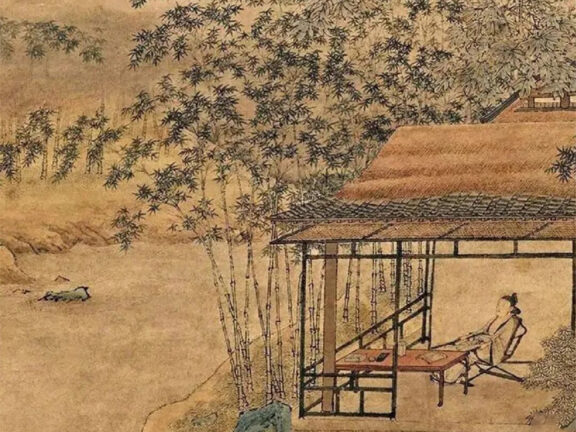
5 Ways Ancient Chinese Stayed Cool in Dog Days
Could You Survive a Summer in Ancient China? The answer might surprise you. While we crank up the air conditioning and complain about heatwaves, our ancestors faced scorching temperatures without a single watt of electricity. Yet they didn't just survive – they thrived, crafting ingenious solutions that turned summer's curse into a season of creativity. From water-powered cooling systems that would impress modern engineers to frozen treats that rival today's gelato, ancient Chinese wisdom offers a masterclass in living well with less. So forget what you think you know about pre-modern life. Step back in time to explore how emperors and commoners alike beat the heat – and discover why their methods might just inspire your own summer strategy. 1. Water-Powered Cooling Long before centralized air conditioning became a modern staple, the Han Dynasty (206 BCE – 220 CE) had already perfected the art of architectural cooling. The Weiyang Palace (未央宫) in Chang'an featured a "Cooling Hall" strategically positioned near water sources. The principle was elegantly simple: flowing water naturally lowered ambient temperatures through evaporation. This wasn't mere luck – it was deliberate engineering that recognized water's cooling potential centuries before mechanical systems emerged. By the Tang Dynasty (618–907 CE),… -
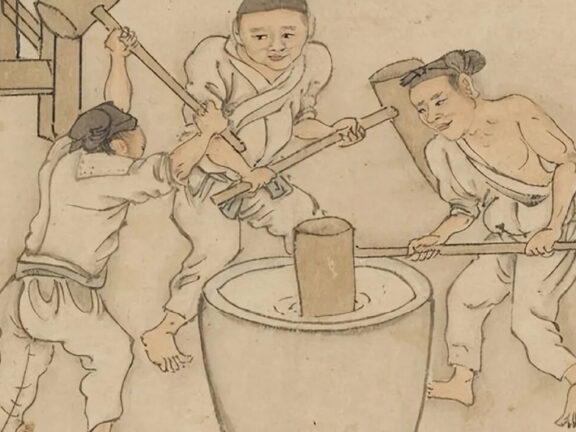
5 Natural Cleaners: How Ancient Chinese Washed Clothes
Ancient Chinese had no Persil or Omo, no Haier washing machines, and certainly no scented fabric softeners. So how did they keep their white robes gleaming and their silk sashes spotless? If you picture a babbling brook, a few maidens humming folk tunes while gently rubbing linen—think again. The real history of laundry in China is less poetry, more perspiration. It was a gritty, muscle‑aching chore that demanded chemistry, botany, and a good deal of brute force. Yet the solutions they devised were surprisingly ingenious—some so effective that they survived well into the 20th century. Let’s roll up our sleeves and dive into the suds‑free world of ancient washday. 1. Ash Power – The Everyman’s Detergent If any single “powder” deserved the title of ancient laundry MVP, it was cao mu hui (草木灰)—plain wood ash from the cooking fire. Yes, the grey dust you sweep out of the hearth. Early farmers noticed that when ash mixed with water, it turned slippery and slightly harsh to the touch. That slipperiness came from potassium carbonate, an alkaline compound that breaks down grease and grime. The Book of Rites (礼记), compiled over two thousand years ago, already advised: “When headbands and belts are… -
LV Sues Molly Tea Over Floral Trademark
LV (Louis Vuitton) finally broke its silence on July 28, 2026. During the group's first-half earnings call, CFO Cécile Cabanis addressed the high-profile trademark lawsuit against the tea beverage chain Molly Tea — and her words did more than confirm the billion-yuan claim. They lit a fire under a question that has burned across Chinese social media: “If a pattern comes from ancient murals and temple windows, how can one brand own it forever?” The case, now on appeal in Suzhou, pits a century-old luxury monogram against a floral logo that millions of consumers see every day. But beneath the money and the memes lies a sharper dilemma: where does legitimate protection end, and where does cultural monopoly begin? The Lawsuit On June 29, 2026, the Suzhou Intermediate Court ordered Molly Tea to pay 10.3 million yuan ($1.4 million) for using a four-petal flower graphic on its storefronts, cup sleeves, packaging, and brand logo. The court found that design "highly similar" to seven registered four-flower marks that LV has held in China since 1986. The tea brand must also stop using the graphic immediately and publish public apologies across all platforms. Molly Tea's founder has appealed, so the ruling is… -
Did Our Ancestors Ever Get a Good Night's Sleep?
We often romanticize the past. We imagine our ancestors drifting off to sleep as the sun set, free from the glaring blue light of smartphones and the anxiety of unanswered emails. It seems like a golden age of rest. However, this idyllic image crumbles under historical scrutiny. The reality is that achieving a peaceful night's rest was a formidable challenge, fraught with legal perils, physical discomfort, and psychological turmoil. From enforced curfews to rock-hard pillows, the battle for a good night's sleep is not a modern invention; it is a timeless human struggle that our forebears knew all too well. They would likely look at our memory foam mattresses with envy, even as we envy their lack of digital distractions. 1. The Curfew's Clamp If you think your bedtime is dictated by a boss or a deadline, consider the ancient Chinese curfew. The desire for an early night wasn't always a choice; it was often a matter of survival. From the Shang and Zhou dynasties, a strict curfew system was in place. The Rites of Zhou (周礼) even mentions a specific officer, known as Si Wu Shi (司寤氏), whose sole duty was to enforce the night ban. Under the Tang… -
A Historical Drama's Most Overlooked Detail
You have seen it a hundred times. A noblewoman in a lavish historical drama retires for the night. Her hair is still pinned in an elaborate updo, her face is fully made up, and she is wearing the same heavy, embroidered robe she wore to the imperial banquet. She simply lies down on the bed, covers herself with a blanket, and goes to sleep. It is a small moment, easily dismissed as a cinematic shortcut. But it is a historical falsehood that has quietly irritated costume drama enthusiasts for years. The idea that ancient people slept in their day clothes is a myth as persistent as the notion that everyone in the past wore drab colors. The reality, as meticulously documented in ancient Chinese texts, is that the sleeping attire of our ancestors was a sophisticated system of garments that was both practical and elegant. It reveals a culture that valued rest as much as it valued ceremony, a world where even the private act of sleeping had its own code of dress. The Private Wardrobe To understand what historical figures wore to bed, one must first understand the concept of Xieyi (亵衣). The Shuowen Jiezi (说文解字), the great Han…
History & Culture








Scan to open current page
-
$CouponsLimitation of use:Expired and UnavailableLimitation of use:
before
Limitation of use:Permanently validCoupon ID:×Available for the following products: Available for the following products categories: Unrestricted use:Available for all products and product types