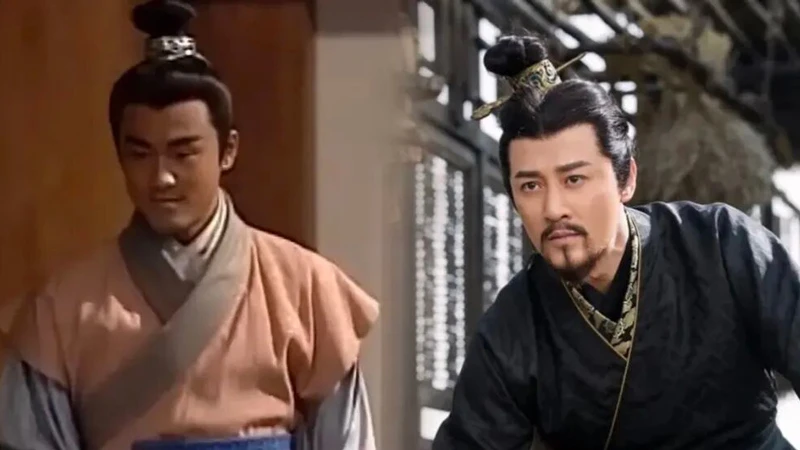
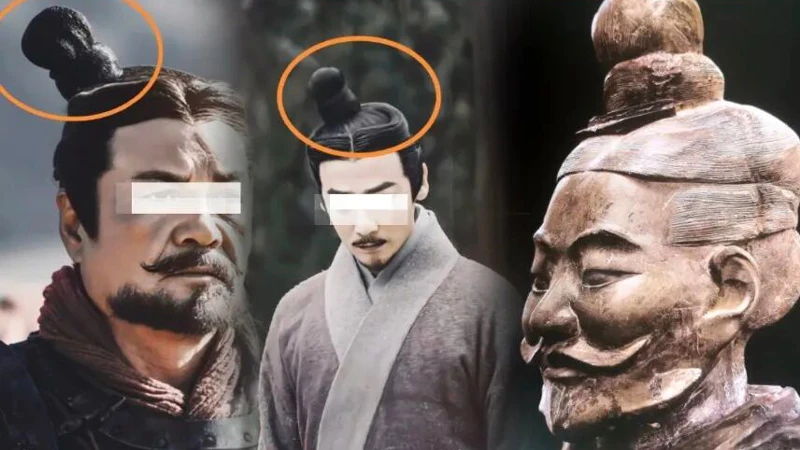
The announcement of a new film adaptation of the classic time-travel series Back to the Past (寻秦记), reuniting the original cast after 25 years, has sent waves of nostalgia through its fanbase. While audiences eagerly await the return of Louis Koo and Raymond Lam to their iconic roles, a seemingly minor detail from the promotional material has ignited a surprisingly passionate online discussion: the distinct, slightly off-center topknot, or Ji (髻), worn by Lam’s character. This quirky hairstyle, far from being a costuming error, is a deliberate nod to a fascinating and authentic historical practice from the Qin era.
The film’s attention to this detail opens a window into the highly structured and symbolic world of ancient Chinese military life, where even a hairstyle could speak volumes about a person’s rank and origin.
More Than a Hairstyle
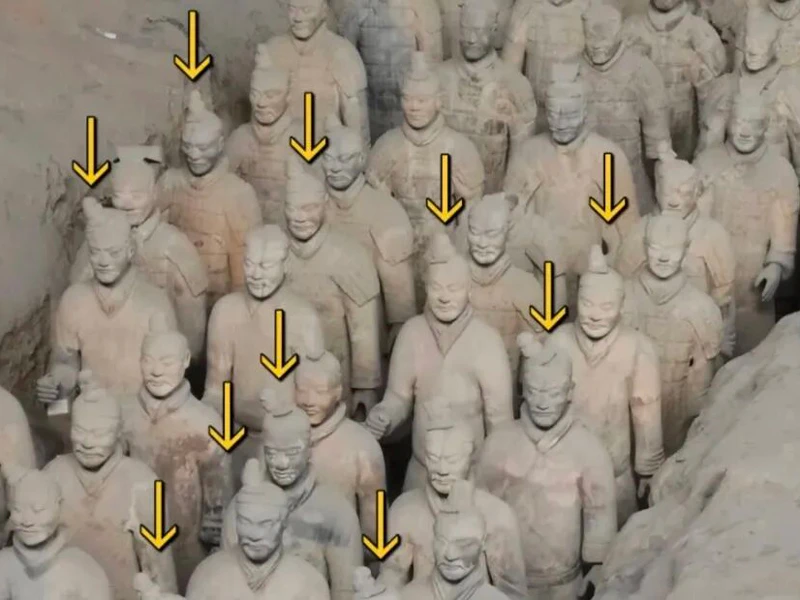
To the modern eye, a tilted bun might appear casual or even charmingly disheveled. In the context of the Qin dynasty (221-206 BCE), however, it was a standard and meaningful feature. The most definitive evidence comes from the silent army of the Terracotta Warriors. A close examination of the thousands of life-sized figures reveals a striking variety in their topknots. A significant portion wear theirs tilted—some to the left, others to the right, some forward, and some backward. This was not random artistic expression but a regulated system.
For years, a common explanation cited much later historical texts, suggesting that tilted hair signified non-Han ethnic groups. This interpretation, however, projects Qing dynasty perspectives onto a civilization over two millennia older. The Qin state, renowned for its formidable and pragmatic military machine, operated under a different logic. In the brutal theater of war, every element of a soldier’s appearance could be optimized for function and command structure. The hairstyle was a practical solution for keeping long hair securely managed during combat, but its specific placement served a higher purpose.
The prevailing and most credible theory today is that the orientation of the topknot functioned as a visual code for military hierarchy. On a chaotic battlefield, where armor could look similar, a quick glance at a soldier’s head would immediately reveal his station. This system transformed hair into a living, wearable insignia. It was a brilliant and efficient method of organization, ensuring clear lines of sight and command in the midst of action, where instant recognition could mean the difference between victory and defeat.
A Code on Their Heads
Researchers have identified a clear pattern within the ranks of the Terracotta Army. The position of the topknot follows a deliberate upward trajectory corresponding to rising military status. The lowest-ranking infantrymen are often depicted with their knots positioned on the lower left or right sides of the head. As rank increases, the knot’s placement moves upward and inward.
The journey culminates with the topknot situated directly on the crown of the head. This central position, however, was not the final word. An even more refined system of distinction existed at this elite level, based on the accessories worn with the topknot. A simple, unadorned central knot denoted one rank. Adding a Ze Jin (帻巾), a type of headband or scarf, signified a higher one. Those privileged to wear a Guan (冠), a formal hat or cap, over their topknot held greater authority still.
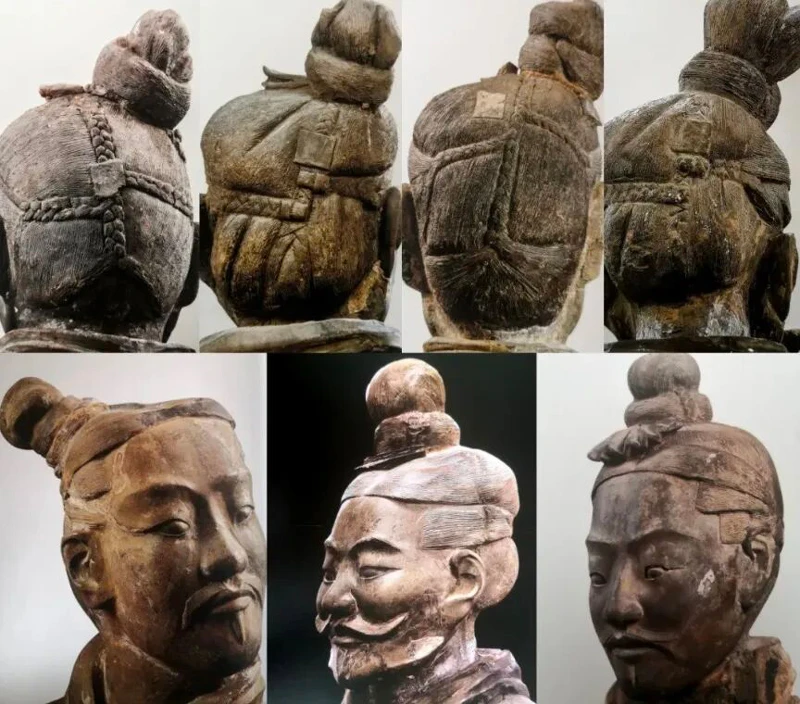
The pinnacle of this sartorial hierarchy was the double-plate Chang Guan (长冠), an elongated cap. A general or high commander would be distinguished by this headpiece, making him instantly identifiable. Therefore, the complete hierarchy reads as a clear ladder: side knot < low central knot < high central knot < central knot with headband < central knot with single-plate cap < central knot with double-plate cap. This intricate code demonstrates the Qin military’s obsession with order and the sophisticated non-verbal language embedded in their culture.
From Terracotta to Television
The production team behind the new Back to the Past film deserves credit for incorporating this nuanced historical detail. Raymond Lam’s character, likely portraying a figure of significant martial standing, sports a topknot that aligns with these ancient conventions. This subtle choice adds a layer of authenticity that deepens the world-building, connecting the fictional narrative to tangible archaeological evidence.
This attention to detail bridges a gap of 25 years, not just for the actors but for the audience as well. Fans who grew up with the original television series now have the knowledge and tools to appreciate these deeper historical echoes. The discussion around the hairstyle has moved beyond mere aesthetics into a public engagement with history, proving that popular culture can be a powerful conduit for historical curiosity.
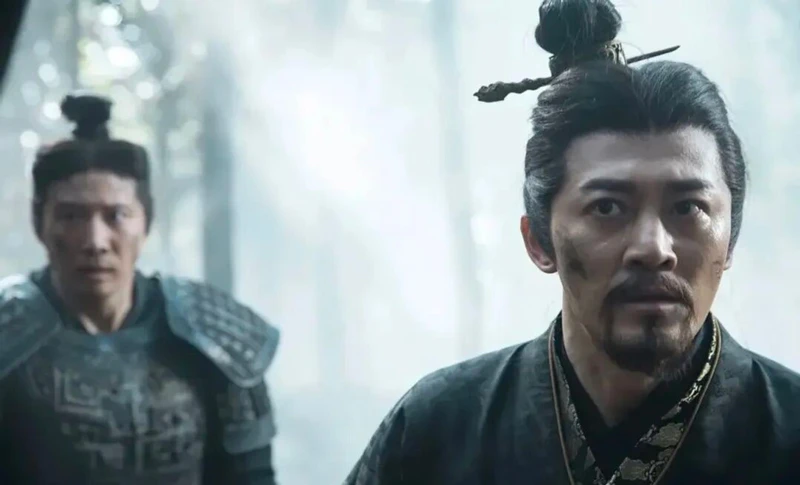
The enduring fascination with the Qin dynasty stems from its foundational role in Chinese history—a short, intense period of unification, standardization, and immense ambition. The tilted topknot, a small detail on thousands of clay soldiers and now on a modern actor’s head, is a microcosm of that ambition. It represents a society that sought to codify and control, to communicate rank and order in every possible way. As the new film brings this ancient world back to the screen, it reminds us that history is often written not just in texts, but in the very way people wore their hair.