A new television experience is captivating audiences. It’s not just about following the plot twists of a period piece, but about embarking on a treasure hunt within the frame. As viewers watch the popular series Swords into Plowshares (太平年) on CCTV-1, a fascinating secondary activity has emerged: spotting the real historical artifacts meticulously recreated by the production team. From a merchant’s stringed instrument to the intricate design on a wine warmer, each detail is a deliberate nod to a tangible piece of history, waiting to be discovered in museums across China. Fans are thrilled, feeling they’ve been treated to a refined cultural feast, and are taking to social media to compare screenshots with photos of ancient relics.
1. Guqin (古琴) - A Melody in Wood
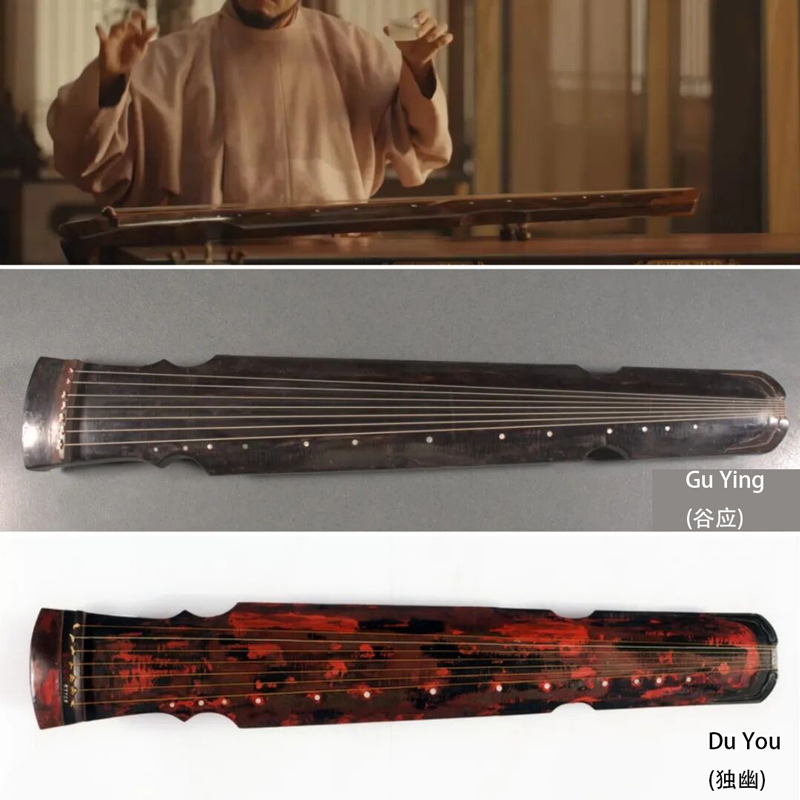
The merchant Cheng Zhaoyue’s (程昭悦) entrances in the drama’s first episode are accompanied by the quiet presence of a Guqin. This isn't just any prop. Its distinct shape closely mirrors classical designs preserved for centuries. The Guqin, a seven-stringed zither, is one of China's oldest plucked instruments. Its basic form was largely standardized by the end of the Han Dynasty, yet it evolved into numerous styles, each with its own name and character.
Viewers with a keen eye might recognize similarities to famous examples like the "Gu Ying (谷应)" instrument from the Tang Dynasty, housed in the Zhejiang Provincial Museum, or the "Du You (独幽)" Guqin in the Hunan Museum. The show’s careful replication invites audiences to appreciate not just the scene’s drama, but the artistry of an ancient musical tradition, making the silent instrument a speaking part of the historical atmosphere.
2. Flask - Vessels of Celebration
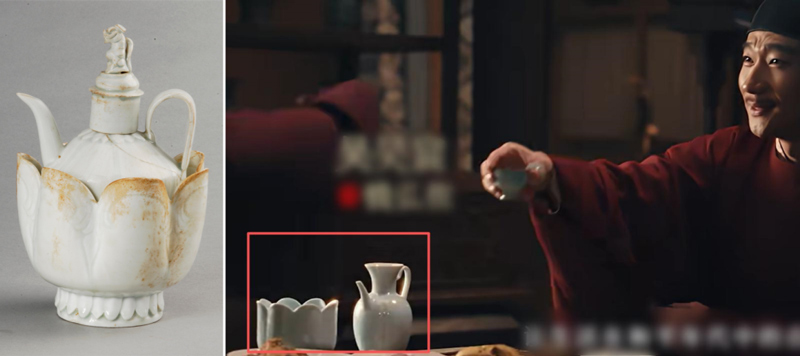
Banquet scenes in Swords into Plowshares are showcases for exquisite period-accurate utensils. A particularly striking set is the combined wine warmer, consisting of a flask placed inside a larger bowl. This style, used for gently heating wine, first appeared in the late Tang Dynasty and became widespread from the Five Dynasties period through the Song and Yuan eras.
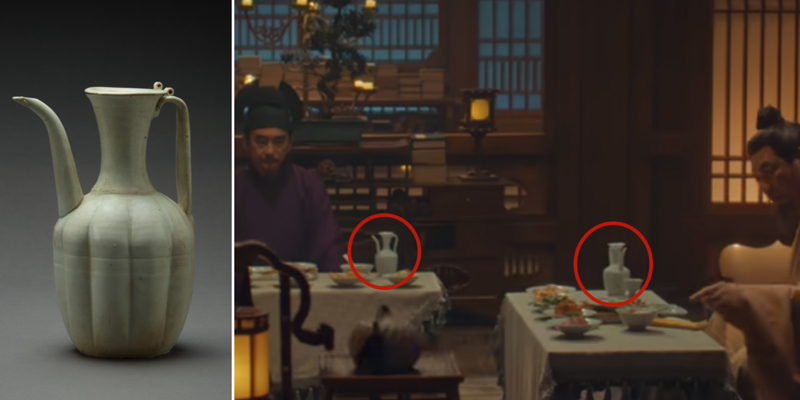
Historical precedent for this is beautifully illustrated in the classic painting Han Xizai's Night Feast (韩熙载夜宴图) by Gu Hongzhong (顾闳中). Another elegant vessel featured is a tall-necked ever with a slender spout, used by the King of Wuyue. Its graceful, melon-ridged form finds a direct counterpart in a ceramic ever from the Song Dynasty displayed in the Yibin (宜宾) Museum. These pieces transform simple drinking moments into lessons in material culture and aesthetic evolution.
3. Burner - Objects of Daily Grace
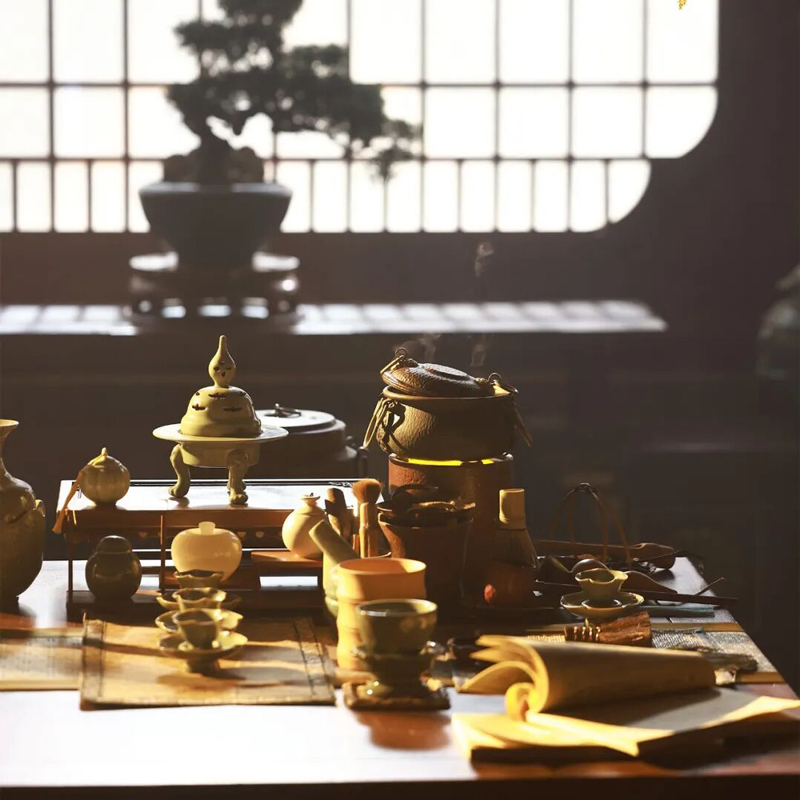
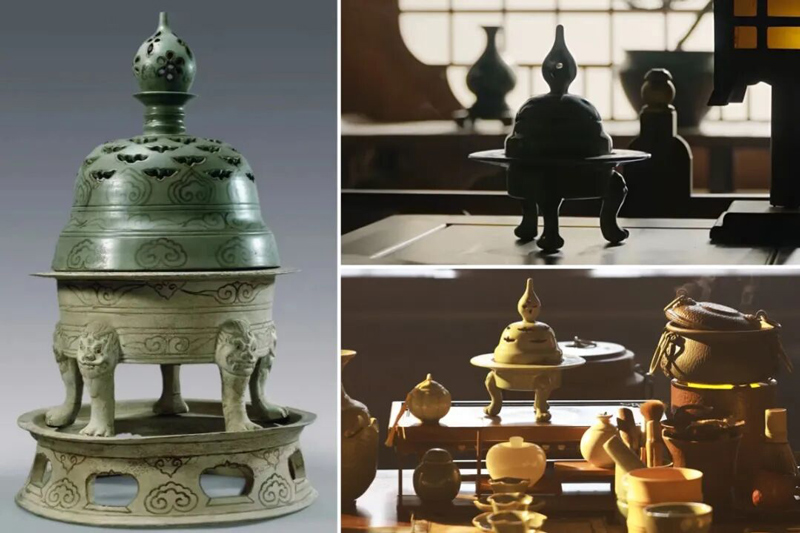
Beyond grand feasts, the drama fills domestic spaces with authentic ceramic items. These objects appear in study rooms and private chambers, grounding the character’s lives in tangible reality. A particular incense burner used in one scene caught the attention of an observant viewer visiting a museum exhibition.
They noted its likely inspiration: a cloud-patterned celadon incense burner excavated from a Wuyue (吴越) tomb, now in the Lin'an (临安) Museum. This kind of parallel highlights the production’s dedication. It shows how even functional items for fragrance and air purification were objects of beauty, their designs carrying cultural motifs that the show respectfully recreates to build a believable world.
4. Four Celestial Animals - Patterns of Power
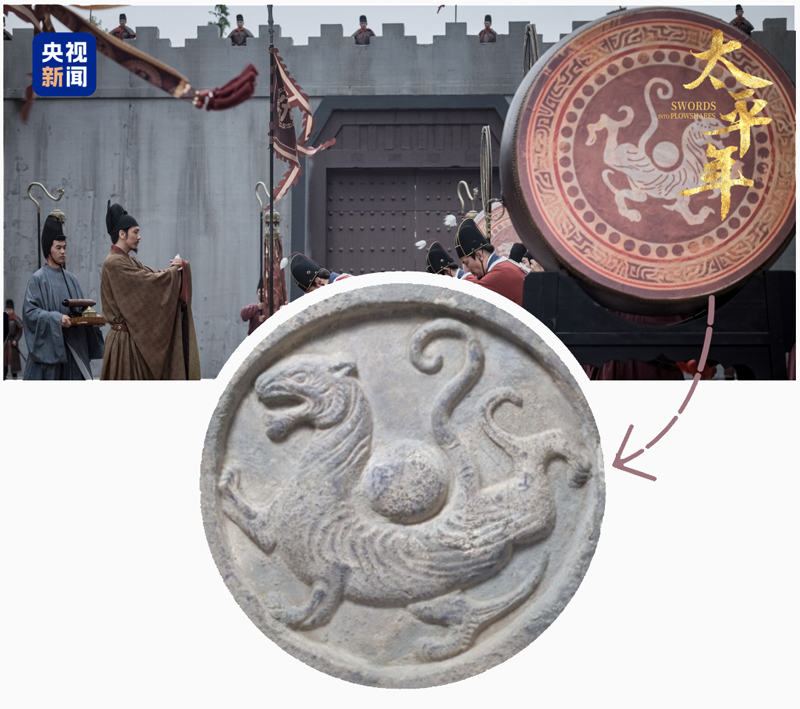
Symbolism is often woven into the visual fabric of the show. On one of the series' promotional posters, a drum skin is adorned with a powerful, distinctive pattern. This is not a random design but a direct reference to the traditional White Tiger motif. In Chinese cosmology, the White Tiger is one of the Four Celestial Animals, guarding the west and representing martial power and authority.
This specific pattern can be compared to a pottery tile-end with a White Tiger design held in the Palace Museum. By incorporating such an icon, the poster subtly communicates themes of power, protection, and the cosmic order that underpinned the historical worldview of the era depicted, adding a layer of depth before the first episode even begins.
5. Makeup - Faces Through Time
The visual authenticity extends to the characters themselves. The makeup team for Swords into Plowshares explicitly drew inspiration from late Tang Dynasty styles, studying frescoes and murals to recreate period-appropriate looks. A comparison between the appearance of Empress Dowager Li in the drama and the depictions of female donors in the Dunhuang (敦煌) Mogao Caves (莫高窟) reveals a shared language of aesthetics.
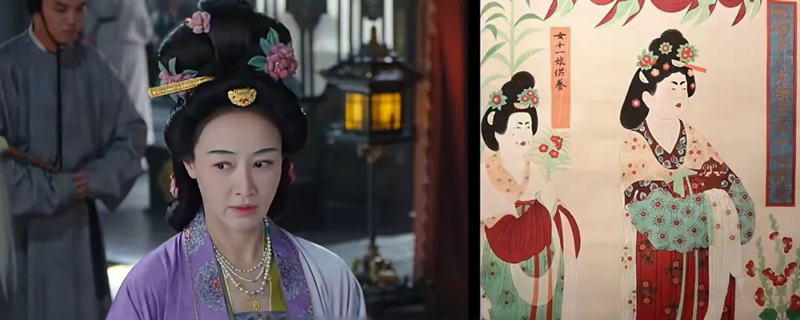
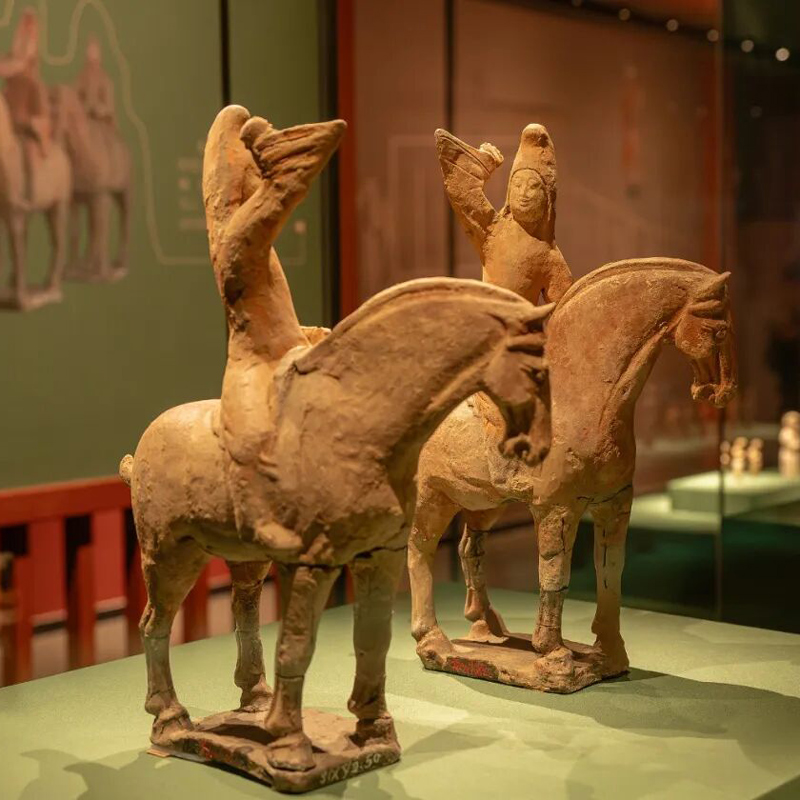
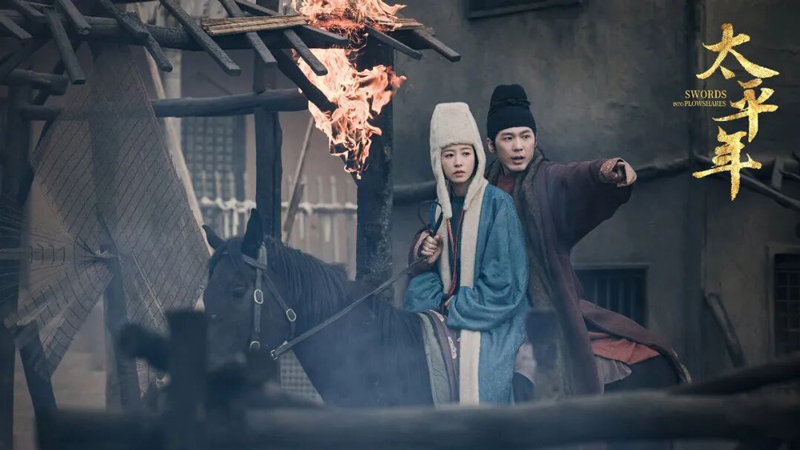
From the shape of the eyebrows to the adornment of the hair, the resemblance is clear. Another character, Sun Taizhen (孙太真), wears a distinctive hood that some modern viewers jokingly called "too futuristic." However, its design finds clear ancestry in the graceful wind hoods seen on Tang Dynasty pottery figurines. This attention to detail in personal adornment closes the gap between the audience and the past, making historical figures feel immediate and real.