Have you ever wondered what people in ancient China ate to start their day? The morning meal, often overlooked, carries within its steam and flavor a profound history of social change, economic shifts, and daily survival. From the strict schedules of imperial courts to the bustling street stalls of the Republican era, breakfast in China is far more than just food; it is a living chronicle.
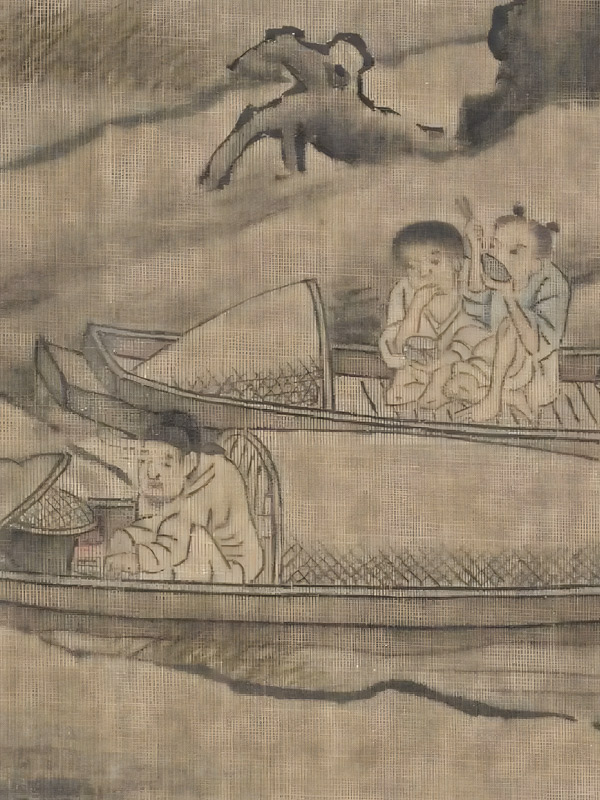
The story begins not with three meals, but with two. During the Shang Dynasty, the daily eating routine was governed by the sun and social station. The two meals were called Yongshi (饔食), eaten around nine in the morning, and Sunshi (飧食), taken in the late afternoon. This "two-meal system" reflected the agricultural rhythms and resource limitations of the time. It wasn't until the Han and Tang dynasties, with greater prosperity and urbanization, that a third meal—breakfast as we recognize it—began to solidify its place, particularly among the elite and city dwellers. Yet, the old ways persisted; even in the Qing Dynasty, many in the north still ate twice a day, while southerners more commonly enjoyed three, a testament to regional economic and climatic differences.
Ancient Morning Rituals
If you could time-travel to a Tang dynasty morning, what might you be served? Porridge was, and remains, a quintessential choice. Its history stretches back over four millennia, reputedly invented by the Yellow Emperor. Esteemed for its health benefits, it was praised by scholars like Su Dongpo (苏东坡) and Lu You (陆游), who famously wrote that eating porridge could "lead one to immortality." This simple dish was a canvas for nourishment and poetic reflection.
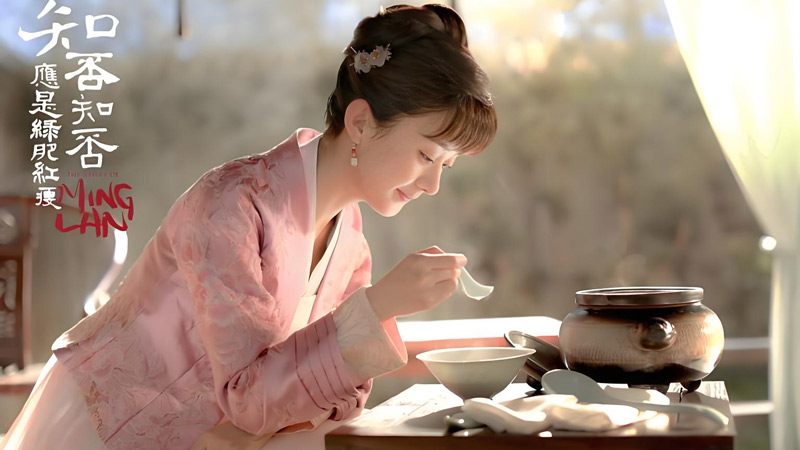
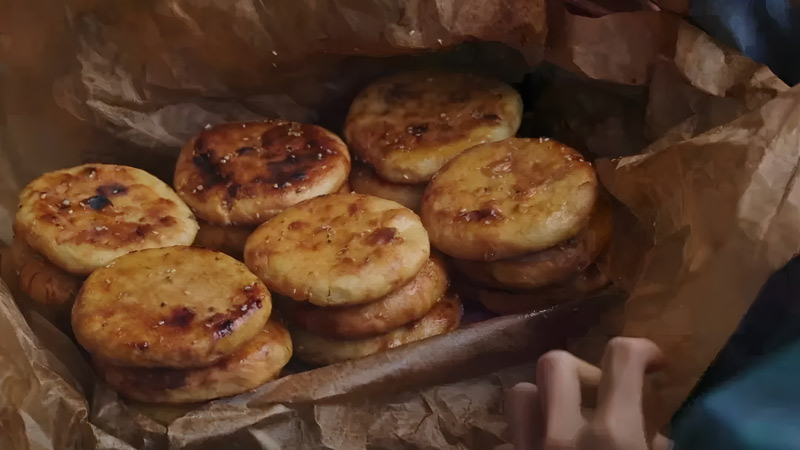
Wheat-based foods were equally vital. There was Botuo (餺飥), a simple dough-drop soup popular for its convenience, as seen being enjoyed by the heroine in the drama The Story of Ming Lan (知否知否应是绿肥红瘦). Then there was the Hu Bing (胡饼), a sesame seed cake introduced from Central Asia. Historical records even show the legendary calligrapher Wang Xizhi (王羲之) casually munching on one. These items provided hearty, portable fuel for the day ahead.
By the Song Dynasty, breakfast culture flourished with variety. The concept of "Xiao Shi" (小食) or "Dian Xin" (点心)—small snacks—took hold. Advancements in sugar refining led to sweet breakfast treats like bean paste buns and date cakes. Later, in the Ming Dynasty, a fried dough strip known as "You Zha Hui" (油炸桧) emerged, its name a direct, edible insult against the reviled official Qin Hui, showing how food could carry political sentiment.
Modern Transformations
The Republican era witnessed breakfast habits crystallizing along clear regional and class lines. In the south, rice congee reigned supreme. In Shanghai, the iconic "Four Heavenly Kings" (四大金刚) of breakfast—a sesame baked cake, fried dough sticks, sticky rice rolls, and soy milk—became the standardized, quick meal for a modernizing city, their presence a backdrop in period dramas like Romance in the Rain (情深深雨蒙蒙).
The north remained loyal to wheat. Steamed buns, noodles, dumplings, and Jian Bing (煎饼) crepes were common sights. Yet, for the vast majority, breakfast was austere. Rural diets, as recorded in local gazetteers, relied heavily on coarse grains like millet and sorghum. In spring, the poor often supplemented with foraged tree leaves and wild herbs, a stark contrast to the relative abundance in cities.
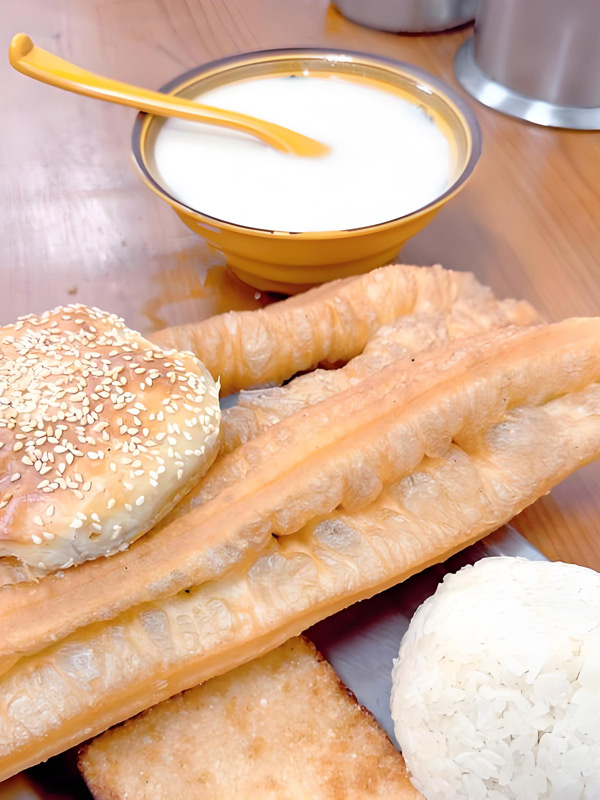
This period also introduced new influences. In metropolitan centers, the Western-style breakfast of bread, milk, and coffee began to appear, symbolizing a changing world. However, war and instability often wiped such variety from the table, reducing meals back to basic sustenance like grain chaff and husks. The breakfast table became a direct indicator of peace or turmoil, prosperity or hardship.
From the aristocratic delicacies of ancient courts to the inventive street food of booming cities, the Chinese breakfast is a deep well of cultural memory. Each bowl of porridge, each fried dough stick, carries the weight of adaptation and the flavor of an era. It reminds us that our most ordinary daily rituals are, in fact, extraordinary historical documents served one morning at a time.
