Imagine a world without smartphones, video games, or high-speed internet. For a student in ancient China, a break from school meant something entirely different from today’s scrolling and streaming. It was a time for harvesting rice, packing warm clothes for winter, or simply wandering through mountains with a sword by your side. The structure of their academic year held secrets to a life where work and rest were deeply connected to the seasons and the land. Let’s step back in time to discover how the scholars of dynasties past spent their days off—and what their timeless rhythms can teach us about finding balance in our own hectic lives.
Official Leaves: Han Taixue to Tang Academies
The concept of a government-approved vacation is far from modern. During the Han Dynasty (汉代), the prestigious Taixue (太学) had rules written into law. According to the Han Code (汉律), students and officials were entitled to a day of rest every five days, a rhythm that functioned Much like our weekend. This was known as Mu (沐), a day specifically for bathing and cleansing oneself, highlighting how personal care was woven into the official schedule. These breaks were not just about rest; they were essential for maintaining hygiene and social order in crowded urban centers.
Beyond these regular intervals, the Han calendar featured three major extended breaks. The Spring Festival holiday was a time for family reunions and ritual. Then there was the “Tian Jia” (田假), or “field break,” set in the fifth lunar month. This wasn’t a vacation in the modern sense; it was a pragmatic response to the agricultural cycle, allowing students to return to their villages to help their families with the crucial summer harvest. Similarly, the “Shou Yi Jia” (授衣假), or “clothes-granting break,” arrived in the ninth lunar month as the weather turned cold, giving students time to travel home and retrieve their winter garments. These two breaks, each lasting about a month, bear a striking resemblance to our modern summer and winter vacations.
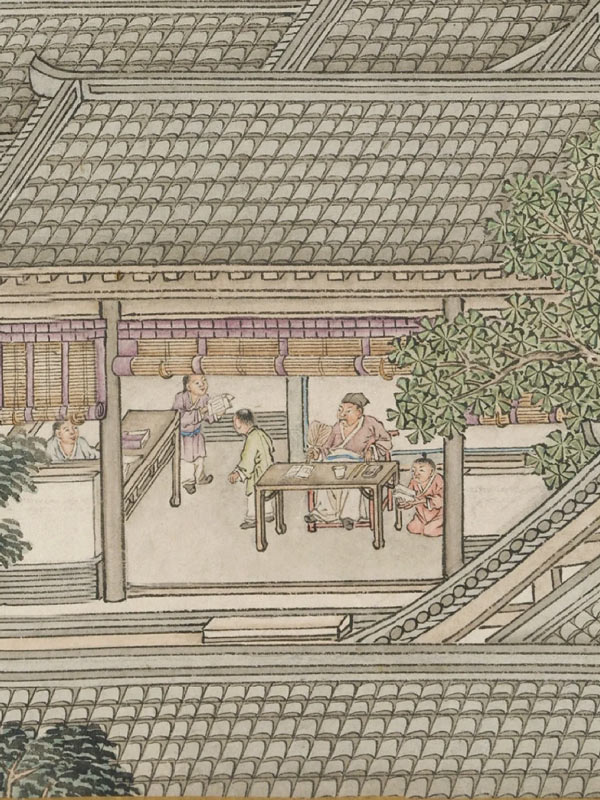
By the time of the Tang Dynasty (唐代), the system had become even more refined. Students at the Guo Zi Jian (国子监) followed a schedule of Xun Jia (旬假), or ten-day breaks, resting on the 10th, 20th, and 30th of each month. In addition, the annual long holidays were extended, often exceeding two months. The renowned poet Wei Yingwu (韦应物) captured the spirit of these times in his verse, describing a student who fills his break with adventure: “After reading, he practices his riding, sword at his side, roaming through Huaiyin (淮阴). Only upon returning does he settle down…” For the Tang scholar, a vacation was a chance to broaden horizons through travel and physical prowess.
The Rhythms of Rural Schools and Academies
Life was more flexible outside the grand imperial halls, in the village Si Shu (私塾), or private schools. Here, the academic calendar was dictated less by central decree and more by the sun, the moon, and the local harvest. During the Ming and Qing dynasties, the schoolmaster’s schedule followed the traditional festival cycle. The major holidays—the Dragon Boat Festival in early summer, the Mid-Autumn Festival, and the Spring Festival—were the primary breaks. The Spring Festival recess was the longest, often stretching from the 20th day of the 12th lunar month to the 15th day of the first month, a period of nearly a month dedicated to family and ancestral rites.
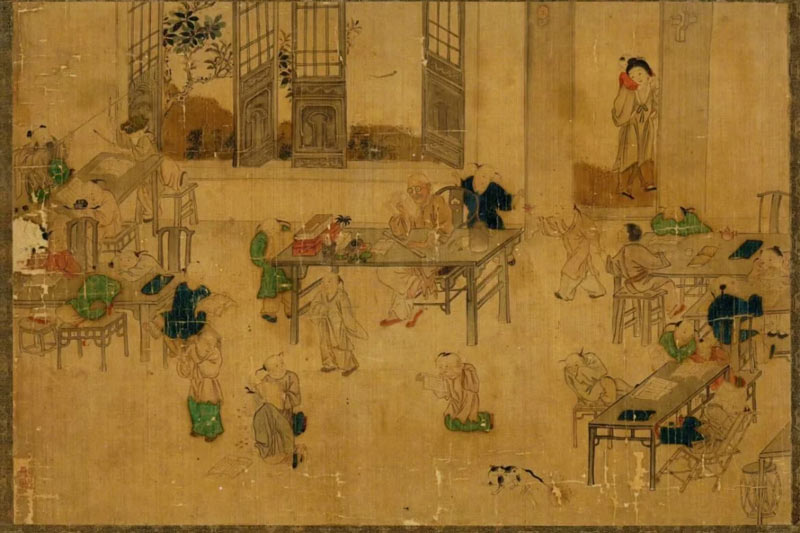
The true genius of the rural school was its adaptability. A teacher might spontaneously declare a “farm break” when the harvest called, acknowledging that many of his students were needed in the fields. This flexibility is charmingly illustrated in a Ming dynasty painting titled Village Children at Play (村童闹学). A poem inscribed on the artwork reads, “The teacher himself is the most restless of all; when school is dismissed, even the village children go to tend the fields.” It paints a picture of a comMunity where education and livelihood were not separate spheres but parts of a single, integrated life.
The rise of academies, or Shu Yuan (书院), during the Song Dynasty offered a middle path. These institutions, like the famous White Deer Grotto Academy (白鹿洞书院) led by the philosopher Zhu Xi (朱熹), valued both discipline and the cultivation of the self. Alongside fixed festivals, the schedule included specific days for “mountain wandering.” These were not idle hours but were considered essential for a scholar’s development—a time to climb peaks, compose poetry inspired by a waterfall, and nurture the clarity of mind needed for deep study. Nature itself was seen as a classroom.
Travel, Friendship, and the Pursuit of Dreams
What did ancient scholars actually do with all this free time? For many, it was a chance to become a traveler. The great poet Li Bai (李白) of the Tang Dynasty used his academic breaks to embark on epic journeys, leaving his family home to “roam far with a sword,” an experience that would forever shape his romantic and untamed poetic voice. Centuries later, the geographer and explorer Xu Xiake (徐霞客) turned his accuMulated vacation time into a life’s work, documenting his treks across China’s most famous mountains and rivers in what would become the invaluable Travel Diaries of Xu Xiake (徐霞客游记).
The break was also a sacred time for reconnecting with loved ones. The poet Du Fu (杜甫) channeled his longing for his scattered family into verse. While his famous line “Thwar-drums boom, cutting off human paths; a single goose calls in the autumn borderland” speaks of sorrow, it was born from a moment of quiet reflection, likely during a break that allowed him to miss his family all the more acutely. Others, like the scholar Gui Youguang (归有光), saw the long vacation as a golden opportunity for intense, uninterrupted study. He famously locked himself away during the New Year to prepare for the grueling imperial examinations, refusing to see even his closest friends.
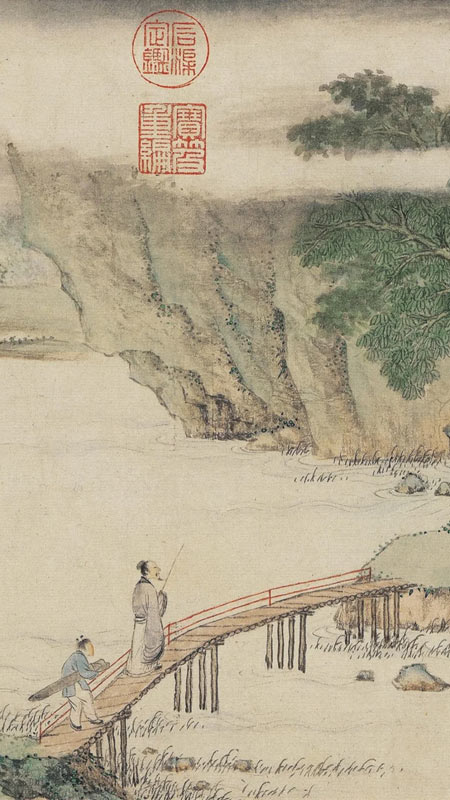
Some students engaged in what we might call an “internship.” A budding physician would accompany his master on house calls, learning through observation. A student of law might sit in on local court proceedings in the Ya Men (衙门). These practical experiences were the hands-on learning of their day. When we compare this to our own world, a profound difference emerges. The ancients, without a digital tether, found deep connection in the landscape. Without modern transport, they experienced the journey as a physical challenge. Without social media, they forged friendships through exchanged poems that would last a lifetime.
The philosopher Wang Yangming (王阳明) once observed, “The nature of children is to love play and fear restraint.” This simple truth, recorded in his Instructions for Practical Living (传习录), has echoed through the ages. The forms of our holidays have changed—we now have planes and pixels—but the fundamental human need for a pause remains. Our winter and summer breaks are a living inheritance from the Han Dynasty fields and Tang Dynasty trails. As you enjoy your own time off this season, perhaps you can feel a connection to that scholar from a thousand years ago, who was also packing his bags, ready to step out of the classroom and into the great, wide world to find his own story.