We walk on them every day, rarely considering their names. Today, it is simply a road, a street, or an avenue. In ancient China, however, the ground beneath one’s feet told a richer story. Each type of path had its own distinct name, a linguistic signpost revealing its purpose, status, and the very texture of the life it supported. This wasn't mere classification; it was a way of seeing the world, embedding hierarchy, daily routine, and philosophical concept into the landscape. From the emperor’s grand highway to the farmer’s field track, the vocabulary of travel wove a complex map of society itself.
Hierarchy Underfoot
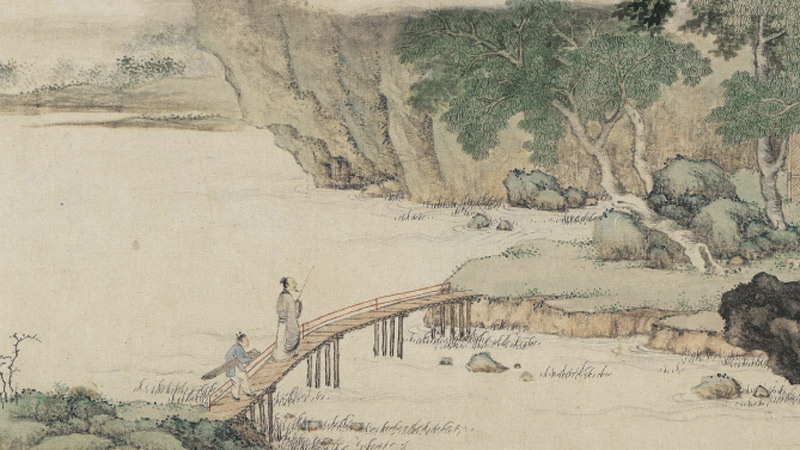
The most important concept was Dao (道). This term represented the highest standard of road, often imperial in nature. After unifying the country, Qin Shihuang (秦始皇) constructed vast "Chidao" (驰道), or "galloping roads," which functioned as ancient expressways for military and imperial use. Yet “Dao” meant far more than pavement. It was the same character used for "the way" or "the principle," linking physical travel to moral and cosmic order. A slightly less grand but still major thoroughfare was a Lu (路), a wide way designed for chariots and carts. Within the walls of a capital city, the large arteries were called Tu (途), denoting the planned, formal avenues of power and ceremony.
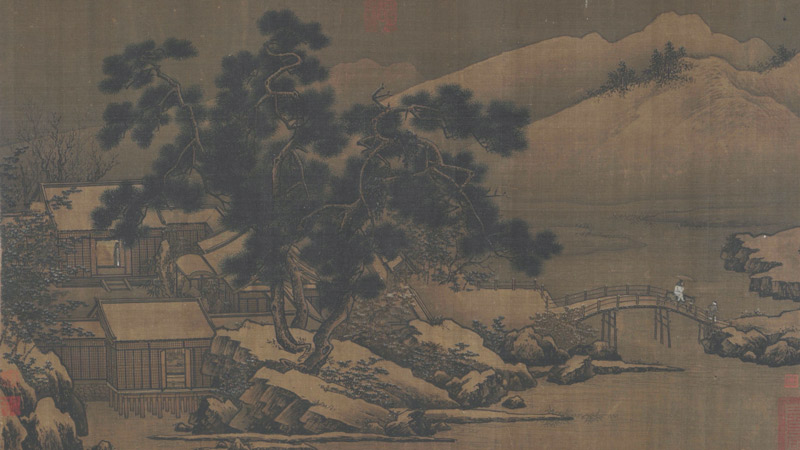
For intersections and connections, another word was key. A Qu (衢) specifically meant a road leading out in four directions, a crucial junction. This term gave rise to the idiom "Tongqu Dadao" (通衢大道), or "open thoroughfare," suggesting unimpeded access and opportunity. These names did more than describe size; they enforced a social code. Walking on a "Dao" was a privilege, while a Lu carried the bustle of official business. The language of roads mirrored the rigid structure of the world above them.
Paths of Daily Life
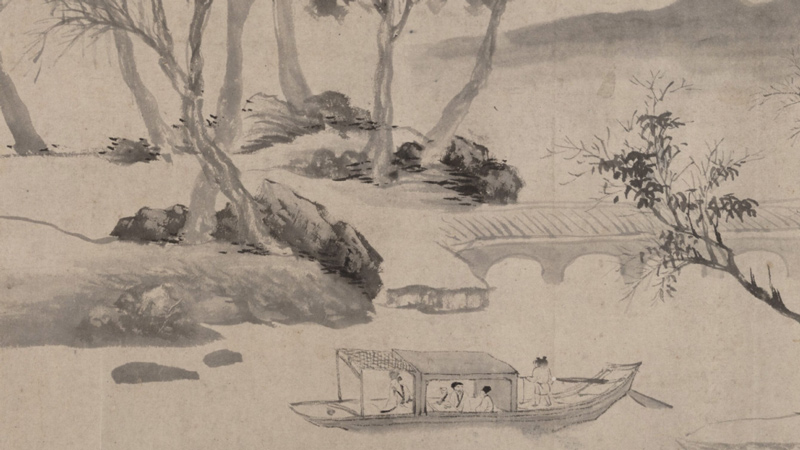
Beyond the grand avenues lay a network of paths defined by everyday use and the human footprint. A Jing (径) was a narrow, direct trail, often leading through a garden or to a secluded home. The poet Tao Yuanming (陶渊明) wrote of his return to find "the three "Jing" are overgrown, but the pines and chrysanthemums remain," using the word to evoke a private, rustic retreat. An Xi (蹊) was a path formed purely by foot traffic, as in the saying "Peaches and plums do not speak, yet a path is worn beneath them," highlighting how natural popularity creates its own route.
In the countryside, the crisscrossing lanes between fields had their own precise labels. The north-south paths were Qian (阡), while the east-west ones were Mo (陌). Together, “Qianmo” described the entire grid of rural life, the veins of agricultural society. The lyricist Xin Qiji (辛弃疾) painted a spring scene with "tender mulberry leaves burst on the Mo," placing delicate growth squarely within this functional landscape. These terms rooted people to their labor and their land.
Function created other specialized paths. The Yidao (驿道) was the state courier and postal road, dotted with relay stations. The Zhandao (栈道) were the breathtaking plank roads bolted into cliff faces, feats of engineering for trade and military maneuvers. In urban alleys, a cultural split appeared: southern cities had Xiang (巷), while northern lanes, influenced by Mongol rule, were called Hutong (胡同), a word originally meaning "well."
Poetry and Metaphor
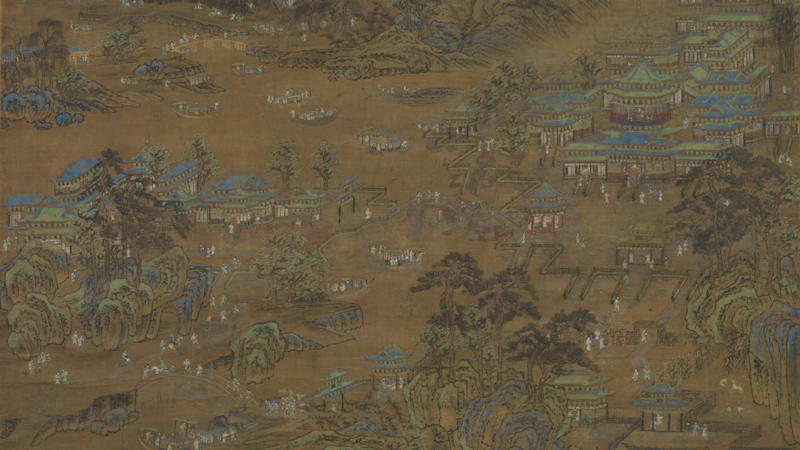
For scholars and poets, road vocabulary became a wellspring of imagery and metaphor. Kangzhuang (康庄) described a broad, splendid avenue where multiple roads met, later symbolizing a smooth and prosperous course in life. The Book of Songs used Zhouhang (周行) to mean the great road or the correct path, often with moral undertones. Tantu (坦途) meant a level, easy journey, literally and figuratively.
This poetic impulse ensured these terms outlasted their cobblestones and dirt. They traveled seamlessly into the language of thought and emotion. "Dao" became truth and philosophy. Tu transformed into "means" or "method." A "Jing" offered a "shortcut" to a solution. A Qilu (歧路), or forked road, symbolized a fateful life choice, while Molu (末路) meant a dead end, the final desperate chapter. Each name carried the weight of centuries of journeys.
These words are more than historical curiosities. They are cultural fossils showing how deeply movement and direction were etched into the Chinese mindset. They remind us that a road is never just a way from one place to another. It is a statement of power, a record of footsteps, a line in a poem, and a symbol for life’s progression. Every time we choose a path, we are walking in the linguistic and philosophical footsteps of those who first gave these journeys a name.