What happens when an ancient civilization’s most cherished family celebration becomes a global treasure? On December 4, 2024, in Asunción, Paraguay, Spring Festival—officially titled "Spring Festival, social practices of the Chinese people in celebration of the traditional New Year"—was inscribed on the UNESCO Representative List of the Intangible Cultural Heritage of Humanity. This decision places China's 44-day festival cycle among the world's most significant cultural practices.
But the Spring Festival is more than a date on the calendar; it is a living, breathing organism that has evolved for centuries. While the term "Spring Festival" is relatively new—popularized in 1914 to distinguish the lunar New Year from the newly adopted Gre、gorian calendar—the traditions it encompasses are ancient. It is a time when modern China, with its skyscrapers and smartphones, pauses to reconnect with rituals that honor gods, ancestors, and family. The festival is a journey through the first five days of the lunar New Year, each carrying distinct meanings and practices that bind communities together.
New Year's Dawn
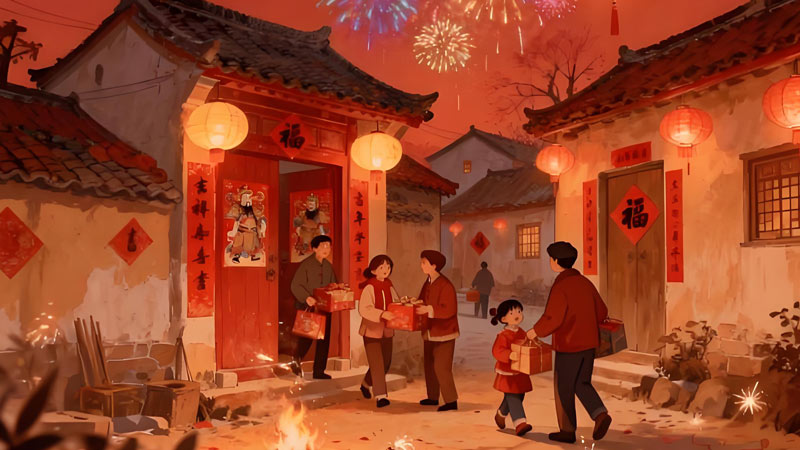
The first day of the lunar calendar, known as Chun Jie (春节), is a symphony of sensory overload. At the stroke of midnight, the world explodes in sound and light. Firecrackers, or Bao Zhu (爆竹), crackle like millions of tiny drums, warding off evil spirits while fireworks paint the sky in ephemeral colors. This is the moment of transition—the old year dies in a blaze of noise, and the new one is welcomed with open arms. As dawn breaks, the atmosphere shifts from chaotic celebration to solemn reverence. Homes become temples as families light incense and present offerings to heaven and earth, then to their ancestors.
The ritual, called Bai Sui (拜岁), is a conversation across time, connecting the living with those who came before. After paying respects to the gods, the focus turns inward. Younger generations kneel before their elders, receiving red envelopes filled with lucky money and words of blessing. The day is steeped in tradition: visiting neighbors, wishing everyone prosperity, and setting the tone for a year of good fortune. Every action, from the direction one faces when lighting incense to the specific greetings exchanged, carries the weight of generations.
Return of the Daughters
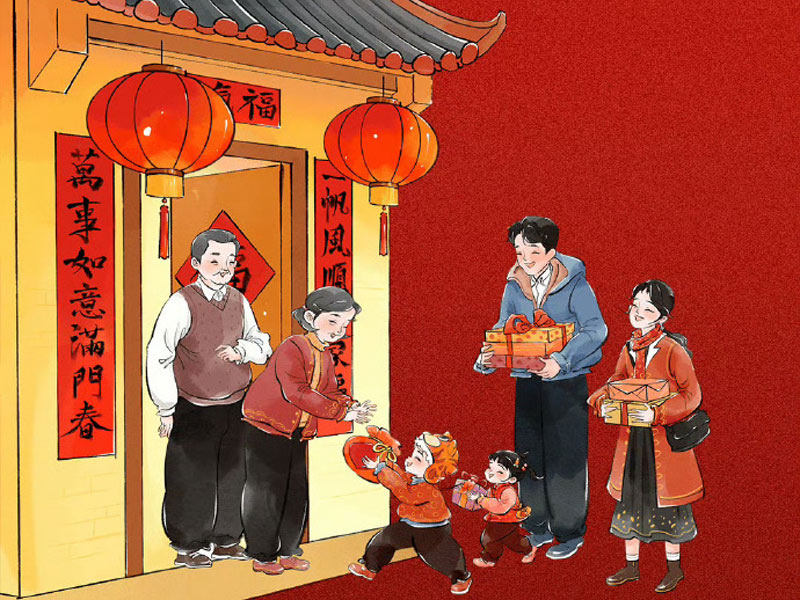
While the first day belongs to the immediate family, the second day expands the circle. Known as Kai Nian (开年), or the "Beginning of the Year," this day begins with offerings to the gods and spirits. Families prepare a special "opening year meal" featuring ingredients with symbolic meanings: hair moss for prosperity, raw vegetables for wealth, and fish for surplus.
The centerpiece of the second day, however, is the Ying Xu Ri (迎婿日), or "Day for Welcoming Sons-in-Law." Married daughters, who typically spend New Year's Eve and Day with their husband's family, return to their natal homes. This practice, rooted in patrilocal traditions, offers a crucial moment of reconnection. The daughter, accompanied by her husband and children, visits her parents, bringing gifts and sharing a meal. It is a powerful statement: though she has married into another family, her bonds with her birth family remain unbroken. The visit is carefully timed—the lunch is a reunion, but the daughter must return to her husband's home before dinner, a reminder of the delicate balance between two families that marriage creates.
A Day of Quiet Words
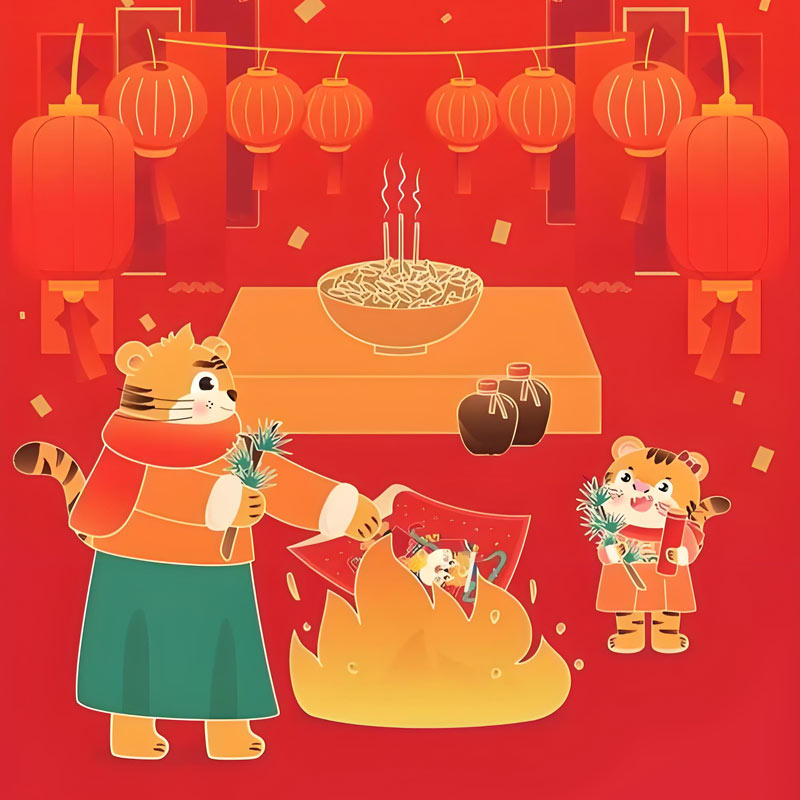
The third day carries a different energy. In southern China, particularly, it is known as "Red Mouth" day, or Chi Kou (赤口). Tradition holds that arguments are more likely to occur on this day, so visiting is discouraged. Instead, families engage in a unique protective ritual. They prepare small red slips of paper, about eight inches long and one inch wide, inscribed with phrases like "peace and safety in all comings and goings." These are pasted by the door, a talisman against conflict and misfortune. The practice, known as pasting the red mouth, acknowledges human fragility—the fear of saying the wrong thing or sparking a quarrel during a time meant for harmony. It is a day of enforced peace, a pause in the social whirlwind of the New Year.
By staying home and literally posting wishes for safe speech, families create a psychological buffer. They are not just avoiding bad luck; they are actively constructing an environment where good fortune and harmonious relationships can flourish. It is a quiet day, a breath between the busyness of the previous days and the celebrations to come.
Feasting with the Gods
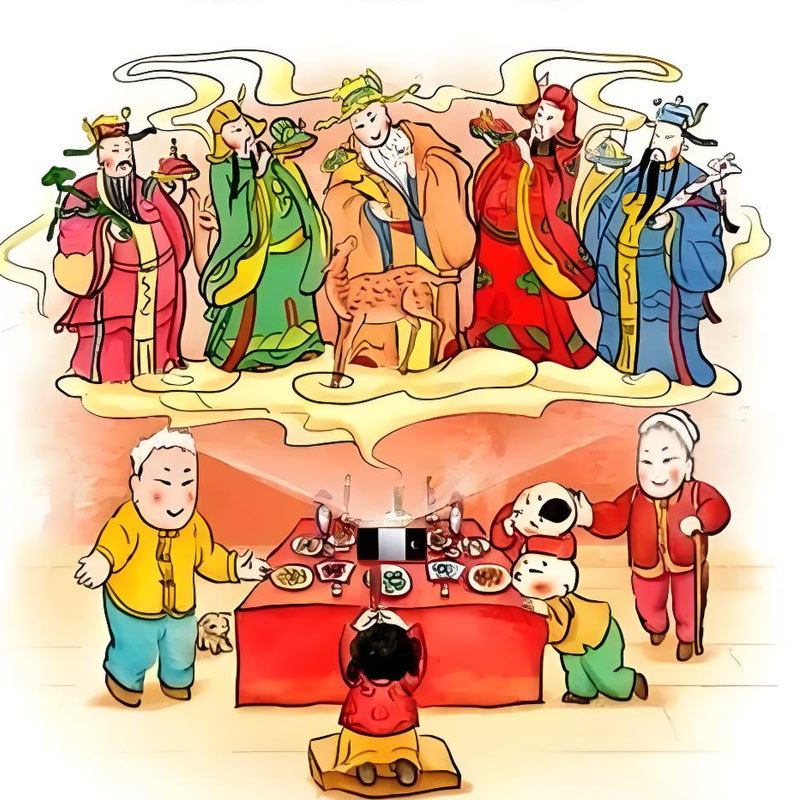
By the fourth day, the focus shifts back to the divine. This is the day to welcome the gods back from their celestial report, a practice known as Ying Shen Jie Shen (迎神接神). According to folklore, this is also the day the goddess Nüwa (女娲) created sheep, making it the "Sheep Day." The weather on this day was once read as a portent for the sheep-rearing season ahead. In the kitchen, practicality meets tradition with the preparation of She Luo (折罗)—a mixed stir-fry made from all the leftovers of the previous feasts.
Nothing is wasted; the New Year is a time of abundance, but also of respect for resources. Alongside this frugal meal, families prepare to "throw out poverty," symbolically sweeping away bad luck from the corners of their homes. The day is a paradox: rich in ritual but grounded in the mundane act of cleaning out the refrigerator. It acknowledges that even in a time of celebration, life goes on. The gods are coming back, but first, the house must be in order and the old food must be consumed, making way for the fresh start that the New Year promises.
The God of Wealth Arrives
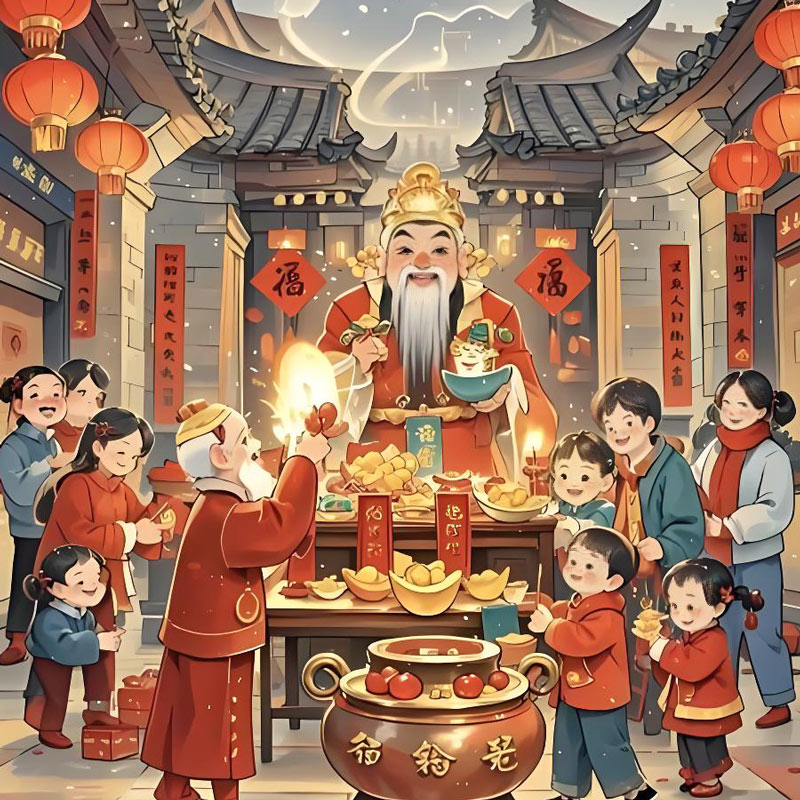
The fifth day, known as Po Wu (破五), or "Breaking Five," is the climax of the early New Year's celebrations. It marks the end of the initial period of restrictions—no sweeping, no using scissors, no taking out the garbage. Now, those prohibitions are lifted. The day is dominated by the God of Wealth, whose birthday it is believed to be. In southern China, elaborate ceremonies invite him into homes and businesses. The goal is clear: to ensure a year of prosperous trades and financial surplus. This is also the day to "send off the poor," finally disposing of the accumulated trash that symbolized bad luck. With the house cleansed and the gods of wealth welcomed, it is considered an auspicious day to Kai Shi (开市), or reopen businesses.
In northern China, families gather to eat dumplings shaped like ancient silver ingots, physically consuming the hope for wealth. The fifth day is a release valve. All the tension of the preceding days—the careful behavior, the specific rituals—gives way to a final, focused push for prosperity. It is a day of action, setting the economic and spiritual stage for the year ahead.