What did the ancients do for fun without smartphones? The question itself feels almost absurd to our modern minds, permanently affixed to glowing screens. We swipe, tap, and scroll through a digital universe, and the idea of a day without this constant connection can feel like a form of sensory deprivation. Yet, for millennia, people lived entire lives, rich with emotion and connection, in a world without a single watt of Wi-Fi. Their existence wasn’t a monotonous gray waiting to be colored in by technology.
Instead, they cultivated a vibrant tapestry of pastimes, from raucous street games to serene intellectual gatherings. This wasn’t just about killing time; it was about building community, expressing creativity, and finding joy in the tangible world. Their story is a powerful reminder that the most profound entertainment often requires nothing more than imagination and each other’s company.
1. Ritual to Rowdy Games
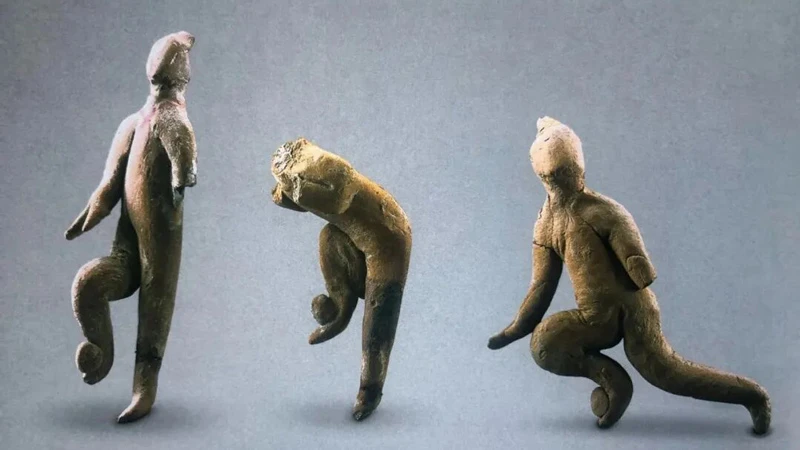
The roots of ancient Chinese entertainment stretch back to a time when the spiritual and the social were one and the same. In primitive societies, the first “shows” were rituals. People didn’t just pray for good harvests; they danced, they sang, they performed. This wasn’t solemn boredom but a vibrant, communal act of hope and celebration, a party with the gods as the guests of honor . As society evolved into the Shang (商) and Zhou (周) dynasties, this connection remained strong. Bronze vessels, exquisite works of art to us, were the centerpieces of lavish banquets where music and dance were as essential as the food .
But the desire for pure, unvarnished fun was impossible to contain. By the time of the Qin and Han dynasties, entertainment had broken free from the temple and palace, spilling into the streets. In the bustling city of Linzi (临淄), considered by many to be the birthplace of professional sports, a new craze was taking hold. It was called Cuju (蹴鞠), a game that involved kicking a leather ball filled with feathers or hair through a small net.
Imagine the scene: everyone from the emperor in his silk robes to the farmer in his hemp tunic would get caught up in the excitement of a match. Kids, meanwhile, had their own version of board game mania with “Liubo” (六博). Think of it as an ancient ancestor of Monopoly, a game of chance and strategy where players moved pieces around a distinctive “TLV” patterned board, their fates decided by the throw of carved dice . The seeds of a truly participatory and diverse entertainment culture had been sown.
2. Parties with a Purpose
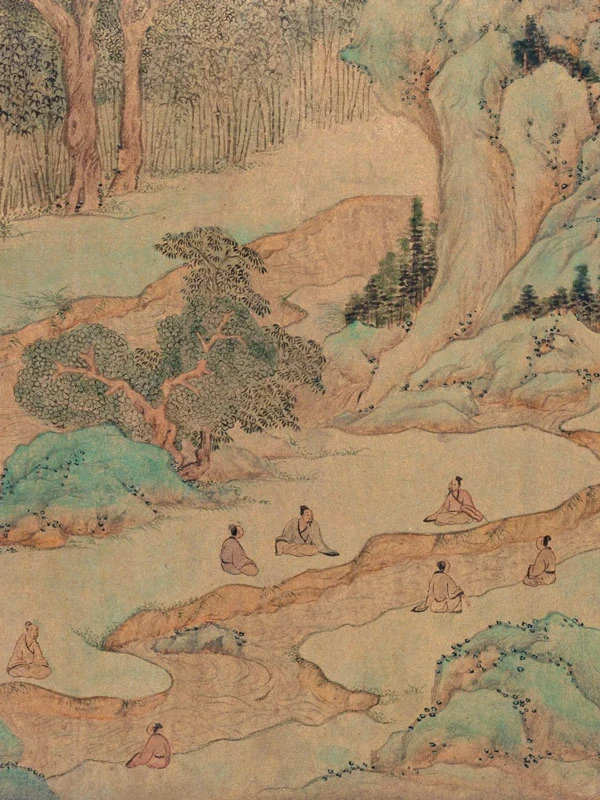
Fast forward to the Wei (魏) and Jin (晋) dynasties, and entertainment took a more philosophical turn, at least for a certain crowd. The era’s chaos and political uncertainty drove many scholars and artists to seek solace in each other’s company, giving rise to the legendary “literati gatherings.” These weren’t just parties; they were carefully curated events set in bamboo groves or along winding streams, designed to foster deep conversation and creative inspiration.
The most famous of these was the 353 CE gathering at the Lanting (兰亭) pavilion. Here, the calligrapher Wang Xizhi (王羲之) and his forty-some friends engaged in a game called “floating goblets.” A cup of wine would be set adrift on a small stream; wherever it stopped, that guest had to compose a poem or drink the wine . The result of this elegant afternoon was not just a hangover but the legendary Preface to the Poems Composed at the Orchid Pavilion (兰亭集序), a masterpiece of Chinese literature and calligraphy. This wasn’t entertainment as distraction; it was entertainment as a catalyst for timeless art.
3. When the City That Never Slept Was New
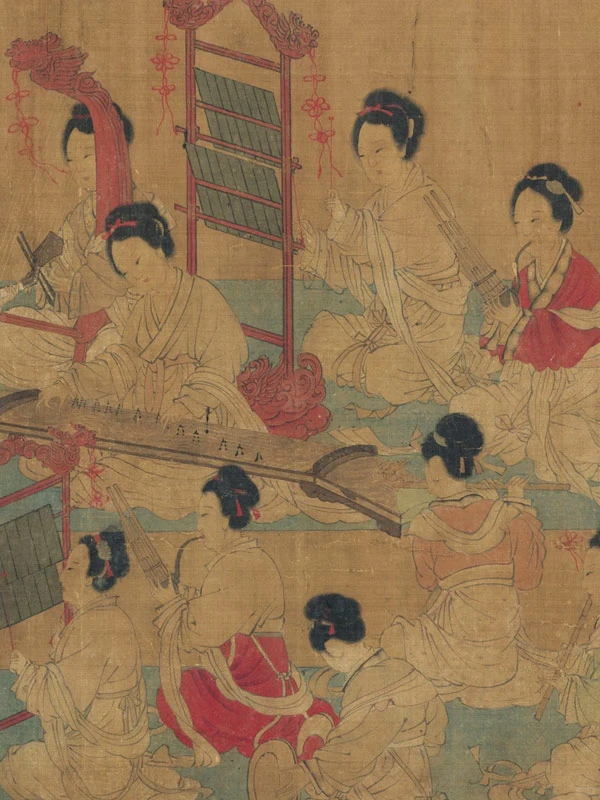
The Tang dynasty was the golden age of ancient entertainment. It was an era of confidence, cosmopolitanism, and color. The capital, Chang’an (长安), was a global metropolis where you could witness awe-inspiring spectacles. Street performers dazzled crowds with ropewalking, pole-balancing, and deadly-accurate equestrian polo . The poet Li Bai (李白), who knew a thing or two about a good time, captured the spirit of the age when he famously wrote, “Since life is but a dream, why not enjoy it to the fullest?” The energy was intoxicating, a non-stop carnival of music and motion.
But the real game-changer came in the Song dynasty. This was when the concept of “nightlife” was truly invented. With the rise of a merchant economy, cities began to pulse with activity long after sunset. The Dongjing Meng Hua Lu (东京梦华录), a memoir of the old capital, describes a city that never slept, with markets open until the third watch, only to reopen at the fifth.
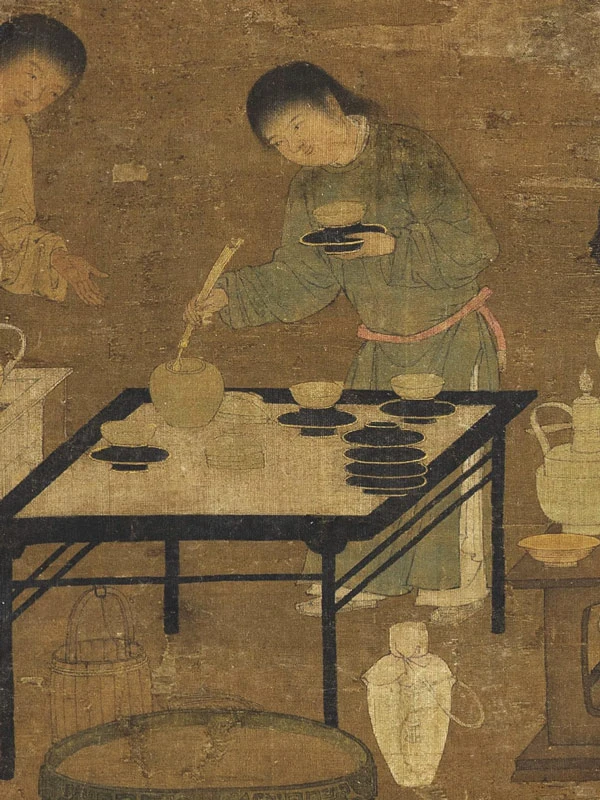
The stars of this nocturnal world were the “Washe” (瓦舍), or “tile houses”—entertainment complexes that were basically the ancient equivalent of a multiplex cinema. Inside, in theaters called “Goulan” (勾栏), you could catch a stand-up comedy routine, gasp at a magic trick, or cheer for a wrestling match. Meanwhile, in the tearooms, a new art form was brewing. The fashion for “Dian Cha” (点茶), a method of whisking tea into a frothy concoction, reached its peak. Masters of the craft, known as “tea artists,” could even paint pictures in the foam . The city itself had become the ultimate playground.
4. Opera, Gambling, and the Common Man
By the Ming and Qing dynasties, entertainment was no longer just a spectacle you watched; it was a product you consumed. The rise of a prosperous urban middle class fueled a boom in commercialized leisure. This was the era of the blockbuster novel, with doorstop-sized tomes like The Dream of Red Mansions (红楼梦) becoming the binge-worthy serials of their day . Storytellers held crowds spellbound in tea houses, and comedic duos made people laugh with a rhythmic patter that sounds remarkably like modern Xiangsheng (相声).
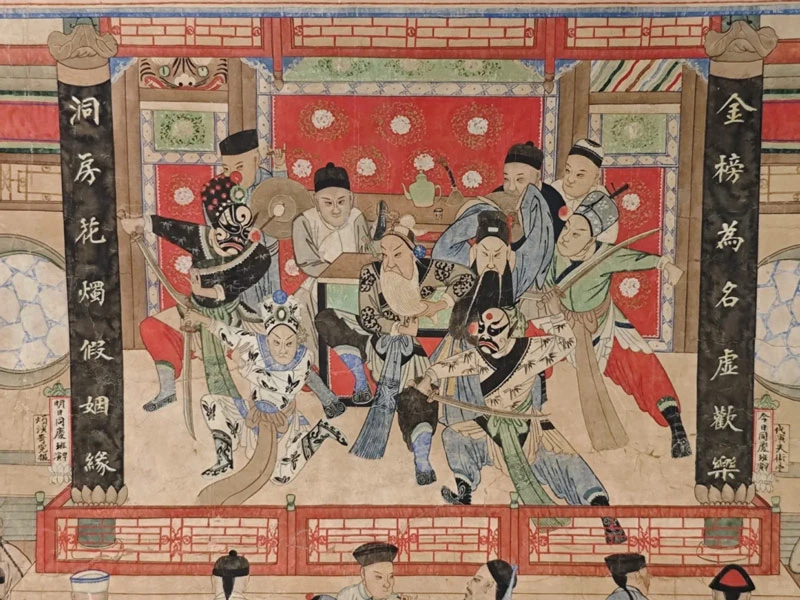
Above all, this was the age of theater. Kunqu (昆曲) opera, with its flowing movements and poetic arias, was the height of fashion. But a new, more robust form was gathering steam in the capital. When the “Four Great Anhui Troupes” entered Beijing in the late 18th century, they brought with them a vibrant mix of music and acrobatics that would eventually crystallize into the national treasure we know today as Peking opera. It was a form of entertainment that was at once high art and popular spectacle, beloved by both the imperial court in the Forbidden City and the common folk in the bustling marketplaces.
5. The Joy of Simple Things
As the imperial era gave way to the Republic, the rhythm of leisure found new spaces. The streets remained the most democratic of stages, where the clang of a knife-sharpener’s call could lead to a spontaneous chat, and storytellers held court on street corners . The humble tea house evolved into the community’s living room—a place to negotiate business, catch up on gossip, or just zone out to a tune after a long day.
As dusk fell over a city like Chang’an, you could still hear the thud of a Cuju ball and the delighted shrieks of children playing a timeless game of “Qi Zhu Ma” (骑竹马), riding a bamboo stick as if it were a galloping horse. They were surrounded by the same physical world we are, but they saw in it an endless array of possibilities for play. Perhaps that’s the ultimate lesson from a world without screens: the most sophisticated entertainment system ever created is the one right outside your door, waiting to be discovered with nothing more than a little imagination and a willingness to connect.