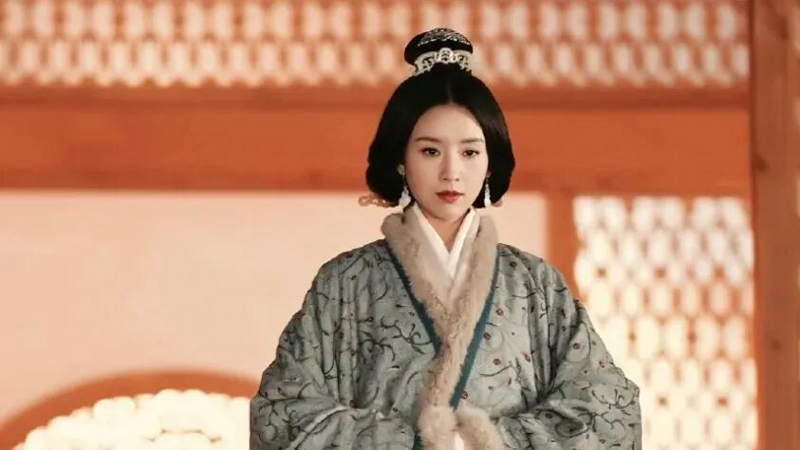
What comes to mind when you hear Falling Horse Chignon? Many assume a direct link to equestrian activity—was it a practical style for riding, or perhaps born from the disarray after a fall? The truth is more nuanced. This iconic hairstyle, whose name literally embeds the character for 'horse', is a fascinating thread in the tapestry of ancient Chinese fashion, carrying cultural whispers from the Han Dynasty onward that are far more vibrant than a simple equestrian tale.
A Fashion Statement, Not a Riding Accident
The Falling Horse Chignon flourished during the mid to late Western Han period. Its connection to the horse lies not in function but in poetic imagery. The style was characterized by a voluminous bun deliberately tilted to one side, creating a "seemingly fallen, yet not quite" effect. It evoked the languid, slightly disheveled allure of a beauty having just slipped gently from horseback, her hair loosely arranged yet intentionally styled. This was artifice, not accident.
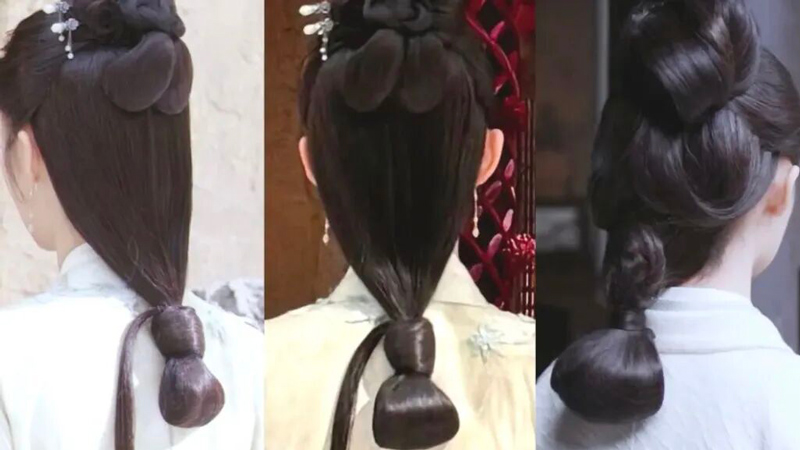
Historical records, notably the Book of the Later Han (后汉书), credit its invention to Sun Shou (孙寿), the wife of the powerful Eastern Han general Liang Ji (梁冀). Renowned for her beauty and cunning, she pioneered a whole aesthetic. She paired the chignon with a "sorrowful brow" makeup, teary makeup, and a swaying walk, crafting a signature look of delicate, melancholic charm. This trendsetting ensemble captivated the capital, with women everywhere rushing to imitate it.
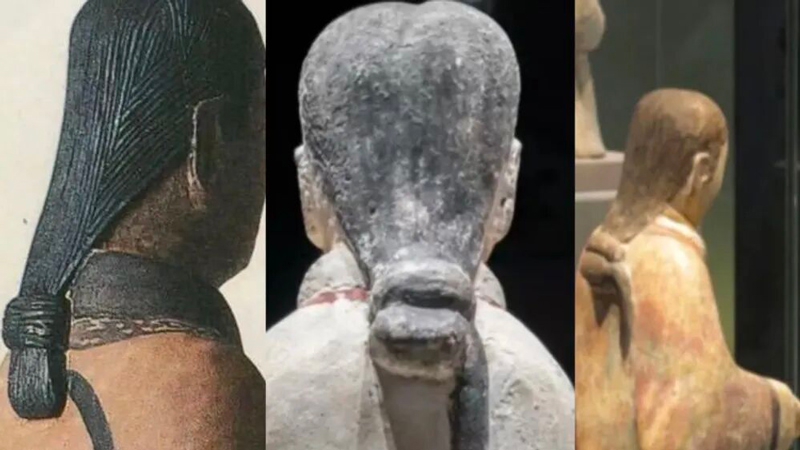
Archaeological finds, like pottery figurines from a Western Han tomb in Xi'an, reveal the chignon's form. It was a loose, gathered bundle, sometimes secured with silk cords, vaguely resembling a horse's belly in shape, and deliberately allowed a strand of hair to escape. The design prioritized a studied carelessness over the tight, secure structure needed for actual riding, marking it as a style for leisurely pursuits and courtly life.
Evolving Styles, Enduring Allure
The chignon's journey did not end with the Han. It experienced a significant revival during the Tang Dynasty, particularly the Zhenyuan (贞元) era, but its form adapted to the new age's sensibilities. Tang aesthetics favored fuller, rounder figures, and the hairstyle followed suit. It was often augmented with additional hairpieces to increase its volume, sitting lower on the head with locks framing the face, as seen in depictions of noblewomen.
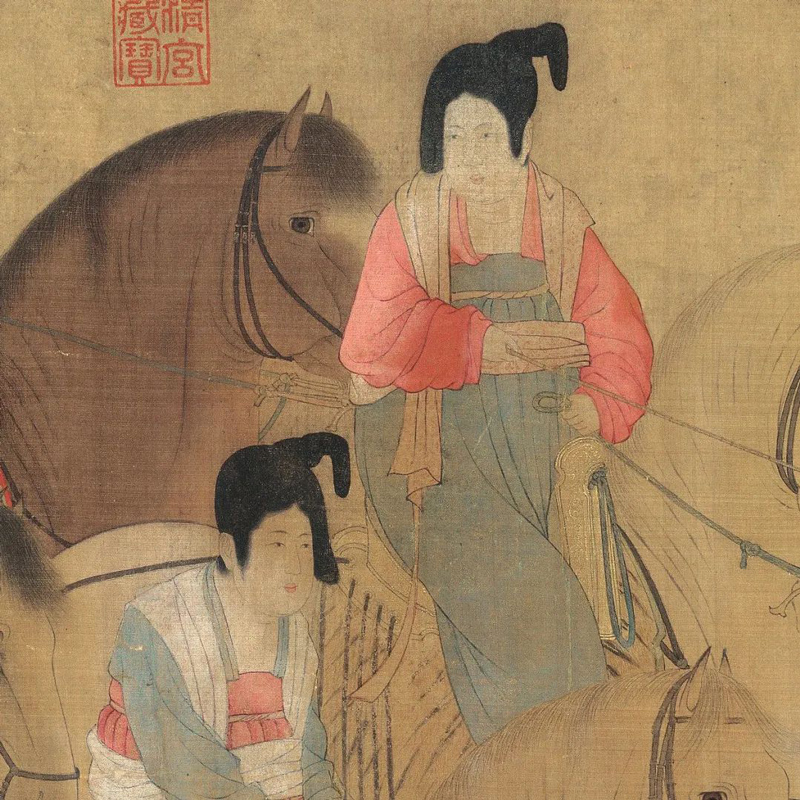
A famous artistic representation appears in the masterpiece Lady Guoguo on a Spring Outing (虢国夫人游春图). Here, noble ladies sport the Tang interpretation of the chignon—a luxuriant, side-pressed bun that complements their opulent robes, exuding grandeur and grace. The poet Wen Tingyun (温庭筠) also referenced a variant known as the Woduo Chignon (倭堕低梳髻) in his verses. This style, popular from the Southern and Northern Dynasties through the Tang, was a sleeker, more elevated descendant, maintaining the asymmetrical fall but with a different structural silhouette.
From Sun Shou's original creation of deliberate, provocative fragility to its Tang reinterpretation as a symbol of voluptuous nobility, the Falling Horse Chignon's popularity always mirrored societal tastes. It transcended mere ornamentation, becoming a cultural bellwether. Even the literatus Lu Xun (鲁迅) once mused that such styles were seen as omens of a state's decline, highlighting how deeply fashion was read into the national psyche.
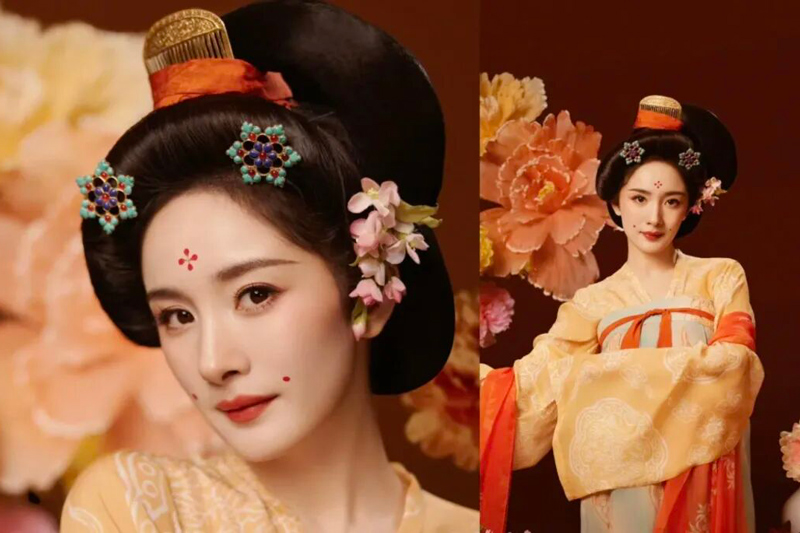
Today, this hairstyle lives on in museum artifacts and classical paintings. It serves as a silent yet eloquent code to decipher ancient ideals of beauty, femininity, and social expression. So, while its name hints at a dramatic equestrian origin, the true story of the Falling Horse Chignon is one of artistic imagination and the timeless human desire to make a statement, one elegant, tilted coil at a time.