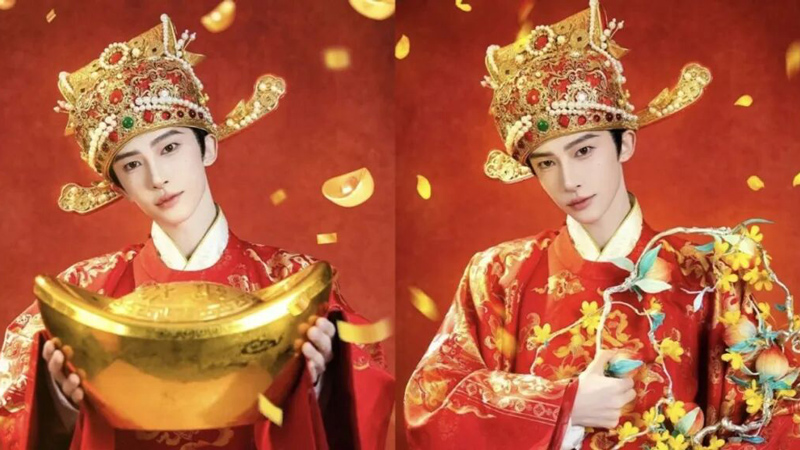
When Liu Yu (刘宇) appeared on Henan (河南) Satellite TV’s Spring Festival Gala dressed as Cai Shen (财神), the God of Wealth, social media lit up. It wasn’t just his performance that caught the eye, but the outfit itself. With a glittering hat adorned with golden coins, a vibrant red round-collared robe, and a gleaming gold ingot in hand, the look was unmistakable.
This costume raises a fascinating question: Where did this instantly recognizable image of the God of Wealth come from? It’s a uniform look we see on TV, in folk art, and on New Year paintings. Yet, a deep dive into history reveals this “classic” look is a relatively modern invention, shaped by centuries of artistic imagination and theatrical flair.
Gods Dressed by Imagination
To understand the God of Wealth’s hat, one must look at ancient religious art. The signature hat isn’t a historical official’s cap but a creative evolution of the Ming-style Fu Tou (幞头) headwear. In Yuan and Ming dynasty religious paintings like the famous Court Procession (朝元图), artists depicted deities in spectacular, otherworldly attire. While they borrowed elements from real-life clothing, they amplified them with imaginative details.
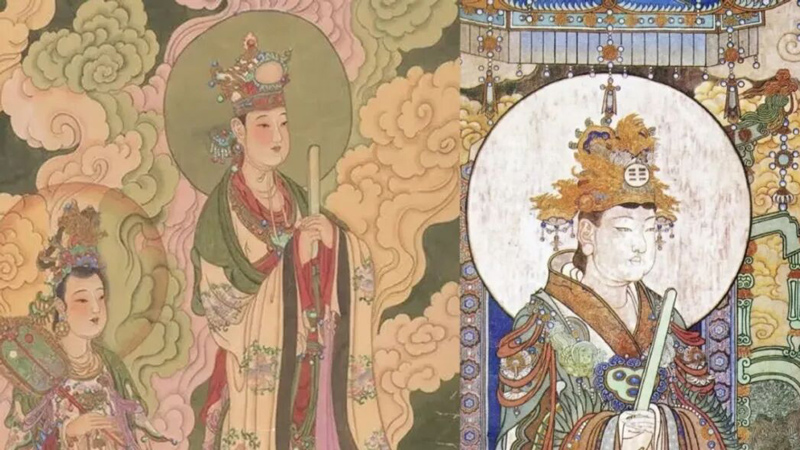
These paintings show gods wearing crowns adorned with elaborate cloud patterns and jewels, far too ornate for earthly wear. Artists faced a unique challenge: they needed to show divine superiority without using the exclusive garments of the emperor. Their solution was to invent a celestial wardrobe, combining the most beautiful and luxurious elements they could dream up. This artistic license meant every painter added their own spin, leading to a diverse but always spectacular vision of the divine.
The Stage’s Lasting Magic
The other major influence on Cai Shen’s look comes from Chinese opera. When actors like the renowned Tang Guoqiang (唐国强) have donned the role, they rely on opera’s fundamental principle: visual exaggeration. Traditional opera costumes are designed to be read from a distance, using bold colors and oversized embellishments to instantly communicate a character’s nature to the audience. The God of Wealth needed to convey prosperity and happiness immediately.
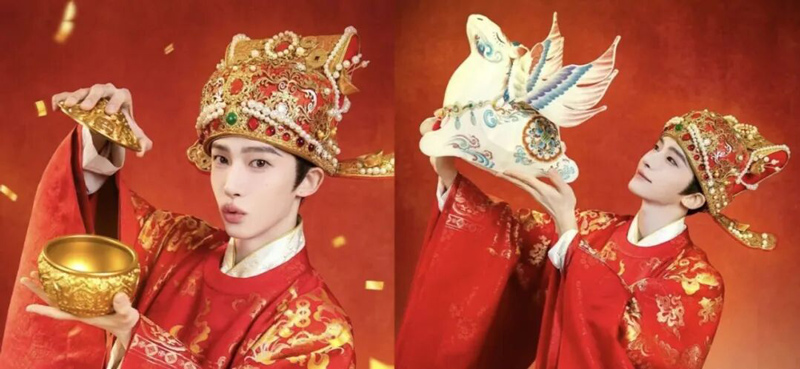
This theatrical tradition explains the modern costume’s “busy” aesthetic. Opera costumers layered on symbols of wealth—coins, gold ingots, and lucky plants—turning the outfit into a walking emblem of good fortune. This wasn’t about historical accuracy; it was about storytelling through spectacle. The more elaborate and shimmering the costume, the more powerful and joyful the deity appeared. This stagecraft became so influential that it seeped into popular culture.
By the time the God of Wealth became a fixture of Ming dynasty folk customs—with New Year prints, or “Cai Ma” (财马), appearing in the Song and the formalized worship in the Ming—his visual identity was being cemented. The Qing dynasty then solidified the image we know today: a Fu Tou crown reimagined with dramatic, wing-like flaps decorated with cloud motifs. This wasn’t a scholar’s official hat anymore; it was a statement piece designed purely for impact.
Why Red and Gold Reign
The choice of the round-collared robe is equally deliberate. The style, often with a golden embroidered cloud collar draped over the shoulders, maximizes the visual impact of its festive colors. The large, unbroken surface area of the red robe, paired with the shimmering gold trim, creates a powerful and joyous contrast. It’s a combination deeply associated with celebration, luck, and prosperity in Chinese culture.
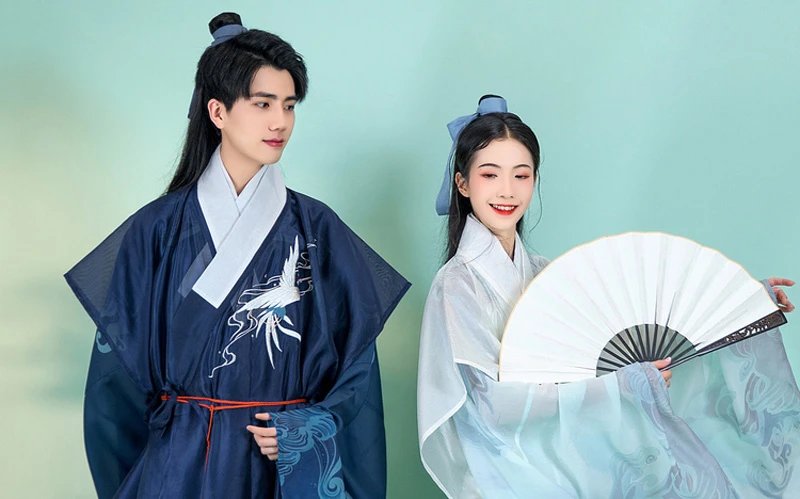
This preference for vibrant, warm colors also makes practical sense for the winter season of the Spring Festival. The robe’s design suggests warmth and comfort, making the mythical figure feel more approachable and fitting for the holiday atmosphere. Compare this to a more historically accurate scholar’s outfit, which Liu Yu has worn before. While elegant and festive, it lacks the overwhelming, joyous spectacle of the God of Wealth costume. For a figure meant to bring boisterous good luck, the quieter tones just don’t fit.
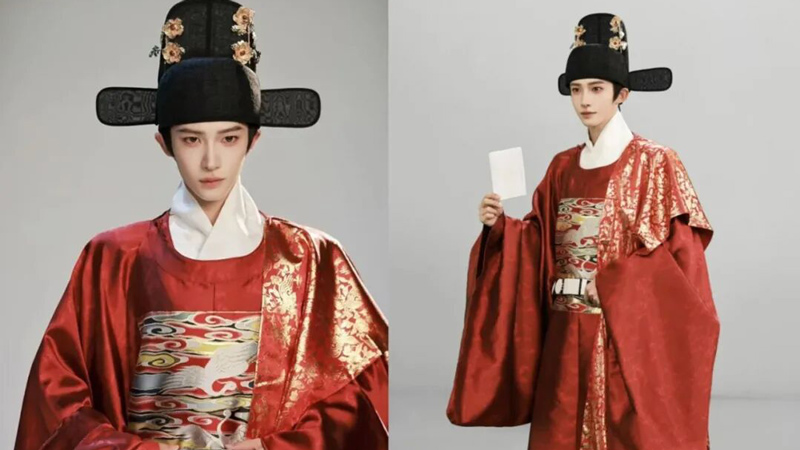
Ultimately, the God of Wealth’s outfit is a brilliant example of cultural branding. It’s a look forged not by imperial decree, but by the collective imagination of artists, the demands of the stage, and the people’s desire for a visually thrilling symbol of hope. So, the next time you see this glittering figure, remember you’re not just seeing a god; you’re seeing centuries of artistic invention designed to make the abstract idea of fortune feel wonderfully, and loudly, real.