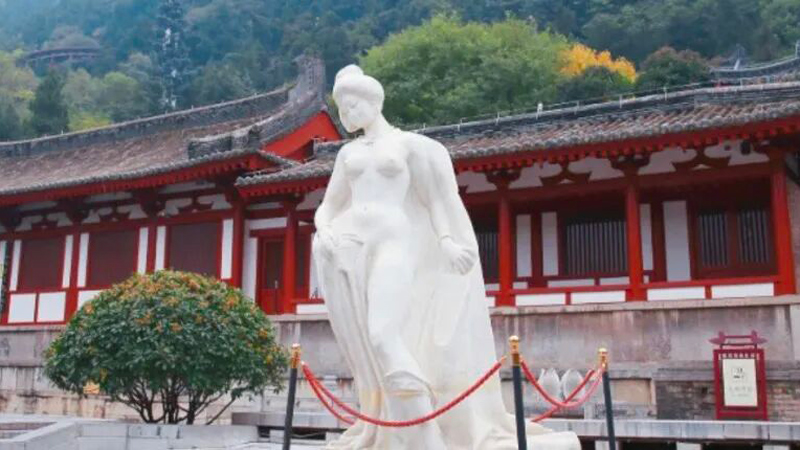
For thirty-five years, a statue has stood in the warm mists of Huaqing Pond (华清池) in Xi'an (西安). It depicts Yang Yuhuan (杨玉环), one of the famed Four Beauties of ancient China, caught in a moment often translated as "The Imperial Concubine Alights from the Bath." Its semi-nude form has fueled an enduring public debate. Is it a faithful artistic representation of the famously open Tang Dynasty, or is it a distasteful spectacle?
However, this persistent controversy over nudity and decency misses the fundamental point. The core of the disagreement is not about exposure itself, but about a profound departure from a central tenet of traditional Chinese aesthetics: the power of subtlety and implication. The statue imposes a Western logic of direct physical display onto an Eastern historical symbol whose beauty was traditionally conveyed through artistry and artistic conception.
The Core Debate
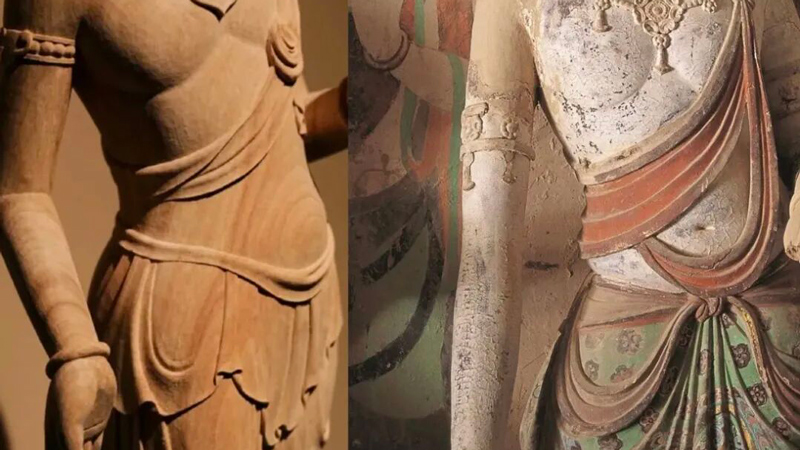
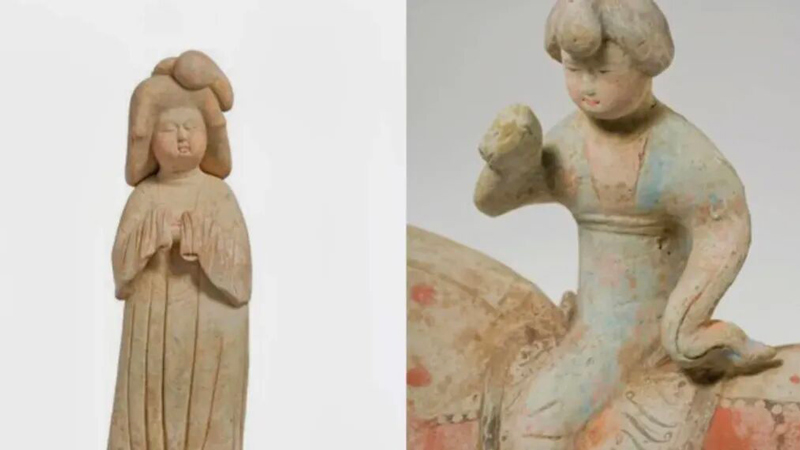
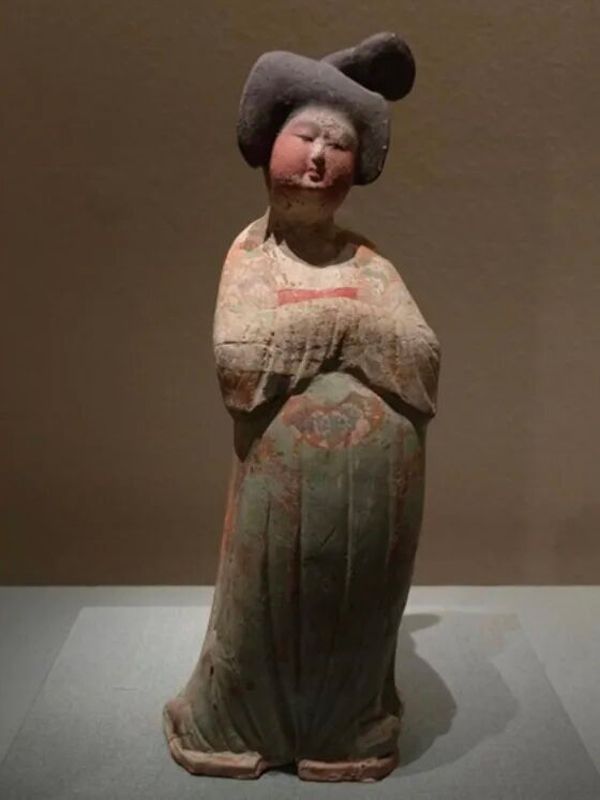
The defenders of the statue often point to the Tang Dynasty's reputation for cultural openness and physicality. They cite semi-nude murals in the Mogao Caves (莫高窟) or figurines with exposed flesh as historical precedent. Yet, this argument conflates openness with explicitness. Tang art, even at its most sensual, practiced restraint. The flying Apsaras in murals or the court ladies in pottery are revealed through flowing, layered lines and draped silks, their beauty suggested rather than stated. The artistic approach was one of "the lute half-hidden behind the face," a celebration of what is left to the imagination.
This principle is perfectly illustrated in the poetry surrounding Yang Yuhuan herself.
Bai Juyi's (白居易) lines in Song of Everlasting Sorrow (长恨歌) describe her bathing at Huaqing (华清): "The water was warm, washing her creamy skin (春寒赐浴华清池,温泉水滑洗凝脂)."
Not a single word graphically depicts her body, yet the image evoked is one of supreme luxury and softness. The power lies in the absence of direct description. This is the essence of classical Chinese aesthetic appreciation: beauty is not presented outright but is hidden within artistic conception and intentional blank space), meant to be savored and contemplated.
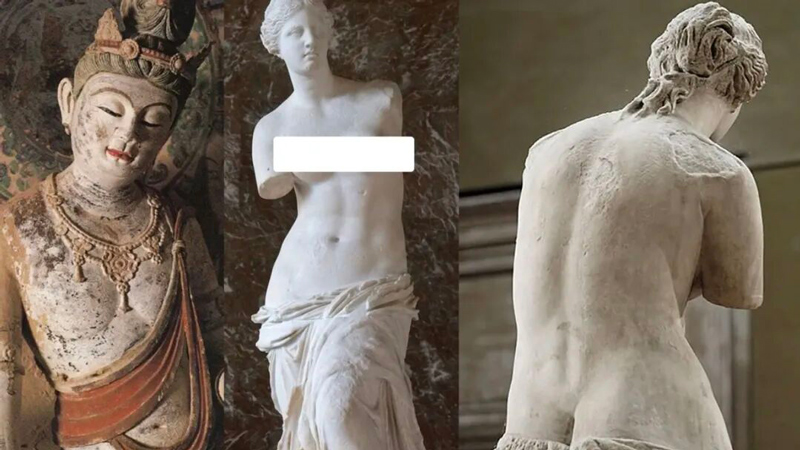
In contrast, the Huaqing Pond statue's design, with its bared torso, follows a different tradition. It aligns with a Western sculptural canon that cherishes the direct visual impact of the human form, celebrating muscle, texture, and idealized proportion. From Michelangelo's David to the Venus de Milo, the body itself is the primary vehicle for expressing ideals of strength, divinity, or beauty. The current debate, therefore, is less about morality and more about a clash of two deep-seated artistic philosophies.
Context and Conception
Some argue for absolute artistic freedom, but such freedom must consider cultural and spatial context. Huaqing Pond is not a contemporary art gallery. While now a commercial tourist site, it remains a powerful cultural landmark steeped in a specific historical narrative. Visitors come to connect with the legacy of the Tang, to walk where emperors and consorts once strolled. Placing a statue born from a Western aesthetic framework in this setting creates a discordant note. It feels like a bold stroke of oil paint on a classical ink-wash scroll—technically proficient perhaps, but fundamentally out of place.
Concerns about education, particularly for younger visitors, are also relevant. The issue is not simply about shielding children from nudity. It is about the subtle messages regarding beauty and expression. Traditional Chinese culture teaches the value of propriety and measure, not as repression, but as an understanding of context and subtlety. If a venerated historical figure is represented primarily through physical exposure, what does that communicate about the more layered, implicit forms of beauty deeply rooted in the culture's artistic heritage?
Furthermore, subtlety should never be mistaken for prudishness or a lack of sophistication. In Chinese aesthetics, the highest form of expression is often that which implies more than it states. The art of calligraphy values the energy and spirit conveyed through the brushstroke, the "force penetrating the paper's back," more than the literal shape of the character. In Chinese opera, a flick of a sleeve can communicate volumes of emotion. Yang Yuhuan's legendary beauty was a composite of her talent, her tragic story, and the glorious epoch she represented—none of which can be captured through anatomical accuracy alone.
A Question of Cultural Identity
This 35-year controversy ultimately exposes a broader uncertainty in modern China's relationship with its own cultural identity. The goal is not to reject Western art or devalue the human form as a subject. Instead, it is about recognizing and preserving a distinct aesthetic language in spaces that are custodians of history. The reserved subtlety of traditional Chinese art is not a weakness or a relic; it is a refined, deliberate form of expression honed over millennia.
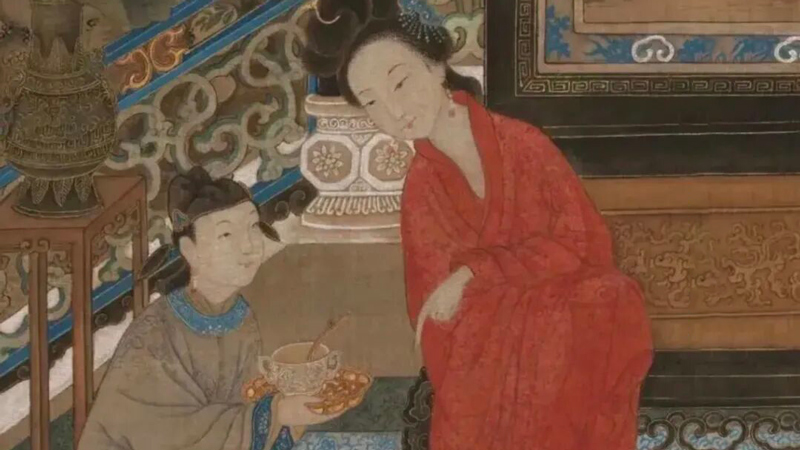
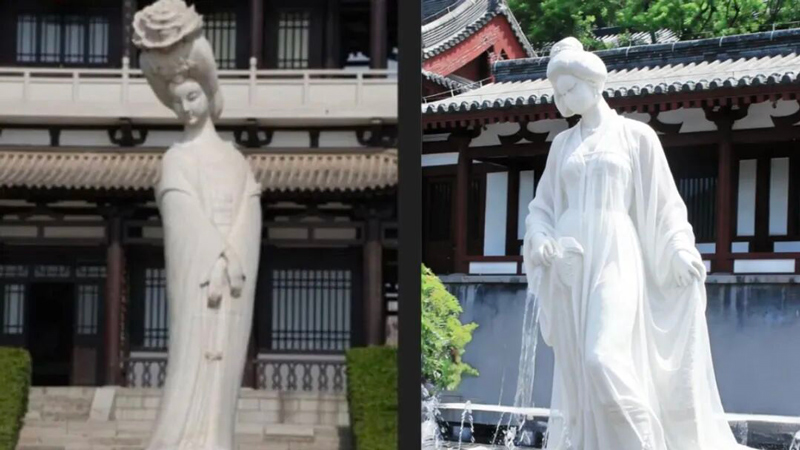
A statue of Yang Yuhuan has the potential to be a powerful conduit for this aesthetic. It could use the drape of a robe, the incline of a head, or the grace of a posture to evoke her story and the splendor of the High Tang period. This would require a deeper engagement with the artistic principles the Tang itself mastered so well. The dynasty's celebrated openness was one of cultural confidence and inclusivity, not of blunt literalness. Its beauty was plump and graceful, not merely naked; it was embracing, not explicitly exposed.
As the philosopher Wang Guowei (王国维)noted, the finest art leads the heart to a state of peaceful tranquility. The most resonant beauty for a culture is often that which aligns with its deepest aesthetic instincts. A statue that embodies the subtle, implicative beauty of China's own tradition would not just represent a historical figure; it would honor the profound and sophisticated artistic wisdom that form is but a gateway to spirit, and that true meaning resides most powerfully in what is left unsaid.