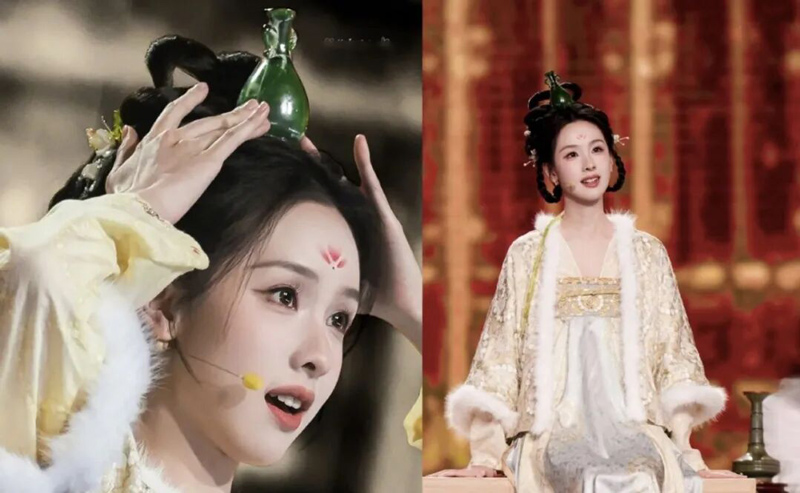
In a recent cultural variety show, actor Chen Duling (陈都灵) moved audiences to tears by portraying not a person, but a relic. She embodied the Tang Dynasty Glazed Twin-Handled Vase from the Palace Museum. Before restoration, this artifact had no elegant name—only a cold serial number: 3054. Her performance, paired with a poignant line about being “locked in a dark box, displaced and wandering,” ignited a powerful online conversation about history, loss, and the fragile nature of protection.
But it was a simple observation from actor Huang Jue (黄觉)—”It looks like you have been well protected”—that truly resonated, encapsulating generations of hardship and the quiet dignity of cultural preservation.
A Vessel, Not Just a Number
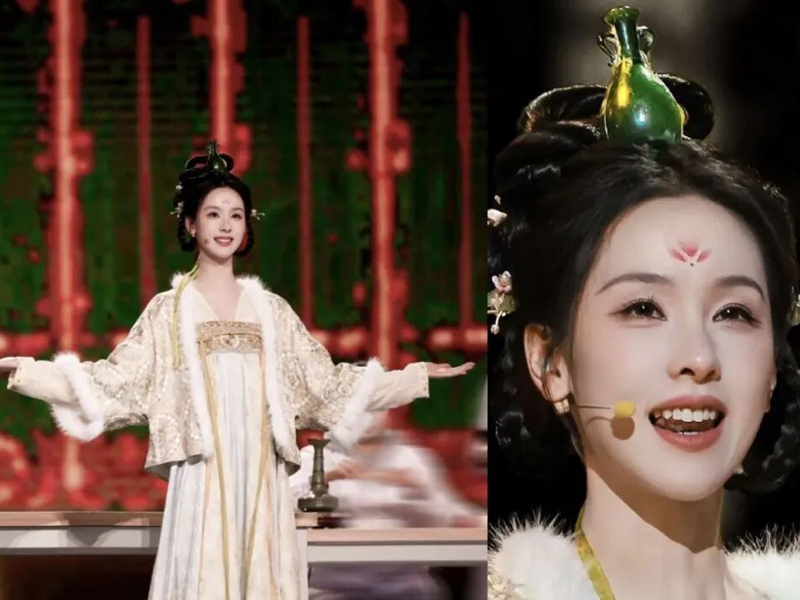
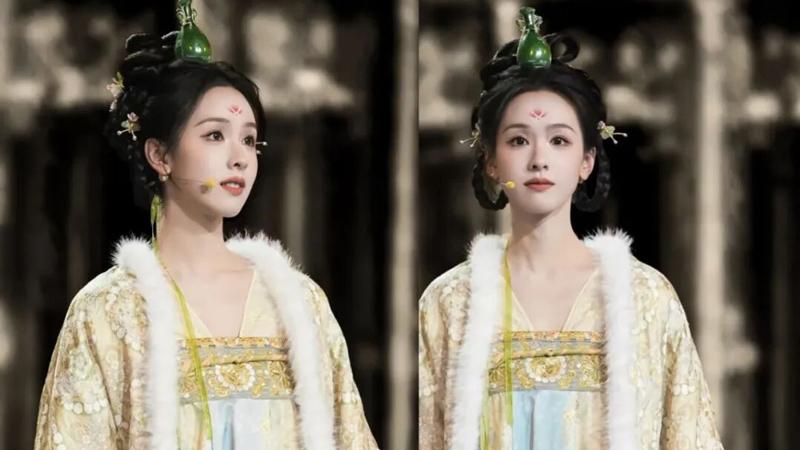
Chen Duling’s costume was a masterpiece of storytelling. She wore a Qixiong Shanqun (齐胸衫裙), a chest-high skirt, paired with a Duijin Pi’ao (对襟披袄), a front-opening robe. Her forehead was adorned with a Hua Dian (花钿), a traditional floral decal. The soft, fuzzy texture of the garment immediately suggested something precious and well-cared-for. The intricate Lianzhu Wen (联珠纹), a pattern of connected circles indicating cultural fusion along the Silk Road, decorated her collar and skirt. Her hair, styled into twin buns, cleverly mirrored the vase’s two handles, while her pale blue and yellow attire perfectly complemented the artifact’s original jade-green glass.
The moment of emotional rupture came when host Ni Ping (倪萍) explained the vase’s backstory. Chen Duling’s character whispered, “I was once locked in a dark box, moving from place to place.” This referred to the real-life ordeal of the Glazed Twin-Handled Vase, which was lost and displaced for a full eight years before finding its way back to the Palace Museum. The concept of “liuli” (琉璃) itself is a traveler. The term, first recorded in the Western Han text Salt and Iron (盐铁论), originally referred to colorful, semi-transparent glass, with techniques believed to have originated in West Asia. By the Tang Dynasty, China had developed its own lead-barium glass, with exquisite examples like the tea sets found in the Famen Temple (法门寺地) underground palace showcasing a perfect blend of foreign techniques and local aesthetics.
Echoes of a Journey
The Chinese word for glass, “liuli”, is a homophone for “to be displaced”. This linguistic twist adds a layer of tragic poetry to every artifact. The eight-year ordeal of vase 3054 is heartbreaking, but it is merely a chapter in a much larger saga of displacement. In 1933, facing the threat of invasion, a dedicated team of museum guardians made the agonizing decision to pack the nation’s treasures and flee south. This began a monumental, 14-year journey to protect the collection from war. These relics were moved by truck, train, and boat, hidden in caves and temples, constantly at risk.
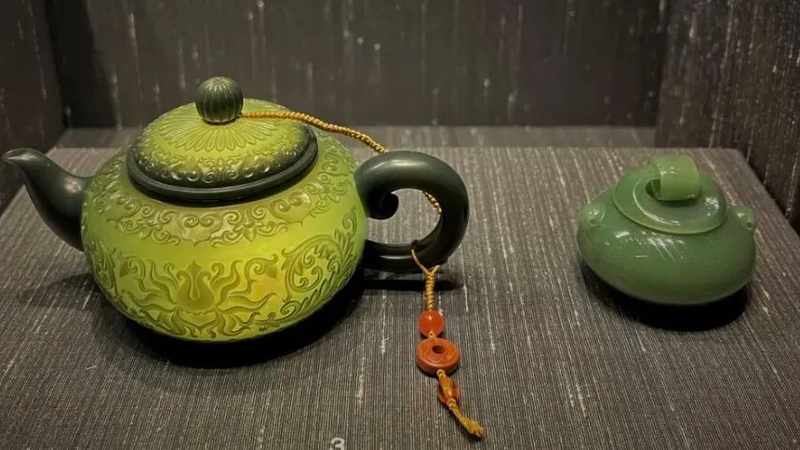
Compared to the countless artifacts that were looted and scattered across the globe during times of turmoil, the items that left Beijing with the guardians were the lucky ones. They had a human escort, a promise of return. Many viewers of the show were reminded of a specific piece: a small green pot, currently residing in the British Museum. One netizen’s comment struck a chord: “I saw it there when I was a child. I saw it there again when I grew up.” For these relics, there is no numbered slot in a homeland inventory, no designated guardian ensuring their journey home. Their displacement is indefinite, their future uncertain.
The Unfinished Mission
This context is what gave Huang Jue’s seemingly simple line—”It looks like you have been well protected”—its profound weight. He wasn’t just complimenting Chen Duling’s soft costume. He was acknowledging the monumental, often invisible, effort required to keep any piece of history safe. It reflected the bittersweet reality that for every artifact shining under museum lights, there are countless others lost to time or held in foreign lands. The comment resonated because it spoke to a collective memory of fragility and a deep-seated desire for wholeness.

The show also featured a poignant exchange. Chen Duling asked a restorer, “What kind of artifact takes generations to repair?” The restorer’s simple reply was, “It’s their mission.” This answer reframes the concept of cultural heritage. It’s not just about the object itself, but about the unbroken chain of human dedication. This mission extends beyond the restorers’ studios. It lies in the memories of a people, in the stories told and retold. As the show demonstrated, an artifact can only truly exist—be recognized, valued, and ultimately protected—if we, as a society, choose not to forget. Its safety is a mirror reflecting the strength and continuity of the civilization that created it.