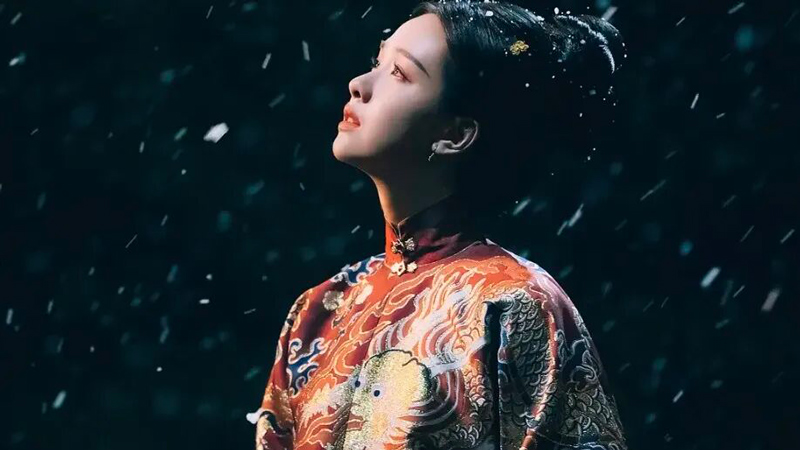
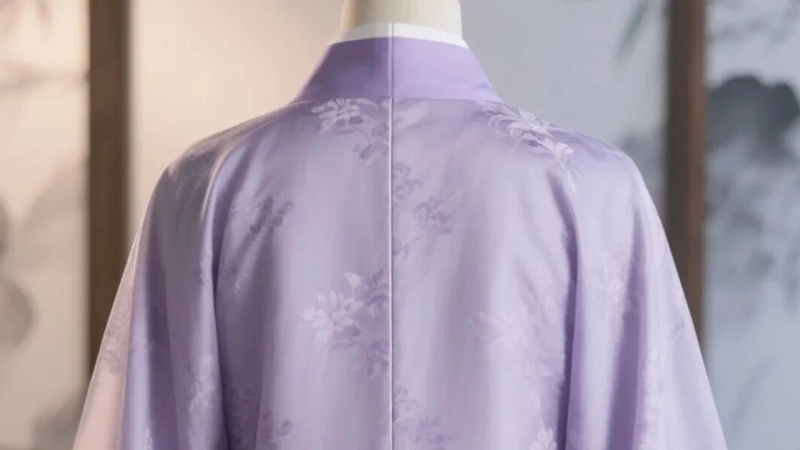
Have you ever noticed the perfectly straight vertical line running down the front and back of traditional Hanfu? This is no mere decorative stitch or accidental wrinkle. In an age of seamless, stretch-knit fabrics, this deliberate opening in the garment tells a story far older than fast fashion, weaving together threads of ancient necessity, structural genius, and profound philosophy. This central seam, or Zhongfeng (中缝), is a signature element, a quiet yet powerful statement embedded in the cloth itself. While its presence is now a defining characteristic, its origins are remarkably humble, born from the simple limitations of the loom.
Loom to Line
Centuries ago, textile technology set clear boundaries. The width of a single bolt of handwoven cloth was narrow, often just 50 to 60 centimeters. This presented a practical puzzle for tailors: how to create a garment wide enough to comfortably drape the human body. The ingenious solution was both simple and elegant. Two lengths of cloth were joined together along their selvedges, creating a single, wider panel with a seam precisely down the middle. This was the birth of the Zhongfeng, a direct result of material constraints.
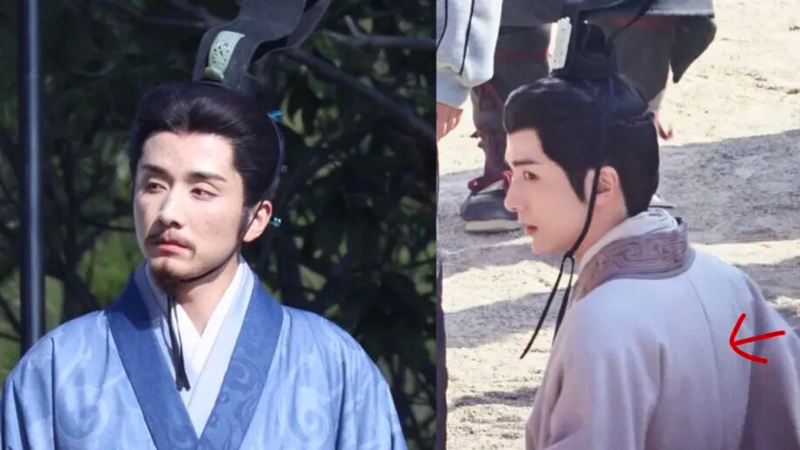
Yet, what began as a necessity quickly revealed an unexpected benefit. This central seam acts as the garment’s backbone. It provides crucial structure and drape, preventing the fabric from sagging or losing its shape. Whether it's the graceful fall of a Ruqun (襦裙) or the dignified hang of a formal robe, the Zhongfeng ensures clean, vertical lines. A Hanfu jacket without it can appear limp, while one with it lends the wearer an innate sense of posture and poise, a subtle uplift that needs no conscious effort.
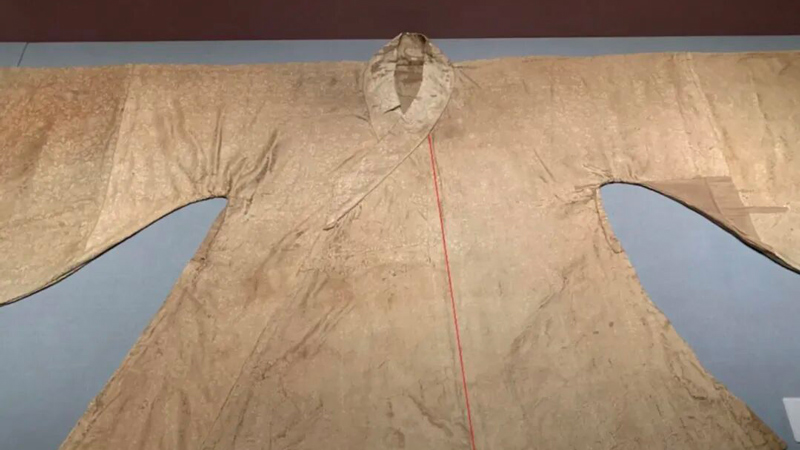
As weaving technology advanced and wider cloth became available, the seam was no longer technically required. But it was preserved. It had transcended its original, practical purpose to become an indispensable element of form and silhouette. While some historical garments, like the famed Plain Gauze Gown, might omit the front seam for design reasons, the back seam almost always remained, a testament to its foundational role in the garment's architecture and aesthetic spirit.
The Seam of Significance
This structural line soon accumulated layers of meaning, becoming a canvas for Confucian ideals. In the classic Book of Rites, the deep robe, or Shenyi (深衣), is described with the phrase "the back seam reaches the ankle to correspond with uprightness". Here, the "rope" or "plumb line" refers explicitly to the back Zhongfeng. It was no longer just a stitch; it was a symbol of moral rectitude and balance.
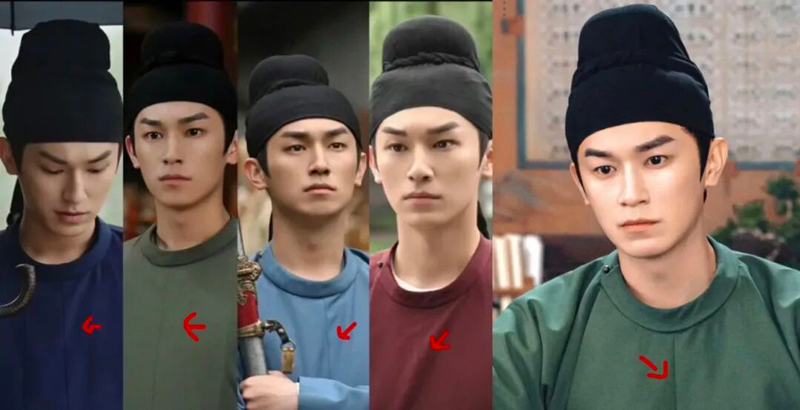
The seam embodied the Confucian doctrine of the Mean, or Zhongyong (中庸), which advocates for moderation, harmony, and avoidance of extremes. Just as the physical seam created a centered, balanced garment that did not pull to one side, it reminded the wearer to cultivate a centered, balanced character—to walk the straight path without deviation. Aligning the seam with the spine of the wearer was an act of physical and ethical alignment.
This idea connected to a broader worldview. Traditional Chinese thought often saw humanity as a microcosm of the universe. The Shenyi’s design was said to incorporate the principles of the compass, square, plumb line, balance, and scale. The Zhongfeng corresponded to the plumb line, an ancient tool for establishing true verticality and order. Thus, wearing the garment was an act of literally clothing oneself in cosmic order and ethical principle, a daily, tactile reminder of one's place within a harmonious system.
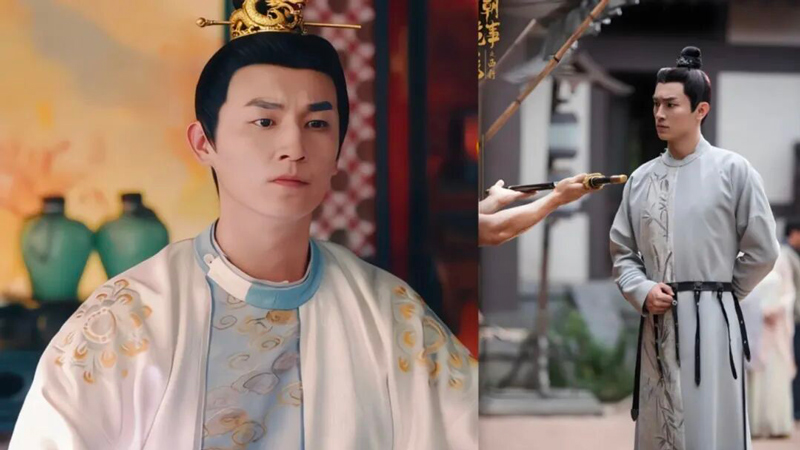
Today, with industrial looms producing fabric over two meters wide, the Zhongfeng is free from its technical origins. It has evolved into a potent design language, not confined to historical reproduction but inspiring modern fashion. Its continued use is a choice, a conscious link to tradition. Interestingly, its absence in many historical dramas, despite claims of authentic "costuming and props," often reveals a missed detail, a lost opportunity to wear this rich narrative on screen.
For contemporary wearers, the Zhongfeng may not consciously evoke ancient moral codes. Yet, its straight, defining presence still resonates. It connects us to a cultural lineage where clothing was interwoven with worldview, where beauty was built on integrity, and where everyday objects carried quiet wisdom. The seam is a thread connecting past to present, a symbol that what was once practical can become profoundly meaningful, and that true elegance often lies in balanced, thoughtful design.