
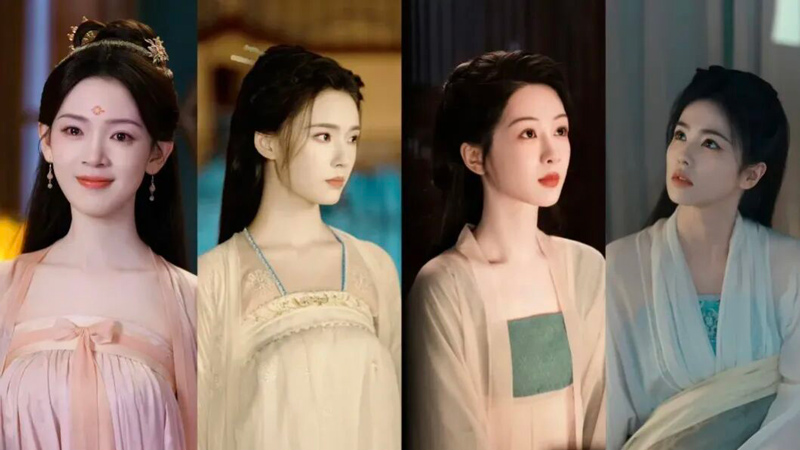
Modern mornings are a race against the clock. We grab clothes, zip, button, and dash out the door. For the elite of ancient China, dressing was a deliberate, time-consuming ritual that set the rhythm for the entire day. Far from a simple task, it was a physical undertaking governed by strict rules of propriety, material limitations, and social station. This process, often perceived today as impossibly cumbersome, reveals a world where clothing was not just covering but a complex language of identity and status.
The Principle of Layers
The foundation of traditional dress was a "from the inside out and bottom to top" approach. Each layer had a designated purpose and position. The foundational garment was the Xieyi (亵衣), a simple undergarment akin to modern underwear. Over this, one would don the Zhongyi (中衣) or middle garment, a full-length robe that served as a base layer. The outermost robe completed the essential trio. In colder months, this system expanded dramatically, with quilted jackets and fur-lined cloaks added for warmth, creating a heavy, insulating shell.
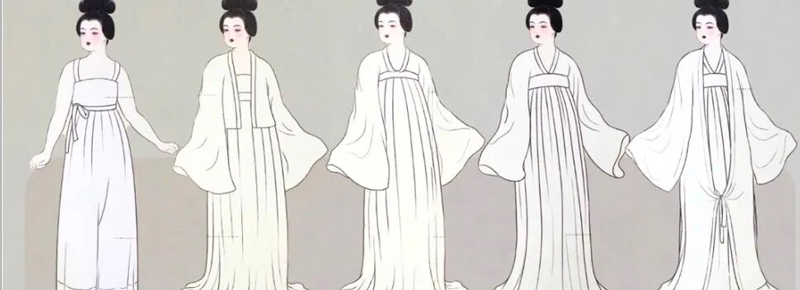
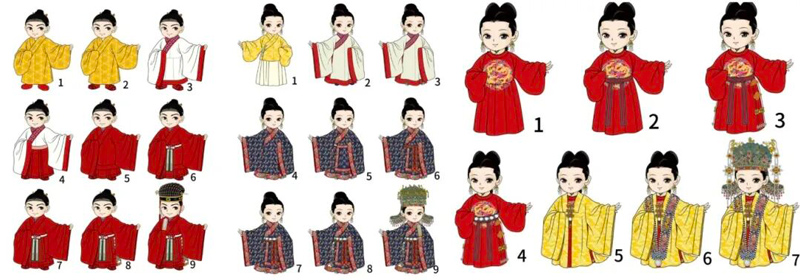
For daily wear, the number of layers could be relatively modest, similar in count to modern clothing but vastly different in form. A Tang Dynasty woman might wear an under-robe, a high-waisted skirt, and a lightweight jacket. However, this was the simplified, functional version. The concept of "less is more" did not apply to formal or ceremonial occasions. Here, the layering became an art form and a display of one's place in the social hierarchy.
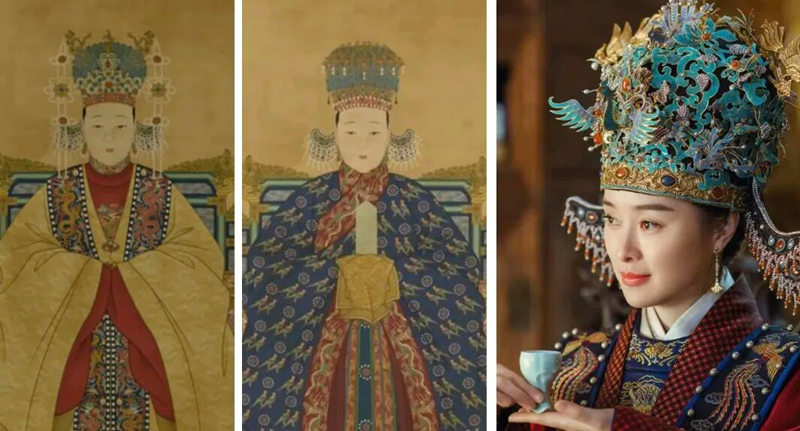
The difference between daily and ceremonial dress was stark. Court regalia could involve ten or more distinct layers. For instance, a Ming Dynasty empress's formal attire included specific inner robes, an ornate outer Diyi (翟衣), multiple belts and sashes like the Dadai (大带) and Gedai (革带), decorative aprons, long hanging pendants, and specific headdresses. Each element was non-negotiable, prescribed by ritual codes that left no room for personal convenience.
The Tyranny of Ties
If layers defined the structure, ties and sashes were the frustrating yet essential mechanics that held it all together. The modern zipper, hook, or elastic band was absent. Instead, a series of finely made fabric ties, often hidden inside the garment, secured each layer. Tying them was a skill. They needed to be firm enough to hold the heavy fabrics in place without shifting, yet not so tight as to restrict breathing or cause discomfort.
This system made independent dressing a genuine challenge. Reaching behind to secure ties on an outer robe was often impossible without assistance. For the nobility, servants were not a luxury but a necessity for basic dressing. The act itself required patience and coordination, as a loose tie could lead to a disheveled appearance, a minor social offense. The gentle, rustling sound of silk ties being adjusted was a familiar background noise in aristocratic households.
The broad, flowing cuts of traditional robes added another layer of difficulty. Sleeves were often longer than the arm, and robes had significant extra fabric to create a graceful, flowing silhouette. While beautiful in motion, these voluminous garments were prone to wrinkling and soiling. Dressing required careful, deliberate movements to avoid tripping on hems or snagging sleeves, a constant mindfulness that influenced how one moved through space.
A Life Shaped by Attire
The complexity of dress directly dictated daily schedules. An official attending dawn court audiences might need to rise two to three hours early simply to be correctly attired. Once dressed for the day, one would remain so. It was uncommon to fully change clothes during the day unless absolutely necessary. Outer cloaks might be removed indoors, but the underlying layers stayed on, avoiding the ordeal of a complete re-dressing.
Maintenance was another relentless task. Without modern irons, keeping luxurious silks and elaborate robes pristine required constant care. Garments were meticulously aired, perfumed with incense to freshen them, and stored in special cabinets. Travel necessitated planning for clothing mishaps. A person of status would be accompanied by attendants carrying spare sets of robes to manage any accidental stains or damage, ensuring they could always appear with proper decorum.
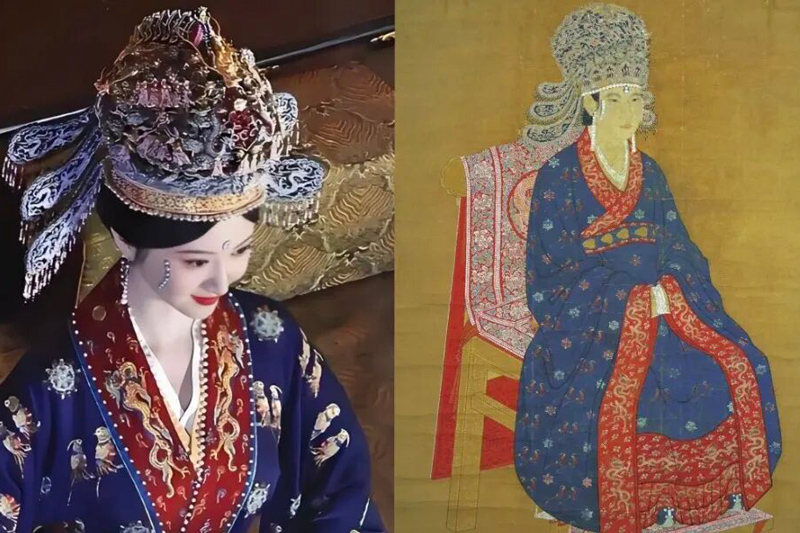
From the ancient Shenyi (深衣) to Tang Dynasty skirts and Song Dynasty Beizi (褙子), the logic of layered dressing remained constant. It was a practical response to the limitations of pre-industrial textiles—a way to achieve warmth, display wealth, and obey social codes all at once. Today, stretch fabrics and instant fastenings have liberated us from that particular form of labor. Some may reminisce about the lost ritual and intentionality, but for the historical figure being laced into their tenth layer at dawn, modern convenience would likely have felt like a revolution in personal freedom.
