
When we picture historical adornment, the image is often feminine. Yet across China's long history, a man's accessories were far from an afterthought. They were a deliberate language, speaking volumes about his identity, virtue, and place in the world. These objects—worn at the waist, on the head, or in hand—served as keys to understanding the wearer.
More than mere decoration, they were embodiments of cultural values, evolving with each dynasty to reflect shifting ideals of masculinity, power, and taste. From the resonant chime of Jade to the functional elegance of a belt, these items composed a silent visual code. This exploration moves beyond simple cataloguing to listen to the stories these objects tell about the men who wore them and the eras they defined.
The Language of Jade
The deep connection between Chinese gentlemanly ideals and jade began early. The saying "a gentleman never parts with his jade without reason" underscores its role. During the Qin and Han dynasties, jade was the paramount material for male adornment, symbolizing moral integrity. A nobleman's ensemble often featured a Zu Yu Pei (组玉佩), a set of jade plaques suspended from the waist. Their gentle, rhythmic clinking was intentional; it was meant to regulate the wearer's gait, promoting a measured and dignified pace. This transformed walking into an auditory demonstration of composure.
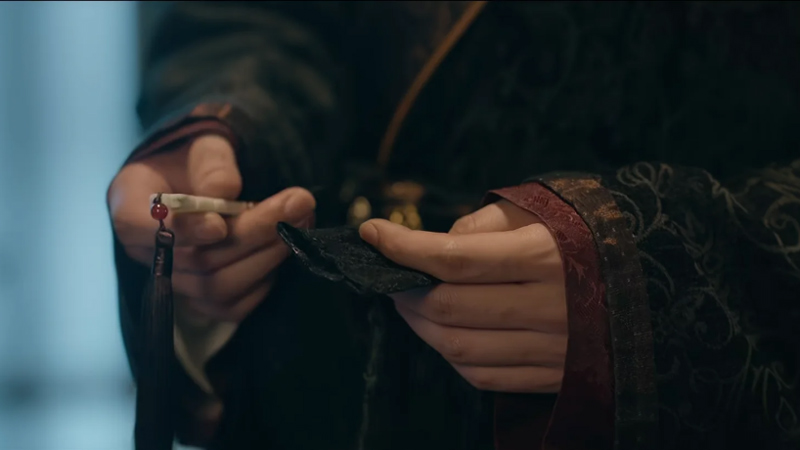
Beyond plaques, jade was integral to a nobleman's ceremonial weapon. The Yu Ju Jian (玉具剑), or jade-fitted sword, incorporated jade pieces on the hilt, guard, and scabbard. While the sword itself symbolized martial readiness and uprightness, its jade fittings elevated it from a tool of war to an artifact of status and refinement. Other practical items were also crafted into personal adornments. The Xi (觿), a sharp tool for untying knots, and personal seals were worn at the waist, beautifully made to be both useful and expressive.
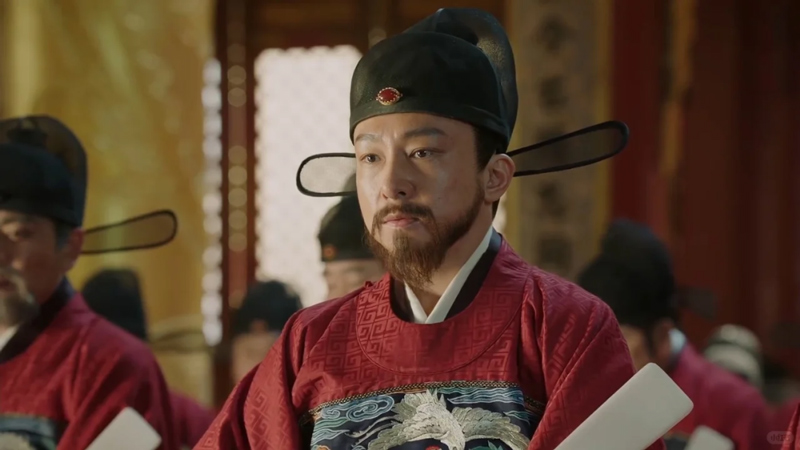
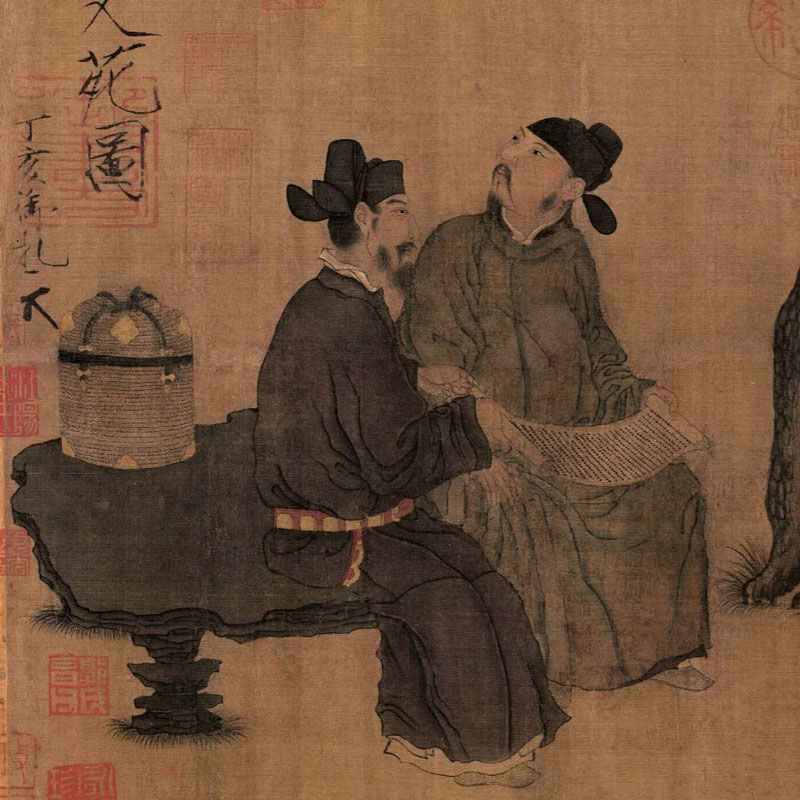
Headwear formed another critical part of this language. The coming-of-age "capping ceremony" marked a boy's transition to manhood. Different styles of Guan (冠, formal hat) and Mian> (冕, ceremonial crown) denoted specific ranks and occasions. For daily wear, scholars favored the Guanjin (纶巾), a simple headscarf immortalized by the strategist Zhuge Liang's "feather fan and silk scarf" image. For commoners, the Futou (幞头), a wrapped cap, was prevalent, eventually evolving into the official's black gauze cap of later centuries.
Belts, Charms & New Influences
Following the Han, aesthetic ideals shifted. The free-spirited scholars of the Wei and Jin periods favored a less rigid elegance. Elaborate jade waist sets gave way to sophisticated leather belts with ornate metal buckles. A unique accessory of this era was the Zhui Wei (麈尾), a tasseled implement used during philosophical debates, held to signify scholarly grace. The portable incense pouch also gained popularity, allowing a subtle fragrance to follow the wearer.
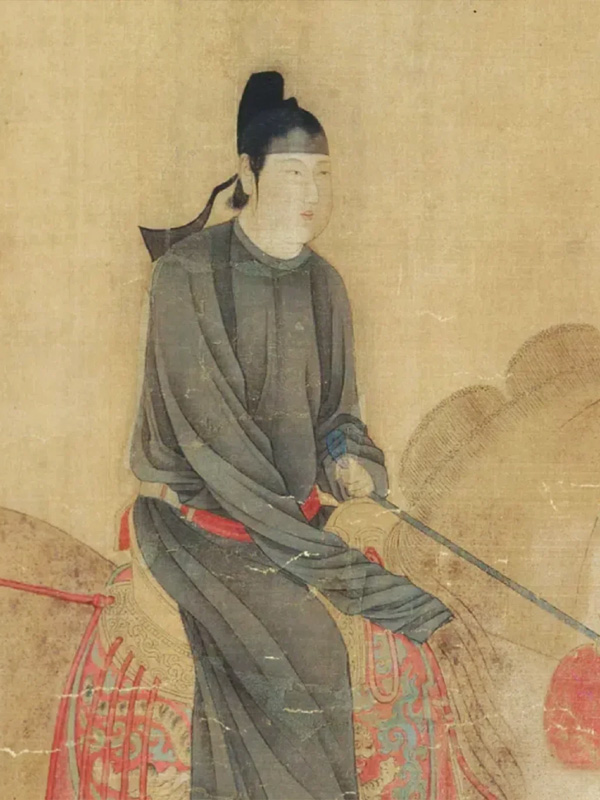
The Tang dynasty, known for its cosmopolitan flair, witnessed a dynamic fusion of Central Plains tradition and imported styles. The official jade belt system was codified, where the number and material of a belt's plaques directly indicated bureaucratic rank. The DieXiedai (蹀躞带), a practical belt from northern equestrian cultures with hanging loops for tools, became a fashionable urban statement. Men also carried identity tokens in decorative waist-pouches. This period embraced a more exuberant and international decorative spirit.
Later dynasties refined these customs. Song dynasty scholars, holding elevated social status, preferred understated elegance, pairing simple jade pendants with silk cords. The Ming era saw strict regulations on official belts, while commoners wore practical sets of small tools called "the seven necessities" on their girdles. A distinctive Mao Zheng (帽正), a square or round jade plaque sewn to the front of a hat, served as both ornament and alignment guide.
The Qing dynasty introduced Manchu traditions. The most striking was the Chao Zhu (朝珠), a court bead necklace adapted from Buddhist prayer beads, mandatory for officials during audiences. Belts were adorned with exquisite embroidered sets of pouches for small personal items. The Ban Zhi (扳指), once a functional leather archer's ring, transformed into a lavish thumb ring crafted from jade or jadeite, purely for display.
The Republican era blended East and West. The pocket watch and chain became a gentleman's staple, often paired with a traditional long gown. Western-style hats replaced the skullcap, and canes were carried as fashion items. Traditional jade found new forms in cufflinks, tie pins, and rings, worn with tailored suits. This sartorial fusion mirrored the era's struggle to balance heritage and modernity.
These adornments were never trivial. They formed a comprehensive system of non-verbal communication, articulating a man's cultivation, social standing, and aspirations. The shift from the bold Tang aesthetic to the reserved Song style, or from functional tools to symbolic ornaments, charts the evolving philosophy of what it meant to be a distinguished man. Today, these objects remain as illuminating points of light from the deep past, offering a tangible connection to the rhythms and refinements of historical Chinese life.
