Imagine a day without your phone. No scrolling, no pinging, no pocket-sized portal to the world. For most of us, that sounds less like a break and more like a punishment. Yet, for centuries, that was the only reality. How did our ancestors fill the hours, fight boredom, and find joy without a single byte of digital distraction? Did they just sit around, staring at walls? Far from it. Their world was not one of dull emptiness, but of vibrant, hands-on fun.
From the dusty fields of the Han Dynasty to the bustling teahouses of the Republic era, the history of Chinese entertainment is a testament to human creativity. It’s a story of turning simple moments—a kick of a ball, a sip of tea, a well-told joke—into the very fabric of a rich social life. Let’s put down our devices for a moment and step into their world.
Rituals to Kicking Off
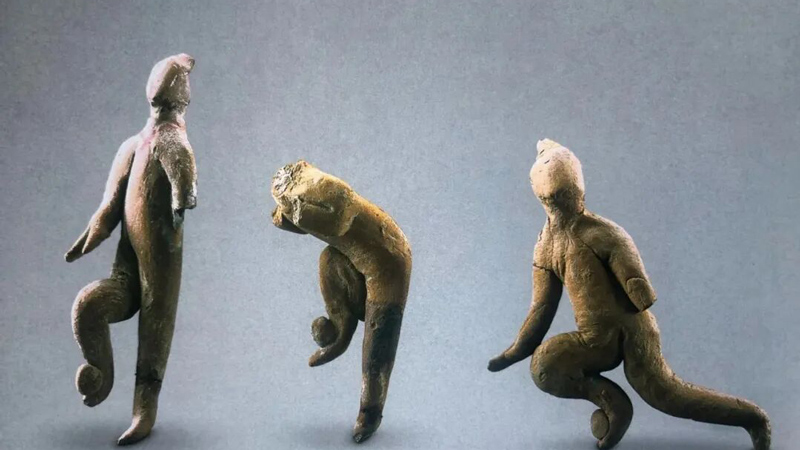
The very first “entertainment” in ancient China wasn’t for fun at all—at least, not at first. It was born from ritual. In primitive societies, people danced and sang not in nightclubs, but to honor spirits and gods. These acts of worship, filled with rhythm and movement, were the seeds of performance. By the time of the Shang (商) and Zhou (周) dynasties, bronze bells and chimes weren’t just for ceremonies; they provided the soundtrack for lavish court banquets, mixing the sacred with the social.
As empires grew, so did the playbook. The Qin (秦汉) and Han (汉) dynasties saw a boom in activities for everyone. Imagine the scene: in the capital, you might see noblemen and commoners alike chasing a leather ball filled with feathers. This was Cuju (蹴鞠), a early form of soccer so popular that even ceramic models of players, like the one in the Xi’an Museum, were made to capture the action. For a quieter challenge, there was Touhu (投壶), a elegant game where players threw arrows into a narrow-necked vase, a test of skill and steady nerves often played at parties.
And the kids weren’t left out. Han dynasty children were already hooked on a board game called Liubo (六博), a sort of prehistoric Monopoly that involved throwing sticks and moving pieces. It proves that the love for a little friendly competition around a table is nothing new. Life without a screen wasn’t empty; it was a playground of physical skill and social strategy.
Poetry, Wine, and Wild Nights
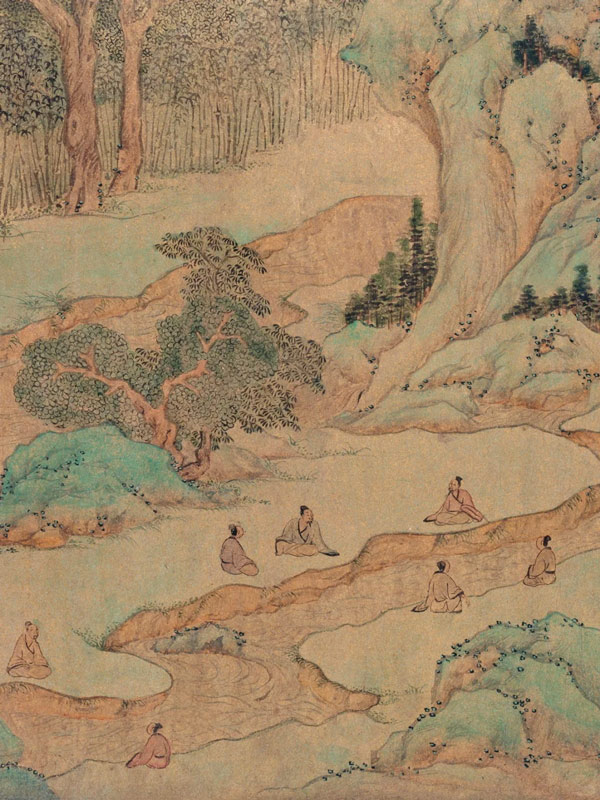
Fast forward a few centuries, and the pursuit of pleasure took a more sophisticated, and sometimes wilder, turn. During the Wei (魏) and Jin (晋) periods, the intellectual elite found their paradise in the “elegant gathering.” Picture a group of friends, escaping the city for a bamboo grove or a scenic hillside. They would drink wine, compose poetry on the spot, and play games like pitch-pot. This wasn’t just a party; it was a philosophical movement. The most famous of these gatherings, the Lanting Ji (兰亭集) in 353 AD, saw the great calligrapher Wang Xizhi (王羲之) so inspired by the wine and camaraderie that he penned the famous preface Lantingji Xu (兰亭集序).
The Tang dynasty turned the volume up on everything, including fun. This was the golden age of performance. You could watch tightrope walkers, amazing pole-climbers, and even horse ballets in the imperial courts. The poets of the era captured this vibrant spirit perfectly. Li Bai (李白), in his poem General’s Wine (将进酒), shouted, “Since life is but a dream, why not enjoy it to the fullest?” Meanwhile, children played a simple, imaginative game called “riding a bamboo horse”—just a stick between the legs, galloping through the streets, a game Li Bai himself made eternally romantic with his verse about a boy who “came riding a bamboo horse.”
Entertainment was no longer just a royal privilege. It was woven into the fabric of city life. Tang capitals buzzed with energy during festivals, with lantern displays so bright they seemed to “join the stars fallen from the river of heaven.” Whether it was a philosophical debate in a garden or a street performer drawing a crowd, the joy came from shared, tangible experiences.
City Lights and Tea Whisking
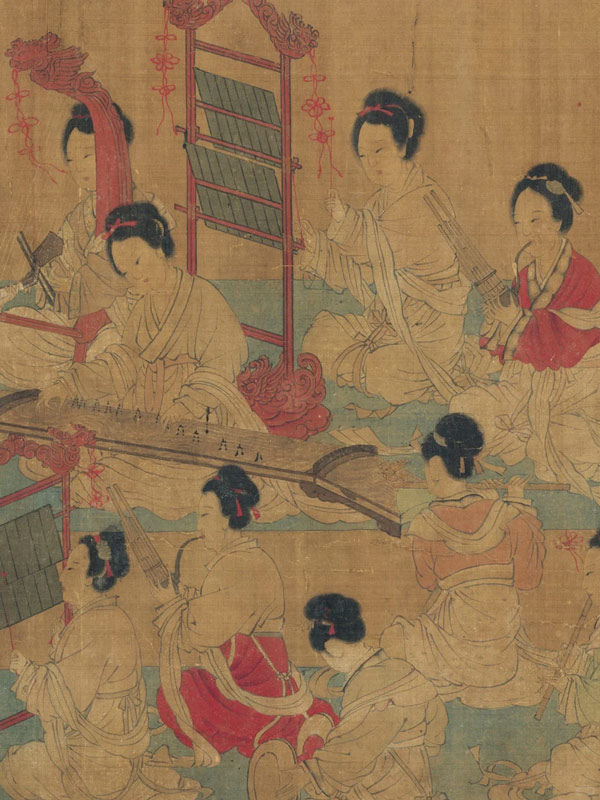
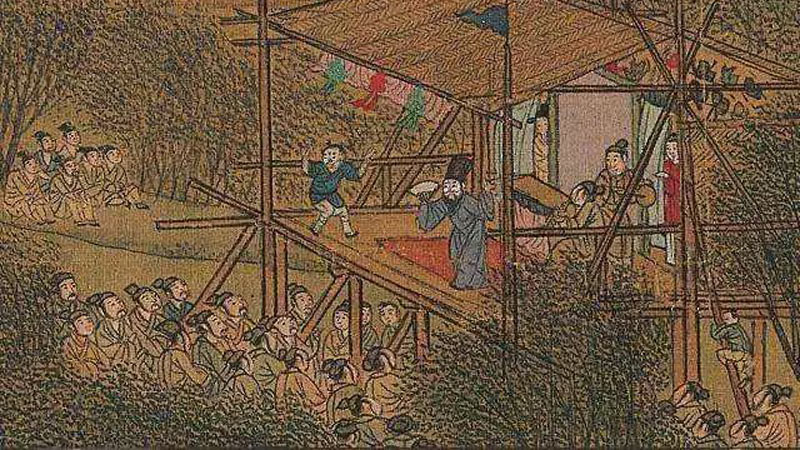
With the Song dynasty, the fun moved indoors and stayed out late. The rise of a merchant economy and bustling cities like Kaifeng created a new kind of playground: the Washe (瓦舍). These “entertainment zones” were like a permanent fair, packed with teahouses, restaurants, and most importantly, the Goulan (勾栏)—theaters enclosed by railings. Inside a Goulan, you could catch a comedy skit, marvel at a magician, or be thrilled by a death-defying acrobat. According to records from the time, these markets were open until three in the morning and reopened at five, a non-stop buzz of commercialized fun.
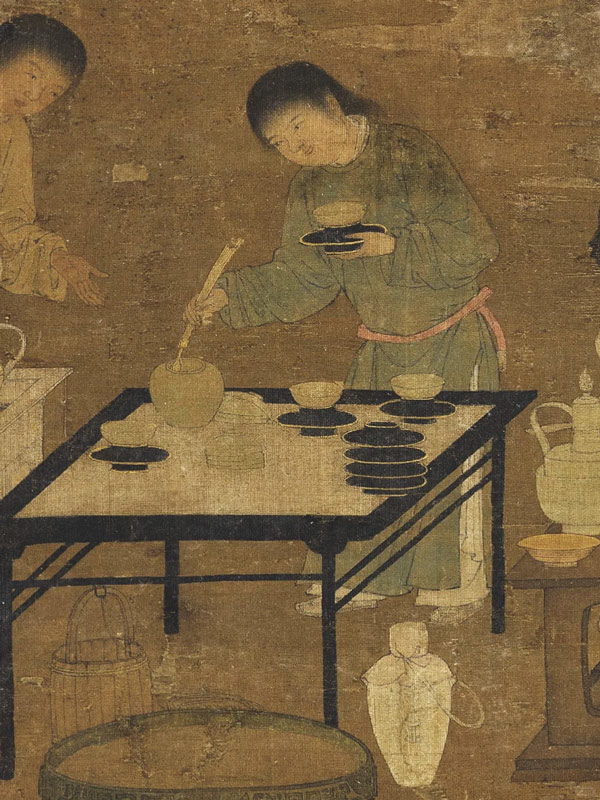
But it wasn’t all spectacle. The Song people also refined the art of quiet enjoyment. Tea drinking became an obsession for everyone from the emperor to the street vendor. It culminated in the elaborate art of Dian Cha (点茶), a ritual of whisking powdered tea into a frothy brew. Masters of the craft could even paint pictures and write characters on the surface of the tea foam, a fleeting art form called “tea hundred plays.” This was a moment of mindful creativity, a stark contrast to the noisy streets outside.
While the Song reveled in urban variety, the Yuan dynasty saw the rise of a new narrative art: Zaju (杂剧). These variety plays, combining music, dialogue, and acrobatics, told stories of heroes, outlaws, and lovers, capturing the imagination of the common people in the tea houses and wine shops that dotted every city. The culture of storytelling, of gathering to hear a tale well told, was becoming a cornerstone of daily leisure.
Teahouses to Theaters
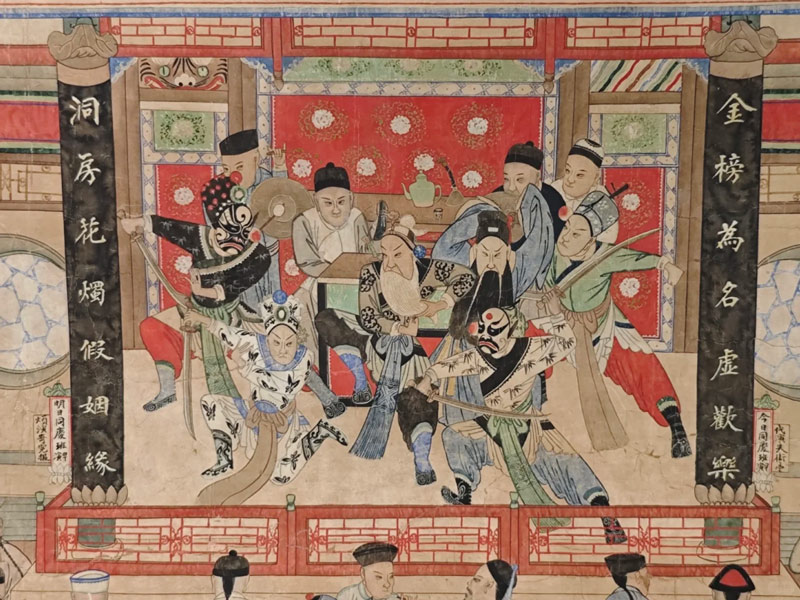
In the Ming and Qing dynasties, leisure became a full-blown industry for the growing middle class. Novels like Journey to the West were devoured, and professional storytelling—from pingshu (评书) storytelling to crosstalk—kept audiences in stitches in bustling marketplaces and temple fairs. It was in this environment that a new star was born: Peking Opera (京剧). When the four great Anhui troupes came to Beijing in the 1790s, they fused their styles with existing operas to create a dazzling new art form. With its elaborate costumes, acrobatic fighting, and iconic music, Peking Opera became a national obsession, packing theaters both in the Forbidden City and in the popular theatres, where audiences ate snacks and cheered loudly during performances.
The world of the commoner was filled with other simple pleasures. Chess boards were set up in public squares. Riddles written on lanterns during festivals challenged the mind. People played cards and dominoes. And in the bustling treaty ports of the early 20th century, this entertainment culture layered itself into new urban spaces. The street corner storyteller and the neighborhood teahouse remained the heart of social life. The teahouse was a living room, an office, and a concert hall all in one—a place to debate politics, close a deal, or just listen to a tune while watching the steam rise from your cup.
So, as the sun sets on this journey through time, we see that the human need for connection, excitement, and a good story hasn’t changed. Our ancestors simply used what they had—a ball, a cup, a stage, or just a friend’s company. Their world wasn’t silent. It was filled with the thud of a kicked ball, the clink of wine cups, the strum of a pipa, and the roar of a crowd at the opera. The most profound lesson from their world might be this: pure joy isn’t something you download. It’s something you create, in the space between people.