
Today's ski resorts and ice rinks represent a globalized winter culture. Yet, centuries before modern arenas, the frozen waterways of imperial China hosted a world of vibrant and sophisticated winter sports. Far from a modern invention, organized ice activities were a dynamic part of life, evolving from military drills to grand state ceremonies. This is not a story of simple recreation, but of a deep-seated cultural ingenuity that transformed barren, frozen landscapes into stages for athleticism, artistry, and imperial power.
1. Qiang Deng (抢等)
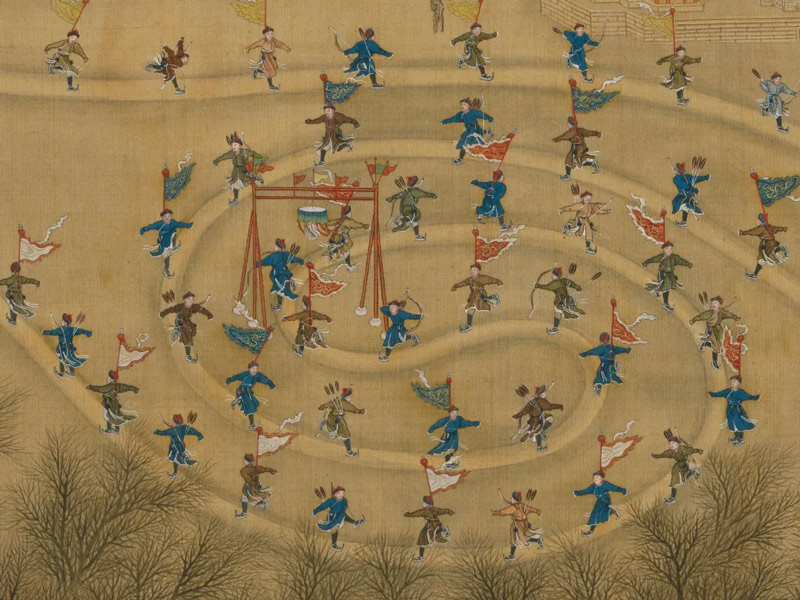
Imagine the crack of a signal cannon echoing across a frozen imperial lake. This was the start of Qiang Deng, a fierce speed skating contest that served as the precursor to modern short-track racing. Originally a military exercise for the Eight Banners armies to maintain winter readiness, it became a highlight of the annual Bingxi (冰嬉) ceremony. Emperor Qianlong (乾隆) elevated these ice games to a "national custom," with grand reviews held on the frozen waters of Beihai (北海) and Zhonghai (中海) in Beijing.
Competitors, selected from elite "Ice Shoe Battalions," wore early iron-bladed skates. Bending forward for aerodynamics, they propelled themselves across the ice with poles, striving to be the first to cross the distant finish line. The event was pure velocity, a test of individual skill and explosive power. Its formal incorporation into the imperial calendar shows how athletic competition was seamlessly woven into the fabric of state ritual and military display during the Qing Dynasty.
This race was more than just sport; it was a public demonstration of discipline and vigor. The emperor's presence transformed the athletes into symbols of dynastic strength. While the specific military function faded, the legacy of Qiang Deng lives on in the thrilling speed skating events that captivate audiences today, proving that the need for speed on ice is truly timeless.
2. Figure Skating
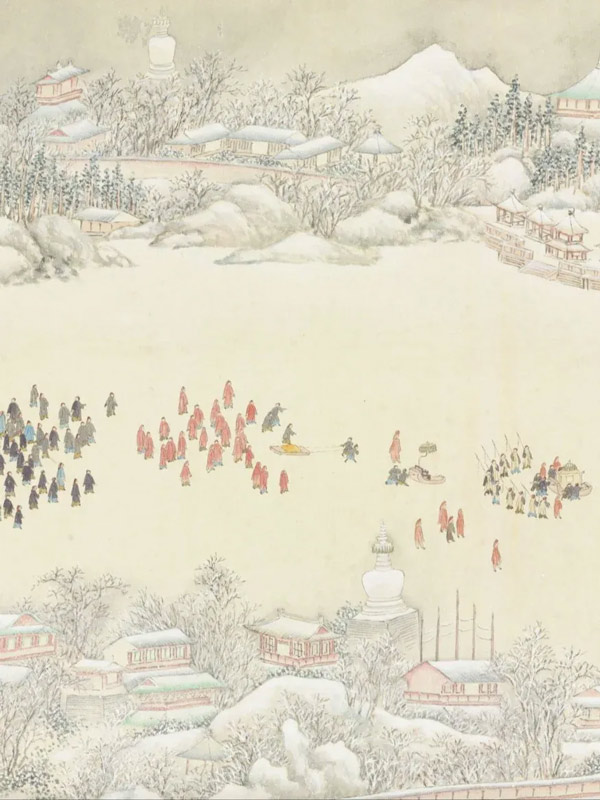
Beyond sheer speed, Chinese ice culture cultivated remarkable grace. The broader Bingxi festival included performances that demanded balletic skill, closely resembling modern figure skating. Performers executed intricate moves with evocative names drawn from mythology and martial arts, turning the ice into a canvas for physical storytelling.
One classic pose was the Golden Rooster Stands on One Leg, where a skater maintained a deep, one-legged glide. Another, Nezha Explores the Sea (哪吒探海), involved a dramatic forward bend to touch the ice while in motion. For group numbers, skaters performed synchronized spins called Twin Swallows or formed human pyramids, gliding across the surface in precarious, beautiful stacks. These acts blended athletic control with artistic expression.
Though not a codified competitive system, this tradition highlights an early appreciation for ice performance as spectacle. The skills required—balance, flexibility, and coordination—are the very foundations of contemporary figure skating. When Western-style skating was introduced in the late 19th century, it found fertile ground in northern Chinese cities, where an innate cultural familiarity with ice artistry already existed.
3. Bing Shang Cu Ju (冰上蹴鞠)
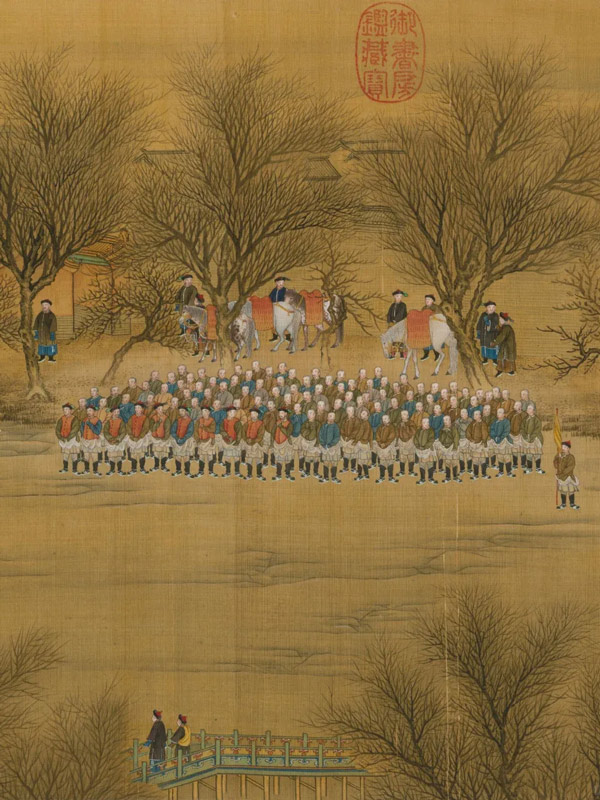
Perhaps one of the most fascinating hybrids was Bing Shang Cu Ju, or ice football. This sport ingeniously merged China's ancient ball game, Cuju, with the slick reality of a frozen lake. During the Qing Dynasty, it served both as a popular folk pastime and a formal component of the imperial ice review, often watched by the emperor himself.
Teams of soldiers, wearing specialized ice shoes, battled for control of a ball on a slick surface. There were no fixed goals; the objective was simply to keep possession and outmaneuver the opposing side. The game was played on square patches of ice, with a round ball, a design said to reflect the ancient philosophical concept of a "square earth beneath a round heaven." This fusion gave new life to the declining sport of Cuju by adapting it to the winter environment and the Manchu prowess on ice.
This ancient game has been revitalized in a modern format called Bing Cuo Qiu (冰蹴球). Played on a smaller, defined court, it involves teams using their feet to slide a flat-bottomed disc, blending the tactical placement of curling with the footwork of its historical ancestor. It stands as a direct living link to the playful yet strategic ice games of the past.
4. Zhuan Long She Qiu (转龙射球)
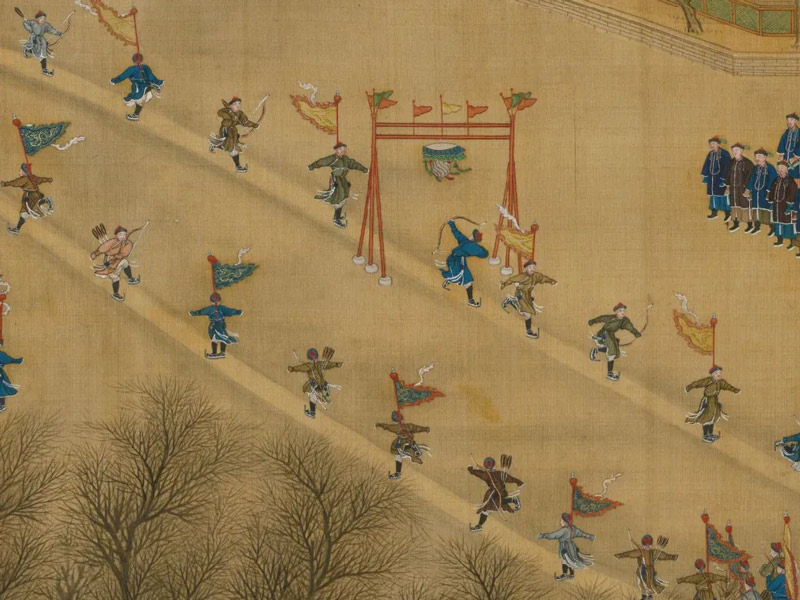
The most majestic event was undoubtedly Zhuan Long She Qiu, the "Dragon Procession and Ball Shooting." This spectacular showpiece combined mass precision skating with archery, representing the pinnacle of the Bingxi ceremony. It involved hundreds, sometimes thousands, of skaters from the Eight Banners forming a single, winding line that slithered across the ice like a giant, moving dragon.
The procession followed a pre-set circuitous path, often tracing a figure-eight pattern known as the "dragon pattern" on the ice. Each banner division was led by a flag bearer, followed by archers carrying bows. At key points along the route, arches called Jing Men (旌门) were erected, from which colorful silk balls were suspended high above.
The climax came as the skating archers, without breaking the momentum of the dragon's flow, had to shoot arrows to knock down the balls. Success required incredible skill: maintaining balance at speed, timing the shot, and hitting a small target, all while staying in formation. After the circuit, awards were distributed based on accuracy. This breathtaking display was the ultimate synthesis of martial skill, collective discipline, and theatrical grandeur, perfectly embodying the ambition and cultural confidence of the high Qing empire.

Biathlon should be archery rather than rifles. 😎
Right! Archery, not rifles for emperors. 😄