-

Traditional Hanfu Meets Modern Fashion on the Spring Festival Gala
For years, a quiet yet persistent question has floated among viewers right before the Lunar New Year's Eve: Will traditional Hanfu make an appearance on the Spring Festival Gala this time? It is a query loaded with anticipation, reflecting a growing public desire to see China's own historical attire celebrated on its biggest television stage. The answer is rarely straightforward, often involving a mix of subtle nods, full-blown spectacles, and sometimes, controversial misses. By looking back at recent galas, we can trace a fascinating journey of how Hanfu has gradually, and sometimes awkwardly, found its place in the national spotlight, moving from a niche interest to a topic of mainstream discussion. A Glimpse of Glory and a Dash of Modernity The most recent Spring Festival Gala, in 2025, offered a mixed bag for Hanfu enthusiasts. It did not feature a dedicated segment for traditional clothing, yet the attire was undeniably present. The opening sequence showcased internet celebrity Li Ziqi (李子柒), who wore an outfit inspired by Ming-style Hanfu. It featured a standing collar and a diagonal closure, but it was noticeably tailored with modern, figure-hugging techniques, a departure from the looser fit of historical garments. The piece cleverly retained traditional…- 0
- 0
- 29
-
Why Hanfu’s Zhongfeng Endures—Beyond a Simple Stitch
Have you ever noticed the perfectly straight vertical line running down the front and back of traditional Hanfu? This is no mere decorative stitch or accidental wrinkle. In an age of seamless, stretch-knit fabrics, this deliberate opening in the garment tells a story far older than fast fashion, weaving together threads of ancient necessity, structural genius, and profound philosophy. This central seam, or Zhongfeng (中缝), is a signature element, a quiet yet powerful statement embedded in the cloth itself. While its presence is now a defining characteristic, its origins are remarkably humble, born from the simple limitations of the loom. Loom to Line Centuries ago, textile technology set clear boundaries. The width of a single bolt of handwoven cloth was narrow, often just 50 to 60 centimeters. This presented a practical puzzle for tailors: how to create a garment wide enough to comfortably drape the human body. The ingenious solution was both simple and elegant. Two lengths of cloth were joined together along their selvedges, creating a single, wider panel with a seam precisely down the middle. This was the birth of the Zhongfeng, a direct result of material constraints. Yet, what began as a necessity quickly revealed an unexpected…- 0
- 0
- 43
-
What Did It Really Take to Get Dressed in Imperial China?
Modern mornings are a race against the clock. We grab clothes, zip, button, and dash out the door. For the elite of ancient China, dressing was a deliberate, time-consuming ritual that set the rhythm for the entire day. Far from a simple task, it was a physical undertaking governed by strict rules of propriety, material limitations, and social station. This process, often perceived today as impossibly cumbersome, reveals a world where clothing was not just covering but a complex language of identity and status. The Principle of Layers The foundation of traditional dress was a "from the inside out and bottom to top" approach. Each layer had a designated purpose and position. The foundational garment was the Xieyi (亵衣), a simple undergarment akin to modern underwear. Over this, one would don the Zhongyi (中衣) or middle garment, a full-length robe that served as a base layer. The outermost robe completed the essential trio. In colder months, this system expanded dramatically, with quilted jackets and fur-lined cloaks added for warmth, creating a heavy, insulating shell. For daily wear, the number of layers could be relatively modest, similar in count to modern clothing but vastly different in form. A Tang Dynasty woman…- 2
- 0
- 62
-
Tang-Song Attire Shines at Guangzhou Baiyun International Airport
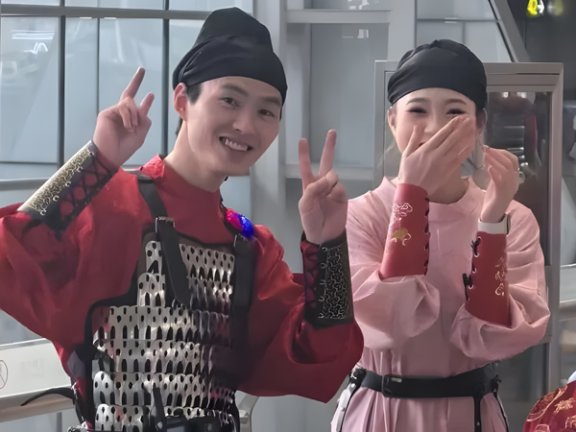
Stepping into Guangzhou Baiyun International Airport (广州白云机场) recently, travelers encountered an unexpected sight. Instead of standard-issue uniforms, airport staff were adorned in elegant, flowing robes. Security personnel resembled Tang Dynasty guards, while patrolling staff mirrored Song Dynasty scholars, performing a courteous Chashou Li (叉手礼), a traditional greeting with hands folded before the chest. This wasn't a costume party or a film set; it was a deliberate, immersive cultural initiative. The seamless blend of ancient aesthetics with the ultramodern transit hub created a unique experience, prompting many to double-check they hadn't landed in a historical drama. This bold move sparked immediate online fascination and posed a quiet question: can traditional attire find a genuine place in our contemporary world? A Living Showcase The true impact lay in the meticulous accuracy of the clothing. These were not generic, theatrical "ancient-style" costumes. The security staff wore vermilion Jiaoling Yuanlingpao (交领圆领袍), cross-collared robes, paired with Futou (幞头) headwear and leather belts, directly referencing the attire of the Jinwu (金吾) guards of the Tang era. Their posture was upright and dignified. Similarly, the patrol staff’s simpler Yuanlingpao and Song-style Futou reflected the refined minimalism favored by Song Dynasty literati. Every stitch and fold served as…- 0
- 0
- 133
-
Is Your Hanfu Outfit a Costume or a Cultural Statement?
Scroll through any social media platform today, and you will find videos of people dressed in elegant, flowing Hanfu. Yet, the comments underneath often spark a familiar debate: "Isn't this just cosplay now?" The line between wearing traditional attire and performing a character seems increasingly blurred. From majestic portrayals of Yang Yuhuan (杨玉环) to scholarly impressions of Li Qingzhao (李清照), enthusiasts are using Hanfu to step into the shoes of historical figures. This trend raises questions. Is it a genuine form of cultural appreciation, or merely a pursuit of online popularity? To understand this modern phenomenon, we might look to an unexpected patron from history who mastered the art of symbolic dress-up long before it was a trend. The Emperor's Disguise The idea of adopting another's attire for portrayal is not new. Consider the Qianlong Emperor (乾隆) of the Qing Dynasty. Official portraits show a ruler in majestic regalia, but his private "Hanfu Portrait for Pleasure" paintings reveal a different side. Here, he is depicted not as a Manchu emperor, but as a Han Chinese scholar. He wore loose Daoist robes, posed with antiquities, and embodied the idealized literati. He even dressed in Western clothing for some portraits. His motivations…- 0
- 0
- 19
-
How Mongolia’s Olympic Uniforms Mastered Tradition and Modernity
As the 2026 Winter Olympics approach, a nation’s teamwear has unexpectedly captured global attention. Mongolia’s opening ceremony uniforms, unveiled recently, have sparked widespread admiration and a pointed question: why can their Olympic attire feel so authentic and compelling? The design brilliantly incorporates historical elements from the Yuan dynasty, presenting a sophisticated blend of heritage and contemporary sportswear aesthetics. This move has not only won praise but has also ignited a conversation about cultural identity on the world’s biggest athletic stage. The ensemble moves decisively away from the more common straight-front closure, known as “Changzi Jin,” seen in many modern interpretations. Instead, it revives the crossed-collar, right-over-left closure system, a hallmark of historical Hanfu and Yuan-era Mongolian robes. This is not mere nostalgia. The design choice is deeply functional. The overlapping front panels form a barrier against biting winter winds, a practical adaptation for the steppe’s climate and for the outdoor ceremonies of a Winter Games. The sleeves are tailored to be narrower than traditional Hanfu, facilitating movement and nodding to a history of horsemanship. The fabric itself is a modern technical blend incorporating wool, a textile long central to nomadic life. Design with Purpose The design team’s stated goal was…- 0
- 0
- 36
-
Did a TV Drama Just Show Ancient Underwear as Outerwear?
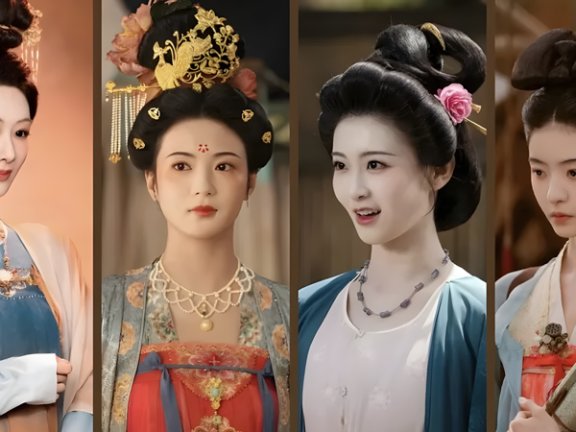
A recent period drama has sparked a lively online debate not about its plot, but about a character's wardrobe. In the television series Swords into Plowshares (太平年), the actress Zhou Yutong (周雨彤), who portrays the character Sun Taizhen (孙太真), appears in several stunning outfits that have left viewers puzzled. The garments feature what looks like a structured, bustier-style top worn over a flowing skirt, leading many to wonder: is this a case of ancient "underwear as outerwear"? The style feels surprisingly modern, reminiscent of contemporary tube or bandeau dresses, yet it is presented as historical costume. This visual anachronism has ignited curiosity about the origins and accuracy of this particular fashion choice within the drama's claimed historical setting. Historical Roots The costume in question is what many in modern traditional clothing circles call a Hezi skirt (诃子裙). However, its status within the spectrum of Hanfu is contentious. A primary reason is the lack of archeological evidence; no physical example of this specific garment has been unearthed. References to a "Hezi" exist in historical texts, but not as a compound term for an entire skirt. The most famous visual association comes from the Tang dynasty painting Court Ladies Adorning Their Hair…- 0
- 0
- 41
-
How Did Song Yi's New Chinese Outfit Ignite a Fashion Style?
When actress Song Yi (宋轶) recently appeared in a stunning New Chinese Style ensemble, the internet erupted with admiration. Her look, featuring a pink-white embroidered blouse with a ruffled collar and a misty pink satin skirt, evoked the grace of a classical Chinese beauty while radiating contemporary charm. Accessories like a delicate hairpin, a celadon vase, and bow-adorned shoes completed the vision of a refined gentlewoman from a scholarly family. This outfit wasn't just clothing; it became a symbol of how traditional aesthetics can seamlessly merge with modern design, captivating fashion enthusiasts and cultural observers alike. The immediate viral response highlighted a growing fascination with styles that bridge historical elegance and present-day creativity, setting the stage for a deeper exploration of this trend. Design Details The brilliance of Song Yi's attire lies in its meticulous details. The blouse's embroidery features flowing patterns that showcase artistic craftsmanship, with the ruffled collar and lantern sleeves adding a touch of ethereal movement. The skirt's drape and subtle side embroidery align with Eastern aesthetics, accentuating a slender silhouette. Color coordination in soft pinks and whites creates a gentle, sweet palette that complements the overall theme. Designers often draw from classical paintings and textiles, reimagining…- 0
- 0
- 20
-
Bai Lu Embraces the Spirit of Traditional Chinese Style
In a recent series of images that swiftly captivated the internet, actress Bai Lu (白鹿) presented a vision of ethereal elegance that seems to transcend time. Dressed in a soft goose-yellow Ruqun (襦裙) robe overlaid with a sheer, misty cyan gauze outer garment, she appeared not as a modern celebrity, but as a celestial being from an ancient painting. The ensemble masterfully blends traditional Chinese aesthetics with a contemporary sense of grace, creating a "soft-fog" effect that is both delicate and profoundly arresting. This look doesn't just clothe the wearer; it surrounds her in an aura of timeless, gentle beauty that feels both familiar and wonderfully new. A Closer Look at the Details The magic lies in the meticulous craftsmanship. The pale cyan outer layer is light and translucent, reminiscent of morning mist clinging to a hillside. It adds depth and a dreamlike quality without obscuring the beauty beneath. The inner robe, in its warm, muted yellow hue, glows softly, its color evocative of sunlight on new blossoms. Upon closer inspection, exquisite embroidery reveals itself along the hems, each stitch a testament to refined artistry. These subtle details embody the quiet sophistication central to traditional Chinese design. Her hairstyle completes…- 0
- 0
- 24
-
Why Historical Dramas Get Waistwear Wrong?
Open any historical or fantasy costume drama today, and you will likely spot a recurring sartorial trend: a character's robe is first cinched by a broad waist wrapper, only to be topped with an additional, often decorative, belt. This layered look, adorned with jade pendants and tassels, has become a visual shorthand for ancient elegance. Yet, this ubiquitous combination is almost entirely a modern invention, a creative liberty taken by costume designers that conflates two distinct historical garments. The Yao Fu (腰袱), or waist wrapper, and the traditional belt served different purposes, stemmed from different needs, and were rarely worn together in the manner now popularized on screen. The Practical Waist Wrapper Far from being a mere accessory, the Yao Fu was a fundamental component of daily dress, rooted in utility. Traditional Hanfu, with its deep robes and broad sleeves, was inherently loose. A narrow belt alone could not secure such voluminous clothing for work or swift movement. The Yao Fu solved this. Typically a wide strip of cloth, sometimes over twenty centimeters across, it was wrapped firmly around the torso to anchor the layers of fabric beneath. For laborers, it provided back support and protected garments from wear; some…- 0
- 0
- 29
-

Why Does Rong Shanbao’s Outfit in Glory Look So Slimming?
In the historical drama Glory (玉茗茶骨), actress Na Zha (娜扎) captivates audiences not just with her performance, but with her wardrobe. Her character, Rong Shanbao (荣善宝), is frequently seen in a specific style of outerwear that seems to magically elongate her silhouette, sparking online conversations about its flattering power. Viewers quickly noted its similarity to modern fashion items, revealing a fascinating truth: this garment is a centuries-old design called the Bijia (比甲). More than just a costume piece, the Bijia’s journey from the imperial courts of ancient China to contemporary street style showcases a stunning continuity in aesthetic preference, proving that some designs truly are timeless. Historical Threads The Bijia’s origins trace back to the Song Dynasty. Originally a form of Hanfu, it was a sleeveless, collarless over-garment, similar to a long vest. Its practical design was later adopted and adapted during the Yuan Dynasty for functionality. Historical records like the Yuanshi (元史) describe its purpose: a garment with a front shorter than the back, lacking sleeves and a collar, secured by two ties. This made it ideal for equestrian activities and labor, protecting the torso without restricting arm movement. By the Ming Dynasty, the Bijia had shed its purely…- 0
- 0
- 25
-
Why Did the Prince's Collar Vanish in The Imperial Coroner 2?
The premiere of the historical drama The Imperial Coroner 2 (御赐小仵作2) has sparked an unexpected debate among its dedicated fanbase. Rather than focusing solely on plot twists, viewers are scrutinizing the wardrobe of the male lead, Prince Chu (楚王). A particular detail has drawn sharp criticism: the noticeable absence of the distinct white collar lining his official robes, a signature element from the first season. This seemingly minor change has opened a broader conversation about historical authenticity, artistic license, and the evolving standards of audience expectation in period television. The discussion delves deep into the intricacies of Tang (唐) and Song (宋) dynasty attire, revealing how costume design is a language unto itself. The Missing Collar To understand the collar controversy, one must first consider the era. If the drama is set in the Tang dynasty, the typical round-neck robe was worn over an inner garment with a narrow, crossing collar. When properly worn, this inner collar would barely peek out, appearing only as a slim edge. The prominent white collar seen in Season One was, therefore, a stylistic choice rather than a strict historical reproduction. If the setting leans toward the Song dynasty, the inner garment's crossing collar would…- 0
- 0
- 16
-
Why Did Ancient Robes Have That Hanging Cloth?
If you watch historical dramas, you have likely noticed a distinctive strip of fabric hanging down the front of many costumes. This is not a random design choice but a faithful recreation of an ancient garment accessory known as the Bixi (蔽膝). Its journey from a practical tool to a ceremonial symbol encapsulates centuries of social change, weaving together threads of necessity, status, and cultural memory. A Tool for Life The origins of the Bixi are fundamentally practical. In early antiquity, clothing was simple and often incomplete. This long cloth panel served a basic yet vital function: modesty. It acted as an apron, shielding the front of the body. Scholars like Xu Shen (许慎), in his ancient dictionary Shuowen Jiezi (说文解字), clarified that early attire merely "covered the front," with the Bixi fulfilling this role. Beyond modesty, it offered protection. For people laboring in fields or navigating rugged landscapes, the sturdy fabric guarded against scratches from thorns and prevented dirt from soiling the garments underneath. It was a piece of durable workwear. Some evidence suggests wider versions might have even served as a makeshift pouch for gathering herbs or crops, a versatile tool in daily life. This phase represents the… -
What Did Ming Dynasty Women Really Wear?
Across centuries, clothing has served as a mirror to Chinese society, reflecting shifts in aesthetics, technology, and social order. While modern fashion draws from countless influences, the styles of the Ming Dynasty (1368-1644 AD) offer a particularly vivid window into a world where fabric, color, and pattern were powerful languages. This was not a static tradition but a dynamic one, evolving from restrained elegance to magnificent complexity. Today, as interest in historical dress revives, we look back to this era not for mere replication, but to understand the sophistication and symbolic richness that defined a woman's appearance, from the imperial court to the bustling marketplace. Silhouettes in Flux The foundational ensemble for Ming women was the Ao (袄), a jacket or upper garment, worn over a skirt. Early in the dynasty, the Ao featured narrow sleeves and clean lines, continuing a Song Dynasty preference for simplicity. By the mid to late Ming period, as prosperity grew, sleeves widened dramatically. The innovative Pipa Xiu (琵琶袖), or "lute sleeve," became iconic: wide through the arm but sharply cinched at the wrist, creating an elegant, flowing shape reminiscent of the Chinese lute instrument. Beneath the jacket, the Mamian Skirt (马面裙) reigned supreme. This…- 0
- 0
- 41
-
Decoding Ming & Qing Dynasty Mamianqun
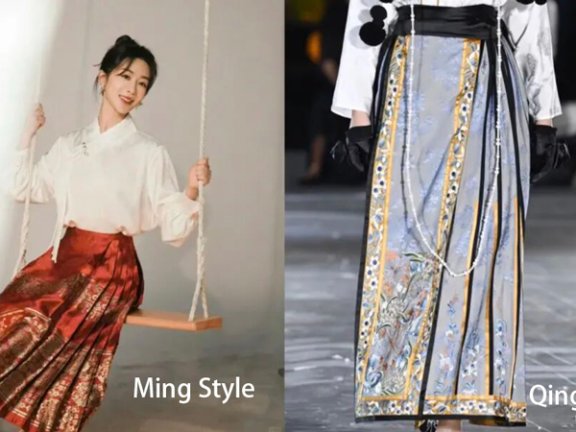
At first glance, the flowing skirts known as Mamianqun (马面裙) from China’s Ming and Qing dynasties appear nearly identical. Both feature the iconic flat front and back panels—the “horse-face” or Mamian—flanked by pleated sides. This similarity often leads modern viewers to see them as one and the same. Yet, to the trained eye, they speak different visual languages, each whispering secrets about the era that created it. You don't need a history book to tell them apart. Instead, focus on four key details: the behavior of the pleats, the character of the Mamian panel, the philosophy of its patterns, and the finish of its waistband. These elements transform the skirt from a mere garment into a legible text, revealing a profound shift in aesthetics and worldview between two defining dynasties. Reading the Pleats The most immediate clue lies in the pleats. A Ming dynasty skirt typically employs what experts call "live pleats." These pleats are secured only at the waist and the hem, leaving the middle section free. As the wearer moved, the pleats would swing open and close dynamically, creating a sense of lightness and fluidity. The pleats themselves were fewer in number and spaced wider apart, contributing to…- 0
- 0
- 30
-
How Chinese Period Dramas Bring Traditional Clothing to Life
Audiences often question the authenticity of clothing in period dramas. What appears on screen blends artistic vision with historical reference, creating a visual language that speaks to modern viewers while hinting at the past. Accurate garment reconstruction offers more than beauty; it provides a tangible link to bygone eras, functioning as an informal guide for those curious about traditional dress. Yet, perfect fidelity remains elusive, as every production makes compromises between fact and spectacle. Several recent series have attempted serious sartorial homage. For instance, The Wind Blows From Longxi (风起陇西), set in the Three Kingdoms period, features layered robes and specific sleeve cuts that reference Han Dynasty styles. Similarly, The Longest Day in Chang'an (长安十二时辰) meticulously presents Tang era Hanfu, with its distinctive silhouettes and rich fabrics. These details matter, as they ground the narrative in a specific time and place, allowing viewers to sense the weight of history through cloth and stitch. Other productions, like Generation to Generation (江湖夜雨十年灯) and Flourished Peony (国色芳华), draw inspiration from Wei-Jin and early Tang aesthetics. They capture a certain mood—the flowing drapery, the subdued palette—but often blend elements for dramatic effect. This approach can illuminate broader stylistic trends while sacrificing precise replication. Even well-regarded…- 0
- 0
- 99
-
Why Was Hanfu Banned at a Sacred Temple in 2026?
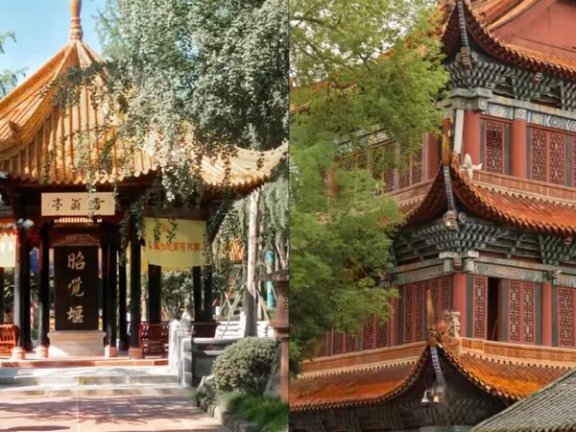
In early 2026, a social media post sparked widespread discussion. A visitor wearing a meticulously recreated ensemble from the Tang Dynasty's Wu Zhou (武周) period was denied entry to Zhaojue Temple (昭觉寺) in Chengdu (成都). The reason given by staff was "wearing exotic costume." The visitor's attire, based on artifacts unearthed from the Hejiacun (何家村) collection, was historically accurate, complete with period accessories. This single incident reignited the persistent debate: does traditional Hanfu have a place in modern public spaces? While the temple later apologized, clarifying that Hanfu is welcome, the event exposed a lingering disconnect. How, in 2026, can a garment representing millennia of Han Chinese heritage still be mistaken for a mere costume? Misplaced Blame The refusal at Zhaojue Temple is not an isolated case. Similar incidents often surface online, creating a narrative that cultural sites are hostile to traditional dress. A closer look reveals a common thread. In many instances, the core issue is not the clothing itself but unauthorized commercial photography. A restaurant near West Lake once turned away a group because their Hanfu and professional camera equated to a "commercial shoot" in the management's eyes. Shanghai Disneyland once stopped an adult guest wearing a Disney-themed…- 0
- 0
- 43
-
Who Really Wore the Feiyu Uniform?
The image is iconic: a stern, formidable figure stalking palace corridors or shadowy alleyways, clad in brilliant crimson robes embroidered with mythical creatures, a sleek, curved blade at his side. This is the Jinyiwei (锦衣卫), or Embroidered Uniform Guard, as popular culture has cemented him in our minds. From television dramas to video games, this visual shorthand for Ming Dynasty secret police and imperial power is unmistakable. But what if this widespread portrayal is more fantasy than fact? The glamorous Feiyu uniform was not standard issue. For the vast majority of the men who served in this complex institution, such opulence was a distant dream, a privileged symbol reserved for a select few at the very top. The Privilege of the Robe Contrary to the on-screen legions of red-clad agents, the Feiyufu (飞鱼服) was not a uniform in the common sense. It was a "Cifu" (赐服), a bestowed garment, one of the highest honors the Ming emperor could grant. Ranking just below the imperial dragon robe, it was awarded individually for merit or faithful service. The right to wear it was a legal privilege, and unauthorized use was strictly forbidden. Its name comes from the "Feiyu" pattern: a legendary creature… -

Ancient Robes: To Wash or Not to Wash?
Did ancient nobles truly never wash their ornate ceremonial robes? The glittering gowns and intricate court attire seen in historical dramas often spark this question. While it seems unthinkable to modern sensibilities, the care of these garments followed a logic dictated by material constraints and social symbolism. The reality is more nuanced than a simple yes or no. The Delicate Art of Preservation For the most splendid attire—the emperor's dragon robe, a noble's court dress, or a lady's ceremonial Xiapei (霞帔)—complete immersion in water was typically avoided. This was not negligence but necessity. The fabrics and adornments were extraordinarily fragile. Silks, luxurious Yun Jin (云锦), and cloth-of-gold could be ruined by water. Protein-based silk fibers shrink, wrinkle, and lose their luster when washed. The true peril, however, lay in the decoration. Embroidery often used Jinxian (金线, gold thread) made from silk wrapped in thin gold foil. Water could cause this foil to detach or oxidize, turning black. Pearls and gemstones might be waterproof, but the threads securing them were not; moisture loosened them, risking loss. A single robe could consume hundreds of meters of such thread. Washing it would transform a masterpiece into a crumpled, tarnished shadow of itself, an…- 1
- 2
- 36
-
Decoding Ming Dynasty Robes in Etiquette China
When a television program can make historical clothing feel as immediate as today's fashion headlines, something special is happening. A recent broadcast by China Central Television (CCTV) has captivated audiences not with futuristic designs, but with a deep, respectful look into the past. The focus was the intricate beauty and profound symbolism of Hanfu, the traditional attire of the Han Chinese. By examining specific garments, particularly from the Ming Dynasty, the program connected threads of fabric to threads of cultural memory, prompting viewers to see ancient robes as more than museum relics. They are presented as active testaments to a worldview, where aesthetics and social order were seamlessly woven together. More Than Fabric: The Language of Ceremonial Dress The CCTV program, titled Etiquette China (礼仪中国), serves as a guide to this philosophy. It operates on a powerful premise: to understand a civilization's ideals, study the clothes it wore for its most important moments. The series approaches Hanfu not merely as costume, but as a visual language of Li (礼), a concept encompassing ritual, propriety, and the very framework of traditional social harmony. The most formal garments, known as ceremonial dress, carried the heaviest symbolic weight. These robes were canvases for… -
Xu Lu’s Embroidered Gown Blends Heritage and Modernity
A recent public appearance by actress Xu Lu (徐璐) has captured widespread attention. Her ensemble, a white satin bustier top paired with an off-white gradient tulle skirt, presented a vision of graceful sophistication. The outfit transcended mere fashion, evoking the poise and beauty of a classical painting. This look is a prime example of the New Chinese Style, a trend skillfully blending traditional Chinese aesthetics with contemporary design. Her styling choices sparked lively discussions, illustrating how modern celebrity fashion can breathe new life into cultural elements. The Look Xu Lu's attire was a masterclass in subtle detail and luxurious texture. The bustier top featured a three-dimensional pearl-like pattern and delicate gold-thread embroidery. This intricate work resembled a miniature landscape, capturing a sense of poetic refinement often associated with Jiangnan (江南), China's serene southern region. The design cleverly integrated Western-inspired silhouette with distinctly Chinese craftsmanship. The accompanying skirt added to the ensemble's ethereal quality. Its layered, gradient tulle created a soft, flowing movement, making every turn visually striking. The color palette of satin white, milky beige, and pale gold exuded a quiet, innate luxury. This restrained scheme elevated her overall presence, proving that impact doesn't require loud colors. Her styling completed…- 0
- 0
- 27
-
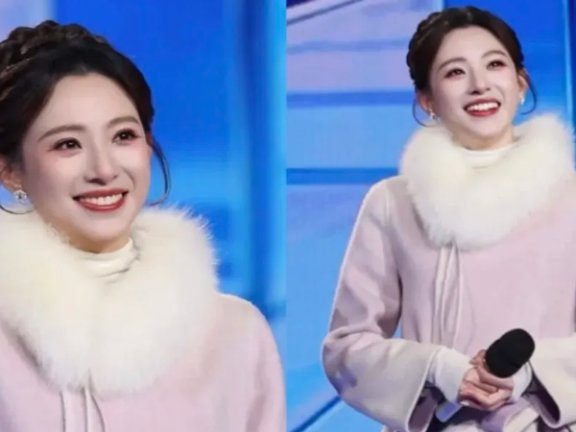
China’s Coziest Gala? The Surprising Star Accessory
This year's China Central Television New Year's Eve Gala earned a new nickname: the coziest edition yet. In a refreshing departure from the usual sleeveless gowns and sharp suits, hosts and performers appeared bundled in warm, comfortable clothing. Online audiences cheered the practicality, but they quickly noticed something else. One accessory appeared more than any other—a simple scarf. This wasn't just a tool against the winter chill; it became a subtle thread connecting the modern celebration to centuries of Chinese sartorial elegance. Ancient Neckwear While the modern scarf feels universal, its precursors have deep roots in Chinese history. As early as the Song Dynasty, a garment called Xiangpa (项帕, neck kerchief) was worn by women during festivals like the Lantern Festival. Described by scholar Zhou Mi (周密), it was a decorative band of silk or brocade wrapped around the neck, serving both aesthetic and modest warming purposes. A similar item, the Lingjin (领巾, neck scarf), was used more broadly by men and women alike. These were not the long, trailing scarves of later European fashion but practical, often square or triangular pieces of fabric, tied or fastened at the front. Art provides clues to their form. In paintings like Tang…- 0
- 0
- 40
-

Are Period Dramas' Costumes Wrong?
In the recent historical drama Glory (玉茗茶骨), a particular costume detail has ignited a fiery debate among viewers: the Yun Jian (云肩), or cloud collar. Adorning the shoulders of characters, these ornate pieces have left audiences divided. Are they an authentic representation of Ming dynasty elegance, or a glaring historical inaccuracy? This sartorial storm surrounding a single accessory opens a fascinating window into a much larger issue: the widespread blurring of historical lines in modern costume design, often substituting the flamboyant styles of the late Qing era for the reserved sophistication of the Ming. What is a Yun Jian? Many assume the cloud collar is a standard component of Hanfu. This is not entirely accurate. While the concept of shoulder-decoration existed earlier, for most of the Ming dynasty, the Yun Jian was primarily a woven or embroidered pattern integrated directly into the fabric of formal robes, not a separate accessory. It functioned as a symbolic motif on ceremonial garments. Only in late Ming paintings, often depicting immortals or elegant ladies, do we begin to see the emergence of the Yun Jian as a distinct piece of attire. The true, independent cloud collar gained traction only in the late Ming period.…- 0
- 0
- 26
-
The Power and Ritual of Ancient Jade Group Pendants
Has actress Chen Duling (陈都灵) made a mistake with her jade pendant? In the costume drama The Excellence (翘楚), her character wears an extremely long strand of jade ornaments. Is it meant to be a necklace or a waist decoration? This question from viewers points to a fascinating detail in historical attire: the Jade Group Pendant. Far more than mere decoration, these elaborate assemblages of carved jade pieces served as a walking symbol of power, status, and ritual propriety in ancient Chinese courts. Their placement—around the neck or at the waist—was not arbitrary but evolved through dynasties, reflecting changes in fashion, function, and social hierarchy. The controversy around a modern interpretation opens a window into the complex language of jade in antiquity. Necklace to Waistpiece The earliest forms of the Jade Group Pendant, dating to the Shang and early Zhou dynasties, were indeed worn around the neck. These were significant, multi-component ornaments. However, from the Eastern Zhou period onward, the primary location shifted to the waist. As other forms of lighter, more delicate necklaces developed, the larger, more complex assemblages became predominantly waist pendants. This historical shift means that many modern attempts at historical costume restoration, which place substantial group…- 0
- 0
- 38
Hanfu Archives









Scan to open current page
-
$CouponsLimitation of use:Expired and UnavailableLimitation of use:
before
Limitation of use:Permanently validCoupon ID:×Available for the following products: Available for the following products categories: Unrestricted use:Available for all products and product types