
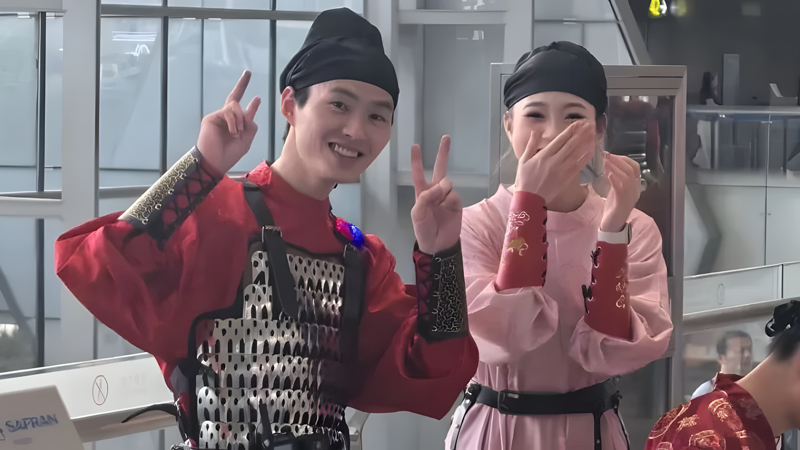
Stepping into Guangzhou Baiyun International Airport (广州白云机场) recently, travelers encountered an unexpected sight. Instead of standard-issue uniforms, airport staff were adorned in elegant, flowing robes. Security personnel resembled Tang Dynasty guards, while patrolling staff mirrored Song Dynasty scholars, performing a courteous Chashou Li (叉手礼), a traditional greeting with hands folded before the chest. This wasn't a costume party or a film set; it was a deliberate, immersive cultural initiative.
The seamless blend of ancient aesthetics with the ultramodern transit hub created a unique experience, prompting many to double-check they hadn't landed in a historical drama. This bold move sparked immediate online fascination and posed a quiet question: can traditional attire find a genuine place in our contemporary world?
A Living Showcase
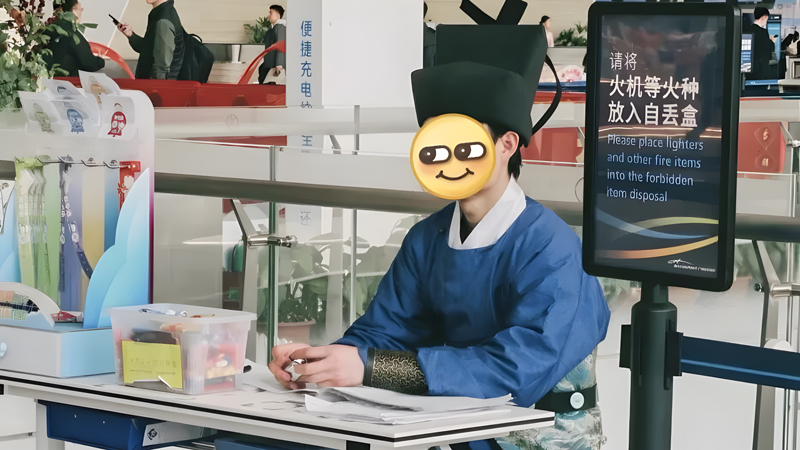
The true impact lay in the meticulous accuracy of the clothing. These were not generic, theatrical "ancient-style" costumes. The security staff wore vermilion Jiaoling Yuanlingpao (交领圆领袍), cross-collared robes, paired with Futou (幞头) headwear and leather belts, directly referencing the attire of the Jinwu (金吾) guards of the Tang era. Their posture was upright and dignified. Similarly, the patrol staff’s simpler Yuanlingpao and Song-style Futou reflected the refined minimalism favored by Song Dynasty literati. Every stitch and fold served as a silent, visual lesson in historical fashion.
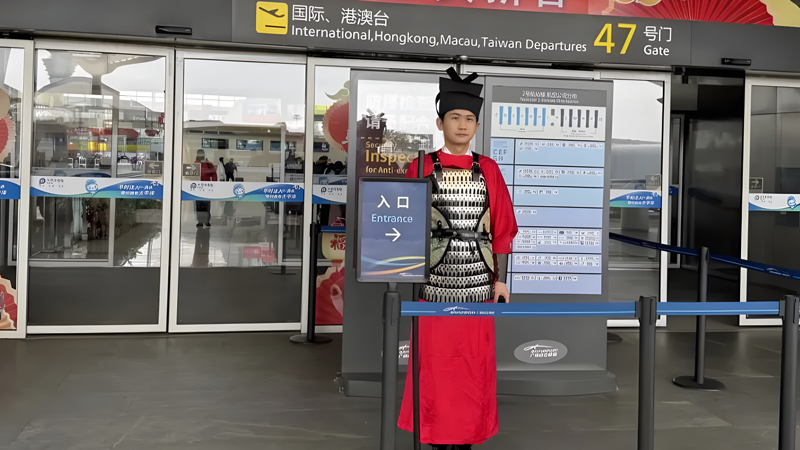
This attention to detail extended beyond fabric. The staff’s trained movements, especially the Chashou Li, transformed routine interactions into subtle demonstrations of ancient etiquette. A simple gesture of greeting became a portal to understanding past social codes. Passengers weren't just seeing history—they were engaging with it through every check-in, query, and security scan. The airport, a place of constant transition, momentarily became a space for cultural connection.
The power of this "immersive display" was its avoidance of overt lecturing. There were no placards or lengthy explanations. Instead, culture was communicated through presence and action. By simply performing their duties in historically grounded attire, the staff allowed tradition to occupy modern space naturally. This experiential approach fostered curiosity and appreciation far more effectively than any textbook summary could.
Beyond the Spectacle
While the visual appeal is undeniable, the deeper goal must be integration, not just exhibition. The initial surprise and delight—the "time-travel" feeling—is a powerful hook. However, the lasting success of such projects depends on moving past the stage of novelty. The ultimate aim should be a day when seeing someone in Hanfu at an airport doesn't prompt a double-take, but is recognized as a professional in a uniform that honors tradition.
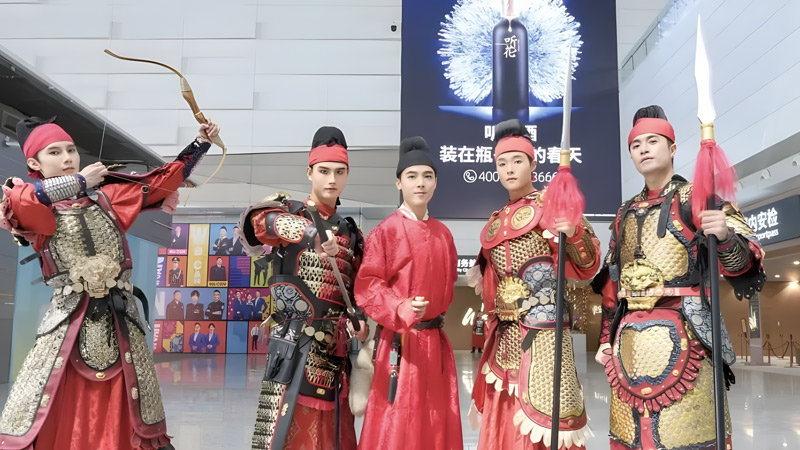
This incident invites reflection on how traditional garments evolve. True modernization isn't a rigid, one-to-one transplant of ancient designs into modern settings. It involves thoughtful adaptation that respects foundational forms while meeting contemporary needs for practicality, comfort, and professional appropriateness. The airport experiment is a pioneering step, proving Hanfu can function outside ceremonial or recreational contexts.
The initiative also highlights airports as potent, yet underutilized, channels for cultural dialogue. As global crossroads, they present a unique opportunity to showcase living culture to an international audience. The effort at Baiyun Airport stands in pointed contrast to instances elsewhere where cultural lines have blurred, serving as a confident assertion of specific heritage. It demonstrates how public service roles can gracefully shoulder the role of cultural ambassador.
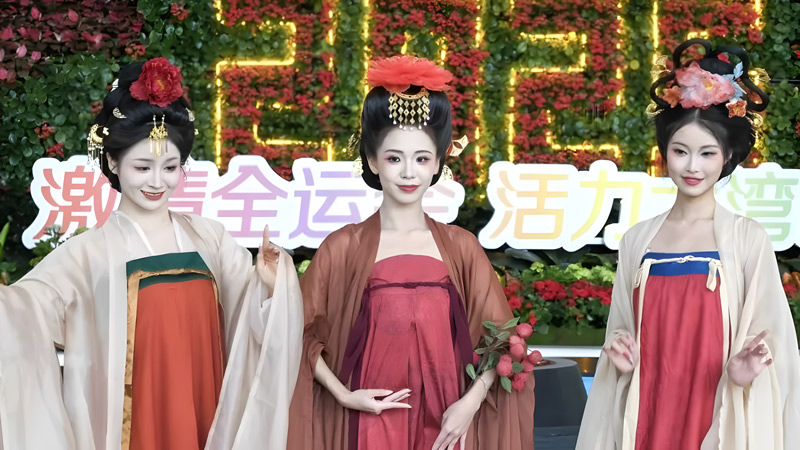
For Hanfu to thrive as more than a photogenic prop or a fleeting trend, it must navigate a path toward genuine utility. Can its design principles inform practical workwear? Can its aesthetics be adapted for daily life without losing its soul? The experiment at Baiyun is a compelling opening chapter, challenging us to imagine a future where tradition isn't worn as a costume, but woven into the very fabric of everyday life.
