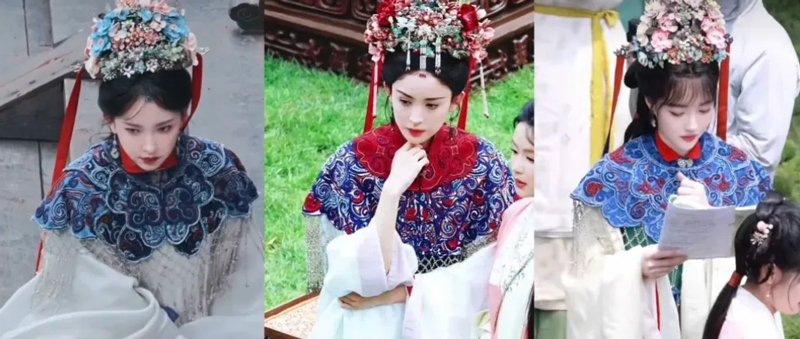
In the recent historical drama Glory (玉茗茶骨), a particular costume detail has ignited a fiery debate among viewers: the Yun Jian (云肩), or cloud collar. Adorning the shoulders of characters, these ornate pieces have left audiences divided. Are they an authentic representation of Ming dynasty elegance, or a glaring historical inaccuracy? This sartorial storm surrounding a single accessory opens a fascinating window into a much larger issue: the widespread blurring of historical lines in modern costume design, often substituting the flamboyant styles of the late Qing era for the reserved sophistication of the Ming.
What is a Yun Jian?
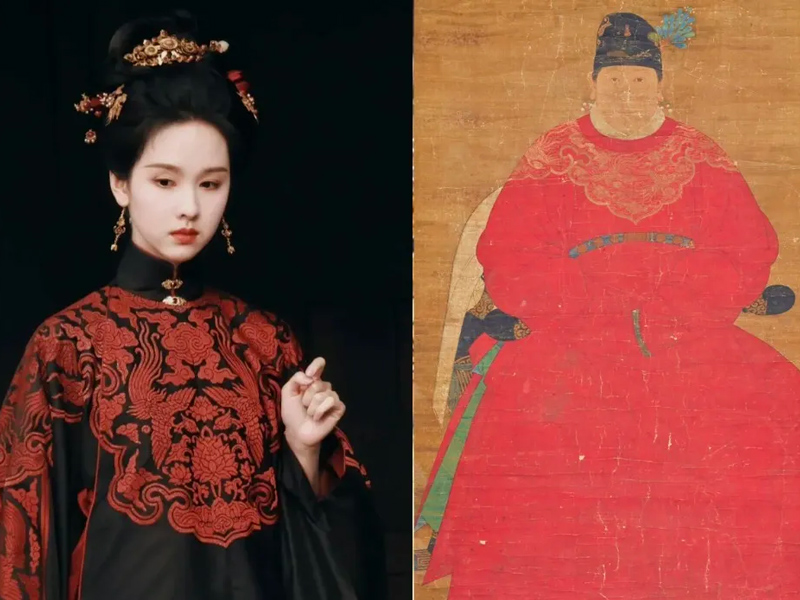
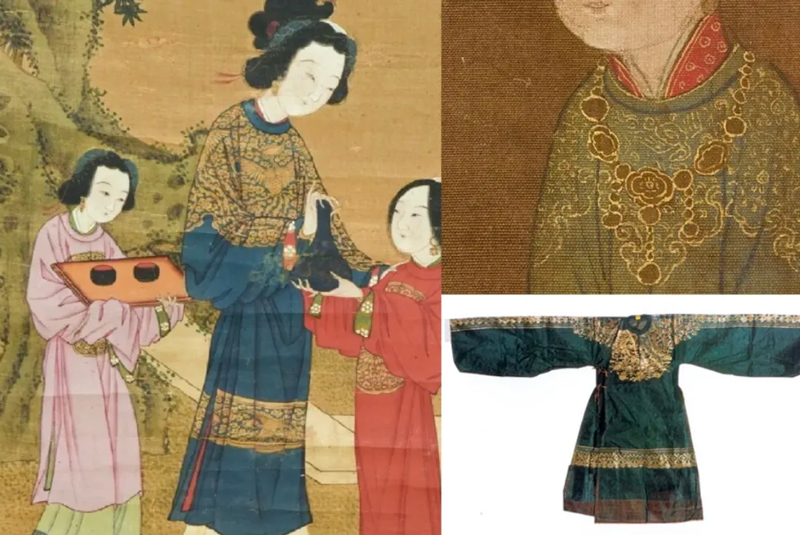
Many assume the cloud collar is a standard component of Hanfu. This is not entirely accurate. While the concept of shoulder-decoration existed earlier, for most of the Ming dynasty, the Yun Jian was primarily a woven or embroidered pattern integrated directly into the fabric of formal robes, not a separate accessory. It functioned as a symbolic motif on ceremonial garments. Only in late Ming paintings, often depicting immortals or elegant ladies, do we begin to see the emergence of the Yun Jian as a distinct piece of attire.
The true, independent cloud collar gained traction only in the late Ming period. Its design philosophy mirrored the broader Ming aesthetic of refined understatement. The most classic style was the Si He Ru Yi (四合如意) pattern, featuring four simple, elegant cloud motifs joined together. These pieces were crafted from luxurious fabrics with exquisite, yet never overwhelming, embroidery. They were designed to complement an outfit, not dominate it.
Ming Versus Qing
The transition from Ming to Qing dynasty witnessed a radical transformation in the cloud collar’s design. This was not a natural evolution but a dramatic shift in artistic philosophy. The late Ming’s Si He Ru Yi style represented a pinnacle of controlled elegance. The Qing dynasty, particularly from the Yongzheng(雍正) and Qianlong (乾隆) reigns onward, pursued a completely different ideal: maximalist splendor.
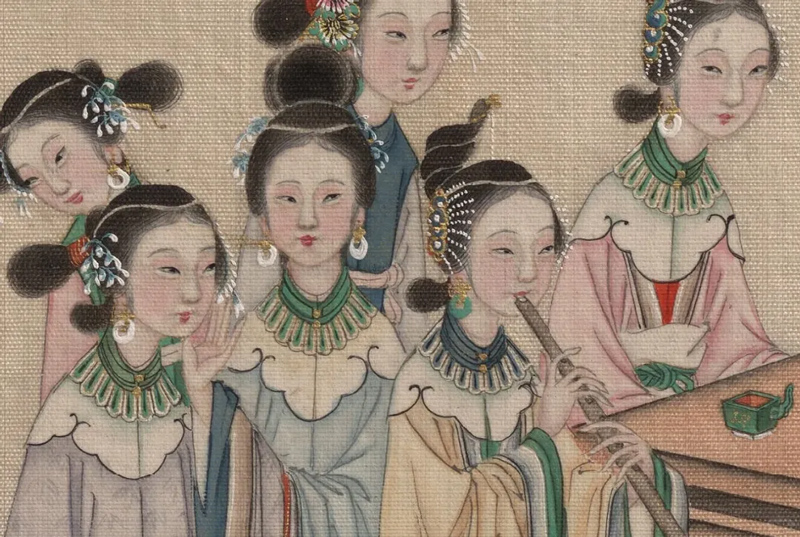
Qing-era designers exploded the simple four-cloud foundation. They introduced multiple overlapping layers, petal-shaped silhouettes resembling chrysanthemums or lotuses, and borders trimmed with dark ribbon. Embellishments grew increasingly elaborate, incorporating intricate embroidery, dangling tassels, and inlaid jewels. The cloud collar became a platform for demonstrating extreme wealth and technical craftsmanship, a far cry from its Ming predecessor’s quiet statement.
In essence, the Ming cloud collar was an exercise in subtlety; the Qing version was a celebration of ornate complexity. This distinction is not merely decorative but reflects profound differences in the two eras' cultural psychology and social values. Confusing them is to miss their unique historical voices.
The Modern Confusion
Today, this historical clarity is often lost. Period dramas set in the Ming dynasty frequently dress their characters in the multi-layered, flashy cloud collars characteristic of the late Qing. This is a fundamental anachronism. Similarly, in the booming Hanfu market, many vendors label obviously Qing-style or even modern, lace-adorned "fantasy" cloud collars as "Ming-style," making authentic late Ming reproductions rare.
The problem is not the creation or sale of Qing-style or innovative designs. The issue is the mislabeling and historical conflation. When a drama like Glory uses a highly decorative Qing accessory for a Ming character, it actively teaches audiences a false visual history. It suggests stylistic continuity where there was a clear rupture.
Some argue that aesthetic appeal trumps historical precision. But true respect for cultural tradition begins with understanding its authentic forms. The cloud collar, though a small detail, is a capsule of history. Getting it right matters. It allows modern audiences to appreciate the distinct beauty of each dynasty and fosters a deeper, more accurate connection to the past. For creators, this means committed research. For enthusiasts, it means informed appreciation. Only then can these beautiful traditions be both preserved and presented with integrity.