Across centuries, clothing has served as a mirror to Chinese society, reflecting shifts in aesthetics, technology, and social order. While modern fashion draws from countless influences, the styles of the Ming Dynasty (1368-1644 AD) offer a particularly vivid window into a world where fabric, color, and pattern were powerful languages. This was not a static tradition but a dynamic one, evolving from restrained elegance to magnificent complexity. Today, as interest in historical dress revives, we look back to this era not for mere replication, but to understand the sophistication and symbolic richness that defined a woman's appearance, from the imperial court to the bustling marketplace.
Silhouettes in Flux
The foundational ensemble for Ming women was the Ao (袄), a jacket or upper garment, worn over a skirt. Early in the dynasty, the Ao featured narrow sleeves and clean lines, continuing a Song Dynasty preference for simplicity. By the mid to late Ming period, as prosperity grew, sleeves widened dramatically. The innovative Pipa Xiu (琵琶袖), or "lute sleeve," became iconic: wide through the arm but sharply cinched at the wrist, creating an elegant, flowing shape reminiscent of the Chinese lute instrument.
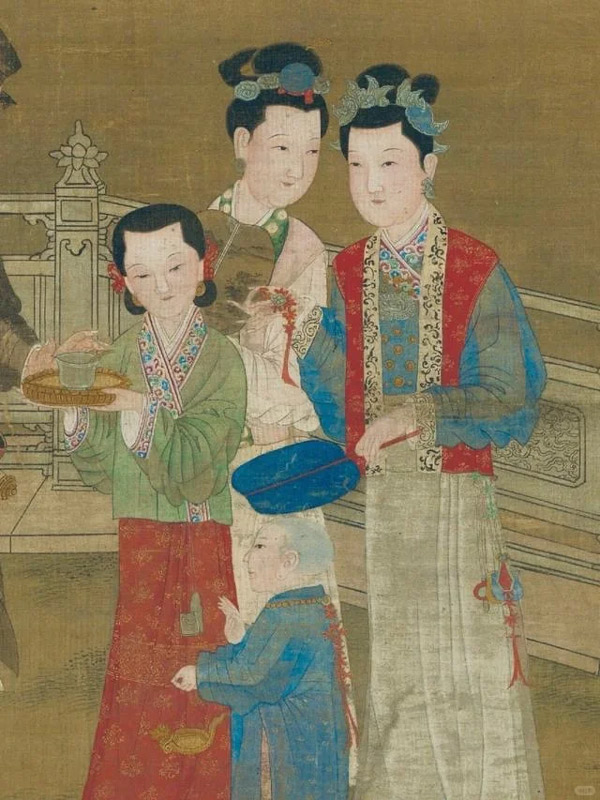
Beneath the jacket, the Mamian Skirt (马面裙) reigned supreme. This skirt was constructed with four overlapping panels, creating two "horse-face" front sections that were often lavishly embroidered. The sides were pleated, allowing for fluid movement and a dignified silhouette where the decorated central panels would reveal themselves with each step. This combination of structured form and dynamic beauty defined the classic Ming look.
Outer layers added versatility and statement. The Bijia (比甲), a sleeveless, open-fronted vest, was worn over the Ao for warmth without bulk. For formal occasions or travel, a Pifeng (披风), a long cloak or overcoat, completed the outfit, signaling status and refinement. Together, these elements created a layered aesthetic that balanced prescribed form with personal expression.
A Language of Patterns
If the silhouette provided the structure, the embroidered and woven patterns supplied the narrative. Every motif carried specific meaning, turning garments into canvases of cultural values. Floral designs were predominant. Chanzhi Lian (缠枝莲), or interlocking lotus branches, symbolized purity and continuity. The sacred, composite Baoxiang Hua (宝相花) blended features of lotus, peony, and chrysanthemum. The peony itself, the "king of flowers," was ubiquitous for its associations with wealth and honor.
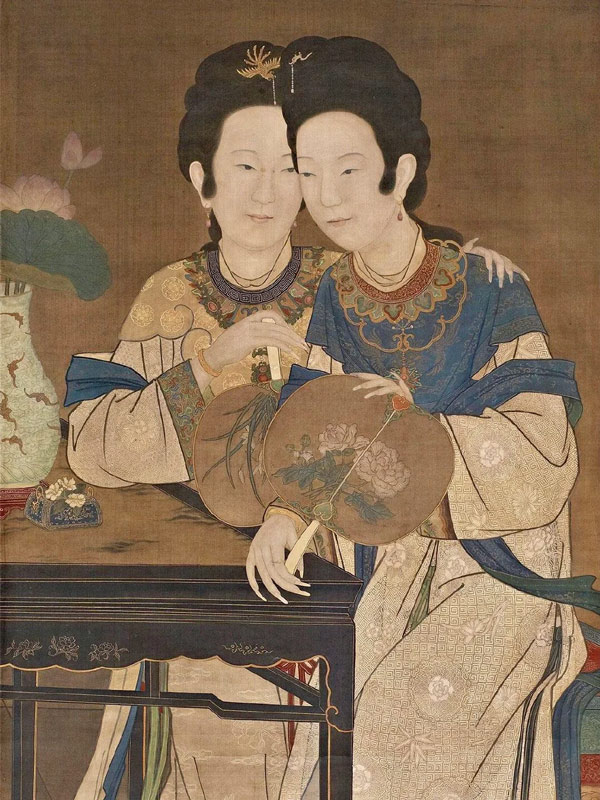
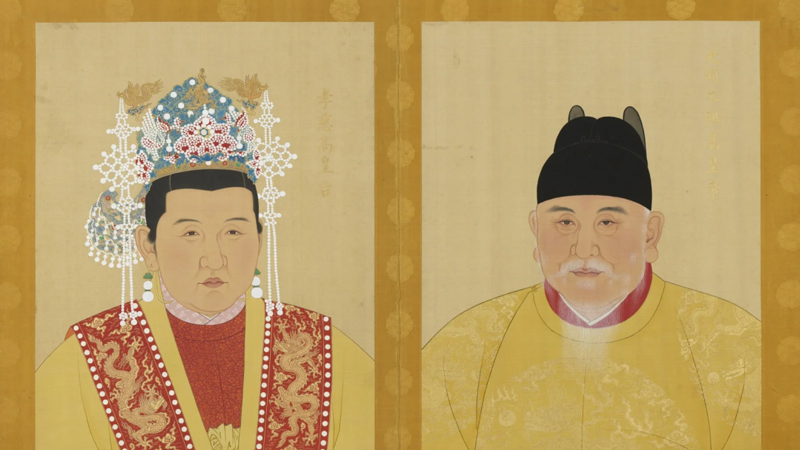
Animal motifs communicated status and aspiration. Dragons and phoenixes were reserved for the imperial family. The Dique (翟雀), a pheasant-like bird, adorned the formal robes of empresses and consorts. More accessible symbols like butterflies fluttering among flowers or magpies on plum branches conveyed hopes for joyful love and good fortune.
Geometric patterns, such as the Sihe Ruyi Yunwen (四合如意云纹), a repeating cloud and wish-granting scepter design, provided a sense of orderly grandeur. These patterns were rarely sparse; they were often applied in a "full-field" style, covering the fabric densely with intricate, colorful artistry that left little background visible, a testament to both the wearer's standing and the artisan's skill.
The Art of Color
The Ming palette was astonishingly nuanced. The color red alone had dozens of variations, from the vibrant Dahong (大红) to the softer Shuihong (水红) and Yinhong(银红). While bright yellow was an imperial prerogative, shades like ginger yellow and goose yellow flourished in popular fashion. Blues, greens, and purples each possessed a full spectrum of depth and tone, achieved through advanced, multi-step dyeing processes.
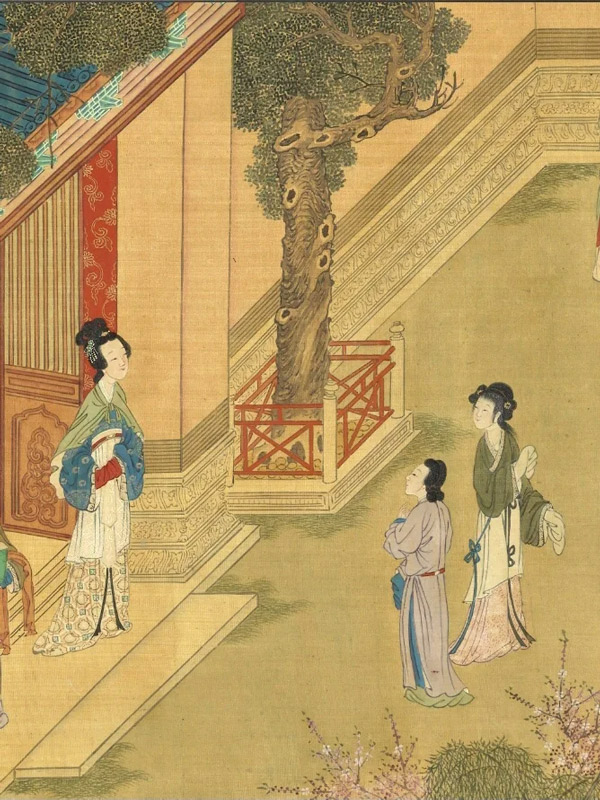
This chromatic richness was a direct result of sophisticated technique. Red came from safflower or sappanwood; blue from indigo; yellow from pagoda tree buds or smoke tree wood. The most precious purple was produced by complex over-dyeing with these materials. Creating a stable, vivid hue often required repeated steeping and the use of mordants, making fine-colored fabric a valuable commodity.
Ming women demonstrated masterful color coordination. A common approach was to use a deep, subdued ground color as a canvas for brilliant patterns. They also expertly employed contrast, like pairing red with green, but carefully modulating the brightness and saturation to achieve harmony rather than clash. The concept of "Siji Yi (四季衣)" or "seasonal dressing" was practiced, aligning one's wardrobe with the natural world: fresh greens in spring, light hues in summer, golden tones in autumn, and warm, deep colors in winter.
The Fabric of Society
Material choice sharply delineated social standing. Silk was the premier fiber, with heavy, luminous satins being highly prized for their dignified drape. Gauzy Sha (纱) and Luo (罗) weaves were essential for summer heat. The most luxurious fabrics were Zhuajin Duan (妆花缎) and brocades, woven with gold and colored threads to form raised patterns. In the later Ming period, cotton became widespread for commoners, but even these garments were often embellished with printed designs or embroidery.
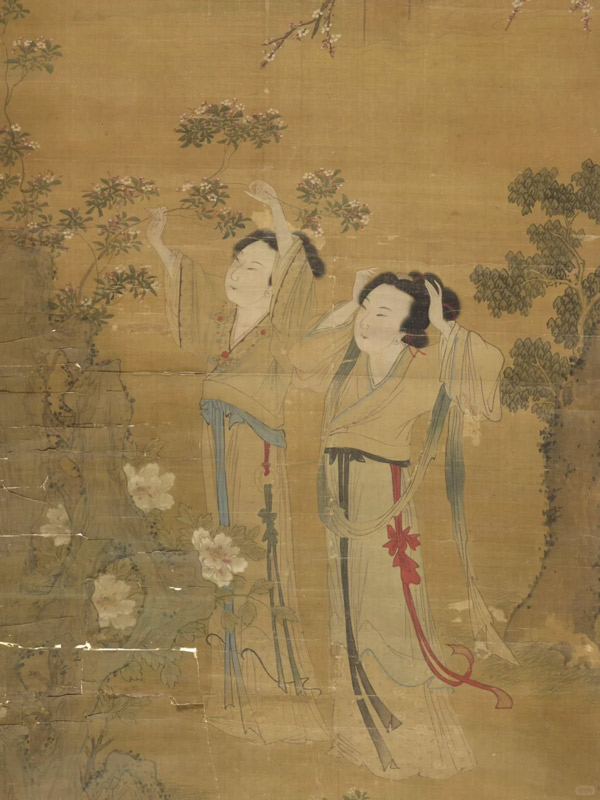
Embroidery was the crowning touch, transforming fine cloth into art. Regional styles like Gu Xiu (顾绣) and Su Xiu (苏绣) began to gain their distinctive reputations. Artisans employed a vast array of stitches—flat stitch, seed stitch, couched gold thread—to render breathtaking scenes from nature and literature. A single garment could represent hundreds or thousands of hours of meticulous labor.
The production of clothing was thus a major economic and artistic enterprise, supporting dyers, weavers, embroiderers, and tailors. The texture of a fabric, its weight, its sheen, and the complexity of its decoration were immediate indicators of a woman's place in the highly stratified Ming social world, making dress an undeniable social text.
Beyond the Sumptuary Laws
Ming fashion existed within a framework of strict sumptuary regulations designed to maintain social hierarchy. Early laws forbade commoner women from wearing certain colors like true red or bright yellow and banned merchants' families from using gold and silver adornments. The formal Diyi (翟衣) with its rows of pheasant motifs and the nine-dragon, four-phoenix crown were exclusive to the empress for state ceremonies.
However, as the dynasty progressed and merchant wealth grew, these laws were increasingly flouted and relaxed. Affluent merchant wives often became unofficial fashion trendsetters, using exquisite fabrics and novel details to display their economic power, subtly challenging the official social order through their sartorial choices.
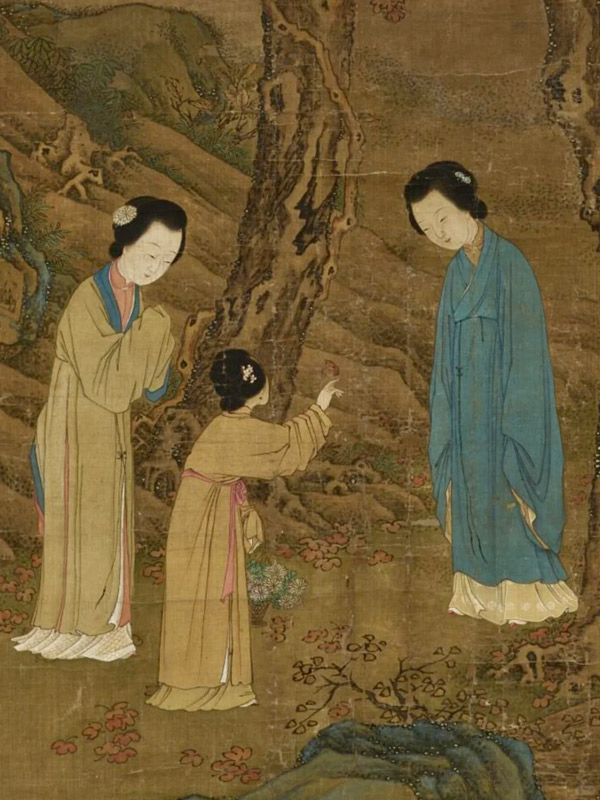
Even within constraints, women found avenues for personal style. Creativity flourished in the details: the width of a border, the choice of edging, a unique combination of patterns on a sleeve, or a special clasp. Their wardrobe was a space where regulated form met individual ingenuity. Today, the legacy of Ming women's attire lives on, inspiring designers in film, theater, and the modern Hanfu movement. Its enduring appeal lies not in rigid antiquity, but in its testament to a timeless human impulse: to weave identity, aspiration, and artistry into the very clothes we wear.