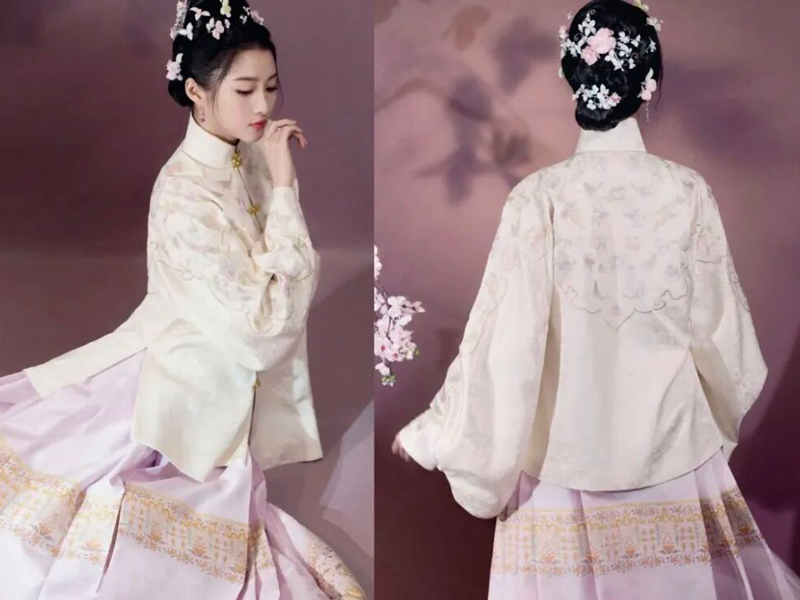
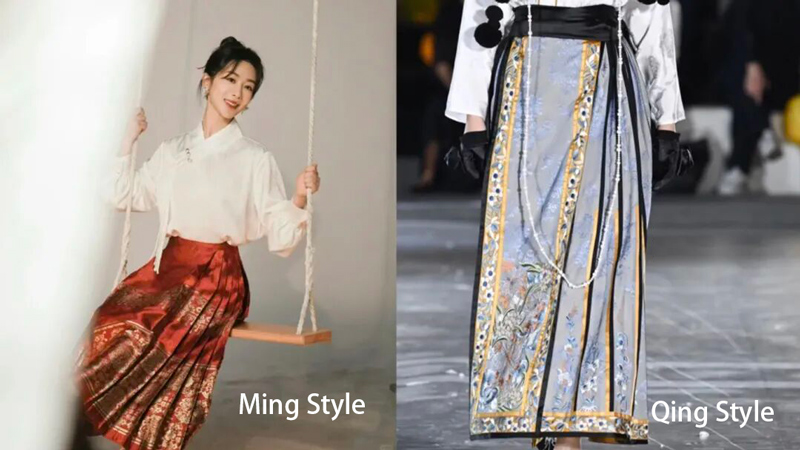
At first glance, the flowing skirts known as Mamianqun (马面裙) from China’s Ming and Qing dynasties appear nearly identical. Both feature the iconic flat front and back panels—the “horse-face” or Mamian—flanked by pleated sides. This similarity often leads modern viewers to see them as one and the same. Yet, to the trained eye, they speak different visual languages, each whispering secrets about the era that created it. You don't need a history book to tell them apart. Instead, focus on four key details: the behavior of the pleats, the character of the Mamian panel, the philosophy of its patterns, and the finish of its waistband. These elements transform the skirt from a mere garment into a legible text, revealing a profound shift in aesthetics and worldview between two defining dynasties.
Reading the Pleats
The most immediate clue lies in the pleats. A Ming dynasty skirt typically employs what experts call "live pleats." These pleats are secured only at the waist and the hem, leaving the middle section free. As the wearer moved, the pleats would swing open and close dynamically, creating a sense of lightness and fluidity. The pleats themselves were fewer in number and spaced wider apart, contributing to an overall impression of relaxed elegance.
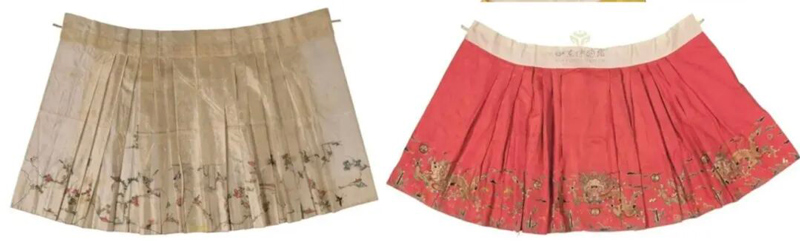
In stark contrast, the Qing dynasty favored "dead pleats," also known as "horse-tooth" or "fish-scale" pleats. These were meticulously stitched down from the waistband all the way to the hem, locking them into a rigid, permanent form. A single Qing skirt could boast hundreds of these fine, narrow pleats, presenting a facade of impeccable symmetry and order. While visually striking, this construction sacrificed the effortless movement of its Ming predecessor.
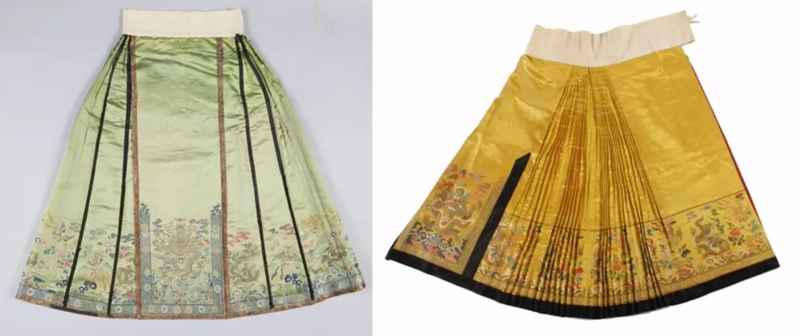
This fundamental difference in structure is more than a tailoring technique; it reflects a changing ideal. The Ming live pleat embodies a preference for natural motion and understated grace. The Qing dead pleat prioritizes precise control and formal presentation, mirroring the dynasty's increasingly rigid social structures and love for ornate display.
A Tale of Decoration
The flat Mamian panel and the horizontal decorative bands, or Qunlan (裙襴), tell the next part of the story. On a Ming skirt, the Mamian is integrated into the skirt’s overall composition. Decoration is often restrained, focused on the waist and bottom bands. Patterns like scrolling lotus or stylized clouds were common, executed in subtle, elegant colors—soft blues, whites, and light reds. The Ming aesthetic valued spaciousness and clear hierarchy in design, leaving intentional blank space to highlight the beauty of the core motifs.
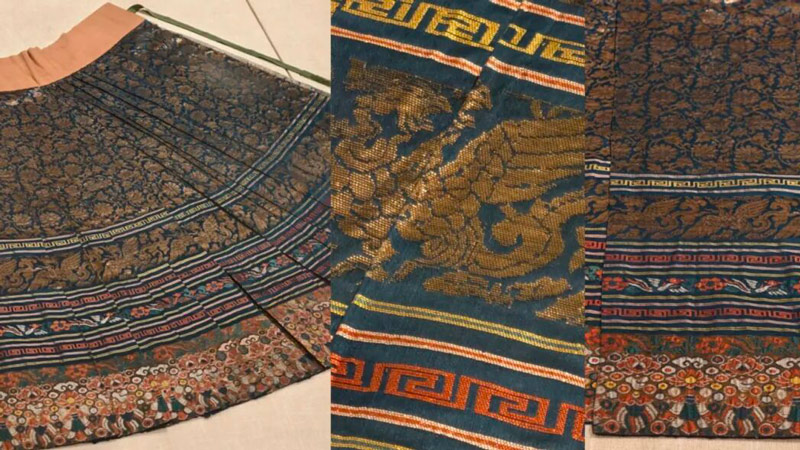
The Qing approach was one of lavish totality. The Mamian panel became a distinct, densely decorated canvas, often acting as a stark divider between the pleated sides. Embroidery covered the surface from top to bottom with intricate scenes: dragons, phoenixes, symbols of good fortune, or even narrative tableaux. Layers of multi-colored trims edged the panels. The color palette shifted to vibrant, contrasting hues like bright red, emerald green, and brilliant yellow, aiming for an effect of opulent prosperity.
This decorative philosophy extended to the skirt's finish. Ming waistbands were simple, often fastened with plain ties, and the hem was usually left unadorned for practicality. Qing skirts featured ornate waistbands with embroidered ties and tassels, and hems were frequently edged with elaborate piping. Every element was an opportunity for embellishment, leaving little to the imagination and nothing to spare.
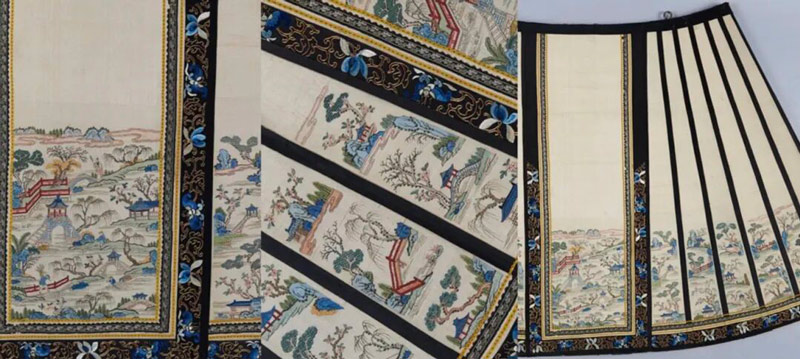
By learning this silent language—the dance of the pleats, the speech of the patterns—we gain more than the ability to date a skirt. We gain a direct line into the artistic soul of an era. The next time you encounter a Mamianqun, pause and look closely. Its details will tell you whether it carries the serene, poetic heart of the Ming or the magnificent, ambitious spirit of the Qing. Which story resonates more with you?