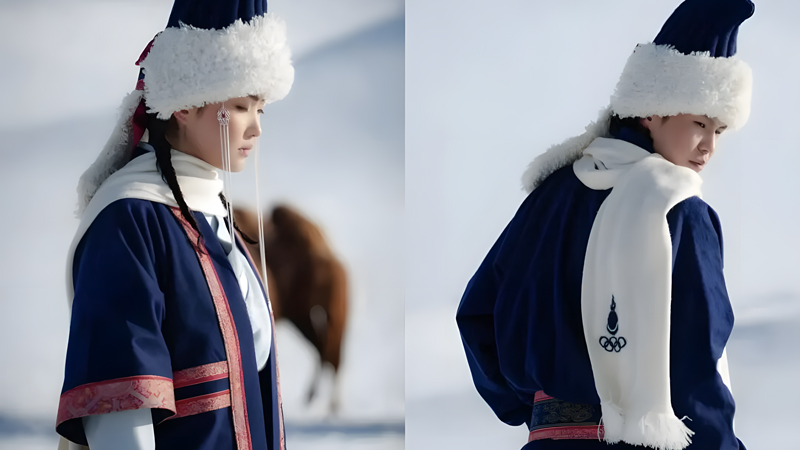
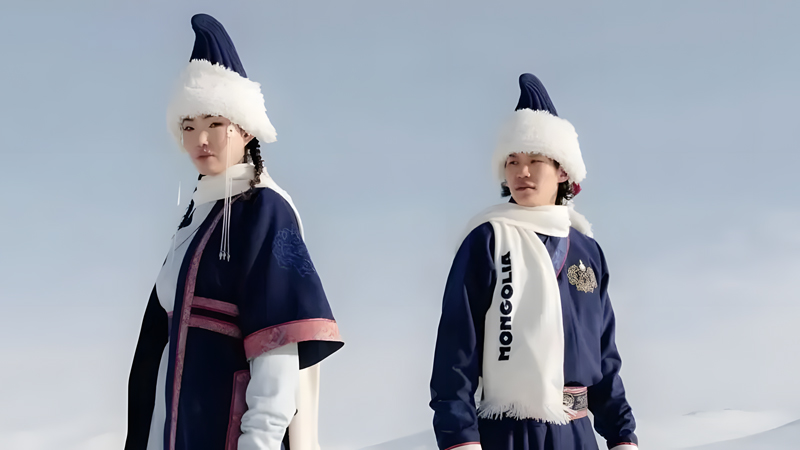
As the 2026 Winter Olympics approach, a nation’s teamwear has unexpectedly captured global attention. Mongolia’s opening ceremony uniforms, unveiled recently, have sparked widespread admiration and a pointed question: why can their Olympic attire feel so authentic and compelling? The design brilliantly incorporates historical elements from the Yuan dynasty, presenting a sophisticated blend of heritage and contemporary sportswear aesthetics. This move has not only won praise but has also ignited a conversation about cultural identity on the world’s biggest athletic stage.
The ensemble moves decisively away from the more common straight-front closure, known as “Changzi Jin,” seen in many modern interpretations. Instead, it revives the crossed-collar, right-over-left closure system, a hallmark of historical Hanfu and Yuan-era Mongolian robes. This is not mere nostalgia. The design choice is deeply functional. The overlapping front panels form a barrier against biting winter winds, a practical adaptation for the steppe’s climate and for the outdoor ceremonies of a Winter Games. The sleeves are tailored to be narrower than traditional Hanfu, facilitating movement and nodding to a history of horsemanship. The fabric itself is a modern technical blend incorporating wool, a textile long central to nomadic life.
Design with Purpose
The design team’s stated goal was finding equilibrium between cultural symbolism and athletic functionality. Every element serves a purpose. The crossed collar, while historical, is paired with an integrated scarf to seal the neckline against the cold, merging tradition with a modern, sleek silhouette. This thoughtful integration shows how historical garments can inform high-performance apparel.
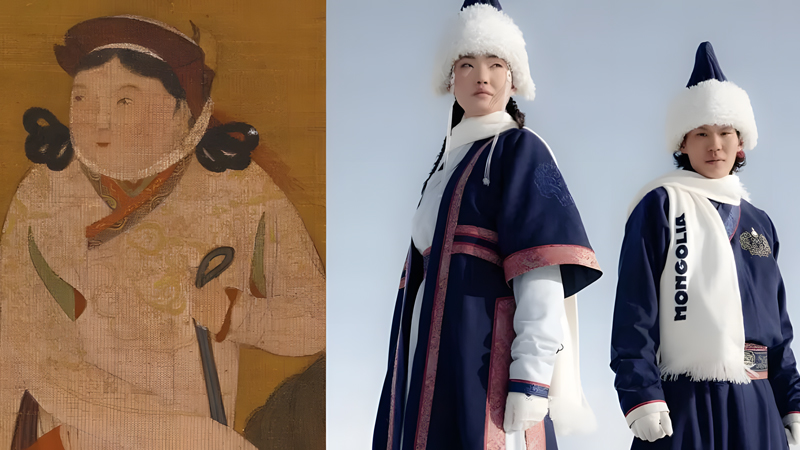
Color plays a vital role. The uniform employs a bold red and blue contrast, hues historically significant and highly visible on the open grassland. This palette is both culturally resonant and designed for visual impact in a stadium filled with competing national colors. The shift from the straight-front design used in previous Games to this historically deeper crossed-collar style represents a conscious effort to reach further into the past, creating a stronger narrative link to pre-modern Yuan dynasty (元朝) attire.
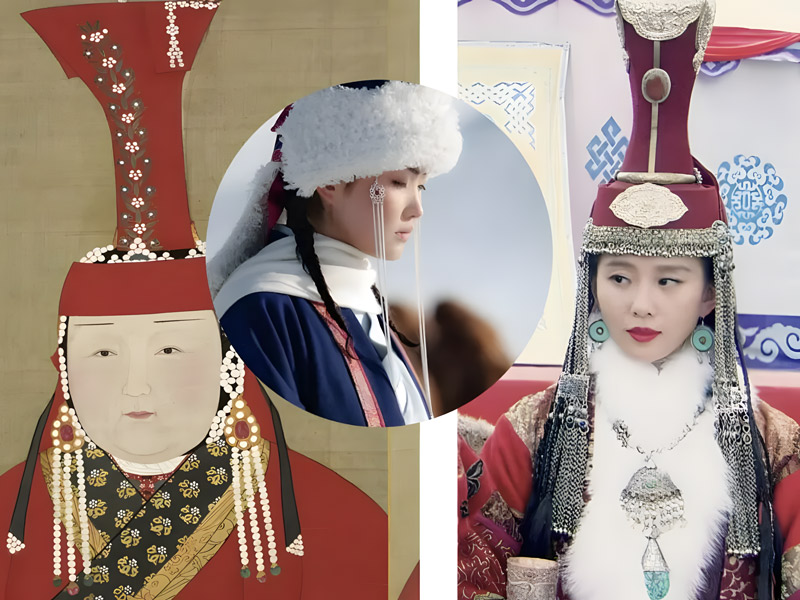
Headwear continues the theme of functional heritage. Both male and female designs feature a peaked brimmed hat. Its origins can be traced to Hufu (胡服) headgear prevalent during the Tang dynasty, a precursor to later northern Asian hats. Its shape reduces wind resistance—a practical boon for mounted cultures—and allows for ventilation. For the female design, a subtle nod is made to the Gugu crown (罟罟冠), a formal headdress for noblewomen in the later Yuan period, through the addition of delicate beaded strands near the temples.
Symbols Woven In
Beyond structure, the uniforms are rich in symbolic embroidery. Patterns merge nomadic motifs with broader Eurasian influences. Classic ram’s horn pattern, representing the importance of livestock, intertwine with Ruyi (如意) cloud patterns, a symbol of goodwill and power in Chinese art. This creates a new visual language that speaks to a shared cultural history.
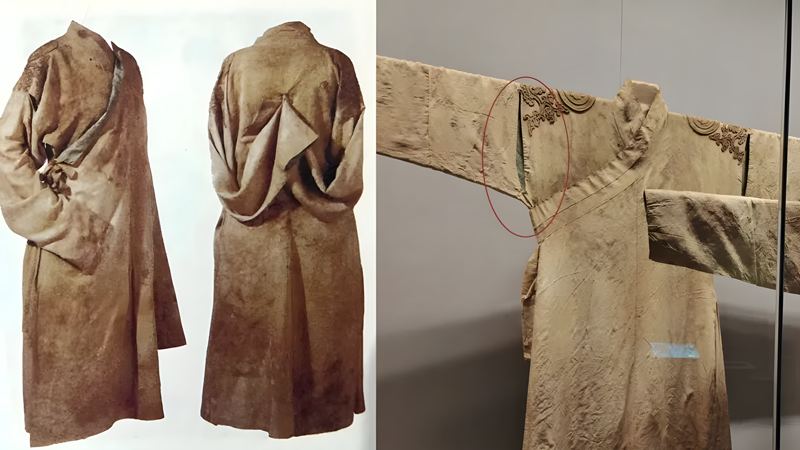
Another prominent motif is the Haiqing (海青) pattern, depicting a formidable falcon known as the Haidongqing (海东青). This bird symbolized speed, power, and precision. Its inclusion on the uniform is aspirational, channeling these qualities for the athletes who will wear it. Historically, there were even “Haiqing garments” with detachable sleeves that could be fastened behind the back like wings, a ingenious example of adaptable design that inspires modern interpretations of versatility.
The overall effect is one of confident synthesis. Mongolia’s uniform does not simply dress athletes in museum replicas; it re-engineers historical principles for a modern context. It demonstrates how traditional clothing wisdom—wind-blocking collars, heat-dissipating hats, symbolic patterns—remains profoundly relevant. This approach offers a masterclass in how to wear one’s history without being weighed down by it, presenting cultural confidence as something dynamic, wearable, and ready for the global spotlight. The lingering question from admirers, however, remains: what will other nations, inspired by this example, choose to wear?