
This year's China Central Television New Year's Eve Gala earned a new nickname: the coziest edition yet. In a refreshing departure from the usual sleeveless gowns and sharp suits, hosts and performers appeared bundled in warm, comfortable clothing. Online audiences cheered the practicality, but they quickly noticed something else. One accessory appeared more than any other—a simple scarf. This wasn't just a tool against the winter chill; it became a subtle thread connecting the modern celebration to centuries of Chinese sartorial elegance.
Ancient Neckwear
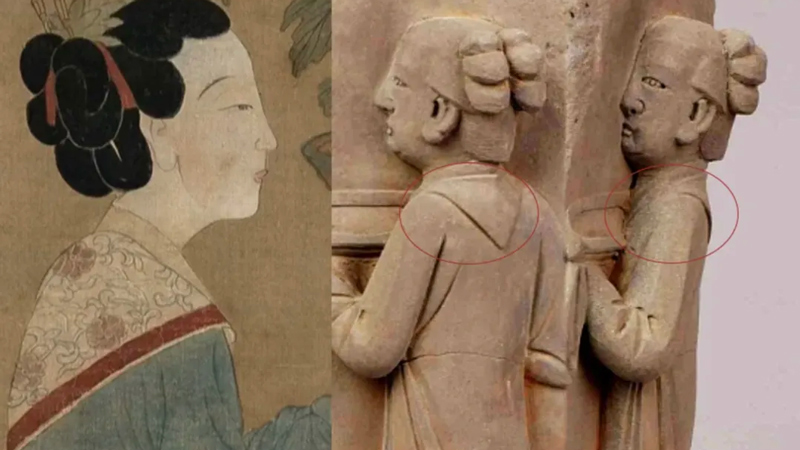
While the modern scarf feels universal, its precursors have deep roots in Chinese history. As early as the Song Dynasty, a garment called Xiangpa (项帕, neck kerchief) was worn by women during festivals like the Lantern Festival. Described by scholar Zhou Mi (周密), it was a decorative band of silk or brocade wrapped around the neck, serving both aesthetic and modest warming purposes. A similar item, the Lingjin (领巾, neck scarf), was used more broadly by men and women alike. These were not the long, trailing scarves of later European fashion but practical, often square or triangular pieces of fabric, tied or fastened at the front.
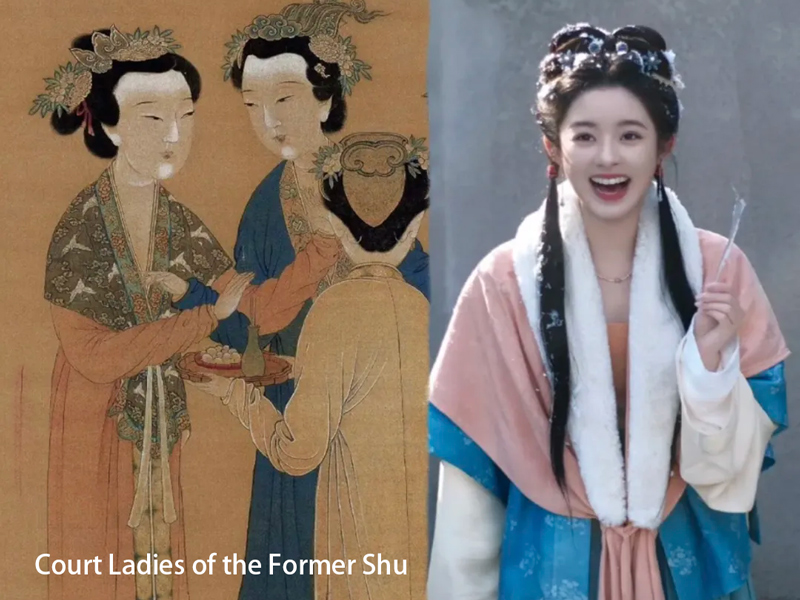
Art provides clues to their form. In paintings like Tang Yin's (唐寅) Court Ladies of the Former Shu (王蜀宫妓图), figures are depicted with what appear to be these kerchiefs or shawls, fastened over the front of their robes. Their depiction in recent period dramas, such as Perfect Match (五福临门), shows how costume designers interpret these historical elements. The key distinction seems to lie in dimensions and drape: some were long and wide, evolved from earlier shawls, while others were shorter and squarer, designed primarily for the neck.
This ancient use highlights a continuous cultural practice: adapting clothing for comfort and style. The neck was a focal point for decoration and protection long before the mass production of woolen scarves. These items were integrated into the overall ensemble, a coordinated part of traditional dress rather than a standalone accessory.
Evolution of Warmth
By the Ming Dynasty, the terminology and function evolved closer to the modern concept. The term Yongxiang (拥项, hugging the neck) appears in historical records, describing what was likely a winter accessory paired with official robes, possibly lined with fur for insulation. Another variant, the Fengling (风领, wind collar), was a large, detachable fur collar often worn over cloaks. It was luxurious and open, reminiscent of the lavish attire seen in ancient tomb murals.
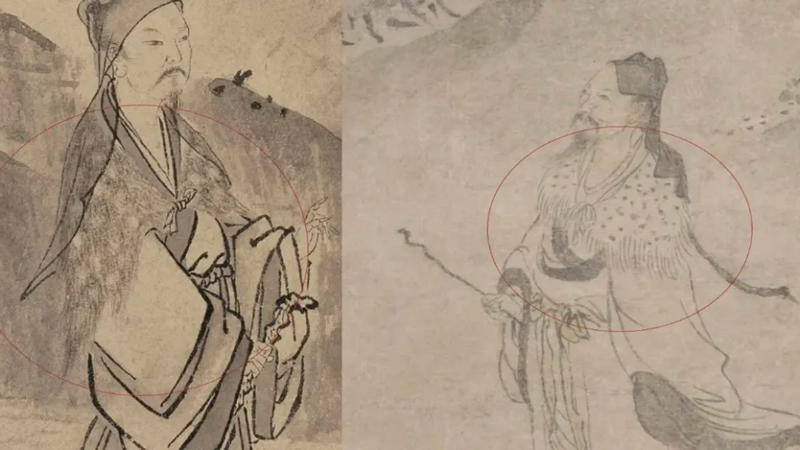
Significantly, the Ming era also saw the direct use of the term Weibo (围脖, surrounding the neck). Documents describe it as a "tight and small" version of the Fengling, made from materials like velvet or linen, worn closely around the throat. This marks a clear point in the accessory's history where its primary identity became dedicated neck warmth. Its presence in literature and its specification for palace eunuchs' winter uniforms underscore its established role.
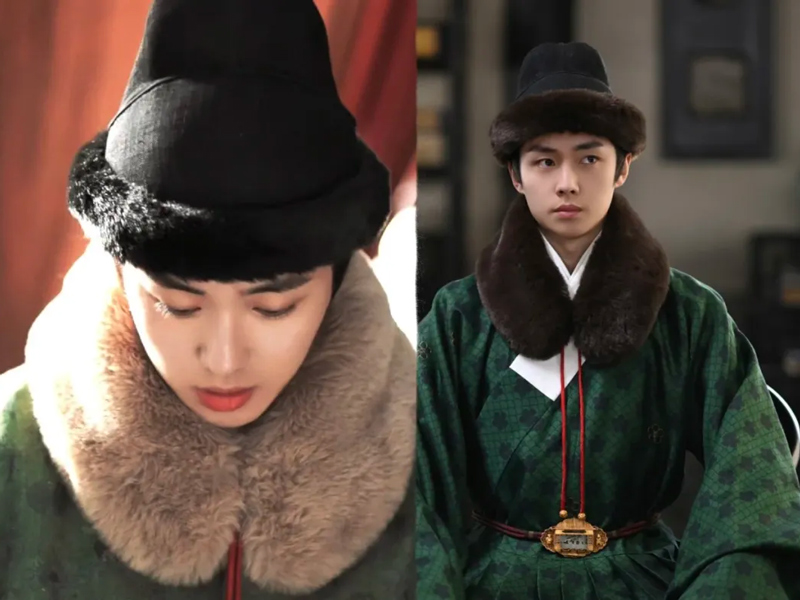
The later Qing Dynasty saw the introduction of Western-style shawls and scarves, often made from cotton, wool, or furs like mink and fox. While these imported styles grew popular, especially among women, the Chinese context had already perfected the art of the neck wrap. The key difference was integration; traditional versions were often conceived as part of a garment system, while Western ones were more frequently standalone pieces. This historical perspective makes the scarves on the CCTV gala feel less like a modern import and more like a cozy, subconscious nod to heritage.
The scarves worn on stage were a quiet testament to this legacy. In choosing warmth, the gala inadvertently showcased an element of historical dress. It demonstrated that fashion is rarely entirely new, often circling back to practical solutions invented long ago. The humble scarf, therefore, was more than just a tool against the draft in the studio. It was a link—a soft, woven thread connecting a contemporary celebration to the pragmatic elegance of ancestors who knew how to face the cold with style.