If you watch historical dramas, you have likely noticed a distinctive strip of fabric hanging down the front of many costumes. This is not a random design choice but a faithful recreation of an ancient garment accessory known as the Bixi (蔽膝). Its journey from a practical tool to a ceremonial symbol encapsulates centuries of social change, weaving together threads of necessity, status, and cultural memory.
A Tool for Life
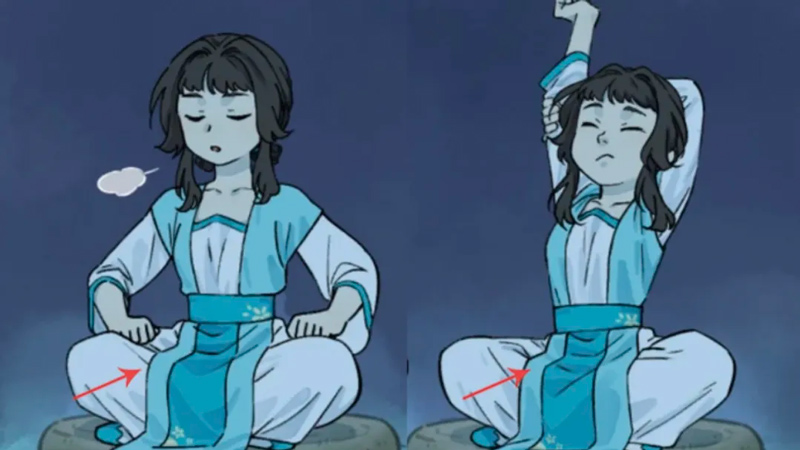
The origins of the Bixi are fundamentally practical. In early antiquity, clothing was simple and often incomplete. This long cloth panel served a basic yet vital function: modesty. It acted as an apron, shielding the front of the body. Scholars like Xu Shen (许慎), in his ancient dictionary Shuowen Jiezi (说文解字), clarified that early attire merely "covered the front," with the Bixi fulfilling this role.
Beyond modesty, it offered protection. For people laboring in fields or navigating rugged landscapes, the sturdy fabric guarded against scratches from thorns and prevented dirt from soiling the garments underneath. It was a piece of durable workwear. Some evidence suggests wider versions might have even served as a makeshift pouch for gathering herbs or crops, a versatile tool in daily life.
This phase represents the Bixi at its most elemental. It responded directly to human needs for protection and propriety. Made from humble materials like leather or coarse cloth, its value was purely functional, a common feature in the wardrobe of ordinary people long before it became a badge of honor.
Symbol of Power
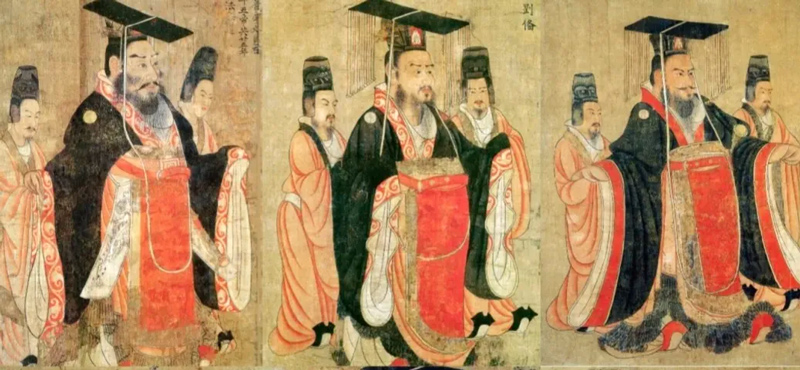
As Chinese society evolved into the stratified dynasties of Shang (商) and Zhou (周), the Bixi transformed. It was co-opted into the strict system of ritual dress, becoming a visual language for proclaiming rank. Shedding its utilitarian past, it was crafted from luxurious silks and embroidered with intricate patterns. Its color was regulated by sumptuary laws, with bright vermilion reserved for the Son of Heaven and other hues denoting nobles and officials.
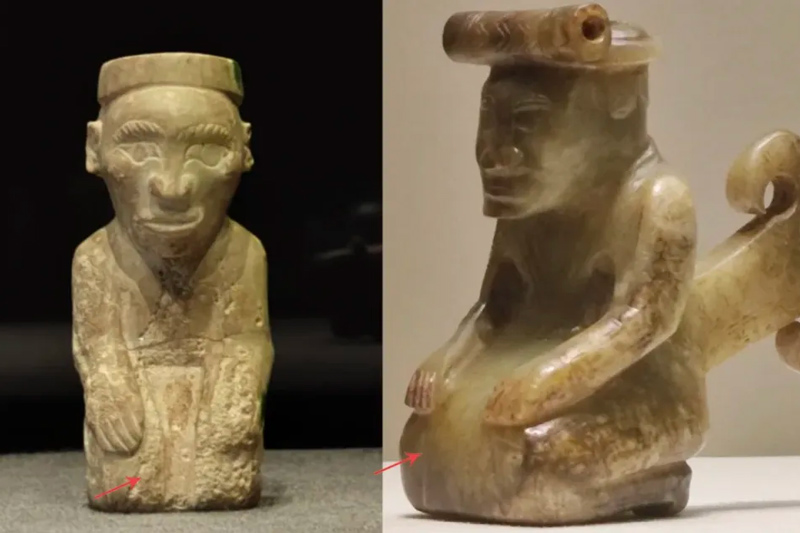
Its shape also carried meaning. While often a long rectangle, archaeological finds, such as jade figurines from the Yinxu (殷墟) ruins, show it was also fashioned into forms like axes or ceremonial tablets. These shapes were potent symbols of authority and ritual privilege. As noted by researcher Shen Congwen (沈从文), wearing such distinctive Bixi was the right of elites, not the common populace.
The Bixi’s ascent culminated in its role in the imperial Mianfu (冕服) ceremonial robes. For grand occasions like sacrifices or coronations, it became an indispensable component of the emperor’s regalia. Here, any lingering practical use vanished entirely. It existed solely as an emblem of supreme authority and a tangible link to ancient rites, legitimizing power through tradition.
The Fall and Final Act
The Bixi’s decline from everyday life was triggered by a sartorial revolution: the rise of trousers. For much of early history, trousers were considered undergarments, with robes and skirts constituting outerwear. The functional need for a front-covering apron was obvious. However, practical, full-seat trousers, adopted from northern equestrian cultures, gradually spread.
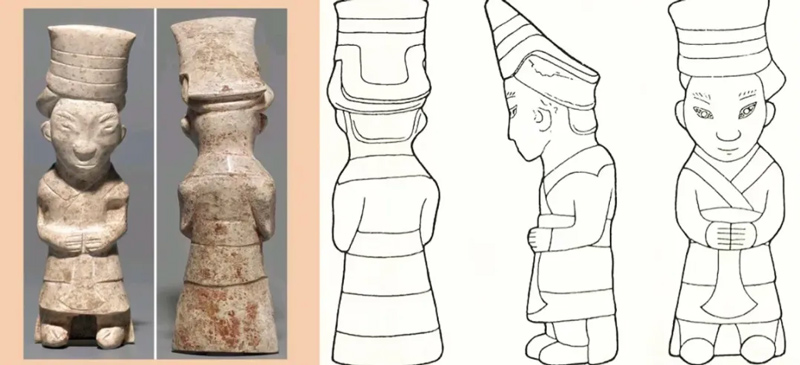
By the Song dynasty, trousers had become standard daily wear for all classes. This new garment rendered the Bixi’s core function of providing modesty completely obsolete. Consequently, it vanished from commoners’ clothing and gradually retreated from the everyday dress of the nobility as well. Its story, it seemed, had reached its end.
Yet, it found a final, enduring niche. The Bixi was preserved exclusively in the most formal ceremonial attire, like the emperor’s Mianfu and the empress’s highest ceremonial dresses. It persisted not for use, but as a cultural icon—a sacred, unchanging symbol of imperial legitimacy and a direct connection to antiquity. Its subsequent appearances in temple art or classic paintings were often nostalgic artistic revivals or symbolic embellishments.
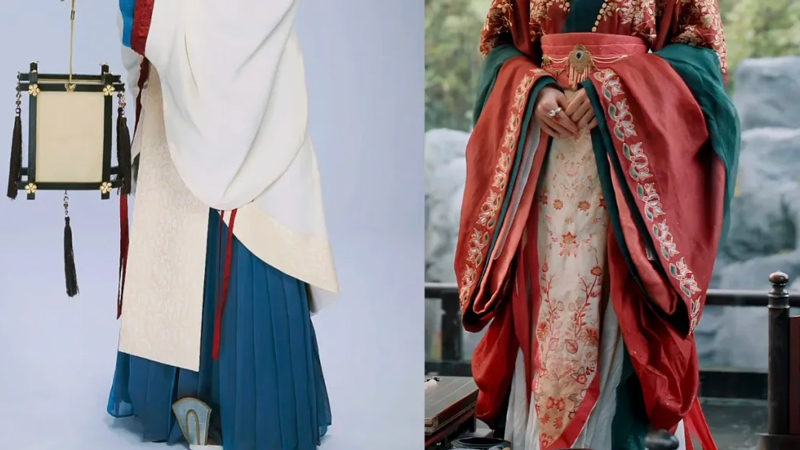
Today, we encounter the Bixi primarily on stage and screen, a deliberate detail that connects modern storytelling to historical authenticity. That hanging cloth is far more than decoration; it is a silent narrator, telling a millennia-spanning tale of how clothing documents the flow of human society, from the dust of ancient fields to the dazzling height of the throne.