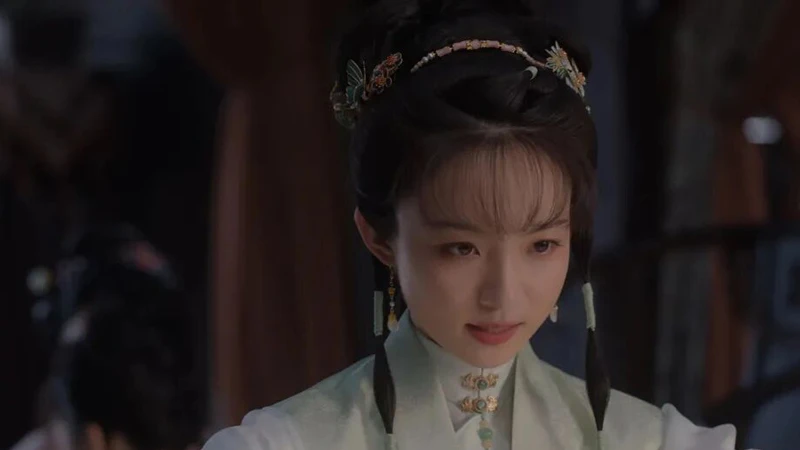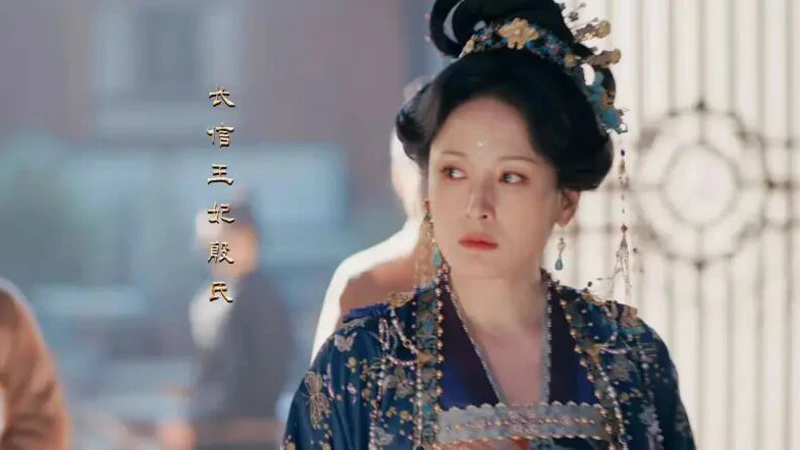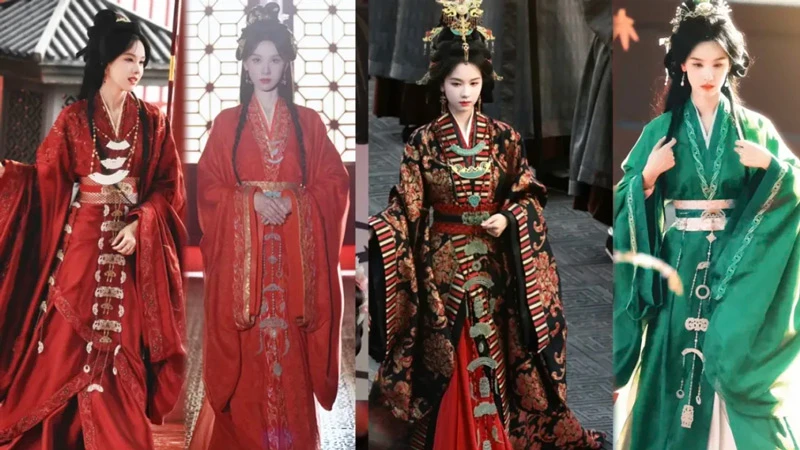
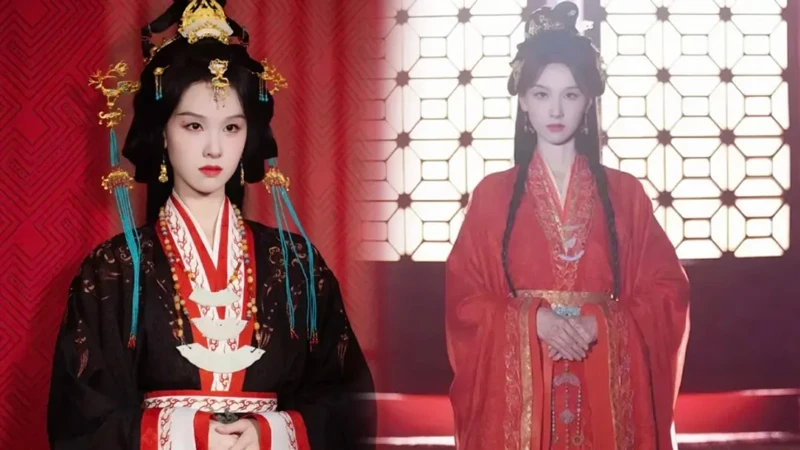
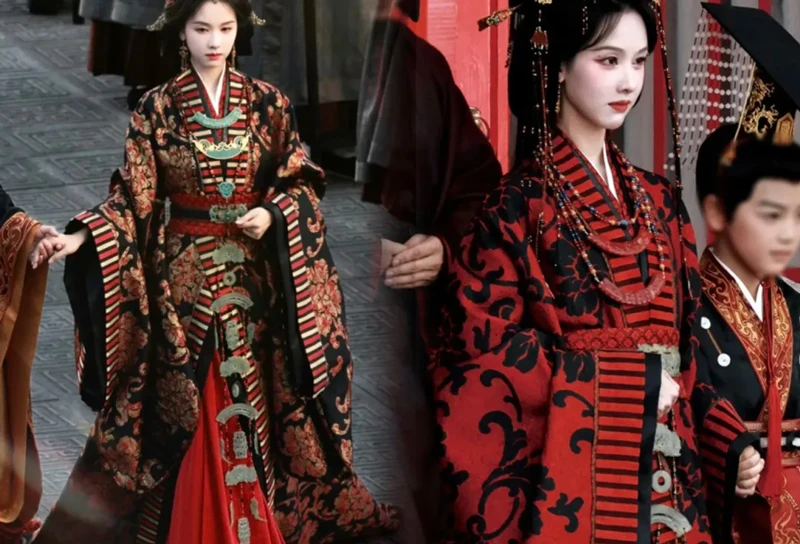
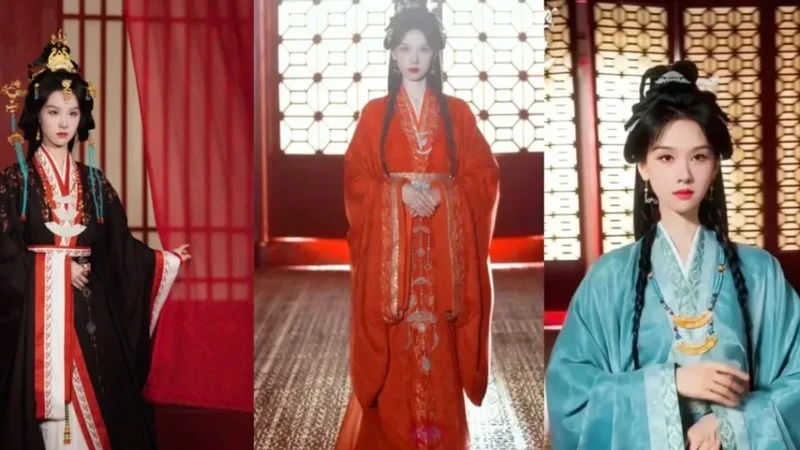
Has actress Chen Duling (陈都灵) made a mistake with her jade pendant? In the costume drama Ashes to Crown (翘楚), her character wears an extremely long strand of jade ornaments. Is it meant to be a necklace or a waist decoration? This question from viewers points to a fascinating detail in historical attire: the Jade Group Pendant.
Far more than mere decoration, these elaborate assemblages of carved jade pieces served as a walking symbol of power, status, and ritual propriety in ancient Chinese courts. Their placement—around the neck or at the waist—was not arbitrary but evolved through dynasties, reflecting changes in fashion, function, and social hierarchy. The controversy around a modern interpretation opens a window into the complex language of jade in antiquity.
Necklace to Waistpiece
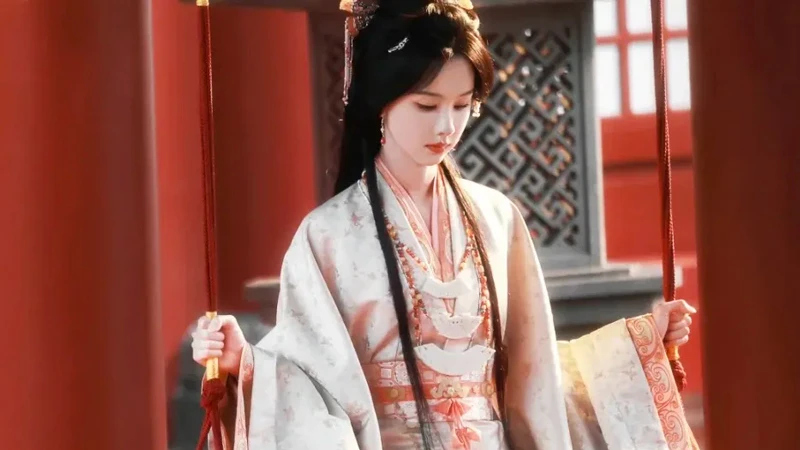
The earliest forms of the Jade Group Pendant, dating to the Shang and early Zhou dynasties, were indeed worn around the neck. These were significant, multi-component ornaments. However, from the Eastern Zhou period onward, the primary location shifted to the waist. As other forms of lighter, more delicate necklaces developed, the larger, more complex assemblages became predominantly waist pendants. This historical shift means that many modern attempts at historical costume restoration, which place substantial group pendants around the neck for earlier periods, might be inaccurate.
The complexity and length of a Jade Group Pendant directly correlated to the wearer’s rank. More components and greater length signified higher status. It is said that the Son of Heaven could wear pendants with nine huang (璜, arc-shaped jade pieces), feudal lords with seven, and high officials with five, though these exact numbers are difficult to verify archaeologically. The pendant was both majestic and cumbersome, its weight and the gentle chime of its pieces dictating a slow, dignified gait for the nobility.
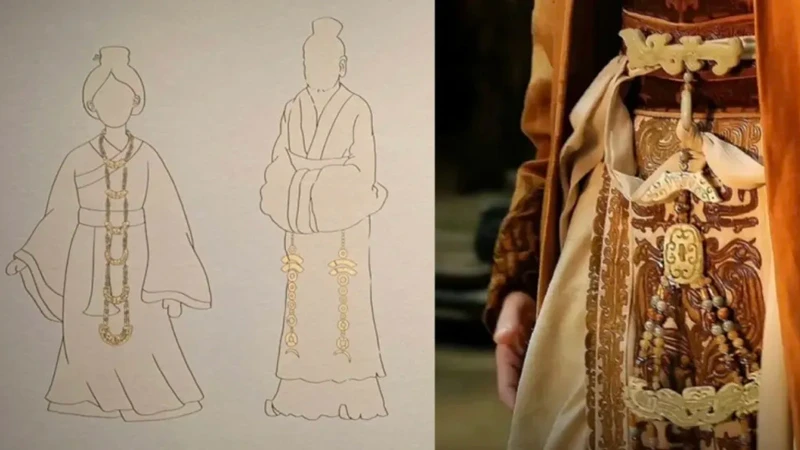
Wearing jade was a ritual obligation for the elite. As recorded in the Book of Rites (礼记), “The ancient gentlemen must wear jade,” and “A gentleman does not leave his jade without good reason.” The material, color, and the silk cord used to suspend it were also codified. The emperor used white jade with a black cord, while lords used dark jade with a red cord. This system turned personal adornment into a public declaration of one’s precise place in the social order.
A Queen’s Regalia
The most spectacular archaeological discovery of a Jade Group Pendant belongs not to a king, but to a woman who ruled like one. Over 2,700 years ago, during the Western Zhou dynasty, a woman named Zhong Jiang (仲姜) held the highest power in the state of Rui (芮国), located in present-day Hanchen (韩城)g, Shanxi. Effectively the ruler, she preceded the only officially recognized female emperor, Wu Zetian, by some 1,500 years.
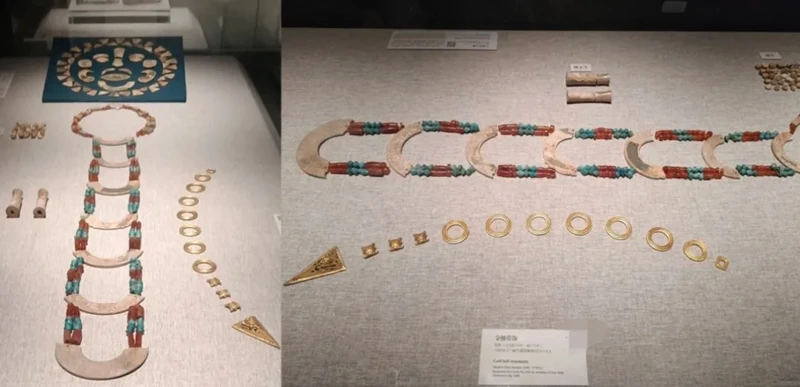
Her tomb contained an unparalleled artifact: the “Seven-Huang Linked Beads” pendant. This masterpiece consisted of one round jade disc, seven jade huang, and over 900 carnelian beads. When worn, it would have stretched from her neck down to her knees. Additional jade pieces adorned her wrists, chest, and abdomen. The use of a seven-huang pendant, a standard reserved for a ruling lord, blatantly showcased her supreme authority.
Another discovery from a slightly later period, the tomb of Guo Ji (虢季), a lord of the Guo state (虢国), also contained a seven-huang pendant, but made of dark green jade. Scholars suggest this “dark jade” corresponds to the recorded type for feudal lords, further emphasizing the strict material hierarchy. Zhong Jian’s (中间) pendant, however, remains the definitive example of how jade regalia could legitimize extraordinary political power.
Anatomy of a Pendant
A complete Jade Group Pendant was a carefully engineered structure, with each component having a specific name and position. At the top, serving as a sort of central hook or crown, was the heng (珩), a trapezoidal or arched piece. Below this, multiple huang were arranged in layers. These arc-shaped pieces were the primary visual elements, often beautifully carved.
Linking these major pieces were smaller, often cylindrical jade beads called ju (琚) and yu (瑀), which helped space the arrangement. At the very bottom, hanging freely, were one or two chongya (冲牙), shaped like animal teeth or small daggers. These would strike each other or other pieces as the wearer moved, producing a soft, rhythmic sound considered harmonious and dignified.
Not every pendant contained all these elements. Much like modern jewelry, they could be assembled in various configurations—more elaborate for major state ceremonies, simpler for less formal occasions. The basic principle, however, was a harmonious, symmetrical structure that conveyed balance and order, mirroring the ideal state.
More Than Decoration
The functions of the Jade Group Pendant extended far beyond aesthetics. First, it acted as a behavioral regulator. Its weight and the potential for noisy clattering required the wearer to move with deliberate, measured steps and maintain an upright posture. It was, in effect, a physical tool for cultivating the restrained elegance expected of the aristocracy.
Second, it served as instant visual identification. In a court setting, a glance at the jade pendant would immediately reveal the wearer’s rank. The material, number of huang, and overall craftsmanship were a wearable identity badge, preventing any confusion about protocol and precedence during intricate rituals or gatherings.
Finally, it held deep spiritual significance. The ancient Chinese believed jade possessed a virtuous essence and could connect the human world with the spiritual. Wearing jade, especially in such a comprehensive, enveloping manner, was thought to protect the wearer from malevolent forces and ensure good fortune. Thus, the pendant was at once a social marker, a moral guide, and a personal talisman.
Today, the Jade Group Pendants unearthed from tombs like Zhong Jiang’s are stunning museum exhibits. They tell silent stories of power, identity, and belief from millennia ago. The next time you see one in a historical drama—whether around an actor’s neck or on their belt—you’ll see not just jewelry, but the intricate rules of an ancient world carved in stone.