
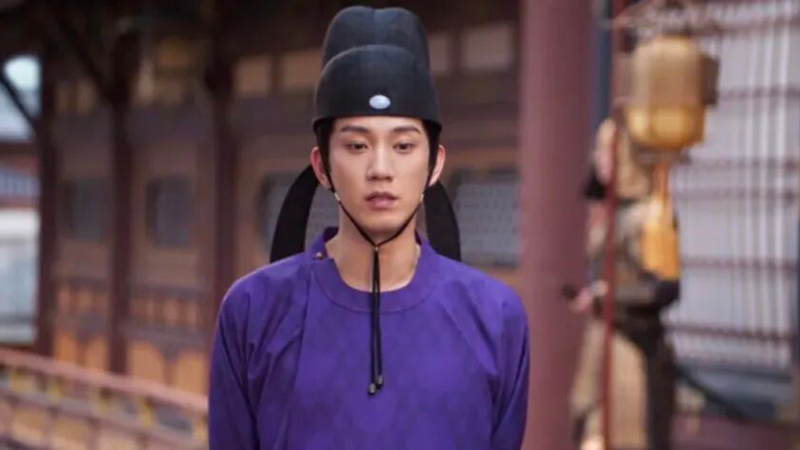
The premiere of the historical drama The Imperial Coroner 2 (御赐小仵作2) has sparked an unexpected debate among its dedicated fanbase. Rather than focusing solely on plot twists, viewers are scrutinizing the wardrobe of the male lead, Prince Chu (楚王).
A particular detail has drawn sharp criticism: the noticeable absence of the distinct white collar lining his official robes, a signature element from the first season. This seemingly minor change has opened a broader conversation about historical authenticity, artistic license, and the evolving standards of audience expectation in period television. The discussion delves deep into the intricacies of Tang (唐) and Song (宋) dynasty attire, revealing how costume design is a language unto itself.
The Missing Collar
To understand the collar controversy, one must first consider the era. If the drama is set in the Tang dynasty, the typical round-neck robe was worn over an inner garment with a narrow, crossing collar. When properly worn, this inner collar would barely peek out, appearing only as a slim edge. The prominent white collar seen in Season One was, therefore, a stylistic choice rather than a strict historical reproduction. If the setting leans toward the Song dynasty, the inner garment's crossing collar would be more visible inside the round neckline of the outer robe. By altering or removing this white accent, the costumers may have aimed for a different period look, though this shift has disrupted viewers' visual familiarity with the character.
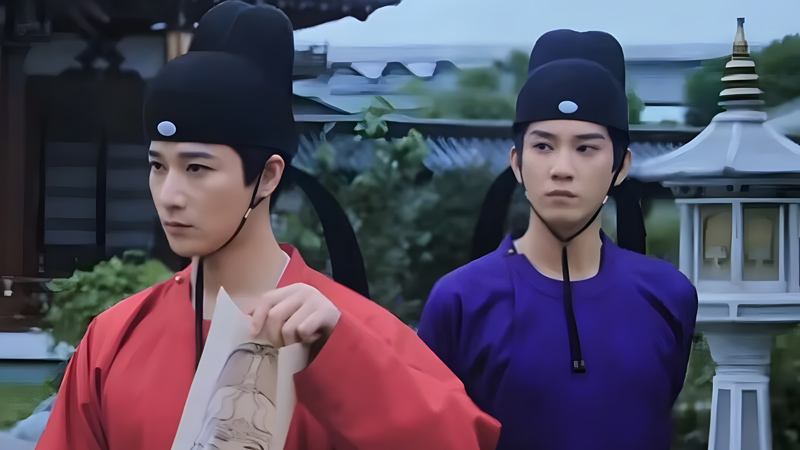
This detail matters because costumes silently communicate a character's identity and the show's internal logic. The change feels abrupt to an audience that attached meaning to Prince Chu's original appearance. It highlights the delicate balance costumers must strike: creating an aesthetically pleasing and recognizable silhouette for modern viewers while nodding to historical precedent. The "white collar" became an unintentional emblem of the prince's persona, making its disappearance feel like a loss of character continuity, not just a fabric swatch.
The discourse around the collar exemplifies a more informed viewer base. Audiences are no longer passive consumers; they are active researchers who compare screen depictions with historical records and museum artifacts. This collective knowledge turns costume design into a public forum for historical discussion, where every stitch is subject to analysis.
Hat Problems and Fabric Truths
Beyond the collar, other anachronisms have been noted. The Maozheng (帽正), a small jade piece centered on the hat intended to align it properly, is a frequent offender. This element originated in the Qing (清) dynasty and is historically out of place in dramas set in Tang, Song, or Ming (明) dynasties. Its persistent use stems from traditional opera costumes, which have influenced modern screen adaptations for decades. Its presence in a drama aiming for Tang-era authenticity is a clear historical misstep, a relic of theatrical convention over academic rigor.
The hat itself presents another challenge. Early Tang styles featured a soft Futou (幞头) headscarf with a supportive base. Later periods saw stiffer, more structured versions. What many dramas present is a hardened, ready-to-wear crown-like piece, which leans more towards ceremonial "crown" than the practical "scarf" it originally was. This simplification sacrifices historical texture for production convenience and a cleaner modern silhouette.
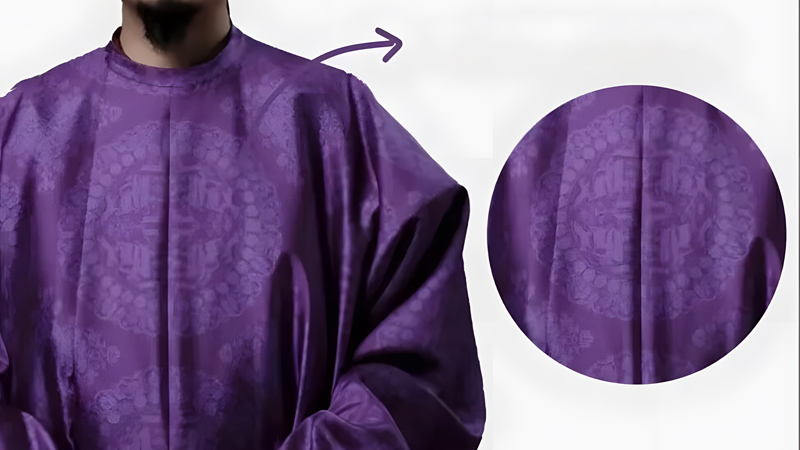
Perhaps the most significant disconnect lies in the cut and quality of the robes. Modern tailoring favors slim, body-hugging fits that project a sleek, heroic image. True Tang official robes, however, were characterized by generous "fangliang" (放量), or ample fabric allowance. This created a loose, flowing, and comfortable drape essential for layered dressing and the era's aesthetic of dignified elegance. The restrictive "tailored" look seen on screen often feels strained and impractical by historical standards.
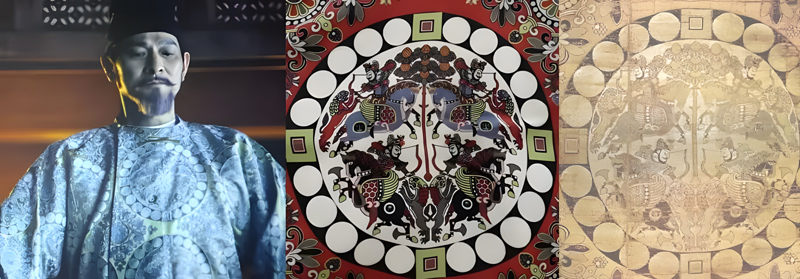
Furthermore, while official robes appeared as solid colors from a distance, they were markers of profound social stratification. The fabric and subtle patterns were everything. Lower-ranking officials wore plain hempen cloth, while high-ranking ones, especially those privileged to wear purple, were adorned with luxurious silks and intricate brocades. Patterns like the Linked Pearl Medallion—circular designs with pearl borders enclosing animals or figures—were common among the elite. This pattern itself shows traces of cultural fusion with Persian Sassanian art. On screen, flat, uniformly colored fabrics without this textural hierarchy fail to convey the nuanced language of power and status woven into the clothes.
More Than Just Nitpicking
This scrutiny is not mere pedantry. It reflects a growing desire for depth and respect for cultural heritage in storytelling. Audiences appreciate when a world feels considered and coherent down to its wardrobe threads. The costume department for The Imperial Coroner reportedly adjusted the collar based on feedback from the first season, proving they engage with their audience. This is a positive step in a collaborative cultural conversation.
However, fixing one inaccuracy often exposes others. The goal is not to achieve flawless historical replication, which is often impossible and can stifle creativity, but to build a consistent and thoughtful visual world that supports the narrative. Accurate details in fabric, cut, and accessories enrich the setting, allowing viewers to immerse themselves more fully in the drama's universe. They become subtle cues about a character's rank, wealth, and even personality without a single line of dialogue.
Ultimately, the conversation around Prince Chu's robes signifies a maturing relationship between creator and viewer. It is a demand for shows to treat their historical setting with integrity, recognizing that authenticity in detail can enhance emotional truth. When a costume is crafted with care and knowledge, it wears its story proudly, allowing audiences to believe not just in the plot, but in the very world the characters inhabit.
