-

Why Against the Current Hair Looks So Retro
When stills from Tan Songyun (谭松韵) and her upcoming costume drama Against the Current Endures (兰香如故) appeared, viewers spotted something odd. Above her forehead sat a delicate net-like piece. It looked like a prop from an older drama, not a fresh design. The question spread fast: why does this styling feel so familiar and distant at once? The answer is not simple nostalgia. It is a real historical accessory with a long name and a longer life. The hanging ornament belongs to a family called Luosuo (络索). When worn around a bun, it becomes Weiji (围髻). Its story moves through Song and Ming wardrobes, and that is why modern screens rarely show it with such clarity. What Is That? First, the “net” is not a net. It is a curved metal bar punched with tiny holes. From those holes hang pearls, stones, and bead strings. In Chinese dress, this hanging style is called Luosuo. At its root, the word meant connected rope. Old texts describe linked cords as a kind of net. Over time, the meaning shifted from rope to ornament. A Song poem by Huang Geng (黄庚) mentions “golden Luosuo with coral pendants,” showing that the look already carried… -
Tang Dynasty Hair: Was It Really That Huge?
Turn on a historical drama set in the Tang Dynasty, and you may see women carrying hair like a small tower. Huge false buns. Layers of pearls. Gold pins stuck in every direction. After enough shows, this becomes the mental image: Tang beauty meant weight. But daily life was not a costume parade. In three centuries, taste shifted. Early Tang and Wu Zhou styles were crisp, tall, and practical. High Tang loved fullness and wealth. Mid-to-late Tang grew more ornate. Context mattered most. A grand ceremony allowed splendor; a normal morning asked for speed. Recent series such as Flourished Peony (国色芳华), and The Long Ballad (长歌行) have begun to show cleaner Tang looks. They remind us that simple hair was not a failure of imagination. It was real life. Daily Looks For most women, the everyday answer was a single bun or double buns. Hair was combed up, tied, and coiled once or twice. No mountain of padding. No forest of pins. This worked for cooking, weaving, carrying water, selling goods, and walking through Chang'an (长安). It kept hair off the neck and out of the way. Paintings and figurines sometimes show richer shapes, but they also show plain, tight… -
Song Zuer’s Si Gong Ling Hairpin Goes Viral
Song Zuer (宋祖儿), also known as Sun Fanqing (孙凡清), recently drew attention in the costume drama Si Gong Ling (司宫令). In a snowy scene, her hair looks almost bare. There is no heavy crown, no jeweled bridge, and no forest of gold flowers. Just one large pin shaped like a safety pin or a U-clip. That small object has become the talk of fashion watchers. It seems too plain to matter. Yet the same shape sits in museums, labeled as a classic hair ornament used for centuries. Why does a simple U-shaped pin feel so striking on screen? The answer lies less in celebrity glamour and more in old Chinese design sense. It solves a real problem, holds hair beautifully, and still looks calm. The Ancient U-Clip The pin’s old name is folded-prong hairpin. In Liu Xi’s (刘熙) Shiming: Explaining Names (释名), written in the Han dynasty, a single stick is called zan (簪), while a two-pronged fork is called chai (钗). Today’s U-clip continues that fork idea. It is not a modern office supply borrowed by stylists. It is a compact version of a very old hair tool. Its shape looks minimal, but the bend creates tension. That tension… -
Myolie Wu’s Tang Look in Shang Gongzhu Stuns
When Myolie Wu entered mainland entertainment, viewers thought they knew her screen image. Then photos from Shang Gongzhu (尚公主) appeared online. She plays an elder princess in a Tang Dynasty (唐朝) court setting, and the first glimpse made fans blink. Is that really her? The surprise comes from more than a new role. Her hair, crown, and makeup follow a rare historical direction. Instead of the smooth, copy-paste ancient costumes common in many dramas, she wears a Tianbao (天宝) drape and a lotus crown. The result feels calm, rich, and unmistakably courtly. For an actress known for warm, grounded roles, this sharp turn has fresh energy. It also gives women with round faces and wide jaws a useful style lesson. Tang Beauty Codes The Tianbao drape is not loose hair. It looks open, but the hair is gathered. A center part keeps the face symmetrical, with side strands falling softly to frame the cheeks. At the back, the hair is tied into a low shape that reads like a drape. On top, a neat bun supports the crown. This balance matters. The style keeps the relaxed softness of falling hair while adding the dignity of palace hair. A lotus crown… -
Lotus Leaf Hats: Ancient China's Coolest Summer Secret?
If you first saw a lotus leaf hat in a costume drama, you might think the prop team raided a fantasy anime. A green leaf perched on a noble's head? Surely no ancient person wore that. Then your ancestors would sigh: “You unfashionable kids embarrass us.” This hat is not a time traveler. It is a summer hat, shaped like a lotus leaf, used for shade and sun protection. Its popularity goes back much earlier than many viewers expect, to the Northern and Southern Dynasties. Written records and paintings both support it. Once you notice it, costume dramas become a field guide to ancient cooling tricks. Old Paintings Speak The History of Northern Dynasties (北史) says bearers had to wrap their heads in winter; in summer they added a lotus leaf hat. Another text, Records of the Hidden and Visible (幽明录), tells of An Kai (安开), a local sorcerer in Jiangzhou (江州). While Wang Ningzhi (王凝之) was preparing to travel, An Kai secretly pinned a lotus leaf on him as a hat. Wang did not feel anything odd until he sat down; then the leaf appeared, and everyone gasped. Ancient writers often mixed up lotus and water lily, so do… -
Did Ming Women Really Wear Men’s Hair Crowns?
In The Road to Splendor (花开锦绣), Lady Wang (王) enters a room with the calm authority of a noble family’s matriarch. Portrayed by Lü Xiaolin (吕晓霖), she seldom needs a loud voice; her posture, gaze, and unhurried gestures carry weight. Viewers who remember Lü from Day and Night (白夜追凶) as Gao Yanan (高亚楠) may recognize the same restraint. Yet one detail in her new costume has sparked debate: the ornament on her head looks like a man’s hair-binding crown. Why would a married noblewoman wear an item associated with male scholars and officials? The answer is more interesting than a simple costume mistake. In fact, women of the Ming dynasty did wear such crowns, though the habit was neither universal nor well known. The confusion reveals how clothing, memory, and screen habits shape what we assume about the past. Not Only Men The hair-binding crown, sometimes called a small hair crown, began in the Five Dynasties. It looked like a small bowl turned upside down. A complete cap covered the gathered bun, with holes on both sides. A hairpin passed through the bun and held the crown firmly. Materials varied. Aristocratic families used jade or pure gold. Officials and commoners… -
Were Ancient People Really All Hair‑Volume Kings?
Why do historical dramas always show characters with impossibly thick, jet-black hair? Whether it's a noblewoman's towering bun or a scholar's sleek topknot, the sheer volume seems beyond modern reality. Meanwhile, today's young adults panic over receding hairlines and thinning crowns, stocking up on anti-hair-loss shampoos. Were ancient people simply born with superior follicles? The short answer is no—their "good hair" was largely a result of lifestyle, care habits, and a fair amount of illusion. Let's break down the real secrets behind those lustrous locks, and you might pick up a few timeless tips for your own scalp. Sleep and Serenity The most lethal triggers for modern hair loss—chronic sleep deprivation and mental anxiety—were almost absent in pre-industrial life. Ancient farmers and artisans followed the natural rhythm of sunrise and sunset; without electric lights or screens, they rested early and enjoyed deep, uninterrupted sleep. Their daily work, though physically demanding, rarely involved the kind of low-grade, persistent stress that comes from endless emails, social media comparison, or workplace competition. This stable circadian cycle allowed their hair follicles to repair and regenerate during the night, keeping roots firm and thick. Modern life, by contrast, is a minefield of cortisol spikes. Late-night… -
Unlocking the Secret of Long Traditional Hairpins
Hani Kezi (哈妮克孜), playing Liu Fufeng (柳扶风) in the period drama Xin Jian Cuo (心间错), wears a hairpin so long that viewers scoffed online: Did ancient women really stab that kind of ruler-length pin into their buns? Could they yank it out and use it as a dagger mid-conversation? Yes, those long pins were real. And without them, those towering, jewel-studded coiffures in every dynasty drama would collapse into a messy pancake within minutes. The answer lies not in decoration but in engineering. Ancient long hairpins—often 20 to 30 centimeters, sometimes hitting 35—served as structural rebar for high buns and circular looped chignons. Think of them as invisible super-bobby pins that held everything from real hair to added wigs. They weren't a Tang dynasty invention, either. As early as the Han, long combs called zhi (擿)—with long teeth—gripped elaborate updos. In the Mawangdui (马王堆) tombs, Lady Xin Zhui (辛追) wore three zhi made of tortoiseshell, horn, and bamboo simultaneously; the longest measured 24 centimeters—roughly the length of one and a half pencils—thrust horizontally across her crown like a proud banner. Ritual Status Length signaled rank. The Book of Later Han – Carriage and Dress (后汉书·舆服志) decreed that grand empress dowagers… -
The Song‑Era Floral‑Tube Hairpin
Have you ever spotted a character in a period drama and felt an instant tug of familiarity, not from their face, but from something glittering in their hair? In the hit series The Road to Splendor (花开锦绣), Madame Mo (陌) makes a striking entrance. She is played by Fan Tiantian (范湉湉), an actress who previously commanded attention as the formidable Lu Meilin in Fanhua (繁花). Here, she takes on the role of a military general’s wife—bold, outspoken, and unapologetically grand. Yet, what truly catches the eye is not her performance alone, but the peculiar pair of cylindrical hairpins slanting from her temple. They are not the single-pronged Ji (笄, ancient hairpin) or the dangling Buyao (步摇, swaying ornament) common in so many costume dramas. Instead, they look like tiny metal tubes tipped with crimson beads. Where did these come from? And why do they feel so refreshingly unfamiliar? The answer takes us back to the Song Dynasty, a period often overshadowed by the Tang’s flamboyance but equally rich in its own quiet innovations. That cylindrical hairpin is called a Floral-tube hairpin. It was a signature accessory for women of that era, worn equally by commoners and noble ladies. Its shaft… -
Hairpin That Doubled as an Ear Pick
Why is Chen Yao wearing an ear pick on her head in Jiumen (九门)? Her character, Huo Xian Gu, sports a hairpin that looks exactly like a modern ear pick—and that's because it is one. This is the Er Wa Zan (耳挖簪), or "ear-pick hairpin," a traditional Chinese accessory that has been around for over a thousand years. It's a perfect example of how the ancients designed objects for multiple uses, combining beauty with everyday function. In the drama, Chen Yao plays both Huo Xian Gu and her past life incarnation, Lin Lan Qing, a Qing Dynasty embroiderer. The hairpin she wears isn't a random prop—it's a historically accurate piece that tells a story about practicality, social status, and the quiet ingenuity of daily life in ancient China. What Exactly Is It? The hairpin that looks like an ear pick is exactly that—a hairpin with a small scoop at one end. One side is the standard pin shaft, used to secure a bun or hairstyle, while the other is shaped into a tiny spoon for cleaning ears. It's a classic example of ancient multi-purpose design: wear it as decoration, take it off when you need to clean your ears, and… -
Faith and Beauty Behind the Ancient Lotus‑Shaped Headdress
Li Yitong (李一桐) wears a lotus-shaped crown in her new period drama—but is this a historical relic or a modern designer’s fantasy? The answer takes us from Dunhuang (敦煌) caves to Tang dynasty palaces, and from Buddhist sutras to Song dynasty dressing tables. That “strange” ornament, it turns out, has roots deeper than most costume dramas dare to dig. Lotus Crowns: Not a Whim When Gu Yue Feng Hua Lu (古乐风华录) released its set photos, viewers spotted Li Yitong in two outfits—both topped with a lotus-shaped headpiece, paired with gauze robes and a forehead floral pattern. The look feels otherworldly, but it did not emerge from a vacuum. Inside the Mogao Caves (莫高窟) of Dunhuang, murals and painted sculptures are filled with lotus crowns. Some show a single large lotus perched on a topknot; others arrange smaller flowers around the main bun, with long bead strings dangling at the temples. From the Wei and Jin dynasties through the Sui and Tang, Buddhist culture wove itself deeply into Dunhuang life. The lotus, a classic Buddhist symbol, gradually moved from statue pedestals into women’s hairstyles. By the Tang, with both Buddhism and Taoism flourishing, the lotus crown had become a common sight.… -
Decoding Di‑Ji and Fu‑Jin in Historical Drama
In the historical drama The Road to Splendor (花开锦绣), actress You Jingru (尤靖茹) portrays Zuo Shi (左氏), a secondary wife in a wealthy household. While other female characters dazzle with gold and jade ornaments in their hair, Zuo Shi appears with either a dark, cap-like object perched on her head or a plain grey cloth wrapping her entire coiffure. To modern viewers, these choices might seem odd, even dowdy. But these are not stylists' eccentricities; they are accurate reproductions of two specific types of headwear worn by women during the Ming Dynasty (1368–1644): the Di Ji (狄髻) and the Fu Jin (幅巾). Far from being mere decoration, these pieces were silent indicators of social status, economic standing, and even personal taste within the rigid hierarchy of the time. Di Ji: The Social Ladder on Her Head The Di Ji itself is not a full hairstyle but a foundation—a mesh cap woven from silver wire, horsehair, or human hair. It was placed over a tightly coiled bun to hold the shape and provide a stable base for pins and ornaments. This practical item appears in countless Ming-era portraits, such as those in The Happy Reign of Emperor Chenghua (明宪宗元宵行乐图), and has… -
Coin Ornaments Carrying Ancient Blessings
Xin Zhilei’s (辛芷蕾) new character in the period drama Remnants of Gold (金色) wears a forehead ornament that stops you cold. It is not the usual pearl choker or delicate gold filigree. Instead, a neat row of round metal discs arcs across her brow like a string of old coins. Why so strange? The show is set in the Ming dynasty desert, far from the Forbidden City’s pearl-studded courts. This is not a costume department’s wild guess. The design borrows from two real traditions: the Ming dynasty Weiji (围髻) headband and the ancient habit of wearing coin-shaped charms for protection. Together, they turn a simple accessory into a map of cross-cultural exchange along the Silk Road. The Ming Framework The Weiji was a common forehead piece for Ming women. Made of bead strands or metal flower plaques, it sat along the lower edge of the bun, framing the face. Noble ladies wore it with pearls and rubies; commoners used silver pieces or glass beads. Its job was both decorative and practical—it tamed stray baby hairs while adding a touch of grace. Portraits from the era, as well as excavated tombs like that of Princess Sun, the secondary consort of Prince Yixuan… -
Tuan Guan: The Iconic Round Crown Seen in Si Gong Ling
Song dynasty fashion has a curious habit of resurfacing in unexpected ways. If you have seen the historical drama Si Gong Ling (司宫令), you might have noticed something peculiar on the heroine’s head. It is round, flat, and looks strikingly like a certain Japanese snack. This is not a prop designer’s whimsy, nor a modern beauty hack. It is a Tuan Guan (团冠), or circular crown, a piece of headwear that once dominated the streets of Kaifeng (开封) and Lin'an (临安) from the imperial palace to the local tofu stall. More than just an accessory, it represents a unique intersection of sumptuary law, material science, and folk aesthetics. By tracing its journey from a humble bamboo ring to a high-fashion jewel, we uncover a story about a society that cherished both practicality and beauty, a balance rarely achieved in any era. Why was this round cap so beloved, and what can it tell us about the people who wore it? The Humble Origins of a Universal Crown Before it became a glittering icon, the Tuan Guan was the epitome of simplicity. According to the Zhu Shi (麈史), a Song dynasty record by Wang Dechen (王得臣), the very first version was… -
The Red Sash Trend Sparked by The Road to Splendor
Why does Ding Yuxi (丁禹兮) wear a red sash in his new costume drama? And why did ancient Chinese grooms and scholars drape themselves in crimson silk? The answer lies in a forgotten tradition called Pi Hong (披红), or "red draping," which once marked life’s biggest milestones—from wedding chambers to imperial exam halls. Today, that same vibrant hue survives in graduation sashes and award ceremony ribbons, though we barely recognize its thousand-year-old roots. This article unpacks the ritual, its symbolism, and why a simple piece of red fabric still carries the weight of joy, honor, and human hope. The Crimson Cloak of Celebration In the hit period drama The Road to Splendor (花开锦绣), actor Ding Yuxi reprises his role opposite Deng Enxi (邓恩熙), and his character Zhao Ling (赵凌) appears in a striking red sash during a wedding scene. Social media buzzed with curiosity—why the extra cloth? Historically, this was Pi Hong, a broad silk or brocade band worn over the shoulder and across the chest. It flourished during the Ming Dynasty (1368–1644), when red symbolized fire, fortune, and yang energy. Unlike a full ceremonial robe, it was a versatile overlay, used for both scholar’s triumph and a commoner’s nuptials.… -
Clearing Up The Road to Splendor Costume Myth
Ming Dynasty attire or Joseon fashion? When stills from the historical drama The Road to Splendor (花开锦绣) hit the web, a flurry of viewers immediately questioned the look of actor Ding Yuxi (丁禹兮), who plays the lead character Zhao Ling. The comparison seemed instant and almost reflexive: the wide-brimmed hat, the layered robes, it all looked like a standard costume from a Korean historical epic. Yet this snap judgment misses the historical reality by several centuries. This is not a case of borrowing from Seoul, but a masterclass in authentic Ming-era fashion. The confusion is completely understandable, but it also reveals a much larger and more uncomfortable truth about cultural memory and the modern media landscape. It is a perfect storm of mistaken identity where the originator is now mistaken for the imitator. The Hat That Started the Debate The most talked-about piece is undoubtedly the hat. Viewers see a large, dark headpiece and immediately think of the iconic Heukrip from Korean dramas like Dae Jang Geum (大长今). However, what Zhao Ling wears in the show is a Damao (大帽), also known as a large-brimmed hat. It was the most common headwear for men in ancient China. Its prototype can… -
Catfish‑Whisker Hairstyles in Chinese Period Dramas
Have you ever watched a Chinese period drama and noticed the heroine with two strands of hair dangling beside her cheeks? Online fans have lovingly dubbed them "catfish whiskers". But in the hit series The Story of Minglan (知否), a sharp-tongued character scorns such a look as "pleasure-quarter style" – implying it belongs to courtesans, not noble ladies. That raises a burning question: did ancient Chinese aristocrats actually wear these loose tresses, or is modern costume drama just making things up? The short answer: the real historical "hanging locks" from the Wei-Jin period were nothing like today's messy tendrils. They were neat, deliberate decorative pieces, worn only for a fleeting moment in history. And the strict Confucian code on hair grooming left zero room for sloppy strands – especially for women of rank. So why does nearly every on-screen empress or general's daughter now sport this casual, streetwise fringe? Let's untangle the truth behind the tresses, the ritual rules that forbade them, and whether modern drama can ever bend history without breaking it. The Wei-Jin Legacy The "catfish whiskers" we see today are often mistaken for the famous Chuitiao (垂髫) – a child's hanging hair style romanticized in Wei-Jin poetry… -

Where Did Ming Damao Actually Come From?
Ding Yuxi wears a striking black broad-brimmed hat in his new historical drama The Road to Splendor (花开锦绣), yet many viewers instantly label it “Korean-style.” That snap judgment reveals more about our screen habits than about history. The hat in question, a tall-crowned black headpiece with a flat, wide brim, a gold finial on top, and a beaded string dangling below, looks unfamiliar because period dramas rarely feature it. But this distinctive accessory is not a borrowed Korean design. It is a faithful recreation of a Ming-dynasty male hat called Damao (大帽), a common everyday headwear worn by everyone from officials to commoners during that era. Its story stretches back over a thousand years, evolving through successive dynasties before settling into the form we see on screen. So why does a native Chinese artifact get mistaken for something foreign? The answer lies in a mix of visual similarity and a modern lack of exposure to our own traditions. A Hat Born from the Road Long before the Ming dynasty, the broad-brimmed hat already served travelers well. As early as the Wei and Jin periods (220–420 AD), people on long journeys wove sun-shielding headgear from rattan and called it Ximao (席帽).… -
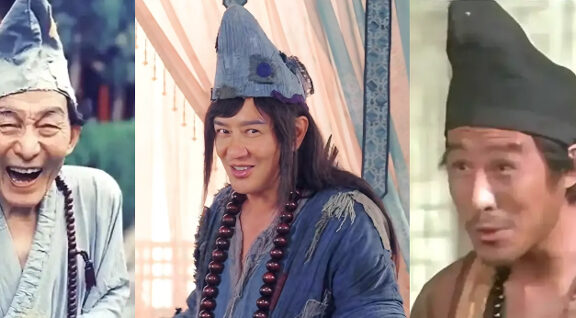
Where Did Jigong’s Famous Hat Come From?
For decades, from the classic television series to today's short-form dramas, the iconic image of Jigong (济公) has remained remarkably consistent—tattered robes, a broken fan, and that unmistakable hat. It sits on his head like an upside-down gold ingot, with its front raised high and the back sloping low. In Chen Haomin's (陈浩民) new short drama Jigong: The Dragon's Arrival (济公之降龙现世), the headpiece looks exactly the same as it did in the 1980s. Why has this particular shape stuck with him for so long? The answer stretches back nearly a thousand years, weaving through history, opera stages, and the evolution of visual storytelling. What seems like a simple costume choice actually reveals how a real historical figure was gradually transformed into a legend, and how a single piece of headwear became more recognizable than the man himself. The Real Monk Historical records confirm that Jigong actually existed. He was born into the Li family in Tiantai (天台) during the Southern Song dynasty. He ordained at Lingyin Temple (灵隐寺) and later resided at Jingci Temple (净慈寺), receiving the monastic name Daochi (道济). Because he frequently intervened to right wrongs and defend the helpless, common people affectionately called him Jigong—"the public benefactor."… -
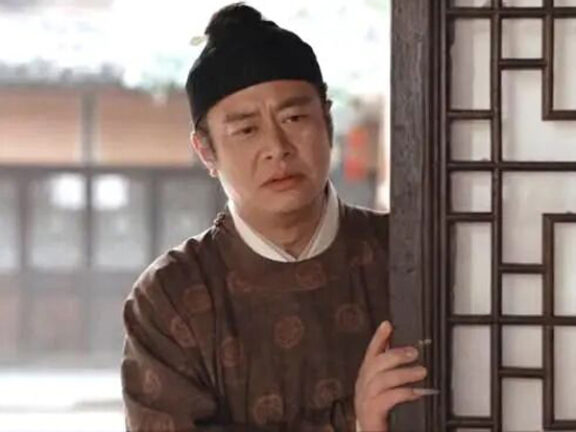
When Long Nails Marked Chinese Male Nobility
In the period drama The Mo (家业), a curious detail catches the eye: Lord Yan (言), a male character from the Ming dynasty, sports an elongated and glossy fingernail on his little finger. It looks deliberately manicured—almost like modern nail art. This seems odd. Ancient Chinese men grooming their nails? Many viewers immediately assume he must be a eunuch, because that is the only stereotype they know from previous TV shows. But is that historically accurate? Far from it. The practice of male nail care among the aristocracy was not only common but also a marker of status and refinement for centuries. Before jumping to conclusions, let us dig into the real history—and discover why the production team gave Lord Yan that polished nail. It is not a hint at his identity; it is a faithful nod to the lifestyle of Ming gentry. A Historical Practice Long before the Ming, nail grooming had already taken root among the elite. During the Shang and Zhou dynasties, bronze tools became widely available, and both noblemen and noblewomen used specialized implements to trim and polish their nails. By the Warring States period, written records—such as the works of Han Feizi (韩非子)—mention aristocrats wearing… -
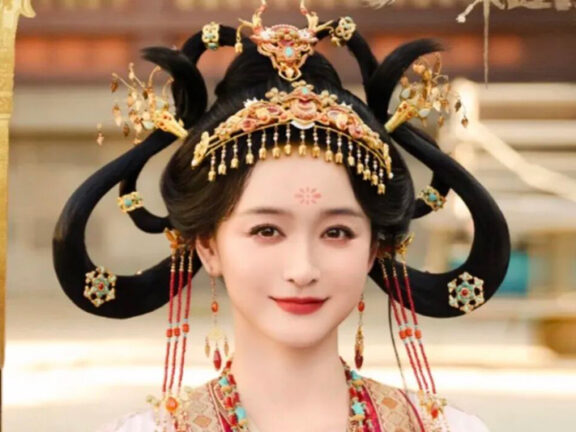
Yiji: The Hidden Engineering of Old Chinese Hairdos
How did ancient Chinese women achieve gravity-defying hairstyles without modern tools? The answer lies not in natural hair volume, but in a sophisticated system of wigs, hidden pins, and natural styling gels that would impress any modern hairstylist. From the towering buns of the Tang Dynasty to the seemingly loose, floating locks of the Wei and Jin periods, these looks were carefully engineered. It was all about clever preparation and structural support, a forgotten art of daily beauty that reveals a deep understanding of materials and physics. The secrets are more practical than magical, and they tell a story of ingenuity that has been largely overlooked in favor of myths about natural hair abundance. The Pre-Made Foundation Forget the idea that all that hair was real. From the Han Dynasty onwards, women extensively used wigs and pre-styled hairpieces, known as Yiji (义髻), which were the ancient equivalent of a modern hair topper. These were not simple add-ons but expertly crafted foundations made from human hair, horsehair, hemp, bamboo, or silk threads. Artisans would weave these materials into the complete framework of high buns, half-swooping buns, or double-loop styles. This way, a woman could simply fix the entire pre-made structure onto… -
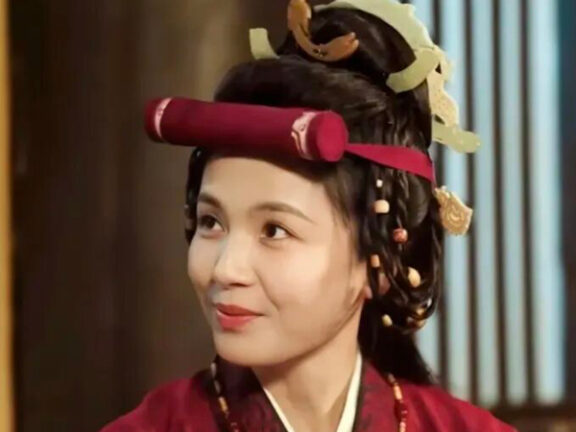
Liu Tao's Hair Roller and the Ancient Kui Headpiece
Is That a Hair Roller on Her Head? What Liu Tao’s (刘涛) New Look Reveals About Ancient Style When recent behind‑the‑scenes images from Liu Tao’s latest production surfaced online, viewers did a double‑take. Perched atop the actress’s head sat what looked uncannily like a modern curling wand—stiff, tubular, and utterly out of place against her period costume. “Why is she wearing a hair roller?” asked one puzzled commenter. “It looks so rare, and so strange!” Yet this peculiar accessory is no styling mishap. It is, in fact, a carefully researched recreation of a Shang‑Zhou dynasty headpiece known as Kui (頍), an ancient forehead band that later evolved into the familiar Mo’e (抹额) of Chinese costume drama. To understand why Liu Tao’s character—widely believed to be the legendary warrior‑queen Fu Hao (妇好)—sports this coiled ornament, we must travel back over three thousand years, where fashion met function, ritual met warfare, and a simple strip of cloth became a symbol of status, warmth, and martial spirit. The Curious Case of the Curled Crown What exactly sits on Liu Tao’s head? Archaeologists and costume historians point to the Kui, also called Kui Guan (頍冠), which later generations renamed Mo’e—the forehead band. In its… -
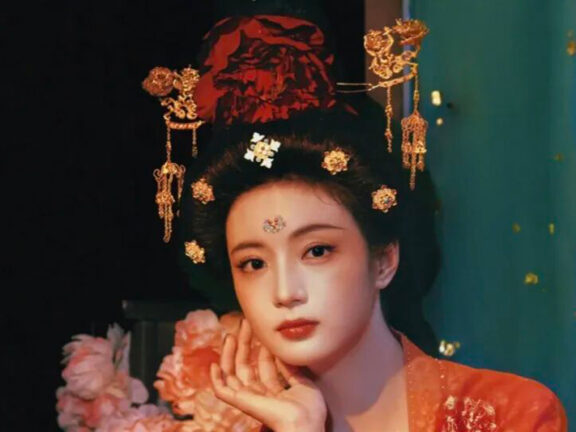
Giant Floral Headdresses and Tang Drama Myths
Are giant floral headdresses sabotaging the authenticity of Tang Dynasty dramas? With recent period pieces drawing fire for oversized blooms that dwarf actresses' faces, a deeper question emerges: did Tang women actually wear these massive flowers, or has screen mythology distorted our historical lens? The debate isn't merely about aesthetics—it touches on how modern casting, thinning beauty standards, and recycled costume templates collide with archaeological fact. While some viewers blame today's slender actresses for "failing to carry" these flamboyant accessories, the real culprit may be a centuries-old painting that planted a deceptive seed in the minds of costume designers. Painting That Lied? When critics point to Court Ladies Adorning Their Hair with Flowers (簪花仕女图) as proof of giant floral fashion, they overlook a crucial detail: no other surviving artwork from the late Tang or Five Dynasties period shows a single bloom covering half the wearer's updo. The painting's florals are disproportionately massive, creating a top-heavy imbalance that strikes art historians as anomalous. Shen Congwen (沈从文), the renowned scholar, famously suggested that these oversized elements might have been added later—possibly by Song Dynasty painters projecting their own fantasies onto an earlier era. He argued that the composition feels disjointed, with the… -
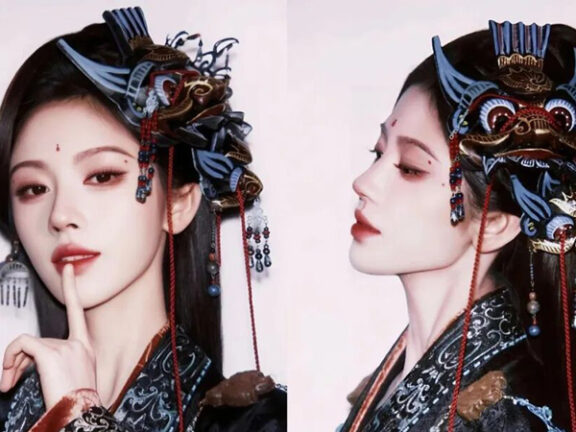
Why Is Ju Jingyi Wearing a Beast-Face Crown in Wanhua Shijie?
Recently, set photos from the upcoming Chinese costume drama Wanhua Shijie (万花世界) have been circulating online, and one particular look worn by actress Ju Jingyi (鞠婧祎) has sparked widespread curiosity. Instead of the usual hairpins, combs, or dangling step-shakes that dominate historical dramas, her character Su Lüxia (苏绿夏) sports a striking headpiece—two blue-and-gold beast-face ornaments flanking her temples, complete with dangling red tassels. It looks like a miniature mask perched on her head, utterly different from the conventional ancient Chinese hairstyles audiences are used to seeing. Was this bizarre design simply made up by the costume department, or does it draw from something deeper? The answer lies in an ancient Chinese theatrical tradition known as Nuo opera (傩戏), a living piece of intangible cultural heritage that most viewers have never encountered in a female lead’s wardrobe before. A Mask That Isn't a Mask At first glance, Ju Jingyi’s headpiece might seem puzzling—why would a costume drama put what looks like a fearsome mask on someone’s head instead of their face? The production team behind Wanhua Shijie didn't invent this design from scratch. They adapted it from traditional Nuo opera masks, but with a crucial twist: instead of having the actress…
Makeup & Hairstyle




Scan to open current page
-
$CouponsLimitation of use:Expired and UnavailableLimitation of use:
before
Limitation of use:Permanently validCoupon ID:×Available for the following products: Available for the following products categories: Unrestricted use:Available for all products and product types