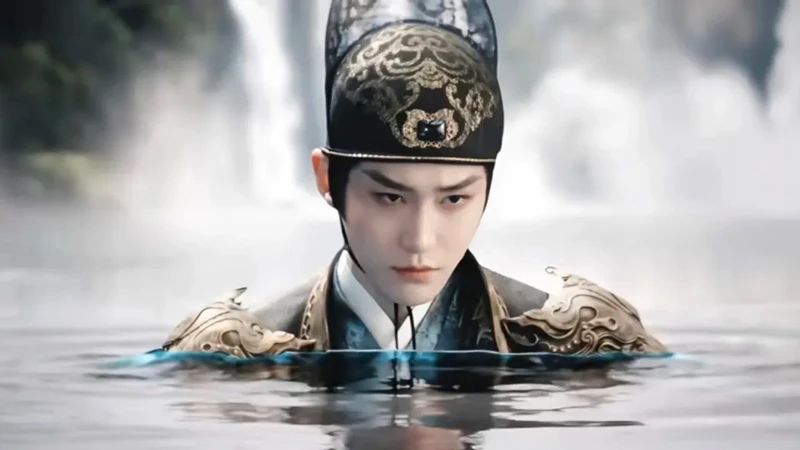
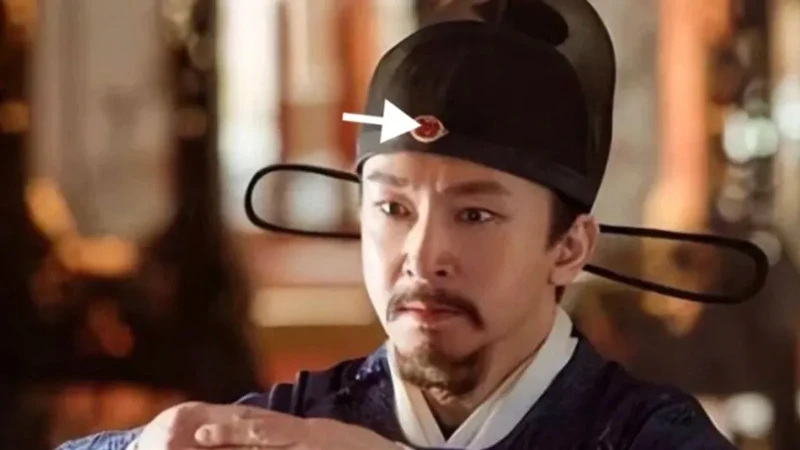
The recent period drama The Unclouded Soul (逍遥) sparked debate not just over its plot, but over a hat. Actor Wang Duo’s (汪铎) character, Bing Zhu (秉烛), holds a position akin to the head of the Eastern Depot (东厂), a feared Ming Dynasty secret police agency. Such leaders were sometimes ironically called “Factory Flowers” for their perceived flamboyance. His costume, featuring an ornate black gauze cap with a central jeweled ornament known as a Maozheng (帽正), seemed to fit that trope. Yet, viewers questioned its historical accuracy, asking if Ming officials truly wore such elaborate headpieces or if the show was taking creative liberties.
Icon of Authority
The black gauze cap, or Wushamao (乌纱帽), is the definitive symbol of a Ming Dynasty bureaucrat. Its origin lies in the Futou (幞头), a headscarf from the Wei and Jin periods. By the Ming era, it had evolved into a stiffened hat, officially codified as mandatory court attire. Officials wore it with a round-collar robe, a belt, and black boots. This uniform was so entrenched that “losing the black gauze cap” became, and remains, a metaphor for losing one’s official post.
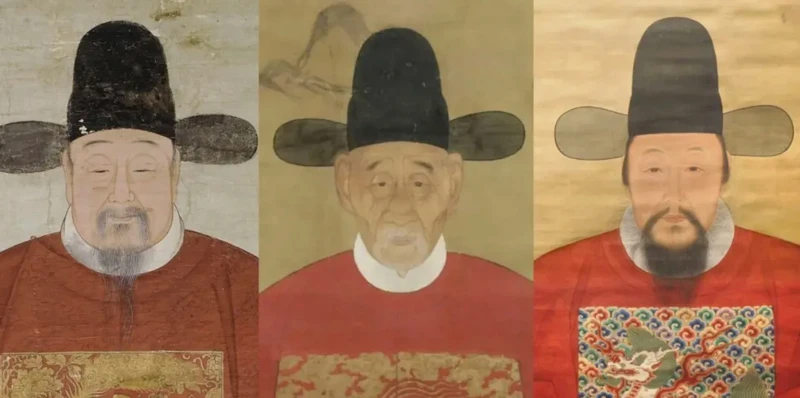
Scholars like Gao Chunming (高春明) and Sun Ji (孙机) note the Ming Wushamao represented the final, perfected form of the Futou’s evolution. It was a badge of office, not mere fashion. While earlier Song Dynasty versions allowed for some variation, the Ming standardized its form. The key feature was its clean, unadorned front. Historical records, including Ye Mengzhu’s (叶梦珠) Yueshi Bian (阅世编) from the early Qing, describe the attire but make no mention of a central Maozheng on Ming caps.
The simplicity was intentional. The cap’s authority came from its uniformity and association with the state, not decorative excess. Even the emperor’s similar Yishanguan (翼善冠) maintained a relatively restrained design. The focus was on the structure of the hat itself—the shape of its wings, the angle of its folds—which communicated rank and function within a rigid hierarchy.
When Drama Rewrites History
So where did the jeweled Maozheng come from? The answer lies centuries later, in the Qing Dynasty. Qing official hats underwent a radical redesign. They introduced the iconic finial, peacock feathers, and notably, the prominent central Maozheng, often inlaid with jewels. This was a distinct Manchu aesthetic departure from Ming minimalism.
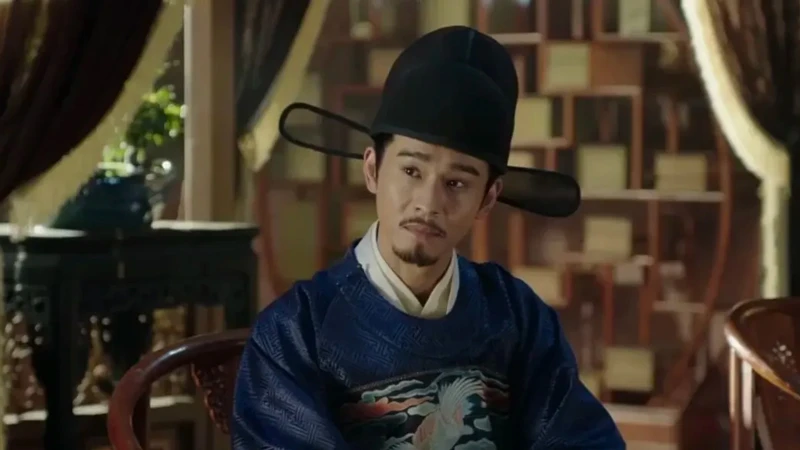
However, a policy of “Ten Followings and Ten Not Followings” allowed theatrical costumes to retain older Han Chinese styles. Thus, opera stages preserved Ming-inspired robes and hats, but over time, they incorporated Qing decorative elements like the Maozheng for visual flair. In Peking Opera, Kunqu, and other traditional forms, officials’ hats became brilliantly embellished. This theatrical hybrid was mistakenly accepted by later audiences as historical Ming dress.
Further confusion stems from Yuan Dynasty paintings of deities wearing ornate crowns, and even from a commonly reproduced but later, spurious portrait of the Ming founder, Hongwu Emperor (洪武皇帝), which shows him with a Maozheng. These artistic liberties, not contemporary records, have polluted the modern visual understanding of Ming official wear.
A Symbol Simplified
The true significance of the Ming Wushamao is found in its deliberate lack of central ornament. It was a symbol of bureaucratic identity, stripped of personal expression. Its evolution from a simple scarf to a rigid cap mirrors the centralization of imperial power. The hat was the office.
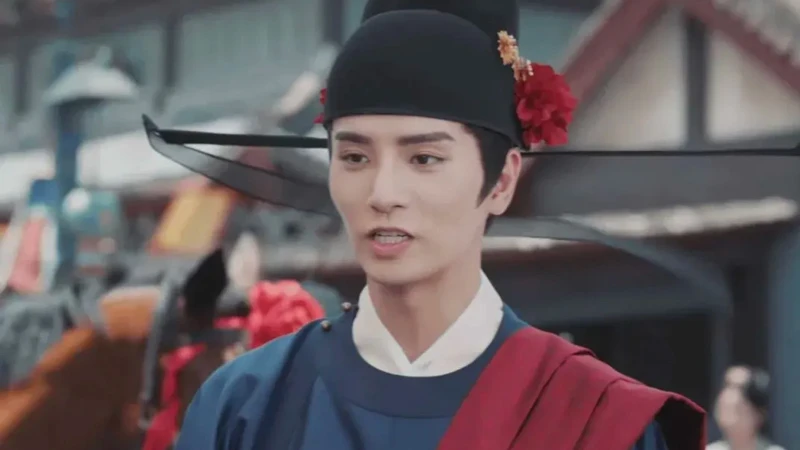
Many historical dramas and video games now default to the more ornate, opera-influenced design, creating a confusing “Frankenstein” aesthetic for Ming costumes. They mix periods, adding Qing decorations to Ming silhouettes. While artistic adaptation is valid, understanding the real history enriches the viewing. The next time you see a “Factory Flower” on screen, you’ll know: the most powerful statement his hat could make was not through jewels, but through its stark, unyielding form.