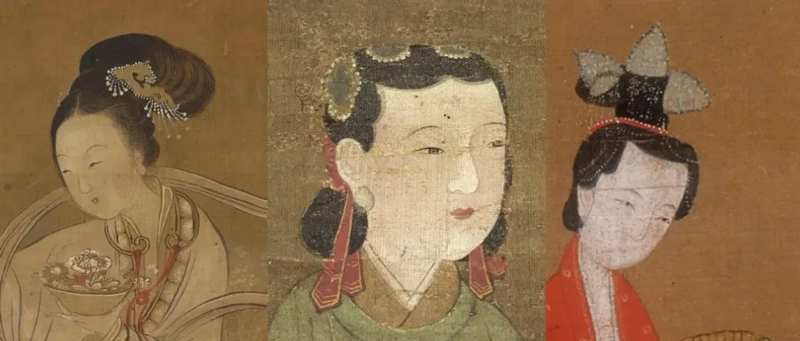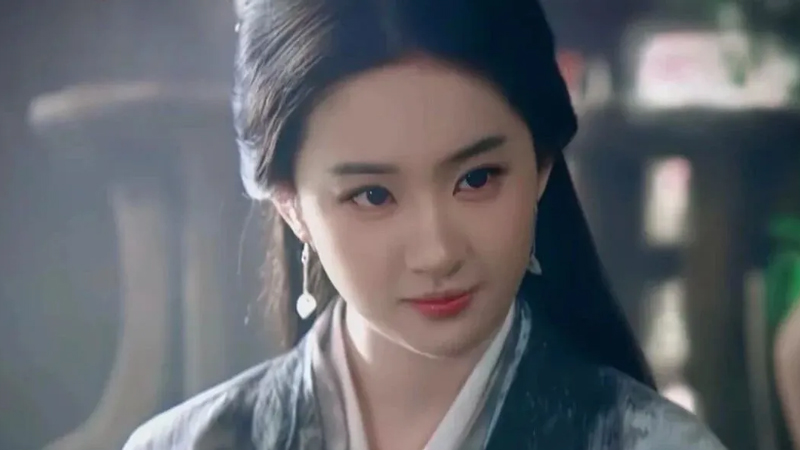
Open any historical drama, from palace intrigues to romantic Wuxia tales, and you will likely see it: the precise, unwavering center parting. This hairstyle dominates the screens, framing the faces of heroines and court ladies alike. It is more than a recurring visual motif; it is a silent language of aesthetics, history, and cultural identity.
While modern viewers might see repetition, this signature look is deeply rooted in a legacy of artistic representation and philosophical ideals. Its persistence speaks to a profound connection between contemporary storytelling and ancient conceptions of beauty, order, and the human form.
The Rule of Symmetry

The center parting is the ultimate expression of balance. In traditional Chinese aesthetics, symmetry is not merely pleasing—it is a fundamental principle reflecting cosmic and social harmony. The perfectly centered hairline creates a clean, vertical axis for the face, evoking stability and composure. For characters in shows like The Story of Yanxi Palace (延禧攻略), this visual balance mirrors the ordered, yet perilous, hierarchy of the court. The style frames the face like a classical portrait, focusing attention on the eyes and expressions crucial for conveying unspoken drama and emotion.
This partitioning also served highly practical needs historically. A center part provides the most stable foundation for elaborate hairstyles and heavy headdresses. Whether a woman was engaged in daily tasks or attending formal ceremonies, this method kept hair neatly anchored and controlled. It transformed hair into a reliable canvas, allowing for the intricate architecture of buns, coils, and ornaments that denoted status and occasion.
Beyond palace walls, the style aligned with broader ideals. The "face full like the moon" was a classic standard of beauty, and the center parting naturally complements rounder or square jawlines, softening angles and creating a harmonious oval silhouette. It was a universally flattering technique, a democratizing tool in the artisan's kit that could elevate any face according to the period's ideals.
Building the Canvas
The center parting was rarely the final destination; it was the crucial starting point. Think of it as the straight grid lines an artist sketches before painting. This stable base allowed for astonishing creativity and variety in the hairstyles built upon it. The simple part enabled the complex. From this foundation, stylists would employ techniques like the "all-enveloping" method, sweeping hair straight back to conceal the hairline entirely, popular in Tang-era styles to accentuate high, dramatic buns.

Another variation was the "multiple-parting" style, seen in Ming-inspired looks like the Sanliutou (三绺头). Here, the front hair was divided into three or more sections—the center one widest—and swept back, creating layered lines that added depth and decoration without straying from overall symmetry. For those seeking to modify a high forehead or hairline, the "hair-concealing" method was used. Strands were left out from the central bun or at the temples, artfully draped to soften the face, sometimes forming shapes like the delicate "Tongqian tou (铜钱头)" or "coin-ring" fringe.
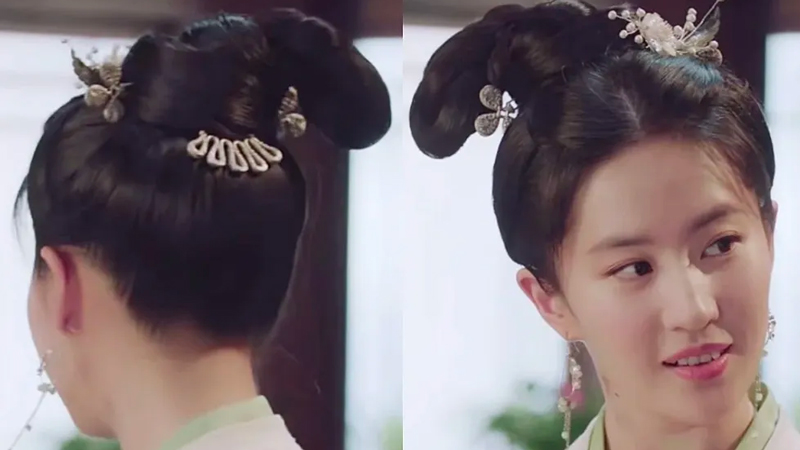
The true flourish came with the ji (髻), or hair bun. Here, ancient stylists exhibited remarkable freedom. Buns could be towering or compact, shaped into loops, rings, or elaborate packages. They were often worn deliberately off-center—tilted to the left or right—in a playful contrast to the strict order below. This combination is key: the disciplined base of the center part gave license for the top to be dynamic and expressive, ensuring the final look remained elegant and intentional, never chaotic.
A Legacy Reimagined
The center parting has effortlessly bridged centuries. It remains a powerful tool for modern costume designers seeking instant visual shorthand for "historical" and "cultured." In a drama like Nirvana in Fire (琅琊榜), the clean, severe center parts of certain characters underscore their intellect and discipline. The style connects the actor immediately to a lineage of portraiture and classical art, grounding fantasy in a recognizable tradition.
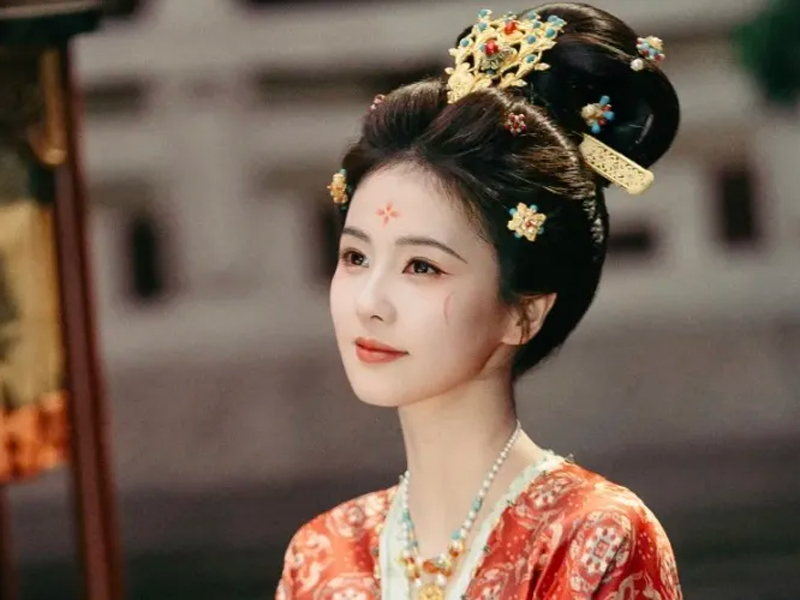
This aesthetic has also influenced global fashion. International runways have seen collections featuring sleek, center-parted buns, drawing direct inspiration from Chinese historical aesthetics. The look conveys a modern minimalism fused with timeless elegance. It is a testament to how a traditional form can be stripped back to its essential lines and still carry immense stylistic power and cultural resonance.
Ultimately, the prevalence of the center parting in historical dramas is a choice both artistic and philosophical. It is a nod to authenticity, a tool for character design, and a celebration of a specific aesthetic intelligence. It reminds us that beauty often resides in balance, that foundation allows for flight, and that some styles endure because they speak to something fundamental. The next time you see that familiar part, look closer—it is the quiet axis around which a world of story, history, and artistry turns.