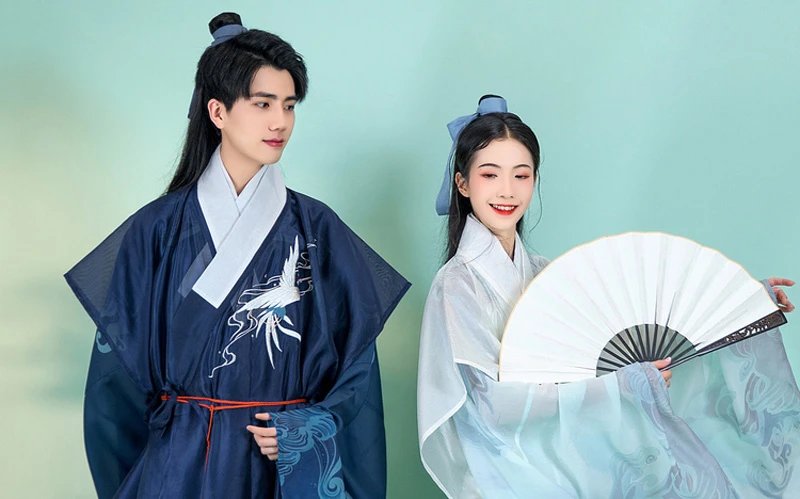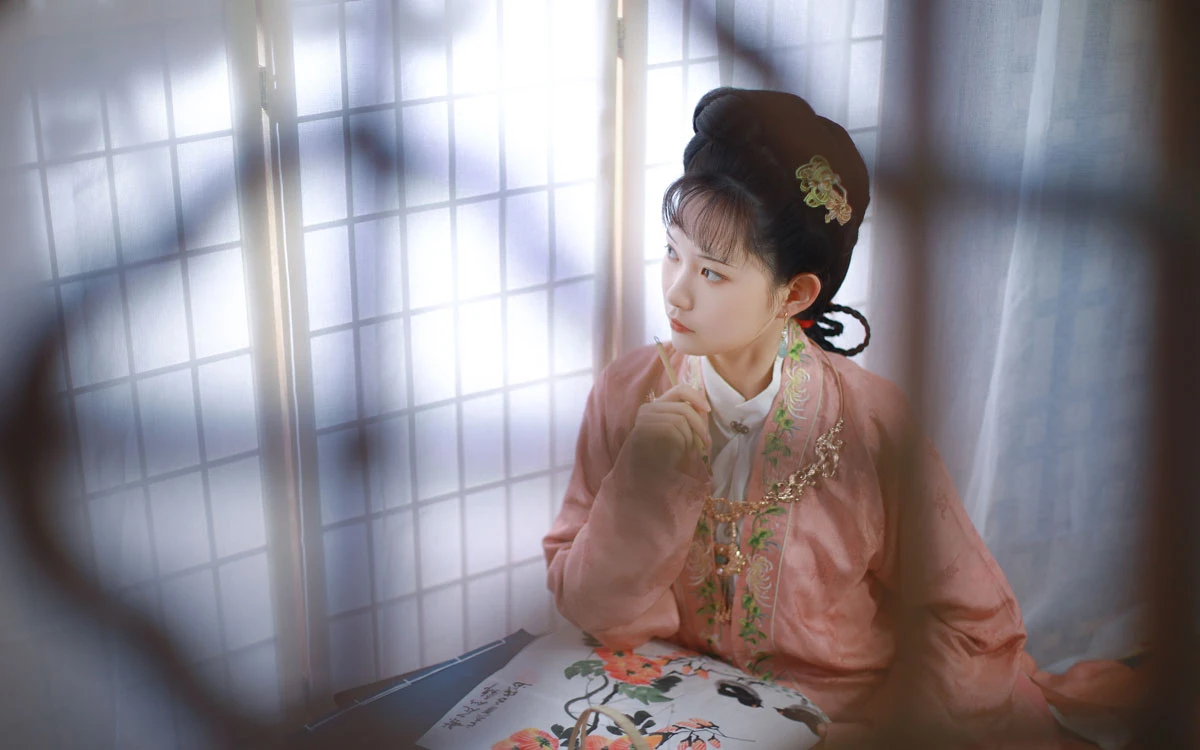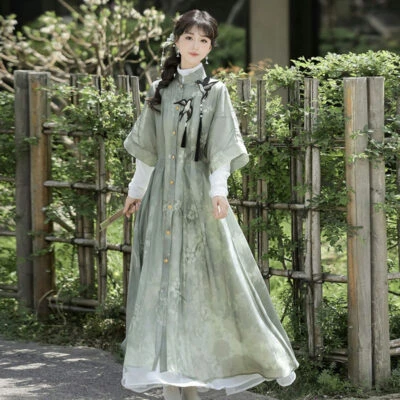
A woman sits before a bronze mirror in her chamber. Her fingers, deft and sure, begin their daily ritual. Strand by strand, hair is coiled, pinned, and elevated. This is not mere grooming; it is the construction of identity. In the Ming Dynasty, a woman’s hairstyle was her public statement, a silent language of social status, marital availability, and regional fashion. From the relatively simple coils of the early 14th century to the architectural marvels atop heads in the 16th, the evolution of the hair bun narrates a story of aesthetic ambition and social nuance. It was a canvas for artistry and a map of one’s place in the world.
Evolution of Style
The journey of Ming hairstyles mirrors the dynasty’s own socio-economic pulse. Initial styles, influenced by the preceding Song and Yuan periods, favored modesty and restraint. Hair was often gathered into neat, low buns, reflecting a post-war ethos of simplicity. This understated elegance, however, was not destined to last.
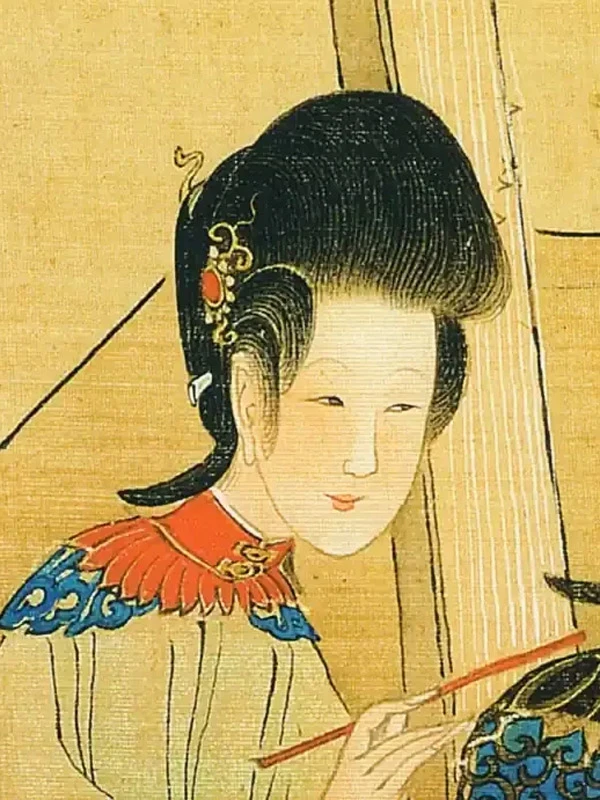
As the dynasty matured, particularly during the mid to late Ming period, commercial prosperity blossomed. A vibrant urban culture emerged, especially in the wealthy Jiangnan (江南) region. With newfound economic confidence came sartorial daring. Women’s hairstyles began to soar, literally. The desire for height and volume became an obsession, leading to increasingly elaborate and towering constructions. This trend grew so pronounced that the court issued sumptuary laws, official decrees aiming to curb such “extravagance.” Yet, the imperial edicts largely failed. The pursuit of beauty and social distinction, it seemed, was a more powerful force than bureaucratic disapproval.
This shift from simplicity to complexity was not merely about size. It represented a broader cultural confidence. The hairstyle became a focal point of personal adornment, a site for investment and display. The flattened, circular shapes of earlier times gave way to vertical, voluminous forms. This visual transformation from horizontal to vertical lines created a silhouette of dignified poise, making the wearer appear more upright and stately, a perfect complement to the era’s increasingly broad-sleeved robes.
Architectures of Identity
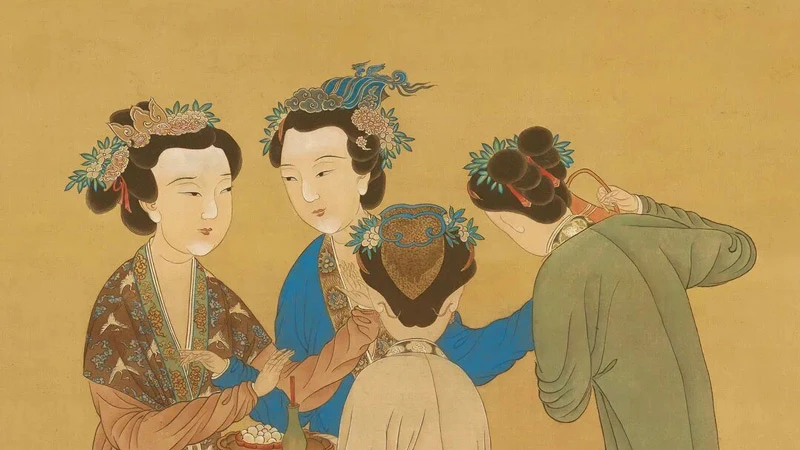
Specific hairstyles served as clear social signifiers. One of the most celebrated was the Mudan Tou (牡丹头), or Peony Head. Popular in late Ming Jiangnan, it was a masterpiece of volume. Hair was divided into sections, twisted, and stacked high upon the crown, secured with pins and hairpins. Resembling a full-blown peony, it could reach a remarkable seven inches in height. Adorned with delicate step-shakes and hairpins, it embodied the elegant grace of a southern gentlewoman, each movement causing a gentle, captivating tremor.
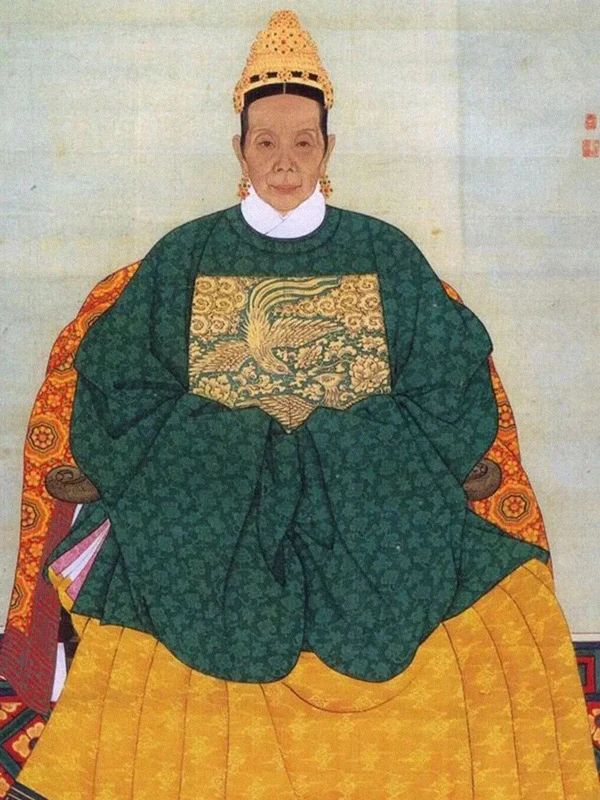
Another distinct style was the Duo Ma Ji (堕马髻), or Falling Horse Bun. This was a revival of a Han Dynasty classic, beloved for its asymmetric, artfully disheveled charm. The bun was deliberately placed to one side of the head, as if slipping, creating an aura of delicate, feminine allure. Its off-center balance broke from traditional symmetry, offering a touch of playful individuality for those who dared. For married women, the Tiao Xin Ji (挑心髻) was a common choice, characterized by hair swept high from the forehead to create a stable, dignified profile that communicated maturity and responsibility.
The most iconic Ming innovation, however, was not a true hairstyle at all. It was the Diji (鬏髻), a hairnet. This was a small, stiff cap woven from silk threads, shaped like a pointed hut, and worn over the actual hair bun. Its primary function was as an unmistakable badge of marriage. Beyond its symbolic role, the Diji’s material loudly proclaimed the wearer’s wealth. Common versions were made from horsehair or human hair. The affluent used Yinsi Diji (银丝鬏髻) woven from silver wire. The ultimate luxury was the Jinsi Diji (金丝鬏髻), a “golden crown” of fine gold filaments, reserved for the official wives of high-ranking officials. A tiny object, it carried the immense weight of social hierarchy.
A Complete Symphony of Adornment
The Diji was never worn alone. It was the foundation for an entire ecosystem of ornaments known as a Yifu Toumian (一副头面), or a full headdress set. This coordinated suite could include over twenty individual hairpins and ornaments, each with a specific name, position, and function, all following a unified decorative theme.
The centerpiece was the Tiaoxin (挑心), or “heart-lifter.” This was the largest and most ornate hairpin, inserted front and center into the Diji. Directly below it sat the Fenxin (分心), a horizontal ornament often depicting Buddhas or flowers. Flanking the temples were a pair of Yanbin (掩鬓), or “brow-coverers,” typically cloud-shaped to secure stray hairs. An arc-shaped Huadian (花钿) or hairband adorned the front base, while the back was fitted with a Manguan (满冠), a pen-holder-shaped piece.
Completing the ensemble were numerous smaller pins and a Weiji (围髻), a beaded fringe encircling the lower edge of the Diji and draping across the forehead. The completeness and quality of this set were paramount. A stunning archaeological example is the set unearthed from the tomb of Madam Mei, wife of the Duke of Qian Mu Bin (沐斌), in Nanjing. Its exquisite craftsmanship and coordinated “Eight Immortals” motif showcase the dazzling final effect of this structured approach to beauty.
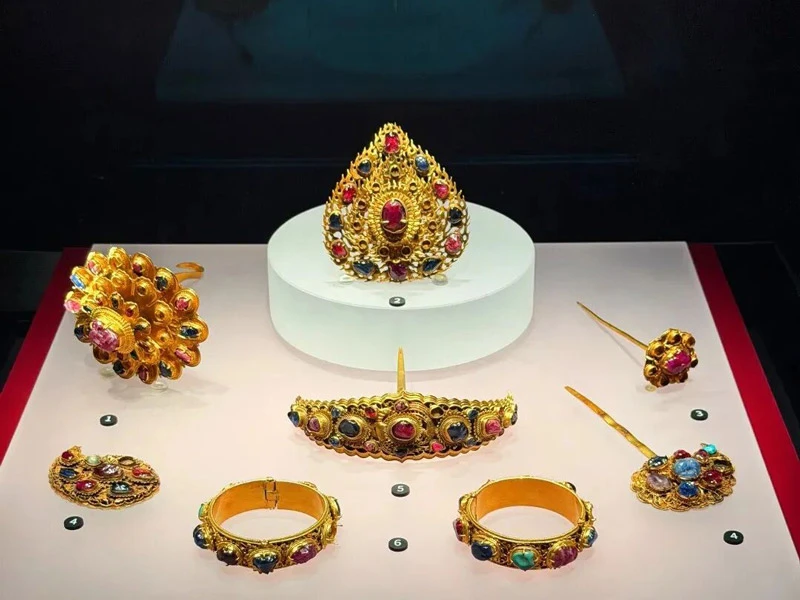
In literature and life, hair held profound metaphor. Loose, unbound tresses suggested intimacy and private moments, while a meticulously arranged bun signaled public propriety. The changing styles of a woman’s life—from the simple knots of a girl to the lavish Diji of a bride and the subdued elegance of a matron—quietly charted her personal history. To study these hairstyles is to read a nuanced social text. When we gaze upon a portrait like Qiu Ying’s (仇英) Spring Morning in Han Palace or the radiant Jin Diji (金䯼髻) displayed in the Wuxi Museum (无锡博物院), we witness more than ancient craft. We see the silent, steadfast determination of generations of women who built their identity, one elegant pin at a time.