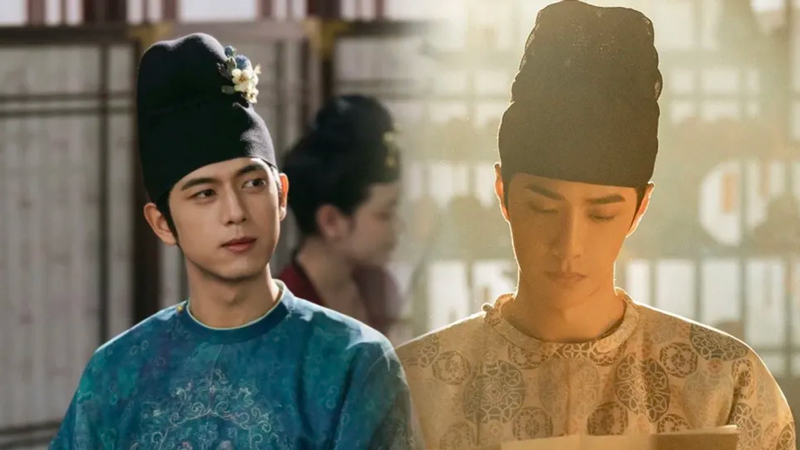
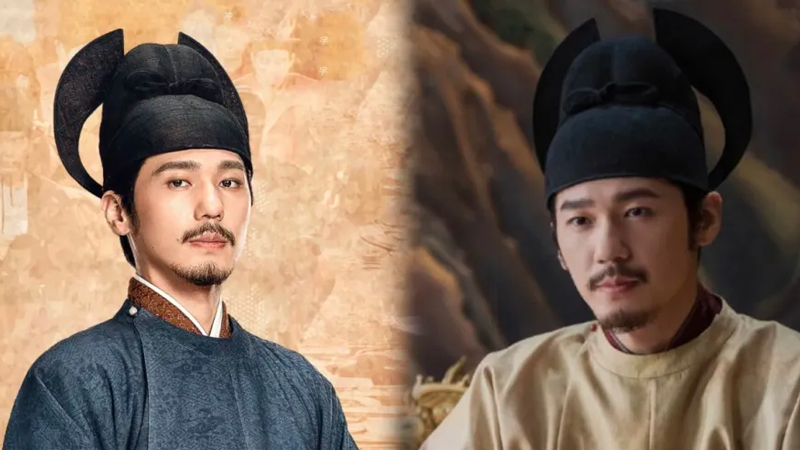
In the historical drama Swords into Plowshares (太平年), the character portrayed by actor Bai Yu (白宇) wears a hat that immediately captures attention. Its most distinctive feature? Two stiff, upward-curving wings. To modern eyes, its silhouette might seem whimsical, even cartoonish, sparking amused comparisons online.
Yet, this is no costume designer’s flight of fancy. This headwear is a carefully recreated Chaotian Futou (朝天幞头), a style steeped in the political and social symbolism of ancient China. Its presence on screen is a deliberate choice, a visual key that unlocks a deeper understanding of a character's status, profession, and the intricate world they inhabit. From the imperial court to the performing stage, the evolution of the Futou tells a story of shifting power, cultural exchange, and silent communication long before a single word is spoken.
The Journey of the Upturned Wings
The Chaotian Futou, with its iconic raised ribbons or "wings," first gained prominence during the Five Dynasties period. Initially, it was a mark of supreme authority. Historical records and portraits, such as those of King Qian Liu (王钱镠) of Wuyue (吴越), show this style adorning the heads of emperors and kings. The upward sweep of the wings was likely symbolic, perhaps representing a connection to heaven or an imposing, majestic bearing. An 11th-century text, The Leisure Record from the Army Tent (幙府燕闲录), notes that "rulers in the Five Dynasties often wore the Chaotian Futou, with two feet tilted upward," while regional lords created their own variants.
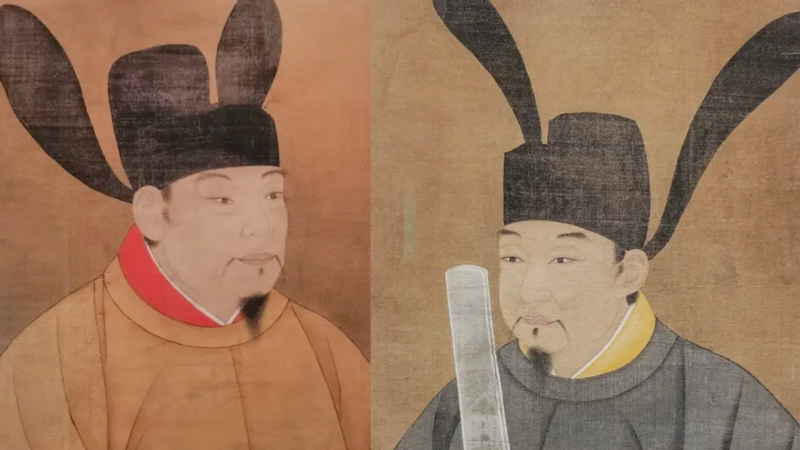
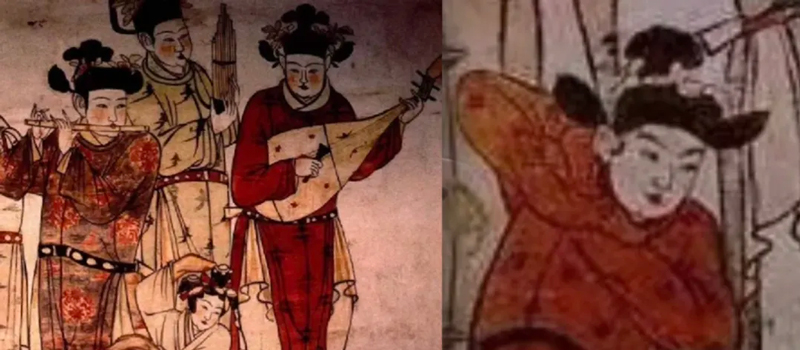
By the Song Dynasty, this once-exclusive imperial symbol had traveled down the social ladder. The basic form was adopted and adapted. While the upturned style remained, its use expanded dramatically. It became standard attire for ceremonial guards, low-ranking officials, and, most notably, entertainers. In murals from the Xuanhua Liao Dynasty Tombs (宣化辽墓), musicians are depicted wearing elaborate, sometimes even flower-decorated, versions of the Chaotian Futou. A similar hat appears in the tomb of Wang Chuzhi (王处直) from the Five Dynasties, proving its usage was never strictly limited to the throne. The hat's journey mirrors a diffusion of cultural motifs, where a regal design becomes a broader badge of professional identity.
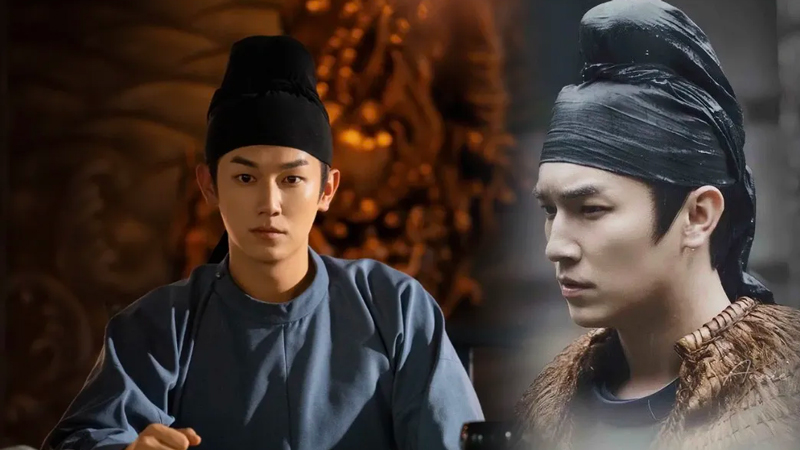
The Futou itself underwent a significant transformation. In the Tang Dynasty, it began as a simple, square black scarf of silk or linen, known as a "soft wrap," tied around the head. For more structure, a stiffened lining called a Jinzi (巾子) was added underneath, creating a "hard wrap." This foundational hat evolved into the formal headdress for Song officials. It became a structured, lacquered cap, permanently shaped, though still referred to by its old names: Futou or "folded-up scarf." Its common name, Wusha (乌纱, black gauze), would centuries later become the very term for official office itself: the "black gauze cap."
A Silent Language of Status
In the highly stratified societies of imperial China, clothing was a rigid code. The Futou was a primary component of this code. By the Song era, the style of a hat's "feet" or wings communicated precise information about the wearer's rank and role at a single glance. This was a world where your hat did the talking.
Long, straight, and horizontally extended wings, known as Zhanjiao Futou (展脚幞头), were reserved for high court officials. A popular but apocryphal tale attributes their extreme length to Emperor Taizu of Song (宋太祖), who supposedly designed them to prevent ministers from whispering secretly during court audiences. In reality, these broad-winged styles predated his reign, flourishing in the late Tang and Five Dynasties. Their practical effect, however, aligning with imperial desire for order and decorum, likely cemented their official use. Other styles served other classes: curved feet for servants and clerks, crossed feet for guards, and "wind-wing" feet for ceremonial officers and musicians. The common people wore simpler, shorter styles like the Shunfeng Futou (顺风幞头).
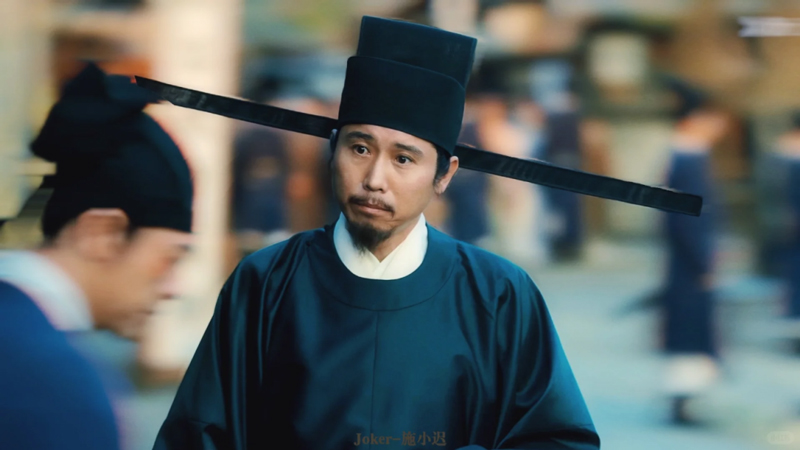
The hat worn by Bai Yu's character in Swords into Plowshares, therefore, is a specific historical citation. Its upturned wings place it within the Chaotian Futou tradition. Depending on the precise era the drama depicts and the character's profession—be it a guardsman, a junior official, or a performer—the hat visually anchors him in a specific social niche. It is a testament to the show's attention to detail, using costume not just for aesthetic appeal but for historical authenticity and narrative shorthand. When a modern audience wonders about the hat's strange shape, they are inadvertently asking about the complex visual language of a past world.
Ultimately, the Futou reminds us that in traditional China, "clothing and headdress were of equal importance." A hat was never just a hat. It was a public declaration, a piece of bureaucratic uniform, and a cultural artifact all in one. The next time a historical drama catches your eye, look closely at the crowns. Their angles, lengths, and curves are silent sentences in a forgotten language, speaking volumes about power, profession, and the pageant of the past.