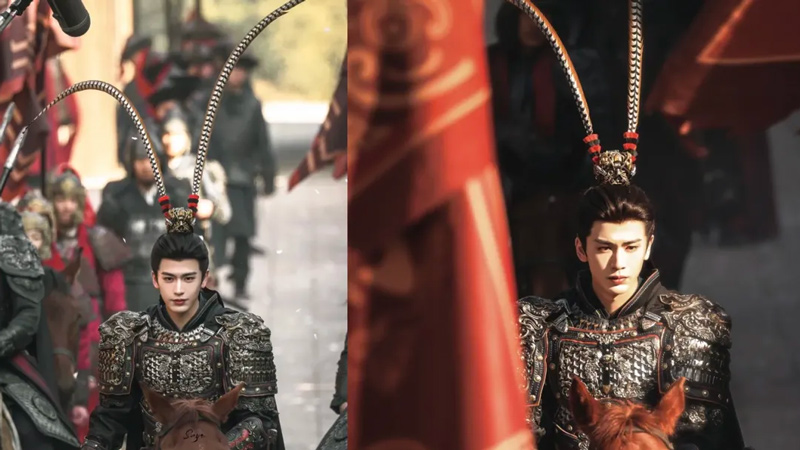
Have you recently scrolled past a historical drama photo where a young actor's helmet is crowned with two wildly long, colorful feathers? This exact image of actor Zhang Linghe (张凌赫) from the costume drama Pursuit of Jade (逐玉) set the internet abuzz. Fans were instantly reminded of the iconic Monkey King, Sun Wukong (孙悟空), leading many to joke, "Has ancient costume drama borrowed the Great Sage's style?" This striking headdress, far from a modern fantasy invention, is a deliberate callback to a deep and symbolic tradition in Chinese performance arts. Known as pheasant feathers or "Zhijiling (雉鸡翎)", these plumes are more than decorative flair. They are a dynamic language of their own, whispering tales of character, status, and millennia of cultural evolution directly from the wearer's brow.
Roots in Ritual and Battle
The story of these feathers begins not on stage, but in ancient ceremony. Their earliest traceable lineage connects to the ritual dances of the Zhou Dynasty, governed by the strict codes of Zhou Li (周礼). In these performances, particularly the esteemed "Ba Yi (八佾)" dance reserved for imperial rites, dancers held ceremonial implements called "Di (翟)." These were often crafted from the long, iridescent tail feathers of pheasants, symbolizing dignity and used in movements that embodied classical order and harmony. Here, the feather was an object held in hand, a direct link to ritualistic reverence and structured beauty.
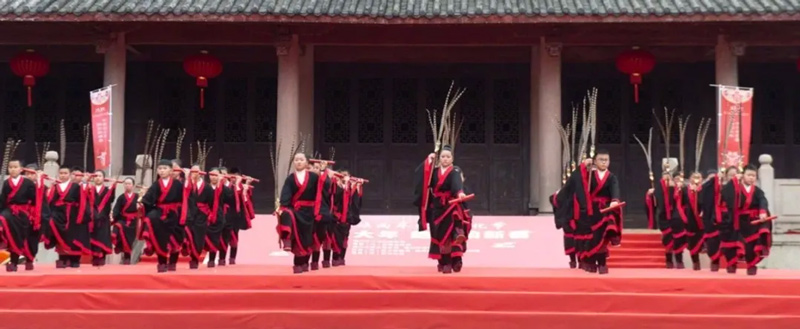
A separate, more martial thread emerged later. During the Warring States period, the practice of "Hufu Qishe (胡服骑射)" – adopting nomadic clothing and cavalry tactics – introduced new military gear. Warriors began wearing helmets adorned with the short, stiff feathers of the He bird, a creature admired for its ferocious courage. This "He Guan (鹖冠)" was a badge of valor, meant to instill fear and represent a fighter's unyielding spirit. While the helmet's form changed over centuries, the conceptual link between plumage and prowess remained, patiently waiting for its dramatic renaissance.
These two streams—the ceremonial and the martial—eventually converged. The object held in a ritual dance and the short crest on a soldier's helmet transformed on the theatrical stage. They lengthened, became more flexible and visually spectacular, evolving into the long, swaying pheasant feathers we recognize today. This was no mere costume change; it was an act of cultural synthesis, blending the grace of ancient rite with the boldness of the battlefield into a potent new symbol for storytelling.
The Stage's Symbolic Language
In the highly codified world of traditional Chinese opera, every costume element speaks, and the pheasant feathers developed a nuanced vocabulary. They became a deliberate marker of a character's nature and narrative position. Generally, upright, morally orthodox heroes and their loyal generals would never wear them. In operas based on Romance of the Three Kingdoms (三国演义), legendary figures like Guan Yu (关羽) or Zhang Fei (张飞) sport clean, unadorned helmets, reflecting their solid virtue and alignment with legitimate authority.
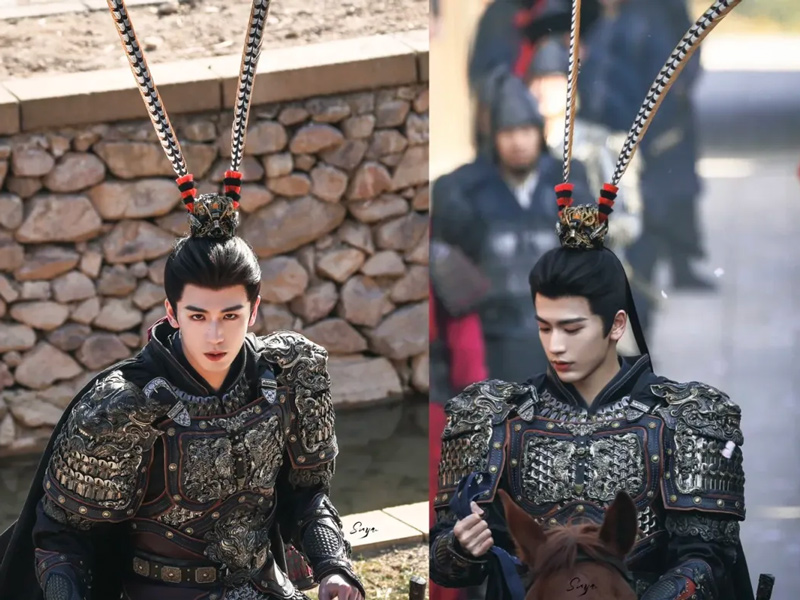
Conversely, the feathers crown characters of brilliant but unbridled talent, those who exist outside strict orthodoxies. The formidable warrior Lu Bu (吕布), known for his skill and treachery, almost always appears with towering dual feathers. The elegant and proud strategist Zhou Yu (周瑜) wears them with a different flair, suggesting his refined arrogance. The feathers' inherent wildness and dynamic movement perfectly externalize these characters' rebellious spirits, untamed prowess, and complex moral ambivalence.
This code even extends to gender and age. The revered female general Mu Guiying (穆桂英) typically does not wear the feathers, as her commanding presence requires a more grounded, authoritative dignity. However, her husband, the young general Yang Zongbao (杨宗保), is often introduced with the vibrant feathers dancing on his helmet. For him, they symbolize youthful vigor, dashing heroism, and a his emerging prowess—a first revealing of his sharp, promising edge before he matures into a steadier leader.
Opera to Screen
The vibrant language of opera feathers has found a vibrant new audience on television and streaming screens. Modern costume dramas and short-form series frequently incorporate them, drawn to their instant visual impact and rich cultural connotations. In Pursuit of Jade, Zhang Linghe's character uses the feathers not just as a visual spectacle but as a quick, non-verbal cue to his character's likely positioning—perhaps as a brilliant but unconventional hero or a formidable rival. This adoption shows how traditional motifs are being repurposed for contemporary visual storytelling.
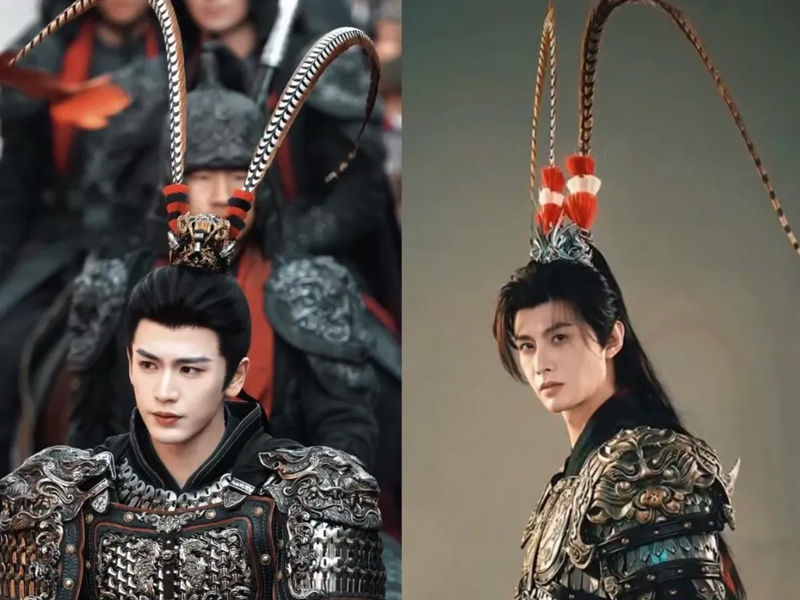
Understanding these feathers is like acquiring a key to a secret code. Their playful sway on a screen or stage carries the weight of Zhou ritual dance, the fierce spirit of Han cavalry, and the sophisticated character shorthand of Qing Dynasty opera. They are a unique cultural cipher in the Chinese aesthetic, balancing precise symbolic meaning with a timeless sense of romantic heroism.
This enduring appeal lies in their duality. They are at once a spectacular piece of costume and a vessel for layered meaning. As audiences today enjoy their dramatic flair in new contexts, they unconsciously connect with an artistic tradition that has always used visual splendor to narrate deeper truths about identity, rebellion, and the enduring allure of the heroic ideal.