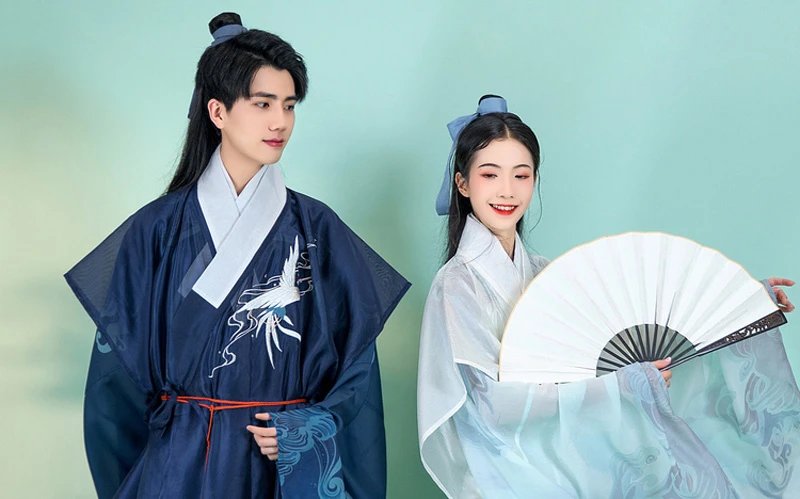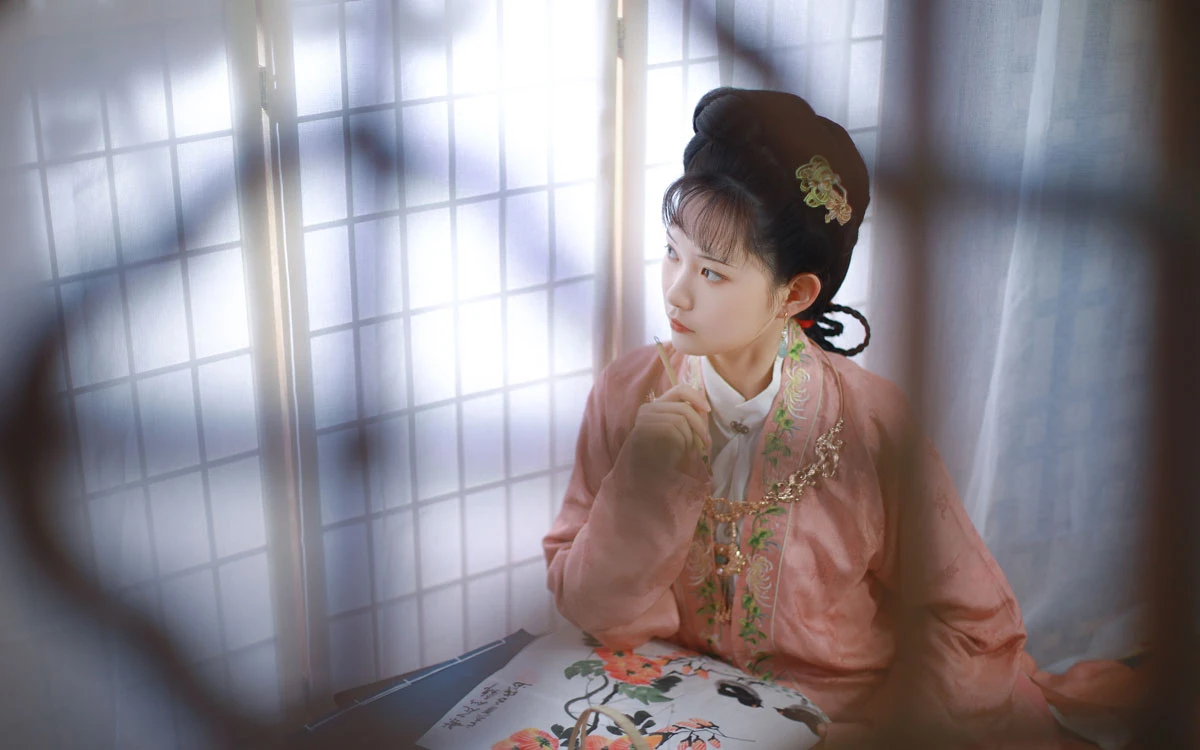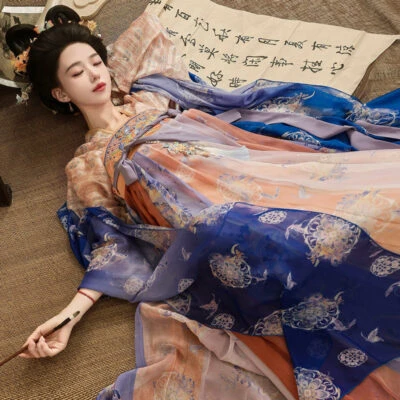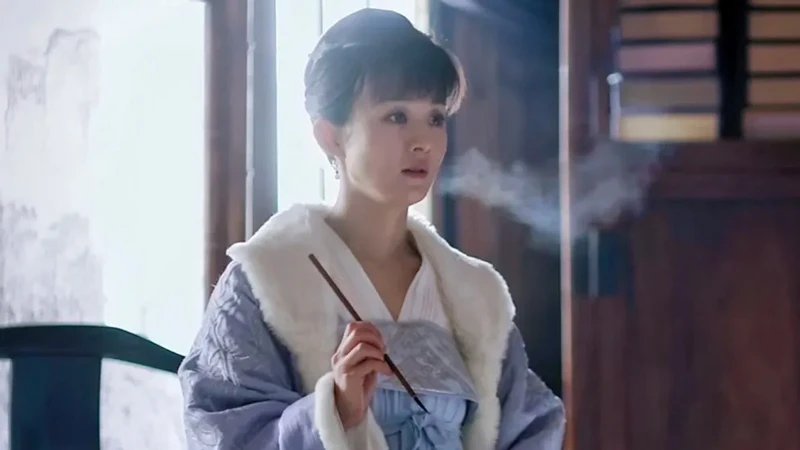
When audiences first tuned into The Story of Minglan (知否知否应是绿肥红瘦), they were drawn into a world of intricate family politics and personal growth. A subtle visual detail caught many eyes: the hairstyle of the protagonist, Sheng Minglan (盛明兰), played by actress Zhao Liying (赵丽颖). In her youth, she wore hair that fell over her forehead, much like contemporary bangs. After marriage, this style vanished, replaced by a formal, swept-back updo. This shift is far from arbitrary; it is a deliberate reflection of ancient Chinese societal codes, where hair served as a clear indicator of age, status, and personal responsibility.
This exploration goes beyond the drama, uncovering how hairstyles functioned as a silent language in historical China, marking the significant transition from the carefree days of childhood to the weighted duties of adulthood.
Decoding Childhood Hair
In ancient China, the hairstyle we now loosely associate with bangs was exclusively a child’s privilege. This look, known as Liu Hai (刘海), originated from the term “childhood-specific hairstyle”, meaning “hair left for a child.” From the Zhou Dynasty onward, both boys and girls wore their hair in this manner during their early years. Historical artworks, such as the painting Children at Play in an Autumn Garden (秋庭戏婴图), depict youngsters with strands of hair, called “Tiao” (髫), flowing from the crown or temples. As a child grew, this front hair would lengthen to the eyebrows, forming what was termed “Mao” (髦), a direct precursor to the straight-across bangs we recognize today.
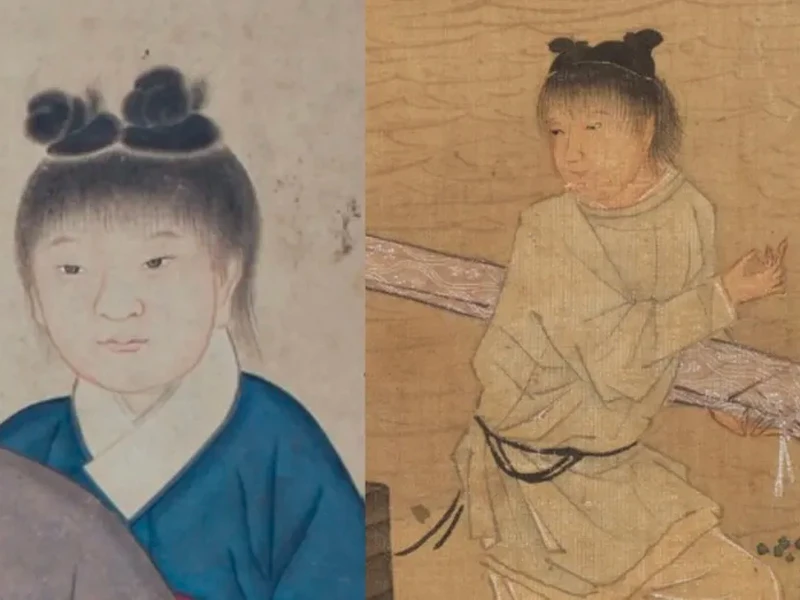
Children’s hairstyles extended beyond just forehead hair. Other distinctive cuts included the Mazi Gai (马子盖), where the hair on the top or back of the head was trimmed into a cap-like shape and then secured into a small bun or thin braid. Another style was the Bo Jiao (鹁角). These looks were subject to few strict rules, allowing for both tidy trims and unruly growth, perfectly capturing the unburdened spirit of childhood. The classic novel The Dream of Red Mansions (红楼梦) references such styles, with dialogue teasing about the “horse-cover” hair, firmly anchoring it as a marker of youth.
The permissibility of these styles was deeply symbolic. In a culture where visual cues were paramount, a child’s loose or front-falling hair signaled their exemption from serious social obligations. This distinction was carefully maintained, setting the young apart from adults in a visually immediate way. The hairstyle was not merely about keeping hair out of the eyes; it was a public declaration of one’s life stage, a testament to a period of learning and play before the structured world of adult responsibility beckoned.
Rites and Adult Forms
The end of childhood was formally marked by coming-of-age ceremonies, with hairstyle changes at their core. For boys, this was the Guanli (冠礼), or capping ceremony, typically held between ages 12 and 20. During this ritual, a young man’s previously unbound hair was gathered, tied, and topped with a cap, symbolizing his readiness to assume familial and civic duties. The Book of Rites emphasizes that “the capping ceremony is the beginning of propriety,” highlighting its foundational role. For girls, the equivalent was the Jili (笄礼), or hair-pinning ceremony, around age 15. A female elder would style the girl’s hair into an updo and insert a hairpin, an act called “shang tou” (上头), announcing her transition into marriageable adulthood.
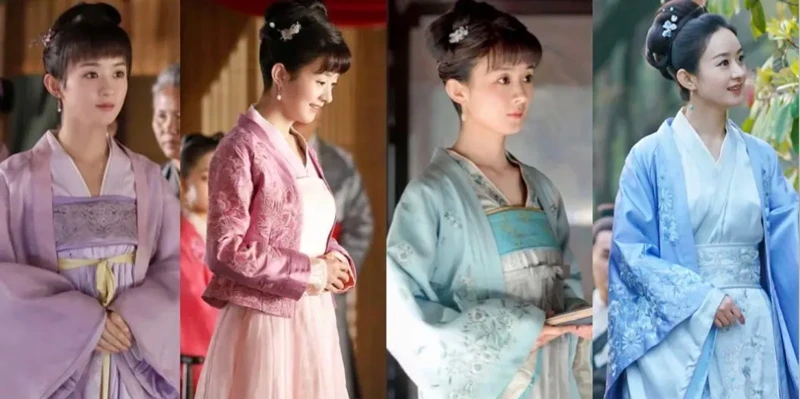
The Story of Minglan faithfully incorporates this custom. Minglan’s post-marital updo is not a fashionable choice but a necessary adherence to tradition. By pinning all her hair up and abandoning the forehead strands, her character visually sheds her adolescent identity and embraces the roles of wife and manager of a household. This meticulous detail adds a layer of authenticity to the drama, demonstrating how personal grooming was inseparable from social expectation and narrative progression. It shows a character’s internal journey through external change.
This historical precision offers a valuable lens for viewing contemporary historical productions. Some modern dramas prioritize aesthetic appeal over accuracy, allowing adult characters to sport anachronistic bangs or loose hair, even in formal settings. This not only creates visual dissonance but also distorts public understanding of past cultural norms. When productions like The Story of Minglan commit to these details, they do more than dress a set; they educate and immerse the viewer in a believable world where every element has meaning.
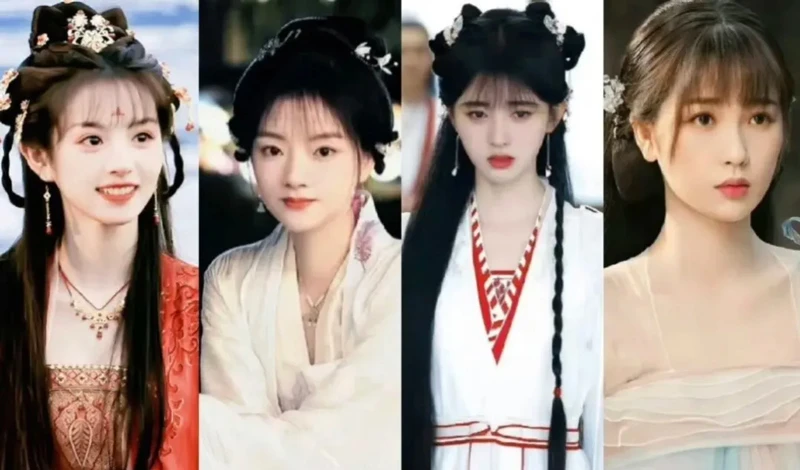
Ultimately, the transformation from child’s bangs to adult’s updo encapsulates a profound cultural philosophy: that growth is both a personal and a social contract. The flowing hair of youth represented freedom, while the restrained styles of adulthood denoted duty and integration into the social fabric. This perspective invites us to see hairstyles as active participants in storytelling, both in historical narratives and in our modern lives, where we constantly negotiate between personal expression and contextual appropriateness. The next time you see a character’s hair change in a period drama, look closer—it might be telling the most important part of the story.